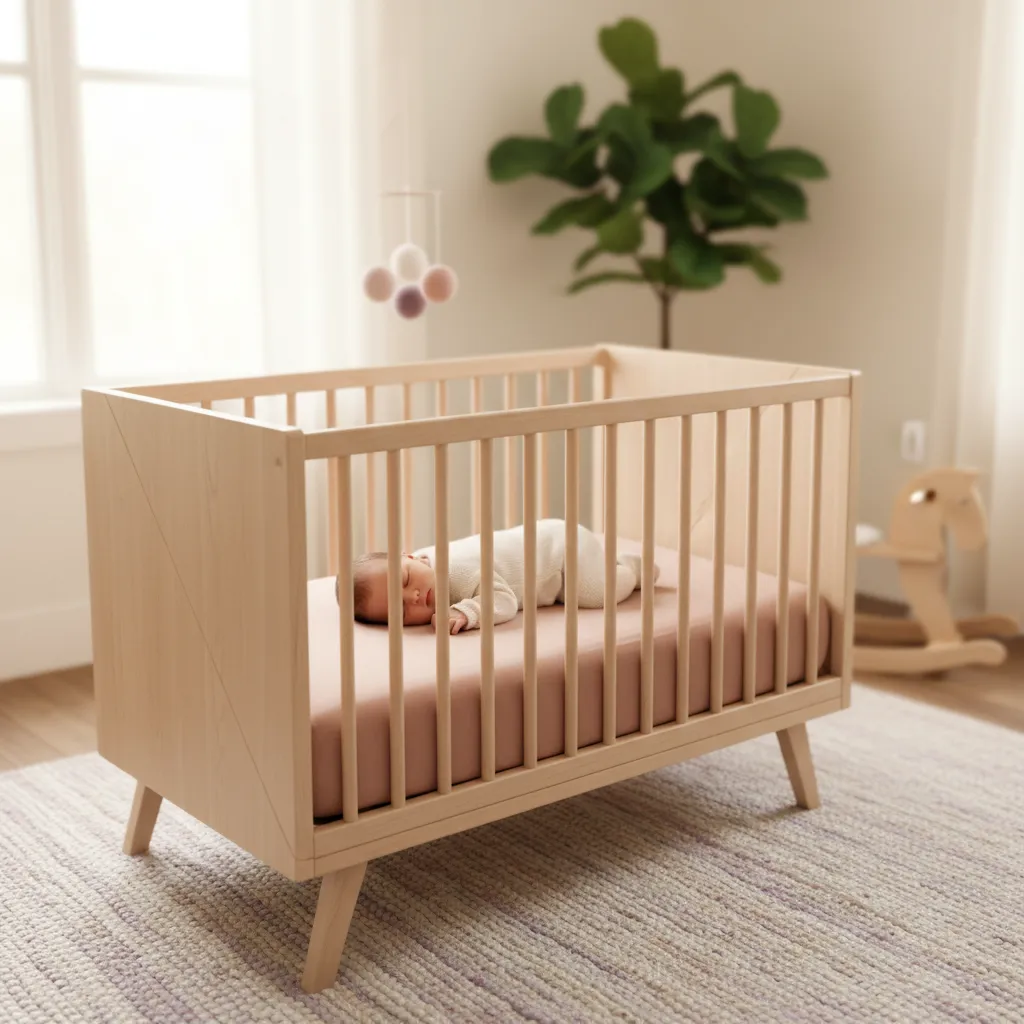
The third wake-up before midnight can make sleep regression feel like someone changed the rules while you were brushing your teeth.
Sleep regression is a temporary stretch when a baby or toddler who was sleeping more predictably suddenly wakes more, naps less, or fights bedtime. The practical goal is not perfect sleep. The goal is to protect safety, rule out obvious problems, and help your child relearn the routine with as little chaos as possible.
Most sleep regressions improve within two to six weeks when you keep sleep safe, respond consistently, and adjust wake windows for your child's age. Call your pediatrician if the change comes with fever, breathing trouble, poor feeding, unusual lethargy, or pain.
Key Takeaways
- Sleep regression is a pattern change, not a diagnosis. More waking can come from development, illness, hunger, overtiredness, separation anxiety, travel, or a routine that no longer fits.
- The 4-month regression is different. Around this age, sleep cycles mature, so some babies wake fully between cycles and need practice settling again.
- Safety stays first. The AAP safe-sleep guidance and CDC both recommend back sleeping on a firm, flat surface with no loose bedding or soft objects.
- A routine works better than a rescue mission. A short bedtime sequence, age-fit wake windows, and one repeatable night response usually beat a new tactic every hour.
- Some night waking is normal. A 2018 infant sleep study found many 6- and 12-month-olds did not sleep uninterrupted for six or eight hours.
Quick Sleep Regression Check
| Question | If yes, try this first |
|---|---|
| Did sleep change suddenly after longer stretches? | Keep the same bedtime routine for 7 nights before changing the whole plan. |
| Are naps short and bedtime messy? | Check wake windows and move bedtime earlier for a few nights. |
| Is your baby learning to roll, crawl, stand, or talk? | Add daytime practice, then keep nights boring and predictable. |
| Is there fever, cough, ear pulling, vomiting, rash, or poor feeding? | Treat it as a health question and call your pediatrician. |
| Has travel, daycare, daylight saving, or a new room changed sleep? | Rebuild the old cues: dark room, same phrase, same order, same response. |
Use the Baby Sleep Tracker for three nights before you overhaul the routine. Patterns are easier to see when wake-ups, feeds, naps, and bedtime are on one page.
What Is Sleep Regression?
Sleep regression describes a stretch of worse sleep after a better phase. A baby may wake every hour, take 30-minute naps, need more help at bedtime, or start crying when placed in the crib.
The phrase is useful because parents recognize it quickly. It can also be misleading because sleep rarely moves in a straight line. The NHS notes that baby sleep varies widely, and some babies naturally take longer to sleep for longer stretches.
Babysential Team builds sleep articles from pediatric guidance, public health recommendations, and peer-reviewed sleep research. AI tools help organize drafts and checks, but the editorial job is to give tired parents a clear plan that fits real nights, not just search results.
What Ages Are Sleep Regressions?
Sleep regressions are commonly reported around 4 months, 6 months, 8 to 10 months, 12 months, 18 months, and 2 years. These ages line up with sleep maturation, motor leaps, separation anxiety, nap transitions, language bursts, and toddler independence.
They are not appointments on a calendar. Some babies skip the obvious version. Others have a rough week after illness or travel that looks exactly like a regression.
Around 3 to 4 Months
The 4-month sleep regression gets the most attention because sleep architecture is changing. Mayo Clinic explains that newborn sleep has no strong day-night rhythm at first, then patterns mature as the brain and nervous system develop.
That maturation can mean lighter sleep between cycles. A baby who used to sleep through small arousals may now wake fully and need help getting back down.
For the deeper age-specific version, read The 4-Month Sleep Regression. This broader guide helps you sort out what to do at any age.
Around 6 Months
At 6 months, sleep disruption may come from rolling, more daytime awareness, changing feeds, or a bedtime routine that still works like it did for a younger baby. Some babies are ready for longer night stretches. Others still wake for feeds.
The useful question is simple: is the waking driven by a need, a habit, or an overtired schedule? You answer that by looking at the whole day, not just the 2:17 a.m. wake-up.
Around 8 to 10 Months
This age often brings crawling, pulling to stand, separation anxiety, and a nap schedule under pressure. A baby may stand in the crib and then get furious because sitting back down is harder than standing up.
Give plenty of daytime practice for new skills. At night, keep the room dark, help your baby back into a safe position if needed, and repeat the same short phrase.
Around 12 Months
The first birthday can bring a false start toward one nap. Many 12-month-olds are not truly ready for one nap every day, even if they refuse a nap sometimes.
Before dropping a nap, try capping the first nap, protecting the second nap, or using an earlier bedtime. A too-early nap transition can create more night waking, not less.
Around 18 Months and 2 Years
Toddlers add opinions. They also add molars, language, separation anxiety, daycare changes, and the ability to stall bedtime with impressive confidence.
Keep the routine short and predictable. Offer small choices before the final goodnight: pajamas or sleep sack, one book or two short books, this stuffed toy or that one. After lights out, the response should get boring.
How Do You Know If Your Baby Is in a Sleep Regression?
The clearest sign is a sudden change that lasts more than a couple of nights. One bad night is data. Three to seven rough nights form a pattern.
Common signs include:
- More night waking: Your baby wakes more often than their recent baseline.
- Short naps: Naps end after one sleep cycle, often around 30 to 45 minutes.
- Harder bedtime: The same routine takes much longer or needs more help.
- Early morning waking: Your child starts the day before 6 a.m. and cannot resettle.
- More clinginess: Separation at bedtime suddenly feels harder.
- New skill practice: Rolling, crawling, standing, walking, or talking shows up at night.
Check the basics before you label it. Hunger, illness, teething pain, room temperature, a wet diaper, too much daytime sleep, and too little daytime sleep can all look like regression.
How Long Does Sleep Regression Last?
Most sleep regressions last about two to six weeks. Some improve faster once the schedule fits again. Some last longer when illness, travel, or inconsistent responses keep resetting the pattern.
The 4-month change can feel longer because the underlying sleep-cycle maturation does not reverse. The intense waking usually settles, but your baby may need new settling skills because newborn sleep has changed.
Peer-reviewed infant sleep research also gives parents a useful reality check. In a 2018 study, a substantial share of 6- and 12-month-olds did not sleep uninterrupted by six- or eight-hour definitions, and uninterrupted sleep was not clearly tied to developmental outcomes.
That does not mean you must accept brutal nights forever. It means the target should be healthier sleep, safer sleep, and a routine your family can repeat, not a promise that every baby will sleep like an adult.
What Helps During Sleep Regression?
Start with the least dramatic fix. Exhausted parents are vulnerable to big changes at 3 a.m., but babies usually do better with boring consistency.
1. Keep Sleep Safe Every Time
For babies under 1 year, place your baby on their back for every sleep. Use a firm, flat, non-inclined surface with a fitted sheet only. Keep pillows, blankets, bumpers, positioners, and soft toys out of the sleep space.
That guidance matters even during a regression. A trick that gets longer sleep by adding unsafe bedding, stomach placement, or a soft surface is not a good trade.
2. Reset Wake Windows
Overtired babies often wake more, not less. Undertired babies may also fight bedtime because they are not ready for sleep.
Use wake windows as a starting point, then adjust based on your child:
| Age | Typical awake stretch |
|---|---|
| 3 to 4 months | 75 minutes to 2 hours |
| 5 to 6 months | 2 to 3 hours |
| 7 to 10 months | 2.5 to 4 hours |
| 11 to 15 months | 3 to 4.5 hours |
| 16 to 24 months | 4 to 6 hours |
These are ranges, not rules. If bedtime is falling apart, look first at the final wake window and total nap sleep.
3. Make Bedtime Predictable
A good bedtime routine does not need eleven steps. It needs the same order most nights.
Try a 20-minute sequence:
- Feed or snack if age-appropriate.
- Diaper, pajamas, sleep sack, and teeth or gum care.
- One short book or song.
- Lights low, white noise if you use it, same goodnight phrase.
- Into the crib or bed calm and sleepy.
Keep feeding earlier in the routine if your baby has a strong feed-to-sleep association you want to soften. If feeding to sleep works for your family and the waking is manageable, you do not need to change it just because the internet has opinions.
4. Pick One Night Response
Choose a response you can repeat when tired. Rocking for 20 minutes at the first wake-up, feeding at the second, patting at the third, and trying a new sleep-training method at the fourth usually teaches confusion.
A repeatable response may be hands-on soothing, timed check-ins, a brief pickup and put-down, or a feed when your baby is genuinely hungry. The right option depends on age, health, feeding, and your tolerance for crying.
For toddlers, the response might be one calm return to bed, the same phrase, and no negotiation after lights out.
5. Add Daytime Practice
If the regression lines up with a new skill, practice it during the day. Rolling, sitting, crawling, standing, and walking can all steal sleep because the body wants rehearsal time.
Give your baby floor time, safe movement, and chances to work on the skill before bedtime. The night is then less tempting as the practice session.
6. Protect the Parent on Duty
Sleep regression is not only a baby issue. It is a household safety issue when adults are too exhausted to drive, work, or care safely.
Split nights if you can. One adult takes the first half and the other takes the early morning. If you are solo, choose one daily nap or early bedtime block for yourself and let non-urgent chores wait.
Should You Sleep Train During a Regression?
Sleep training is optional. Some families use it and feel calmer. Some do not, and that can also be fine.
The timing matters more than the label. A healthy older baby with stable feeding and a safe sleep setup may respond well to a consistent settling plan. A sick baby, a young newborn, or a baby with feeding or weight-gain concerns needs care first and training later.
If you choose a sleep-training approach, decide the method before bedtime and follow it for several nights unless something is clearly wrong. Switching methods mid-cry is harder on everyone.
If you do not want formal sleep training, you can still make progress by tightening the bedtime routine, improving wake windows, and making night responses calmer and more predictable.
When to Call the Pediatrician
Call your pediatrician if sleep suddenly changes with fever, breathing changes, wheezing, repeated vomiting, signs of dehydration, poor feeding, unusual sleepiness, weak cry, rash with illness, or pain that does not settle.
Also ask for help if snoring is loud and regular, breathing pauses, reflux symptoms seem severe, or your child's sleep is affecting growth, feeding, or daytime behavior.
For parents, call for support if exhaustion is becoming unsafe or your mood feels scary, flat, or unmanageable. A sleep regression is temporary, but severe sleep loss can become a real health problem for caregivers.
This article is for informational purposes only and does not replace professional medical advice. Always consult your pediatrician for guidance specific to your child.
Frequently Asked Questions
What is sleep regression?
Sleep regression is a period when a baby or toddler who was sleeping more predictably starts waking more, taking shorter naps, or resisting bedtime. It is a pattern description, not a medical diagnosis.
How long does sleep regression last?
Most sleep regressions last about two to six weeks. The timeline depends on age, illness, feeding, travel, separation anxiety, and how consistently the sleep routine is reset.
What ages do sleep regressions happen?
Common ages include around 4 months, 6 months, 8 to 10 months, 12 months, 18 months, and 2 years. Not every child has every regression, and some rough sleep periods come from ordinary schedule mismatch.
Should I sleep train during a regression?
Sleep training is optional. If your baby is old enough, healthy, and feeding well, a consistent settling response can help. Safe sleep and medical needs come first.
The Bottom Line
Sleep regression is miserable because it removes the tiny bit of predictability your family had earned. Start with safety, check for illness or hunger, adjust the schedule, and repeat one calm response long enough to see whether it works.
If you need a simple next step tonight, track bedtime, naps, feeds, and wake-ups in the Baby Sleep Tracker for three days. Then compare your pattern with How to Help Your Baby Sleep Longer Stretches and Sleep Regression at 12 Months if the timing fits.
Sources: