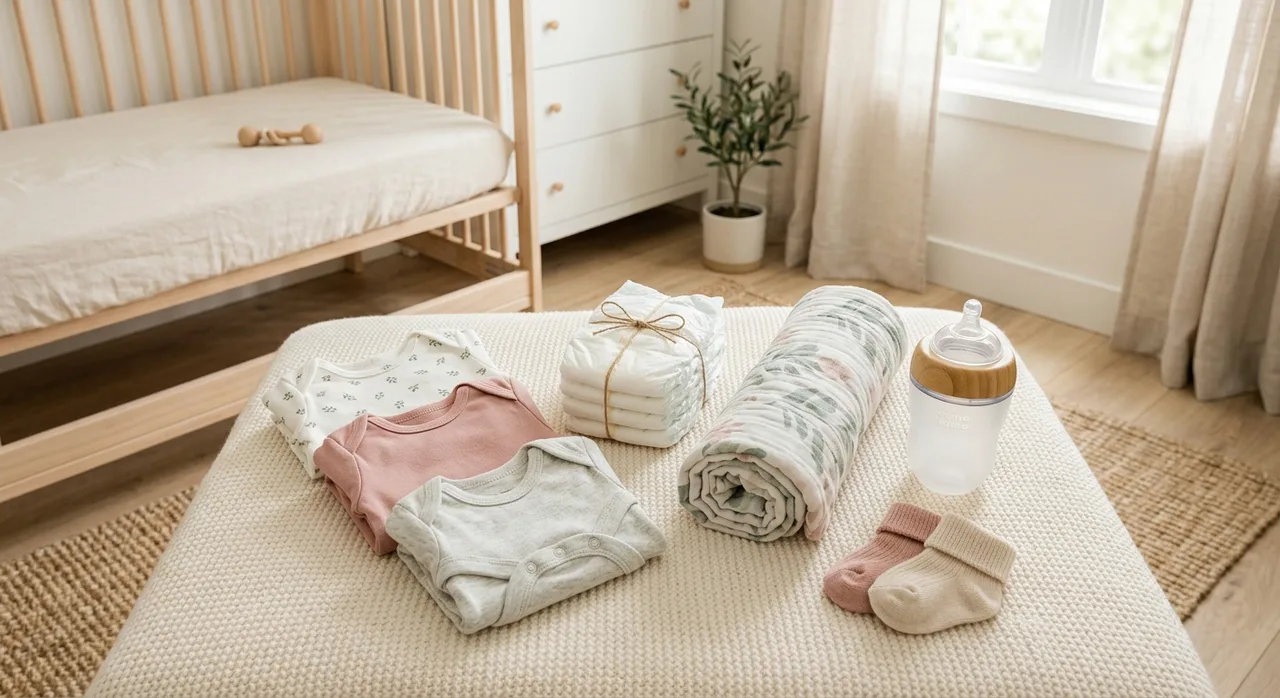
The Honest Newborn Checklist
You need far less than the baby stores tell you. The true essentials for the first 8 weeks are a safe sleep surface, feeding supplies (breast and/or formula), diapers, basic clothing in 0-3 month sizes, and a handful of comfort items for both baby and recovering parent. Skip the wipe warmer, the bottle-sterilizer appliance, newborn shoes, and most newborn-size clothing because babies outgrow them in weeks.
This checklist follows the real timeline of life with a newborn, not a store catalog. It is organized by what you actually use week by week, with honest notes on what to skip and where to save money.
The Real Essentials: Week by Week
Week 1: Coming Home
The first week is about survival and recovery. You are sleep-deprived, healing, and learning to feed a tiny human. Keep it simple.
Sleep:
- Bassinet or bedside sleeper with a flat, firm surface. The AAP safe sleep guidelines are clear: no crib bumpers, no pillows, no blankets, no soft objects. Just the baby on their back on a firm surface.
- 2 to 3 fitted sheets for the bassinet (spit-ups happen at 3 AM)
Feeding:
- If breastfeeding: nipple cream (lanolin or silicone-based), nursing pads, a large water bottle
- If formula: 4 to 5 bottles, formula, burp cloths
- Do not over-stock bottles before birth. You do not know yet which bottles your baby will accept
Diapering:
- 1 box newborn diapers + 1 box size 1. Do not overbuy newborn size. Most babies move to size 1 within 1 to 2 weeks
- Wipes (fragrance-free) or soft washcloths and water
- Diaper rash cream with zinc oxide
Clothing:
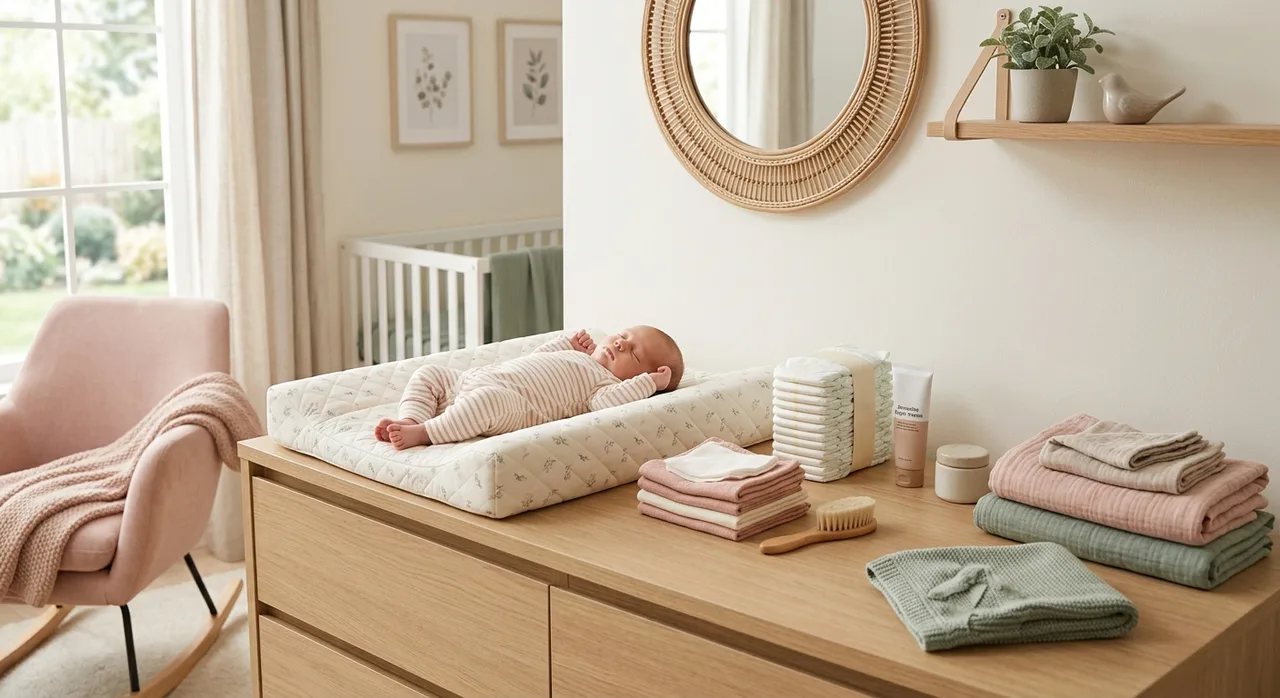
- 5 to 7 bodysuits or onesies in 0-3 month size. Skip newborn size unless your baby is premature or very small
- 2 sleep sacks (wearable blankets) for safe sleep
- 2 to 3 pairs of socks
Health:
- Digital thermometer (rectal use is most accurate for newborns per the AAP)
- Nasal aspirator (bulb or Frida)
- Vitamin D drops: the AAP recommends 400 IU per day starting from the first day for breastfed babies
For the parent:
- Peri bottle, mesh underwear, and maxi pads for postpartum recovery
- Dermoplast spray for comfort
- Snacks and water within arm's reach at every feeding spot
- Comfortable, loose clothing
Read our deep dive on the first week home with a newborn for what those early days really feel like.
Weeks 2 to 4: Finding Rhythm
By week 2, you are starting to find patterns. Cluster feeding often peaks around week 3 during a growth spurt.
Sleep:
- Check your bassinet's weight limit. Some babies outgrow bedside sleepers faster than expected
- White noise machine can help (phone apps work too)
- Swaddle blankets or Velcro swaddles if your baby likes them
Feeding:
- If pumping, now is when a breast pump and storage bags become useful
- Cluster feeding is normal around week 3. It does not mean you are not making enough milk
- Check our guide on how much a newborn should eat for reassurance
Diapering:
- Most babies are in size 1 by week 2
- Keep diaper rash cream stocked
Clothing:
- Still 0-3 month for most babies
- Add a few 3-6 month pieces if your baby is growing fast
Weeks 5 to 8: Settling In
The fog is lifting. Your baby is more alert, may start smiling around week 6, and you are developing a rhythm.
Sleep:
- Start thinking about the crib transition if your baby is getting close to the bassinet weight limit (usually 15 lbs) or starting to roll
- Check our newborn sleep routine guide for patterns and expectations
Feeding:
- Pumping routine is usually established if you are returning to work
- Bottle-feeding: babies may move to larger bottle sizes (5 to 8 oz)
Play and Development:
- Activity gym or play mat becomes useful for tummy time
- High-contrast toys and board books
- Tummy time: a few minutes at a time, a few times per day
Clothing:
- Transitioning to 3-6 month size for most babies
The Master Checklist (Quick Reference)
Sleep
| Item | Status | Notes |
|---|---|---|
| Bassinet or bedside sleeper | Essential | Flat, firm surface. No bumpers |
| Fitted sheets (2-3) | Essential | Size-specific to your bassinet |
| Sleep sacks (2) | Essential | Safer than loose blankets |
| White noise machine | Helpful | Phone apps also work |
| Crib | Later | When baby outgrows bassinet |
Feeding
| Item | Status | Notes |
|---|---|---|
| Bottles (4-5) | Essential (formula) | Try 1-2 brands before stocking up |
| Breast pump | Essential (if pumping) | Insurance often covers it |
| Nursing pads | Essential (breastfeeding) | Disposable or washable |
| Nipple cream | Essential (breastfeeding) | Lanolin or silicone-based |
| Burp cloths (5-8) | Essential | Also works as spit-up rags |
Diapering
| Item | Status | Notes |
|---|---|---|
| Newborn diapers (1 box) | Essential | Do not overbuy |
| Size 1 diapers | Essential | Most babies here by week 2 |
| Wipes (fragrance-free) | Essential | Or washcloths and water |
| Diaper rash cream | Essential | Zinc oxide |
Clothing
| Item | Status | Notes |
|---|---|---|
| Bodysuits / onesies (5-7) | Essential | 0-3 month size |
| Sleep sacks (2) | Essential | For safe sleep |
| Socks (2-3 pairs) | Essential | Grip bottoms nice but not required |
| Swaddle blankets | Helpful | Velcro or traditional |
Health and Safety
| Item | Status | Notes |
|---|---|---|
| Rectal thermometer | Essential | Most accurate for newborns |
| Nasal aspirator | Essential | Bulb syringe works fine |
| Vitamin D drops | Essential (breastfed) | 400 IU/day, AAP recommendation |
| Infant acetaminophen | Helpful | Ask pediatrician before first use |
Parent Care
| Item | Status | Notes |
|---|---|---|
| Peri bottle | Essential (vaginal birth) | Postpartum comfort |
| Mesh underwear and pads | Essential | Stock up |
| Snacks and water bottle | Essential | At every feeding spot |
| Comfortable clothes | Essential | Loose, nursing-friendly |
You can use our interactive checklist tool to track what you have and what you still need.
What You Do NOT Need in the First 8 Weeks
Baby stores and registry checklists push products that make life more complicated, not less. Here is what to skip:
- Wipe warmer: A bacteria breeding ground. Cold wipes are fine and babies do not mind
- Bottle sterilizer (the gadget): Skip buying one, but not the sanitizing. The CDC recommends sanitizing feeding items daily while a baby is under 2 months old, was born premature, or is immunocompromised. That is exactly the window this list covers. A dishwasher run with hot water and a heated drying (or sanitize) cycle already does it, and boiling or steaming works too. What you do not need is a separate appliance
- Shoes for a non-walking baby: Socks with grip are enough. Save shoes for when your child actually stands and cruises
- Newborn-size clothing in bulk: Outgrown in 2 to 4 weeks. Buy 0-3 month instead
- Crib bumpers: Banned by the CPSC. They are a SIDS risk
- Positioners and wedges: Not recommended by the AAP. Flat surface only
- Expensive nursing pillow: Regular bed pillows work. If you want one, a basic Boppy is fine
- Baby food maker: Solids do not start until 4 to 6 months
- Diaper bag organizer inserts: The bag itself is enough
For more on what to skip, see our complete baby registry checklist.
Postpartum Parent Essentials (Do Not Forget Yourself)
You cannot care for a newborn if you are falling apart. The parent-care list is just as important as the baby list.
Physical recovery:
- Peri bottle, dermoplast spray, mesh underwear, maxi pads, ice packs
- Stool softener (ask your doctor)
- Comfortable, loose clothing that opens easily for nursing
Breastfeeding care:
- Nipple cream (lanolin or silicone-based)
- Nursing pads (disposable or washable)
- Breast shells if you are leaking heavily
Nutrition:
- Protein bars, electrolyte drinks, meal prep or delivery
- Large water bottle at every feeding station
- Easy one-handed snacks
Mental health:
- Phone numbers for your OB, lactation consultant, and pediatrician saved and accessible
- Know the signs of postpartum depression: persistent sadness, anxiety, hopelessness, or thoughts of harming yourself
- If in crisis, call or text 988 or the Postpartum Support International helpline at 1-800-944-4773
For real parent experiences, read what nobody tells you about newborns.
Budget Reality Check
What does the first 8 weeks actually cost?
| Tier | Estimated Cost | What It Includes |
|---|---|---|
| Minimum viable | $300 to $500 | Basics only, many items secondhand, borrowing gear |
| Mid-range | $800 to $1,200 | Mix of new and quality gear |
| Full setup | $2,000+ | Everything new, premium brands |
Where to save: Secondhand clothes (babies wear things for weeks), borrowed gear from friends, accept hand-me-downs generously.
Where NOT to save: Car seat (never buy used because crash history is unknown) and crib mattress (new only, for SIDS safety per the NICHD Safe to Sleep campaign).
See our smart baby shopping checklist for detailed budget strategies.
Common Mistakes New Parents Make
- Buying too much in newborn size. Most babies wear 0-3 month within weeks
- Over-researching products instead of preparing mentally. No swaddle brand matters as much as knowing what to expect
- Not having enough basic supplies in the house. Diapers, wipes, pads, and snacks run out fast
- Forgetting parent-care items. The peri bottle and snacks matter as much as the onesies
- Buying gear before knowing if baby likes it. Swaddles, bottles, and pacifiers are personal. Every baby is different
FAQ
What do you actually need for a newborn?
A safe flat sleep surface, feeding supplies (breast and/or formula), diapers, basic clothing in 0-3 month sizes, and a handful of comfort items. Skip the wipe warmer, the bottle-sterilizer appliance, and newborn shoes.
What do I need in the first 2 weeks with a newborn?
Focus on basics: a bassinet, 5-7 onesies, newborn and size 1 diapers, feeding supplies, burp cloths, a rectal thermometer, and postpartum recovery items for yourself.
How many onesies do I need for a newborn?
5 to 7 bodysuits in 0-3 month size is enough for the first few weeks. Skip bulk newborn-size purchases since most babies outgrow them within 2 to 4 weeks.
What can you skip buying for a newborn?
Skip wipe warmers, bottle-sterilizer appliances, crib bumpers, newborn shoes, positioners and wedges, and expensive nursing pillows. Regular pillows work fine if budget is tight.
Do I need a bassinet and a crib?
You need one safe sleep surface. A bassinet beside your bed works for the first few months. You can add a crib later when the baby outgrows the bassinet or starts rolling.
Related Reading
- First Week Home With a Newborn
- Complete Baby Registry Checklist
- Newborn Sleep Routine Guide
- How Much Should a Newborn Eat?
- Umbilical Cord Care for Newborns
- What Nobody Tells You About Newborns
- Hospital Bag Checklist
This article is for informational purposes only and is not medical advice. Always consult your pediatrician for guidance specific to your baby.