The Short Answer
Pack your hospital bag by week 36 of pregnancy (earlier if you're expecting multiples or have a high-risk pregnancy). The essentials include: labour comfort items, postpartum care for mum, newborn clothing and nappies, and documents. Most stays last 1–3 days for a vaginal birth and 3–4 days for a caesarean section.
When to Pack
- Twins or multiples: Pack by week 32–34
- Single pregnancy (low risk): Pack by week 36–37
- High-risk pregnancy: Follow your provider's recommendation
For Labour and Birth (Mum)
Comfort and Labour
- Birth plan (printed copies, one for bag, one for staff)
- Lip balm (breathing during labour dries lips quickly)
- Hair ties or headband
- Comfortable, non-slip socks (hospitals are cold)
- Massage oil or lotion if your birth partner will massage
- Portable fan or cool spray for heat management
- Snacks for early labour (energy bars, fruit, nuts)
- Water bottle with a straw (easier to drink during contractions)
- Headphones and a playlist or podcast for early labour distraction
Clothing
- Loose, comfortable nightgown or old T-shirt for labour (you will likely not want to keep it)
- Dressing gown / robe (for walking the ward)
- Slippers or flip-flops (for the floor and shower)
- Going-home outfit (loose, comfortable, post-birth, you will still have a bump)
Postpartum Care
- Maternity pads (pack at least 10–15; the hospital may provide some but not always enough)
- Disposable underwear or old knickers (several pairs, high-waisted for comfort)
- Breast pads (bleeding nipples and milk leaking begin soon after birth)
- Nipple cream (lanolin-based; useful from the first latch)
- Toiletries: shampoo, shower gel, toothbrush, toothpaste, deodorant
- Towel (hospitals often provide these, but having your own is more comfortable)
- Peri bottle (for gentle cleaning after a vaginal birth)
- Stool softener or mild laxative (ask your midwife; first bowel movement after birth can be difficult)
Electronics
- Phone charger
- Camera or fully charged phone
- Portable battery pack
Documents and Admin
- Maternity notes / antenatal records
- Photo ID
- Insurance card or health card (if applicable)
- Birth plan
- Partner's contact details written down (in case your phone dies)
For the Birth Partner
- Change of clothes and toiletries (if staying overnight)
- Snacks and meals (partners rarely leave the room once labour begins)
- Phone charger
- Something to do during early labour (book, headphones)
- Cash or card for the hospital café or vending machine
- Comfortable shoes (you may be on your feet for hours)
For Baby
Clothing
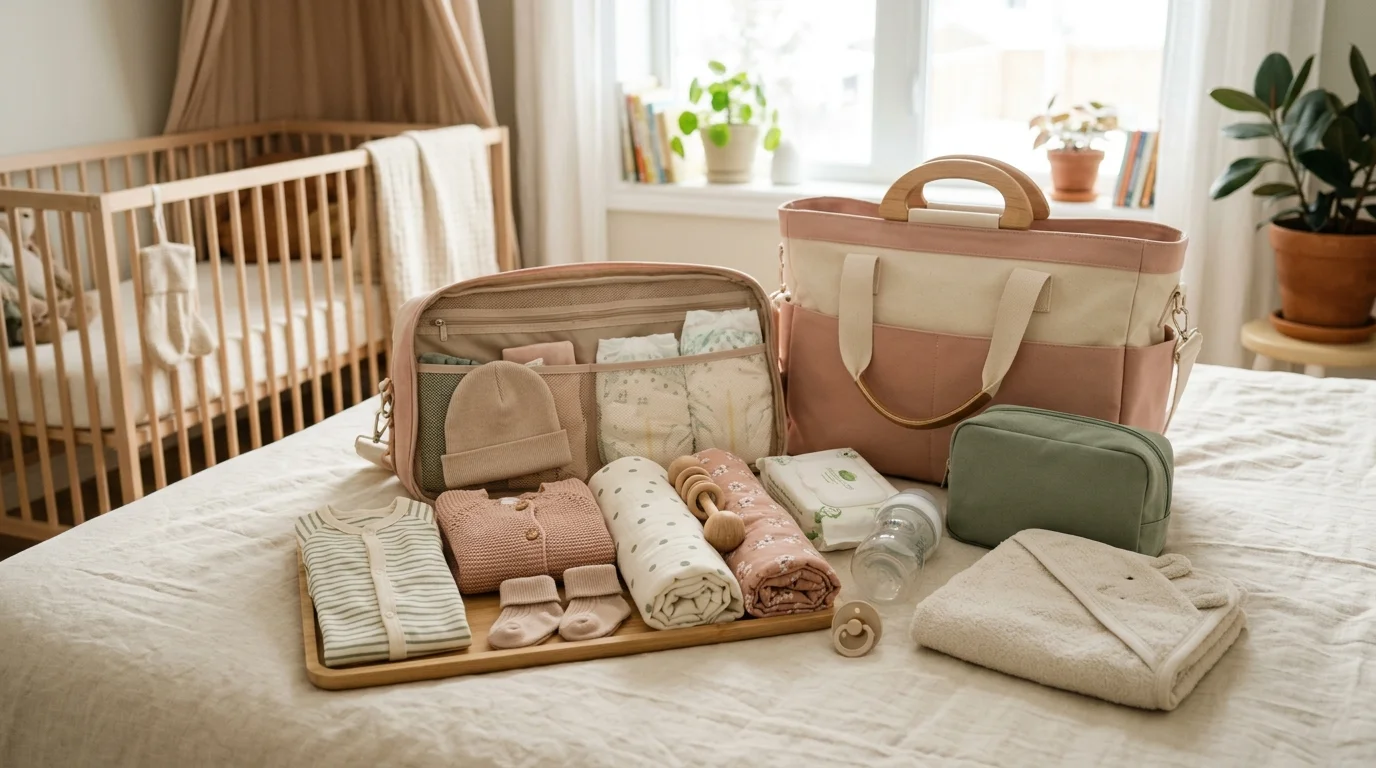
- 2–3 baby grows / sleepsuits (size newborn and 0–3 months, newborns can be bigger than expected)
- 2–3 vests / bodysuits
- Scratch mittens and socks
- Baby hat (hospitals are often warm but newborns lose heat rapidly)
- Going-home outfit
Feeding
- Formula and bottles if not planning to breastfeed (check what the hospital provides)
- Breast pump if prescribed or advised by your midwife
Nappies and Hygiene
- Nappies (newborn size, pack at least 10–15 for the stay)
- Nappy cream
- Cotton pads and water or sensitive baby wipes
- Swaddle blanket or muslin squares
Car Seat
- Your installed car seat must be in the car before you leave for the hospital, you will not be allowed to leave without one.
What Not to Pack
- Jewellery or valuables
- Too much baby clothing (you likely won't change them often)
- Full-size toiletries (space is limited)
- Your entire wardrobe
Packing Tip: Use Three Bags
- Labour bag, snacks, birth plan, labour comfort items, lip balm, socks
- Recovery bag, postpartum pads, underwear, toiletries, going-home outfit
- Baby bag, nappies, clothing, swaddle
This makes it easier to grab what you need without unpacking everything during active labour.
Frequently Asked Questions
When should I pack my hospital bag?
Pack your hospital bag by week 36 for a single pregnancy, or by week 32–34 if expecting multiples or if your pregnancy is high-risk. Labour can begin unexpectedly from 37 weeks, having the bag ready removes one source of stress during an already intense time.
What are the absolute essentials to pack for labour?
The non-negotiables are your maternity notes and ID, a birth plan (printed copies), lip balm, comfortable non-slip socks, a water bottle with a straw, snacks for early labour, and phone charger. Everything else is supportive but these items directly affect your comfort and care during active labour.
What does the hospital provide and what do I need to bring?
Most hospitals provide basic towels, some maternity pads, and staff support, but provision varies. The NHS advises packing your own maternity pads (10–15 minimum), disposable underwear, toiletries, and baby nappies. Check with your specific hospital or birth centre, some provide more than others.
What should I pack in my baby's hospital bag?
Pack 2–3 sleepsuits in both newborn and 0–3 month sizes (babies are often larger than expected), 2–3 vests, a hat, scratch mittens, nappies (at least 10–15), cotton pads and water or sensitive wipes, a swaddle or muslin, and a going-home outfit. For formula feeding, check what the hospital provides and bring your own as backup.
Does my birth partner need their own bag?
Yes, especially if they plan to stay overnight. A change of clothes, toiletries, phone charger, snacks, and something to occupy early labour are practical necessities. Partners rarely leave the room once active labour begins, so having food and a charged device matters more than it might seem in advance.
Do I need an installed car seat before going to the hospital?
Yes, your car seat must be installed in the car before you leave for the hospital. You will not be permitted to leave with a newborn without a correctly fitted car seat. Install and check it before week 36 so there is no last-minute pressure.
How long is the typical hospital stay after birth?
Most vaginal births result in a 1–2 day hospital stay; caesarean sections typically involve 3–4 days. Pack enough clothing and supplies for this duration for both yourself and baby, plus a little extra in case of an extended stay.
Key Sources
- NHS. What to Pack in Your Hospital Bag
- Tommy's. Hospital Bag Checklist
- ACOG. Preparing for Labour and Delivery
Sources
- ACOG. Clinical guidance on pregnancy and women's health
- WHO. Global recommendations for maternal health
- Mayo Clinic. Evidence-based pregnancy health information
🔧 Helpful Tools
- Due Date Calculator. Calculate your estimated due date
- Contraction Timer. Track your contractions during labor
- All Baby Tools. Browse all free tools for pregnancy and baby care
📖 Related Articles
- Third Trimester: Everything You Should Do Now. Complete overview of everything to prepare in the third trimester, from hospital bag to birth plan and practical preparations.
- Hospital Bag Checklist for Labor and Delivery. A trimester-tested hospital bag checklist for labor and delivery. What to pack for the birthing parent, baby, and partner, with practical tips so nothing gets forgotten.