Baby toys are not about keeping a baby busy. In the first year, the best toys help your baby notice, reach, mouth, roll, sit, crawl, copy, and connect with you.
The helpful part is simpler than the shopping aisle makes it look. Babies do not need a room full of gadgets. They need a few safe, age-appropriate objects, plenty of floor time, and an adult who talks, smiles, responds, and plays along.
Key takeaways
- The best baby toys are simple, hands-on, safe to mouth, and matched to your baby’s current skills.
- AAP guidance favors traditional toys like blocks, books, balls, rattles, and pretend-play items over electronic toys for young children.
- Avoid small parts, button batteries, loose magnets, long cords, and baby walkers that a baby sits in.
- For most babies, 3-5 available toys at a time is enough. Toy rotation often works better than buying more.
Development ranges are broad. If your baby was premature, use corrected age when thinking about milestones, and ask your pediatrician if you are unsure what is appropriate.
Quick baby toys by age chart
| Age | What babies are practicing | Best toy types |
|---|---|---|
| 0-2 months | Looking, listening, bonding, brief tummy time | High-contrast cards, soft rattles, simple mobiles, a play mat |
| 2-4 months | Tracking, reaching, stronger head control | Activity gym, crinkle cloth, soft mirror, textured cloth books |
| 4-6 months | Grasping, mouthing, rolling, cause and effect | Teethers, easy-grip rattles, sensory balls, soft blocks |
| 6-9 months | Sitting, transferring objects, crawling motivation | Board books, stacking cups, rolling balls, simple activity toys |
| 9-12 months | Problem solving, pulling up, early pretend play | Shape sorters, chunky blocks, push toys, musical instruments |
What makes a baby toy worth buying?
A good baby toy usually does at least one of these things:
- Invites your baby to look, reach, grasp, kick, roll, crawl, or pull up
- Can be explored safely with hands and mouth
- Encourages interaction with a caregiver
- Has more than one use as your baby grows
- Does not overwhelm your baby with constant lights, sounds, or movement
The American Academy of Pediatrics says the best toys are those that match a child's developmental abilities and support warm interaction between children and caregivers. In other words, a simple rattle used during face-to-face play can be more useful than a battery-powered toy that performs for the baby.
Best newborn toys: 0-2 months
Newborns are not really "playing" in the older-child sense yet. They are learning to feel safe, notice patterns, and briefly focus on the world around them.
High-contrast cards
Newborns see best at close range. Black-and-white or high-contrast cards can give them something clear to look at during short awake windows.
Use them near the changing table, beside a play mat, or during supervised tummy time. Keep it calm. One or two cards are enough.
A soft rattle with a gentle sound
A soft rattle helps babies connect movement and sound. In the early weeks, you will hold it and move it slowly from side to side while your baby tracks it with their eyes.
Choose one that is light, washable, and too large to fit fully into the mouth.
A simple play mat
A play mat gives your baby a safe floor space for supervised awake time. Floor time matters because it lets babies move freely, practice turning their head, and build strength for later rolling and crawling.
Avoid leaving newborns in containers like swings, seats, and bouncers for long stretches. A flat, safe floor space is often better for development.
Best baby toys: 2-4 months
Around this stage, many babies become more alert. They may follow faces, watch their hands, kick with excitement, and begin batting at objects.
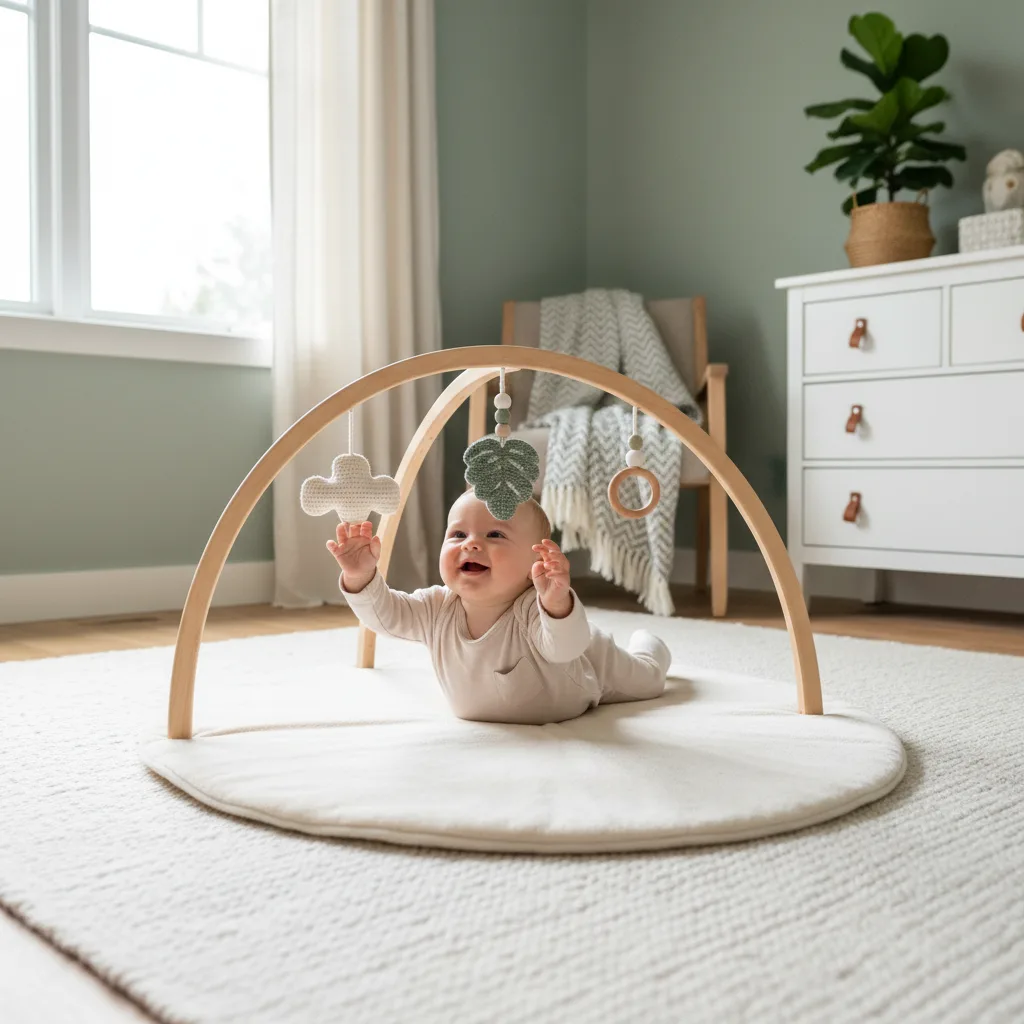
Activity gym
An activity gym can be useful when the toys are simple and removable. Look for hanging toys at a reachable height, varied textures, and enough open space for your baby to move.
Avoid overstimulating gyms that flash, sing, and move all at once. Your baby learns more when they can cause the action themselves, such as batting a toy and hearing it rattle.
Soft mirror
A baby-safe mirror is excellent for tummy time. Babies are often fascinated by faces, even before they understand that the reflection is their own.
Place the mirror low and close enough for your baby to notice it while lifting their head.
Crinkle cloth or soft book
A crinkle cloth gives immediate feedback when your baby touches it. Soft books with simple pictures also build the habit of shared reading long before your baby understands the story.
Best baby toys: 4-6 months
This is the "everything goes in the mouth" stage for many babies. That is normal. Babies use their mouth to explore texture, temperature, shape, and cause and effect.
Teething toys
Choose teethers made for babies, with no liquid filling, no detachable parts, and no strings long enough to wrap around the neck. Silicone, natural rubber, and smooth wood can all work if the toy meets current safety standards.
Check teethers often for cracks or wear. Throw them away if they start to break down.
Easy-grip rattles
At this age, babies often start grasping more intentionally. A slim, lightweight rattle lets them practice holding, shaking, transferring, and dropping.
Dropping is not misbehavior. It is physics research.
Sensory balls
Soft textured balls help with grip and tactile exploration. They also become useful later when your baby starts rolling, reaching, and crawling after them.
Pick balls that are too large to be a choking hazard and easy to clean.
Best baby toys: 6-9 months
Many babies are sitting with support or independently, transferring objects between hands, and becoming more motivated to move.
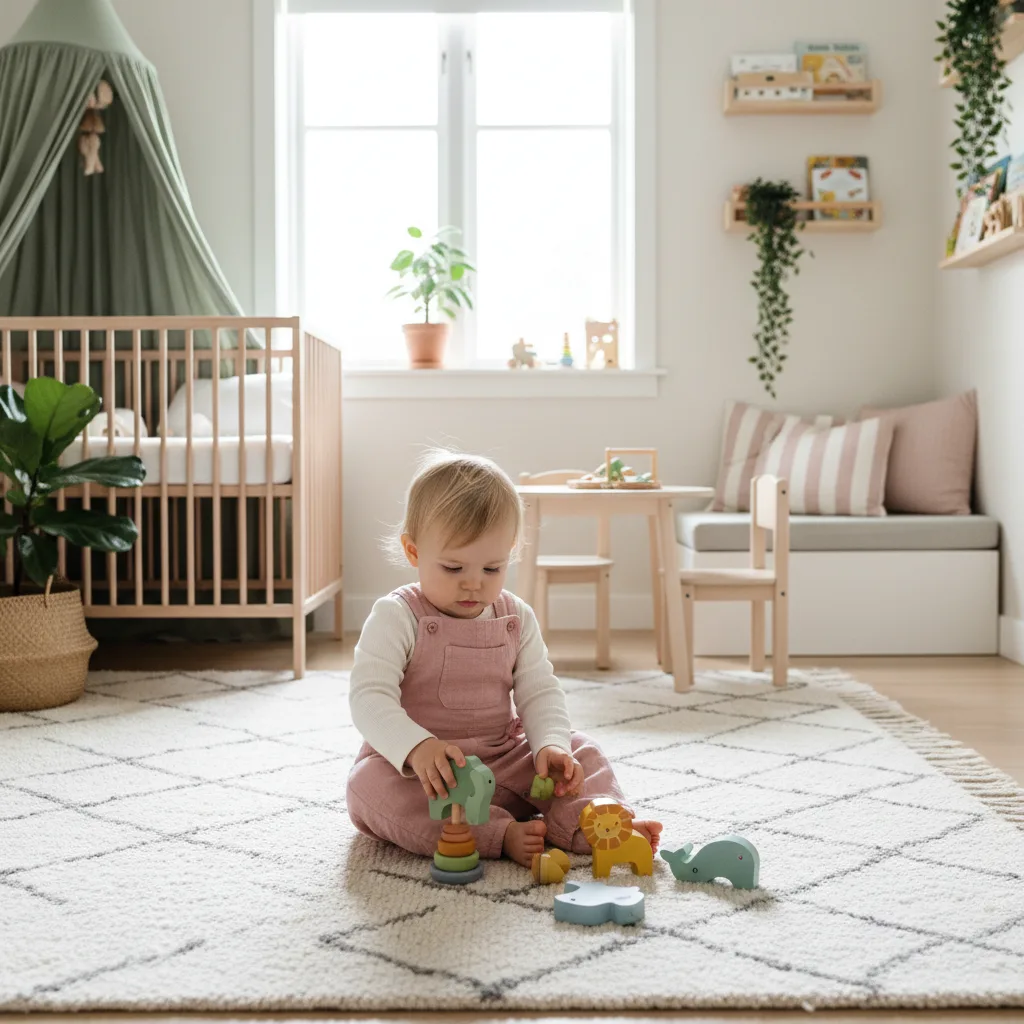
Stacking cups
Stacking cups are one of the best-value baby toys. A baby can bang them, nest them, knock them down, hide things under them, use them in the bath, and later sort by size.
Start by letting your baby knock down towers you build. That is a real developmental game.
Board books
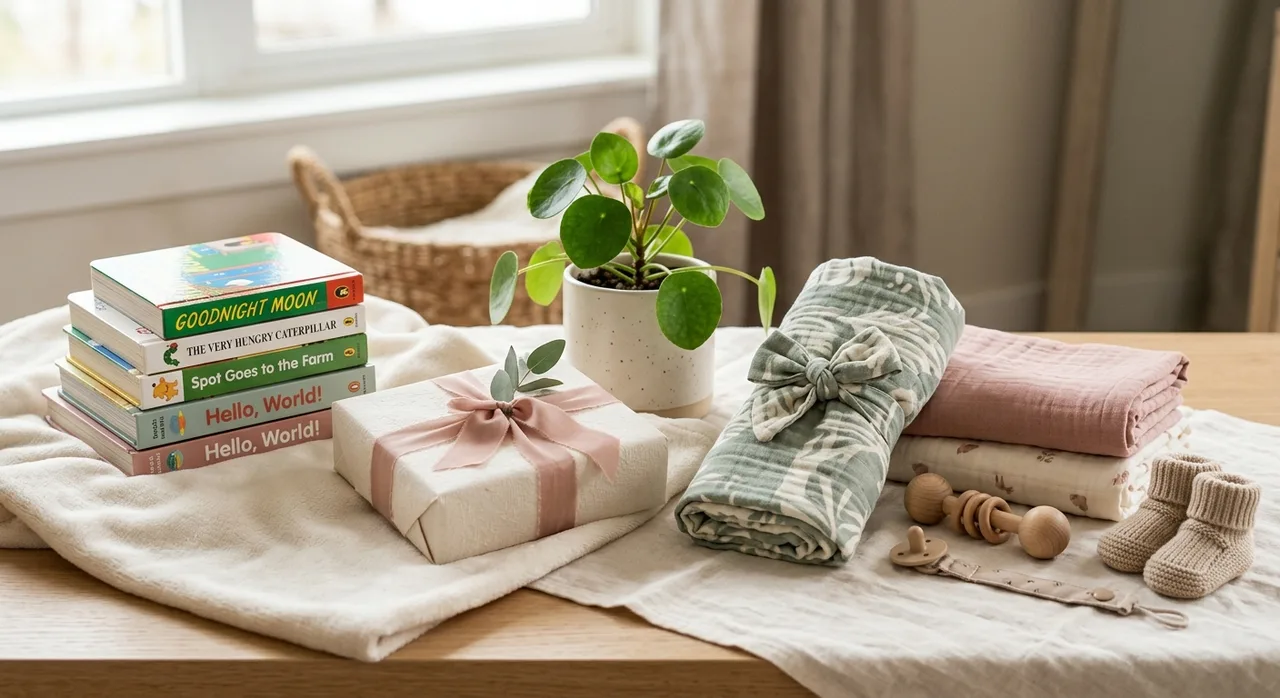
Books are toys, too. Choose sturdy board books with clear photos, simple illustrations, textures, flaps, or familiar routines.
Reading aloud supports language development, but you do not need to finish every page. Point, name, pause, and let your baby chew the corner if the book is designed for it.
Rolling balls
A slow-rolling ball can motivate reaching and early crawling. Sit facing your baby and roll it gently back and forth.
This kind of turn-taking game builds social skills as well as movement.
Best baby toys: 9-12 months
By the end of the first year, many babies are pulling up, cruising, imitating sounds and actions, and solving simple problems.
Shape sorters
Shape sorters build problem solving, hand-eye coordination, and persistence. Start with a simple sorter with only a few chunky shapes.
If your baby mostly bangs the blocks together or takes them in and out of the box, that still counts as play.
Chunky blocks
Blocks are classic because they grow with the child. A baby can mouth them, bang them, transfer them, knock down towers, and later build.
Choose blocks that are large enough to avoid choking risk and finished with baby-safe materials.
Musical toys
Simple instruments such as shakers, drums, bells, and xylophones teach cause and effect. They also support rhythm, listening, imitation, and shared play.
Choose sturdy instruments without detachable small pieces.
Push toys, not seated walkers
A sturdy push toy can help some older babies practice balance when they are already pulling up and cruising. It should be stable, slow, and used with supervision.
Avoid traditional baby walkers that a baby sits in. The AAP has called for a ban on infant walkers because they can cause serious injuries and do not help babies learn to walk.
Are Montessori baby toys better?
"Montessori" is often used as a marketing word, so do not pay extra for the label alone. The useful idea is choosing toys that are simple, hands-on, and invite the baby to do the action.
A good Montessori-style baby toy is usually:
- Made from simple materials
- Not battery-powered
- Focused on one skill or sensory idea
- Open-ended enough to use in several ways
- Easy for the baby to explore independently while you supervise
A wooden rattle, a soft ball, a basket with safe household objects, or stacking cups can fit this idea without being expensive.
Toy safety checklist for babies
Before you buy or accept a hand-me-down toy, check these points:
- Age rating: Choose toys labeled for your baby's age or younger.
- Small parts: Avoid anything that can fit fully inside a choking test cylinder or looks smaller than a toilet paper roll opening.
- Batteries: Button batteries and coin batteries are dangerous if swallowed. Battery compartments should be screwed shut.
- Magnets: Avoid loose or small magnets. Swallowed magnets can cause serious internal injury.
- Cords and ribbons: Avoid long strings, cords, or straps near babies.
- Noise: Very loud toys can harm hearing and overwhelm babies.
- Paint and finish: Avoid chipped paint, unknown vintage toys, and anything with a strong chemical smell.
- Recalls: Check recall lists before using secondhand toys.
If a baby is choking, turning blue, struggling to breathe, or has swallowed a button battery, magnet, or sharp object, seek emergency help immediately.
How many toys does a baby need?
Fewer than most registries suggest. For daily play, 3-5 available toys is usually enough for a baby. Too many options can make play scattered and overstimulating.
Try a simple toy rotation:
- Keep a small basket of current toys where your baby plays.
- Store the rest out of sight.
- Swap a few toys every week or two.
- Keep favorites available longer if your baby uses them often.
This makes old toys feel new again and helps you notice what your baby is actually ready for.
Budget-friendly baby toy ideas
You can support development without buying a lot.
Safe household options include:
- A clean wooden spoon
- A silicone spatula
- Measuring cups
- A scarf for peekaboo
- A cardboard box for supervised crawling play
- A plastic container with a secure lid and large objects inside for sound
Always supervise household-object play. Avoid anything breakable, sharp, small, long, or battery-powered.
What to skip in the first year
Electronic learning toys
Babies learn best through hands-on exploration and responsive interaction. Electronic toys are not automatically harmful, but they often do too much of the work for the baby.
If you use them, keep them occasional and choose toys where the baby controls the action.
Screens marketed as baby learning tools
AAP guidance recommends avoiding digital media for children under 18 months, except video chatting. For babies, real faces, voices, objects, and movement are more valuable than screen-based learning.
Complicated toys for older children
A toy meant for a toddler may frustrate a baby and may include parts that are not safe for mouthing. Choose the toy for the child you have now, not the milestone you hope comes next.
When to ask your pediatrician
Ask your pediatrician or health visitor if your baby:
- Does not track faces or objects by around 2-3 months
- Does not bring hands to mouth or try to reach by around 4 months
- Seems very floppy or very stiff
- Does not roll, sit with support, or show interest in objects within expected ranges
- Loses skills they previously had
Variation is normal, but early support is helpful when a baby needs it.
Frequently asked questions
What toys are best for a newborn?
Newborns benefit from simple, calm toys: high-contrast cards, a soft rattle, a baby-safe mirror for supervised tummy time, and a flat play mat. Your face, voice, and touch are the most important "toys" at this age.
When do babies start playing with toys?
Babies notice faces, sounds, and contrast from birth, but more obvious toy play often appears around 2-4 months when they start batting, reaching, and grasping. Mouthing, transferring, banging, and dropping usually become more active later in the first year.
What toys should a 6-month-old have?
Good toys for a 6-month-old include teethers, easy-grip rattles, soft blocks, sensory balls, board books, stacking cups, and a simple activity gym. Choose toys that are safe to mouth and encourage reaching, rolling, sitting, and interaction.
Are electronic toys good for babies?
Traditional hands-on toys are usually better for babies than electronic toys. The AAP emphasizes that toys should support interaction, imagination, problem solving, and movement. Electronic toys can be occasional, but they should not replace shared play.
Are baby walkers safe?
Seated baby walkers are not recommended because they can cause injuries and do not help babies learn to walk. A stable push toy may be appropriate for an older baby who is already pulling up and cruising, with close supervision.
How do I choose safe baby toys?
Match the age label, avoid small parts, inspect for loose pieces, avoid long cords, make sure battery compartments are screwed shut, skip toys with loose magnets, and check recall lists before using secondhand toys.
Sources
- American Academy of Pediatrics, Selecting Appropriate Toys for Young Children in the Digital Era
- HealthyChildren.org from the AAP, Toy Buying Tips for Babies and Young Children
- CDC, Important Milestones: Your Baby by Six Months
- CDC, Important Milestones: Your Baby by Nine Months
- Mayo Clinic, Infant development: Milestones from 4 to 6 months
- NHS, Baby and toddler safety
🔧 Helpful Tools
- Baby Milestones Tracker. Track your baby's developmental milestones
- All Baby Tools. Browse all free tools for pregnancy and baby care
📖 Related Articles
- Colors and Baby Development. Learn what babies can actually see by age, how contrast helps, and which color claims are overstated.
- Best Baby Toys by Age: A Practical First-Year Guide. Choose safe, age-appropriate baby toys with this practical first-year guide. Find the best baby toys by age, what to skip, and how to buy safely today.