Key Takeaways
- The AAP recommends keeping children rear-facing as long as possible, until they reach the maximum weight or height limit of their rear-facing seat, which is typically well beyond 12 months.
- A correctly installed basic certified seat is always safer than an expensive seat installed incorrectly, attending a free car seat check (offered at many fire stations and children's hospitals) is the most important safety step after purchase.
- Thick puffy coats prevent the harness from being tightened correctly, dress your child in a thin layer, buckle snugly, then place a blanket over the top for warmth.
- Never use a second-hand car seat without a verified history, you cannot confirm whether it has been in a crash, which compromises its structural integrity even if it looks undamaged.
- In Europe, look for ECE R129 (i-Size) certification; in the USA, FMVSS 213; in Australia, AS/NZS 1754, never purchase a seat without a current certification label.
The Short Answer
Choose a car seat based on your child's current age, weight, and height, not what they might grow into. Always prioritise seats that meet your country's safety standards, are correctly installed, and fit your specific vehicle. A correctly installed basic seat is always safer than an expensive seat installed incorrectly.
Car Seat Stages
Car seats are grouped by the weight and height they support:
Stage 1: Infant / Rear-Facing (Birth to ~13 kg / 18 months+)
- Rear-facing seats are the safest position for newborns and infants
- In a rear-facing seat, the force of a frontal crash (the most common and severe type) is distributed across the baby's back, head, and neck, the strongest parts of a young body
- The AAP and European safety bodies recommend keeping children rear-facing as long as possible, until they reach the maximum weight or height limit of their seat
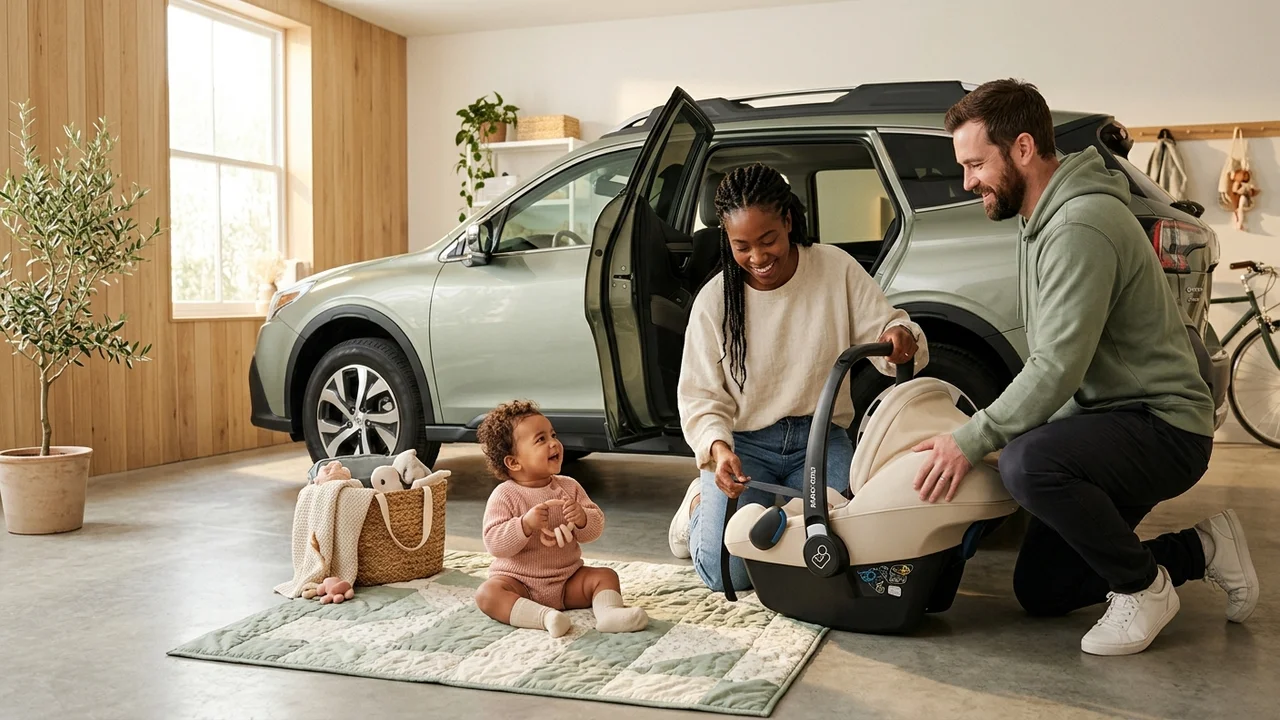
- Types: infant carrier (portable, with carry handle) or rear-facing convertible seat
Stage 2: Forward-Facing (from ~9 kg / 12+ months until ~18–25 kg)
- Forward-facing seats with a harness keep children safer than booster seats
- Do not rush the transition to forward-facing; rear-facing is safer for longer
- Must meet safety standard ECE R129 (i-Size) in Europe or FMVSS 213 in the USA
Stage 3: High-Back Booster (from ~15 kg / 3.5 years to ~36 kg)
- Uses the car's seatbelt; the seat positions the belt correctly
- High-back boosters are safer than backless boosters as they provide side impact protection
Stage 4: Booster Cushion (from ~22 kg until adult seatbelt fits)
- Positions the car seatbelt correctly on the child's body
- Children should use a booster until the seatbelt fits properly across the shoulder and hips, usually when they are around 135–150 cm tall
Key Safety Features to Check
Safety Standards
In Europe, look for ECE R129 (i-Size) certification, newer and more stringent than the older ECE R44. In the USA, all car seats must meet FMVSS 213. In Australia, the standard is AS/NZS 1754.
Rear-Facing Capability
For infants and toddlers, prioritise a seat with the highest possible rear-facing weight limit. Extended rear-facing is the single most effective way to protect young children in a crash.
ISOFIX / LATCH Anchors
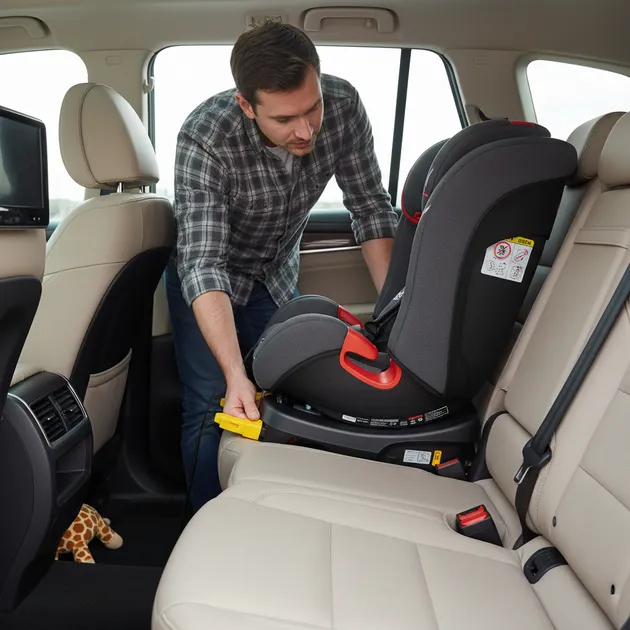
ISOFIX (Europe/Australia) and LATCH (USA) are rigid attachment systems that connect the seat directly to the car chassis, eliminating installation error from using the seatbelt. Most modern cars and seats include this. Verify your car's ISOFIX positions and compatible seat types before buying.
Side Impact Protection
Look for seats with dedicated side impact protection wings or padding around the head. This is especially important for forward-facing seats.
Harness Type
5-point harnesses (over both shoulders, across both hips, and between the legs) are safer than 3-point (seatbelt-style). Convertible and forward-facing seats should have a 5-point harness up to the highest possible weight limit.
Ease of Use
A seat that is easy to install correctly and adjust the harness is safer in practice. Read independent reviews that test real-world usability, not just crash performance.
How to Check the Fit in Your Car
- Install the seat and check that it does not move more than 2.5 cm in any direction when gripped near the belt path
- For infant carriers, check the angle indicator, most require a 30–45 degree recline so the baby's airway stays open
- Ensure the harness fits snugly (the pinch test: you should not be able to pinch harness webbing at the shoulder)
- Check that the chest clip sits at armpit level (for US-style harnesses)
Common Car Seat Mistakes
- Moving to the next stage too early: Stay in each stage until your child reaches the maximum weight or height limit
- Puffy coats in the harness: The harness cannot be correctly tightened over a thick coat; use a blanket over the top instead
- Second-hand seats: Never use a car seat that has been in a crash, is past its expiry date (typically 6–10 years from manufacture), or lacks its manual
- Incorrect installation: Attend a car seat check, many fire stations and children's hospitals offer these for free
- Loose chest clip: The chest clip keeps the harness on the shoulders in a crash; it is not a decorative strap
Budget Guide
| Budget | What to Buy |
|---|---|
| Low | A basic certified rear-facing infant seat with ISOFIX |
| Mid | Extended rear-facing convertible seat (e.g., Axkid, Cybex) |
| High | All-in-one convertible seat covering all stages |
Do not buy: second-hand, unknown provenance, expired, or non-certified seats, regardless of price.
Frequently Asked Questions
How long should a baby stay rear-facing in a car seat?
The AAP recommends keeping children rear-facing as long as possible, until they reach the maximum weight or height limit of their rear-facing seat. This is typically well beyond 12 months. In a frontal crash, rear-facing distributes force across the back, head, and neck, the strongest parts of a young body, making it significantly safer than forward-facing.
What are the different types of car seats and when do I use each?
Infant carrier seats cover birth to around 13 kg. Rear-facing convertible seats extend rear-facing to a higher weight. Forward-facing seats with a 5-point harness are used from around 9 kg once the rear-facing limit is reached. High-back boosters use the car's seatbelt and suit children from about 15 kg. Booster cushions are the final stage before children fit an adult seatbelt.
What does ISOFIX mean and does my car have it?
ISOFIX (Europe/Australia) and LATCH (USA) are rigid attachment systems that connect the car seat directly to the car's chassis, eliminating the installation errors that occur when using the seatbelt alone. Most cars manufactured after 2003 have ISOFIX. Check your car's manual or look for ISOFIX anchor points in the seat back crease, they look like two small metal loops.
Can I use a second-hand car seat?
Only if you can verify its complete history. Never use a seat that has been in any crash (even minor), is past its expiry date (typically 6–10 years from manufacture date stamped on the seat), is missing its manual, or has any damage or missing parts. An unknown-history second-hand seat is not worth the risk.
What safety standard should a car seat meet?
In Europe, look for ECE R129 (i-Size) certification, newer and more stringent than the older ECE R44. In the USA, all seats must meet FMVSS 213. In Australia, the standard is AS/NZS 1754. Never buy a seat without a current certification label.
How do I know if a car seat is installed correctly?
Grip the seat near the belt path and shake it, movement should be no more than 2.5 cm in any direction. For infant carriers, check the angle indicator; most require 30–45 degrees of recline. The harness should pass the pinch test: you should not be able to pinch any webbing at the shoulder after tightening. Many fire stations and children's hospitals offer free car seat installation checks.
Do puffy coats affect car seat safety?
Yes, thick coats prevent the harness from being tightened correctly. A harness that fits over a puffy coat will be too loose without it, creating dangerous slack in a crash. Instead, dress the child in a thin layer, buckle the harness snugly, then place a blanket over the top for warmth.
Key Sources
- AAP. Car Safety Seats
- NHTSA. Car Seats and Booster Seats
- Which Car Seat, i-Size Guide (UK)
- NHTSA. Car Seats and Booster Seats (USA)
Sources
- ACOG. Clinical guidance on labor and delivery
- WHO. Global maternal health recommendations
- Mayo Clinic. Labor and delivery medical guidance
🔧 Helpful Tools
- All Baby Tools. Browse all free tools for pregnancy and baby care
📖 Related Articles
- ISOFIX Car Seat Guide: Safe Installation for Your Child. Everything about ISOFIX car seat installation. Learn how to install a car seat correctly, check if your car has ISOFIX, and choose a safe seat.
- Crib Guide: How to Choose a Baby Crib, Safety Tips, and When to Transition. Everything you need to know about baby cribs, how to choose the right one, safety requirements, the right mattress and bedding, and when your child is ready for a regular bed.
- Car Seat Safety: Complete Guide for Parents. Car seats are the most important baby safety product. Here's what type to use by age, how to install correctly, and the most common mistakes parents make.