Your child fell off the changing table, bumped their head on the coffee table, or tumbled off the climbing frame. Your heart is pounding. Is it a concussion? Should you call the doctor?
Head injuries are one of the most common accidents in children. Fortunately, the vast majority are harmless. But you should know what to look for, how long to monitor your child, and when to seek help.
Here is a clear overview of concussion in children, based on recommendations from the AAP and pediatric emergency medicine guidelines.
What is a concussion?
A concussion occurs when the brain is shaken inside the skull after a blow or jolt to the head. The brain hits the inside of the skull and can be temporarily affected.
A concussion is the mildest form of head injury. The brain is not permanently damaged, but its function is temporarily impaired. Most children recover completely within a few days to a week.
When is it diagnosed as a concussion?
For a head injury to be called a concussion, the child must have at least one of these symptoms after the injury:
- Brief loss of consciousness (fainting)
- Memory loss (cannot remember what happened)
- Confusion or disorientation
- Nausea or vomiting
- Headache
- Dizziness
If your child bumps their head but has none of the symptoms above, it is probably not a concussion, but you should still monitor them for the next few hours.
Symptoms by age group
Concussion symptoms vary with age. Young children cannot tell you they are dizzy or have a headache, so you need to look for other signs.
Infants and babies (0–12 months)
- Excessive crying that cannot be soothed
- Changes in feeding or nursing patterns
- Unusual irritability or sluggishness
- Vomiting
- A bump or swelling on the head
- Changes in sleep patterns
Infants should always be seen by a doctor after a head injury. Even if the baby seems to be doing fine, symptoms in very young children can be hard to detect. Call your pediatrician or urgent care line for advice.
Toddlers (1–3 years)
- Crying more than usual
- Clinging to parents
- Unsteady walking
- Vomiting
- Refusing to eat
- Sluggishness or unusual tiredness
- Irritability
Older children (3+ years)
- Headache
- Dizziness
- Nausea and vomiting
- Confusion ("where am I?", "what happened?")
- Balance problems
- Vision disturbances (double vision, blurry vision)
- Sensitivity to noise
- Sensitivity to light
- Difficulty concentrating
The first 24–48 hours: How to monitor your child
After a head injury, observation is the most important thing you can do. The first 24–48 hours are the critical window.
Observation routine
The first few hours:
- Keep the child awake for at least 1–2 hours after the injury
- Watch for changes in behavior, alertness, or coordination
- Check that both pupils are the same size
During the first night:
- Wake the child every 2–3 hours
- Check that the child is responsive and answers normally
- For older children: ask their name, where they live, or other familiar questions
- For toddlers: check that the child reacts to you, recognizes you, and can be comforted
Day 2:
- Continue to observe, but you do not need to wake the child at night unless the doctor has asked you to
- Watch for new symptoms or worsening
Keep a simple log noting the time, symptoms, and your child's condition. This makes it easier to describe the progression if you call the doctor.
Rest and calm
- Let the child rest, the brain needs time to recover
- Avoid screen use (TV, tablet, phone) for the first 48 hours, screens can worsen headache and dizziness
- Avoid physical activity and play that involves risk of another blow to the head
- Keep noise levels low
Pain relief
Headache after a head injury is common. But be careful with pain medication in the first 48 hours:
- Give pain medication only on a doctor's advice
- Acetaminophen (Tylenol) is safe if the doctor approves it
- Avoid ibuprofen in the first 24 hours (can increase bleeding risk)
- Pain medication can mask symptoms of worsening, so consult a doctor first
When should you contact a doctor?
Call your doctor or urgent care line if:
- The child is under 1 year old and has hit their head
- There was a brief loss of consciousness
- The child has vomited more than once
- The child seems confused or disoriented
- The headache worsens over time
- The child is unusually sluggish or irritable
- You are unsure and worried
Call emergency services (911) immediately if: - The child loses consciousness or is difficult to wake - The headache becomes progressively worse - Repeated vomiting (three or more times) - Seizures or twitching - Clear fluid coming from the nose or ear - Unequal pupils (one pupil larger than the other) - The child gets worse after a period of improvement - Weakness or numbness in arms or legs - Slurred speech or increasing confusion
These signs may indicate a more serious head injury (bleeding or brain swelling) that requires urgent medical attention.
Getting back to normal: Gradual return
Most children with a concussion recover completely within two to seven days. Some may have symptoms for a few weeks.
Step-by-step return
Days 1–2: Complete rest. Minimal screen use and mental exertion.
Days 3–4: Light activities. Brief screen use, calm play, short walks.
Days 5–7: Gradually return to school or daycare. Start with shorter days if the child is school-age.
After 1–2 weeks: Normal activity if the child is symptom-free. Physical activity and sports should be resumed gradually.
The child should be completely symptom-free before returning to sports or activities that carry a risk of another head injury. A second concussion while the first is still causing symptoms can lead to a more serious outcome.
When symptoms last longer
About 25 percent of children with a concussion have symptoms lasting several weeks or months. This is called post-concussion syndrome and can include:
- Persistent headache
- Difficulty concentrating
- Sleep problems
- Mood swings
- Dizziness
If symptoms last more than two weeks, the child should be evaluated by a doctor.
Preventing head injuries
Most head injuries in children can be prevented with simple measures.
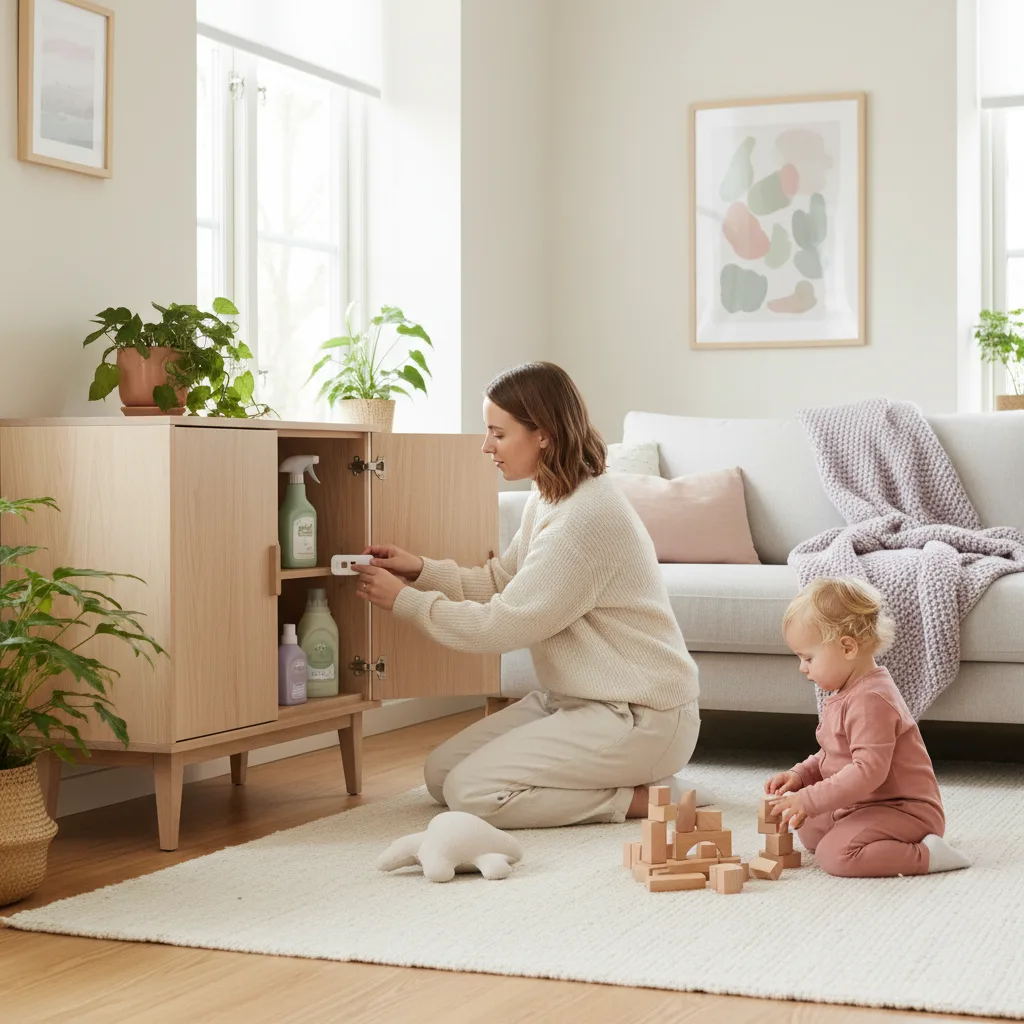
Child-proofing at home
- Anchor furniture to the wall so it cannot tip over
- Use stair gates
- Have soft surfaces under changing tables and tall play equipment
- Never leave a baby unsupervised on a changing table, sofa, or bed
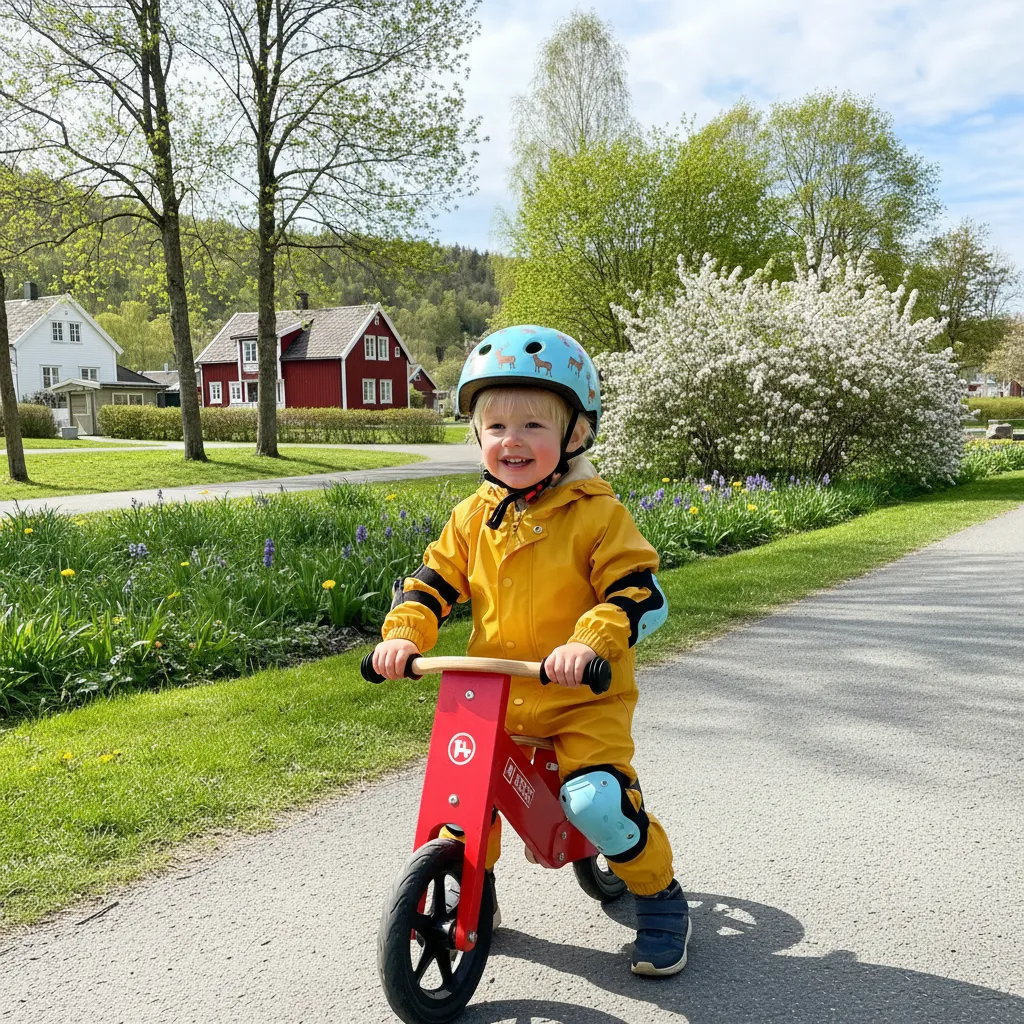
Helmets
- Cycling: Helmets are strongly recommended for all children
- Skiing and snowboarding: Helmets are strongly recommended
- Scooters and skateboards: Helmets are recommended
- Make sure the helmet fits correctly, it should cover the forehead and not tilt backward
Frequently asked questions
Can my child sleep after hitting their head?
Yes, but you should wake the child every two to three hours during the first night to check that they are responsive and reacting normally. If the child is in good shape after the first few hours and the doctor has given the all-clear, it is safe to let the child sleep.
Should I take my child for a scan after a head injury?
Not all head injuries require X-rays or a CT scan. The doctor assesses the need based on symptoms, age, and circumstances. A CT scan is mainly used when there is suspicion of a skull fracture or bleeding. Unnecessary CT scans expose children to radiation that should be avoided.
How do I know if it's a concussion or just a bump?
A bump on the head (hematoma) is common after a knock and is usually harmless. A concussion causes symptoms such as vomiting, confusion, headache, or behavioral changes. If your child only has a bump but is otherwise fine and behaving normally, it is probably not a concussion, but observe them for the next 24 hours.
Can children get a concussion from falling from their own height?
Yes, it is possible, though uncommon. Children have relatively large heads in proportion to their bodies and can get a concussion even from a low fall. The risk increases with the height the child falls from and the surface they land on.
When can my child go back to daycare?
Most children can return to daycare after two to five days, provided symptoms are gone or nearly gone. Start with a shorter day if possible. Let the daycare know so they can keep a close eye on the child and avoid rough play in the first few days.

Read more
Sources
- American Academy of Pediatrics. "Concussion and Head Injury." AAP, 2024.
- Centers for Disease Control and Prevention. "Heads Up: Concussion in Youth Sports." CDC, 2024.
- American College of Emergency Physicians. "Head Injury in Children." ACEP, 2024.
🔧 Helpful Tools
- Baby Milestones Tracker. Track your baby's developmental milestones
- All Baby Tools. Browse all free tools for pregnancy and baby care