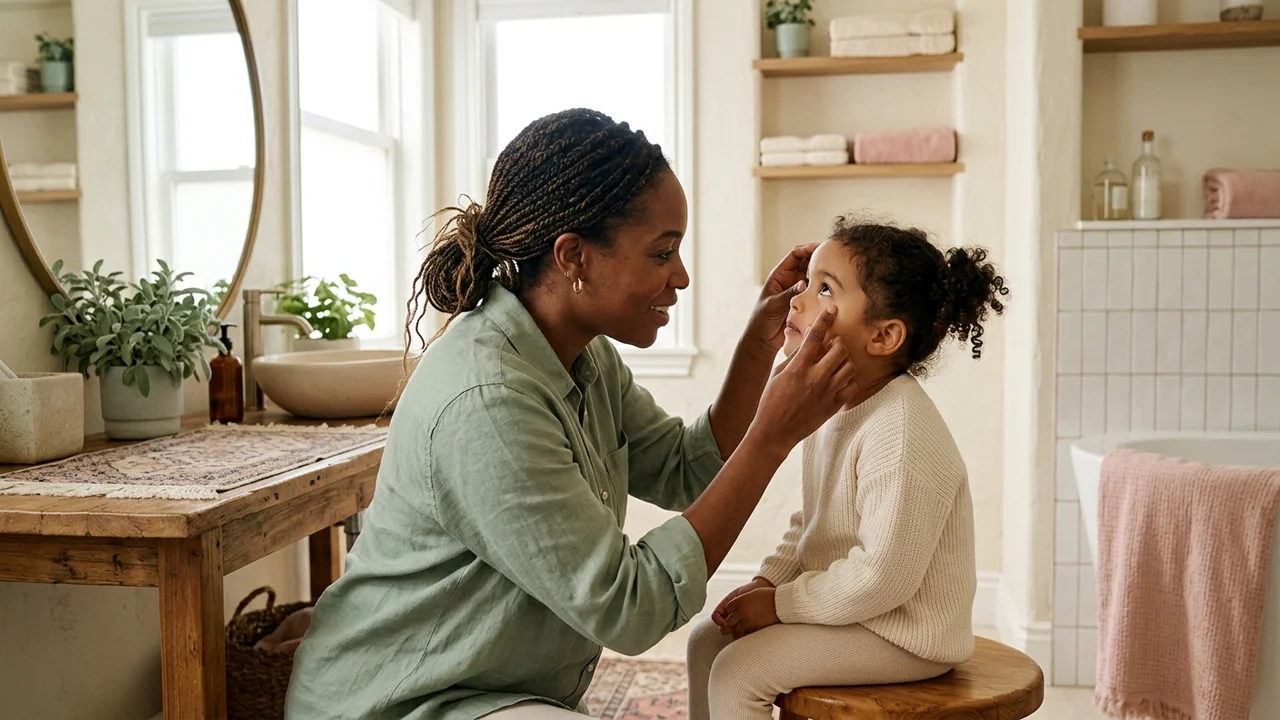
Your child suddenly gets bright red cheeks, as if someone slapped them. It looks dramatic, but is almost always completely harmless. Fifth disease is a common viral infection that most children pass through without problems.
Fifth disease is caused by parvovirus B19 and is one of the classic childhood illnesses. The name comes from it historically being counted as the fifth in a series of childhood illnesses with rashes. It is mild in children, but pregnant people should be aware.
What Is Fifth Disease?
Fifth disease (erythema infectiosum) is a viral infection caused by human parvovirus B19. The virus attacks red blood cells and produces a characteristic immune reaction that shows up as a rash.
According to the CDC, it is most common in children aged 5-15, but younger children can also be infected. The illness provides lifelong immunity, once you've had it, you can't get it again.
Symptoms. How to Recognize It
The illness develops in phases, and the characteristic appearance of the rash makes it easy to identify.
Phase 1: Mild Cold Symptoms (Days 1-7)
The first symptoms can resemble a common cold:
- Slight fever (rarely above 38.5°C / 101°F)
- Headache and fatigue
- A little runny nose
- Muscle aches
Many children have no symptoms at all in this phase. Some never visibly seem unwell and go directly to developing the rash.
Phase 2: Red Cheeks (Days 7-10)
Now the characteristic rash pattern appears:
- Both cheeks become intensely red, as if slapped
- The redness is clearly defined and spares the nose, mouth, and forehead
- The cheeks may feel warm
- The child otherwise seems well in this phase
The typical "slapped cheek" rash is so characteristic that it is often enough for a doctor to make the diagnosis. The appearance of the rash distinguishes fifth disease from other childhood rashes.
Phase 3: Rash on the Body (Days 10-21)
After the cheeks, the rash spreads:
- Net-like, pale red rash on arms, legs, and trunk
- The rash has a characteristic "lace-like" or net pattern
- It may itch slightly in some children
- The rash can come and go over 1-3 weeks
- Heat, sun, and bathing can temporarily make the rash more visible
Contagion. When and How
The most important thing to know about contagion with fifth disease:
- Incubation period: 4-21 days (usually 13-18 days)
- Mode of transmission: Droplet transmission (coughing, sneezing) and direct contact
- Contagious period: The child is most contagious BEFORE the rash appears
When the rash is visible, the child is no longer contagious. This means the child has likely already infected others at daycare or in the family before anyone knew they were sick.
This has practical implications:
- The child does not need to be kept home from daycare when the rash appears
- Isolation after the rash appears has no infection-prevention effect
- Hand washing and good cough hygiene are the most important prevention measures
Treatment
Fifth disease is a viral infection, and there is no specific treatment. The body takes care of it on its own.
What you can do at home:
- Offer plenty of fluids
- Acetaminophen (Tylenol/paracetamol) for fever and discomfort, dosed according to the child's weight
- Let the child rest if they are lethargic
- Moisturizing lotion can relieve itching if the rash itches
- Avoid prolonged sun exposure which can intensify the rash
There is no vaccine against fifth disease.
Fifth Disease and Pregnancy
This is where it is important to be aware. Parvovirus B19 can in rare cases affect the fetus.
The risk according to the CDC:
- About 50-60% of adult women are already immune (having had it as children)
- If a non-immune pregnant person is infected, the risk of harm to the fetus is low
- Greatest risk for complications is in the first half of pregnancy (before week 20)
- In approximately 3% of infected pregnancies, the fetus can develop severe anemia (fetal anemia)
- In very rare cases, this can lead to hydrops fetalis (fluid accumulation in the fetus)
Are you pregnant and have been in contact with someone who has fifth disease? Contact your doctor or midwife. A blood test can show whether you are already immune. If you are not immune, you can be monitored with ultrasound.
What pregnant people should do:
- Don't panic, most adults are already immune
- Contact your doctor or midwife for a blood test (IgG and IgM)
- If you are immune (IgG-positive), no reason to worry
- If you are not immune and have been exposed, follow your doctor's advice for follow-up
Complications. Rare but Worth Knowing
In healthy children, complications are very rare. In certain groups, the illness can have a more serious course:
- Children with blood disorders (e.g., sickle cell disease): Can develop aplastic crisis with severe anemia
- Children with weakened immune systems: Can develop a prolonged infection
- Adults: Can develop joint pain lasting several weeks
For healthy children, fifth disease is a mild illness that passes without problems.
How to Distinguish Fifth Disease From Other Rashes
It can be difficult to know what rash your child has. Here are some differences:
| Illness | Rash | Fever | Contagious? |
|---|---|---|---|
| Fifth disease | Red cheeks, then lace pattern on body | Mild or none | Before the rash |
| Measles | Starts behind the ears, spreads downward | High fever | Yes, highly contagious |
| Rubella | Light pink, starts on the face | Mild fever | Yes |
| Scarlet fever | Sandpaper texture, spares around mouth | High fever | Yes |
| Roseola | Rash after fever breaks | High fever first | Minimal |
Frequently Asked Questions
Can my child get fifth disease more than once?
No. The infection provides lifelong immunity. Once the child has had fifth disease, they are protected for life.
Should my child stay home from daycare?
No, not once the rash has appeared. At that point the child is no longer contagious. The child can go to daycare as long as they feel well enough.
Can I take a photo of the rash and send it to the doctor?
Yes, that's a great idea. The characteristic rash on the cheeks is often enough to make the diagnosis. Many doctor's offices offer video or photo consultations where pictures are helpful.
Is there a blood test that confirms the diagnosis?
Yes. A blood test can detect antibodies against parvovirus B19 (IgM for acute infection, IgG for previously acquired immunity). A blood test is rarely necessary for healthy children, but may be relevant for pregnant people.
Summary
Fifth disease is a common and mild childhood illness with a characteristic rash. The bright red cheeks look dramatic, but the child is almost always unaffected overall. The illness resolves on its own, and you can do nothing more than offer comfort and fluids.
The most important thing to remember: the child is contagious BEFORE the rash, not after. Pregnant people who are not immune should contact a doctor after exposure. And you do not need to keep the child home from daycare when the rash appears.
Read More
- Childhood Rashes. A Guide
- Rashes in Children. When Should You Worry?
- Scarlet Fever in Children
- When to Take Your Child to the Doctor
Sources: CDC. Fifth Disease, AAP. Parvovirus B19, NHS. Slapped Cheek Disease
Last updated: March 2026
Sources
- ACOG. Clinical guidance on pregnancy and women's health
- WHO. Global recommendations for maternal health
- Mayo Clinic. Evidence-based pregnancy health information
🔧 Helpful Tools
- Baby Milestones Tracker. Track your baby's developmental milestones
- All Baby Tools. Browse all free tools for pregnancy and baby care