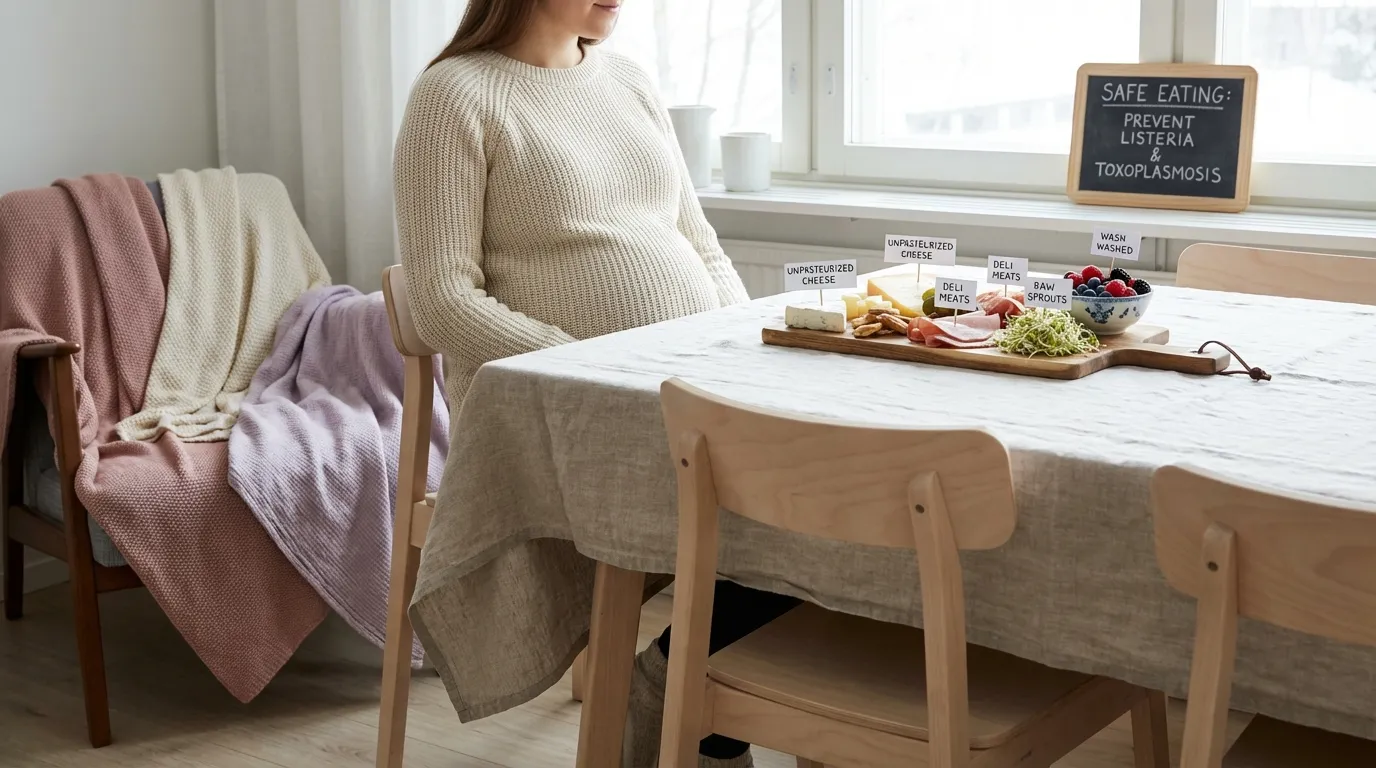
You're craving a sandwich with salami but you're not sure because you're pregnant. Is it dangerous? What about prosciutto, serrano ham, and pepperoni?
The short answer: health authorities recommend that pregnant women avoid all cured and deli meats, including salami. The reason is the risk of the parasite toxoplasmosis and the bacteria listeria, which can harm the fetus. But there are good alternatives, and you don't need to worry if you ate a little cured meat before you knew you were pregnant.
Why Should Pregnant Women Avoid Deli Meats?
Deli and cured meats are meat products that have not been heat-treated. Instead, the meat is dried, salted, or smoked at low temperatures. This means that any parasites and bacteria in the raw meat may survive the production process.
According to the WHO, CDC, and FDA, there are two main reasons why pregnant women should avoid cured meats:
Toxoplasmosis. A Dangerous Parasite
Toxoplasma gondii is a parasite that can be found in raw or insufficiently heat-treated meat, especially from sheep and pigs. According to the CDC, toxoplasmosis can in the worst case lead to:
- Miscarriage
- Stillbirth
- Brain damage and intellectual disability in the child
- Vision impairment
- Other serious birth defects
What makes toxoplasmosis particularly dangerous is that the pregnant woman herself often notices little. You may have mild, flu-like symptoms, or no symptoms at all. But the parasite can be transmitted to the fetus through the placenta and cause serious harm.
Between 10 and 40 percent of the population has antibodies to toxoplasma, meaning they were previously infected and are protected. But this also means that 60–90 percent are not protected. Routine testing for toxoplasmosis during pregnancy varies by country, so the safest approach is to follow dietary guidelines.
Listeria. A Bacteria That Thrives in the Refrigerator
Listeria bacteria is another cause for concern. It is special because it can grow even at refrigerator temperature. According to the FDA, listeria can:
- Survive smoking, freezing, salting, and curing
- Grow in vacuum-packed meat products over time
- Cause serious infections that can be transmitted to the fetus
Cured sausages carry a higher risk of listeria than whole cured hams because the production process involves more steps with potential for contamination.
These Meat Products Should Be Avoided During Pregnancy
The FDA and CDC list the following products that pregnant women should avoid:
| Product | Risk | Safe Alternative |
|---|---|---|
| Salami (all types) | Toxoplasmosis and listeria | Cooked deli ham |
| Pepperoni (cold/unheated) | Toxoplasmosis and listeria | Cooked sausages |
| Prosciutto | Toxoplasmosis and listeria | Cooked ham |
| Serrano/Ibérico ham | Toxoplasmosis and listeria | Cooked ham |
| Chorizo (cold, cured) | Toxoplasmosis and listeria | Fully cooked chorizo |
| Steak tartare | Toxoplasmosis | Well-done steak |
| Rare roast beef | Toxoplasmosis | Well-done meat |
| Carpaccio | Toxoplasmosis | Well-done meat |
| Pâté (refrigerated, uncooked) | Listeria | Shelf-stable canned pâté |
Rule of thumb: Meat that has not been heat-treated to at least 160°F (70°C) should be avoided. If in doubt, it is safe to cook or heat the meat thoroughly before eating.
These Meat Products ARE Safe to Eat
Fortunately there is a lot you can eat while pregnant. Here is what is safe according to the FDA and CDC:
Completely Safe:
- Cooked deli ham, the most common type you'll find at the deli counter
- Fully cooked meat, meat should not be pink, and juices should run clear
- Heat-treated meat products, meatballs, meat patties, sausages that are fully cooked
- Liver pâté (canned, shelf-stable), safe as it is fully heat-processed
- Bacon, must be fully cooked (crispy bacon is safe)
- Chicken and turkey, fully cooked, no pink parts
Safe With Precautions:
- Pre-sliced vacuum-packed deli meat, eat well within the use-by date, as fresh as possible
- Pepperoni on pizza, completely safe! The heat from baking kills any bacteria and parasites
- Cured meat in hot dishes, safe if thoroughly heated through
An important point: Pepperoni on pizza is safe because the pizza is baked in a hot oven. It's the heat treatment that makes the difference, not the type of meat. So yes, you can eat pepperoni pizza while pregnant!
What About Cooked Ham. Is It Always Safe?
Cooked deli ham is the safe alternative to cured meats. It has been heat-treated during production, so the toxoplasmosis parasite is killed. But there are a few things to watch out for:
- Check the use-by date, eat deli meat well within the date
- Store correctly, keep deli meat refrigerated at the proper temperature
- Eat quickly after opening, listeria bacteria can grow in an opened package
- Avoid deli meat that has been sitting open, the fresher, the better
Deli Meats When Traveling Abroad
Health authorities emphasize that pregnant women should be extra careful about food abroad. Many countries have higher rates of toxoplasmosis and listeria than the US or UK.
Typical Cured Meats You'll Encounter Abroad:
- Italy: Prosciutto, salami, bresaola, pancetta, all are raw/cured and should be avoided
- Spain: Serrano and ibérico ham, chorizo (cold variety), avoid
- France: Saucisson, rillettes, pâté (except shelf-stable, fully cooked), avoid
- Germany/Austria: Landjäger, Bauernschinken, avoid
Travel tip: When at a restaurant abroad, always ask if the meat is cooked or cured. Order steak and burgers well done. If unsure, choose fish (fully cooked), chicken, or vegetarian dishes.
What About Tapas?
Tapas are popular, but many classic tapas dishes contain cured meats. These are safe:
- Patatas bravas (fried potatoes)
- Tortilla española (omelette)
- Cooked shrimp in garlic (gambas al ajillo)
- Grilled vegetables
- Bread with olive oil
These should be avoided:
- Jamón serrano/ibérico (cured ham)
- Chorizo (the cold, cured variety, fully cooked chorizo is OK)
- Lomo (cured pork loin)
Toxoplasmosis Testing
Routine testing for toxoplasmosis during pregnancy varies by country. According to the CDC, a blood test is recommended in cases of:
- Symptoms that may indicate toxoplasmosis
- Known exposure to risk factors (eating raw meat, contact with cats/cat feces)
- Travel to countries with high rates
Researchers estimate that a significant proportion of toxoplasmosis cases in pregnant women could be avoided if pregnant women had more knowledge about the risks of raw meat, including cured meats.
Symptoms of Toxoplasmosis:
- Often no symptoms, that's what makes it dangerous
- Some people get mild, flu-like illness
- Swollen lymph nodes (especially in the neck)
- Muscle aches
- Low-grade fever
- Fatigue
The incubation period is 5–21 days. If you have eaten raw meat and develop these symptoms, contact your doctor.
Can Freezing Kill Toxoplasmosis?
Yes, it is a possibility, but it has limitations. According to the CDC and FDA:
- Toxoplasma is killed by freezing at -4°F (-20°C) for several days
- Whole cured hams can be frozen to kill toxoplasma
- But: You don't always know whether the raw materials for cured meats have been frozen, and it varies by producer
Listeria, on the other hand, survives freezing. You can only kill it with heat treatment above 160°F (70°C) for several minutes.
Even though freezing can kill toxoplasma, the simplest and safest advice is: choose cooked and fully heat-treated meat products instead of cured meats during pregnancy.
What Should You Do If You've Eaten Deli Meat While Pregnant?
First of all: don't panic. The risk from any single meal is low, and most people who eat cured meat have no problems.
Midwives and doctors agree on this:
- The risk is extremely low per portion
- You don't need treatment just because you had a little salami
- Contact your doctor or midwife if you develop symptoms such as fever, muscle aches, swollen lymph nodes, or flu-like illness in the weeks after
- Remember that many women eat deli meat without knowing they are pregnant, and everything turns out fine
Prevention: How to Avoid Infection
Here are the official guidelines for avoiding toxoplasmosis and listeria:
Kitchen Hygiene:
- Wash your hands thoroughly after handling raw meat
- Use separate utensils for raw meat and ready-to-eat food
- Wash cutting boards thoroughly after contact with raw meat
- Don't taste raw ground meat or meat mixtures while cooking
- Cook thoroughly, meat should not be pink, juices should run clear
Other Precautions:
- Wash fruit, berries, and vegetables thoroughly before eating raw
- Avoid contact with cat feces, wear gloves when changing the litter box, or ask someone else to do it
- Wear gloves for gardening, soil can contain toxoplasma from cat feces
- Keep your refrigerator clean and cold (below 40°F / 4°C)
- Peel vegetables when possible, it provides extra safety
- Use a meat thermometer when in doubt, the internal temperature should be at least 160°F (70°C)
Good Alternatives to Deli Meats: Sandwich Ideas
It can feel limiting to give up a favorite ingredient, but there are many good alternatives that are completely safe:
Meat-Based Spreads and Toppings (Safe):
- Cooked deli ham, the classic substitute
- Cooked turkey breast, lean and good
- Cooked chicken, protein-rich
- Liver pâté (canned, shelf-stable), iron-rich and safe (heat-treated)
- Fully cooked sausage, safe in moderate amounts
Other Great Sandwich Options:
- Eggs, hard-boiled, fried, or scrambled
- Hard cheese, safe (pasteurized)
- Avocado, rich in healthy fats and folate
- Hummus, protein-rich and nutritious
- Peanut butter, filling and healthy
- Canned fish, mackerel, sardines, tuna (in moderation)
Tip: Canned, shelf-stable liver pâté is a particularly good choice for pregnant women who need extra iron. It is heat-processed and completely safe, unlike fresh pâté served at some restaurants.
Trimester by Trimester: What Should You Know?
First Trimester (Weeks 1–12)
This period is the most vulnerable for the fetus. Organs are forming, and infections like toxoplasmosis can potentially cause the most harm to organ development. At the same time, the risk of transmission from mother to fetus is lowest in the first trimester (under 5–10 percent according to the CDC).
Many women eat cured meats without knowing they are pregnant in the first weeks. If this applies to you: don't worry. The chance that something has happened is very small.
Second Trimester (Weeks 13–27)
The transmission risk to the fetus increases to around 30 percent, but the consequences for the baby are usually less severe than infection in the first trimester. Continue to avoid cured meats.
Third Trimester (Weeks 28–40)
The transmission risk is highest (70–80 percent), but the most serious injuries occur less frequently from late-pregnancy infection. Some bacteria can still affect the brain, which develops significantly in the last part of pregnancy.
The conclusion: Avoid cured meats throughout the entire pregnancy. It's a simple precaution that eliminates the risk entirely.
Other Dietary Advice for Pregnant Women
Deli meats are just one of several foods pregnant women should be aware of. Read more in our other articles:
- Foods to avoid during pregnancy: Complete guide, full overview of all foods to skip
- Feta cheese and pregnancy: Is it safe?, everything about cheese in pregnancy
- Shrimp and seafood during pregnancy, guide to safe seafood
- Sushi during pregnancy: What can you eat?, guide to safe sushi in pregnancy
- Nutrition guide for pregnancy, what to eat for optimal nutrition
Use our Due Date Calculator to calculate your due date, and follow your pregnancy week by week with our Pregnancy Calendar.
Frequently Asked Questions
Can pregnant women eat salami?
No, health authorities recommend that pregnant women avoid salami and all other cured meats. Salami is not heat-treated, and can contain the parasite toxoplasma and the bacteria listeria, which can harm the fetus. Choose cooked ham or other fully cooked meat products instead.
Is pepperoni on pizza safe for pregnant women?
Yes! Pepperoni on pizza is safe because pizza is baked at a high temperature (over 400°F / 200°C), which kills both the toxoplasma parasite and any listeria bacteria. The same applies to cured meats used in hot dishes that are heated through.
What is the difference between cooked ham and cured ham?
Cooked ham is heat-treated (cooked) during production, parasites and bacteria are killed. Cured ham is dried and salted, but not heat-treated, so any parasites can survive. Cooked ham is therefore safe for pregnant women, while cured ham should be avoided.
Can I eat cured meat if it has been frozen?
Freezing at -4°F (-20°C) for several days kills the toxoplasma parasite, but not listeria bacteria. You also don't always know whether the producer's raw materials have been frozen. The safest choice is to opt for cooked meat products rather than cured meats during pregnancy.
I ate salami without knowing I was pregnant. Should I be worried?
No, the risk per portion is low. Don't stress about something you've already eaten. Avoid cured meats going forward in your pregnancy, and contact your doctor or midwife if you experience symptoms such as fever, muscle aches, or swollen lymph nodes.
This article is based on current guidelines from the FDA, CDC, and WHO. The article does not replace medical advice, contact your doctor or midwife with questions about your diet during pregnancy.
Sources:
- FDA. Advice About Eating Fish for Women Who Are Pregnant
- CDC. Listeria (Listeriosis)
- CDC. Toxoplasmosis
- WHO. Food Safety for Pregnant Women
- AAP. Pregnancy Nutrition
Sources
- ACOG. Clinical guidance on pregnancy and women's health
- WHO. Global recommendations for maternal health
- Mayo Clinic. Evidence-based pregnancy health information
🔧 Helpful Tools
- Due Date Calculator. Calculate your estimated due date
- Contraction Timer. Track your contractions during labor
- All Baby Tools. Browse all free tools for pregnancy and baby care
📖 Related Articles
- Foods to Avoid During Pregnancy: Complete Safety Guide. Complete guide to safe and unsafe foods during pregnancy. Sushi, smoked salmon, cheese, coffee, seafood, meat and supplements - based on FDA and WHO guidelines.
- Feta Cheese During Pregnancy: Is It Safe?. Can you eat feta cheese while pregnant? Learn about pasteurized vs. unpasteurized cheese, listeria risk, and which cheeses are safe. Based on WHO and food safety guidelines.
- Parmesan During Pregnancy: Which Cheeses Are Safe?. Can pregnant women eat parmesan, goat cheese, brie, and mozzarella? Complete guide to cheese during pregnancy with international guidelines on listeria risk.