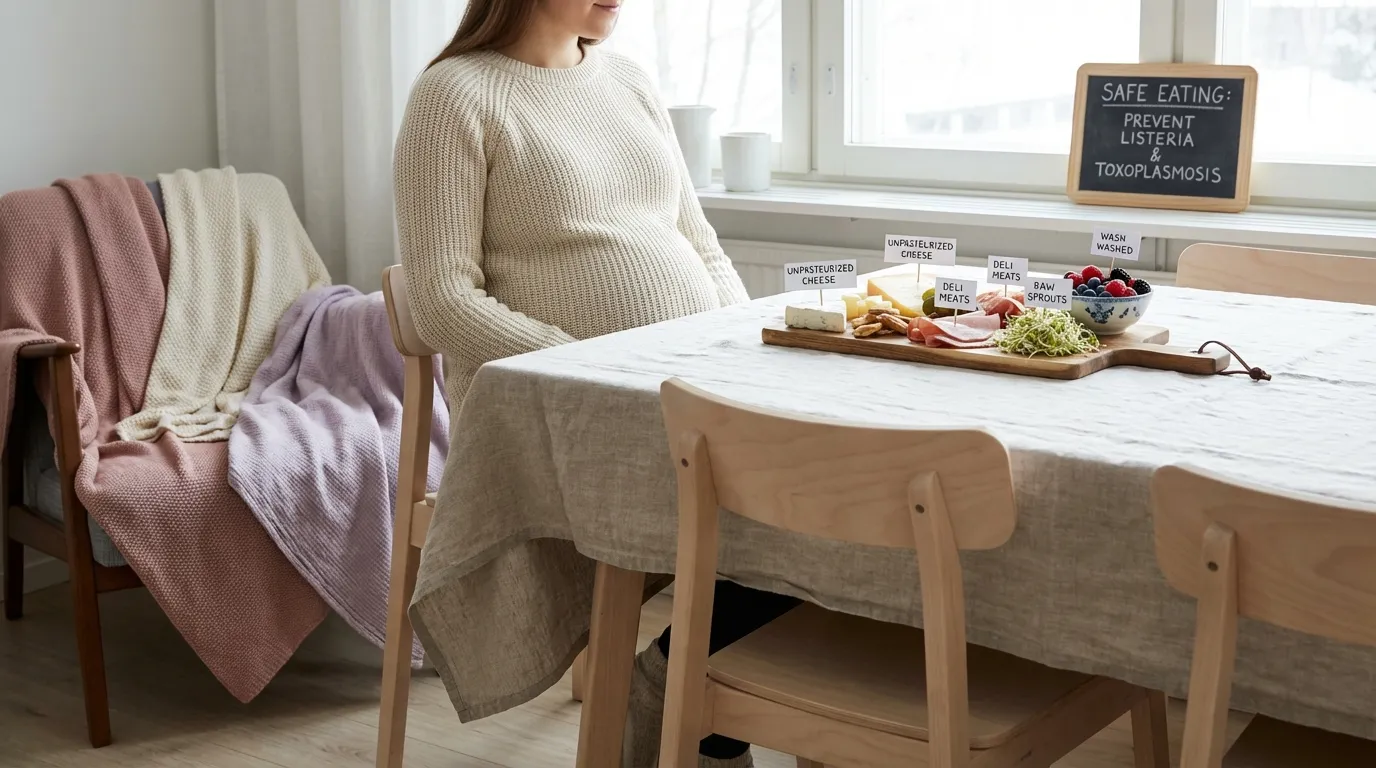
Unsure what you can and cannot eat during pregnancy? You are not alone. There is a lot of conflicting information out there, and it can be difficult to separate fact from myth.
This guide is based on current guidelines from the FDA, WHO, and AAP (updated March 2026). Here you will find a complete overview of what to avoid, what is safe, and why.
Three Main Risks: Listeria, Toxoplasmosis, and Environmental Contaminants
There are primarily three things you need to protect yourself and your baby from through diet:
- Listeria, a bacteria that can grow in the refrigerator and cause serious infection in the fetus
- Toxoplasmosis, a parasite from raw meat and soil that can harm fetal development
- Environmental contaminants, mercury, PCBs, and dioxins that accumulate in certain fish species
The vast majority of foods are completely safe during pregnancy. Focus on what you actually need to avoid rather than worrying about everything. Follow your pregnancy week by week with Babysential's pregnancy guide for diet tips tailored to your stage.
Fish and Seafood During Pregnancy
Fish is an important part of the diet during pregnancy. It contains omega-3 fatty acids, iodine, and vitamin D that are crucial for your baby's brain development. The FDA and WHO recommend that pregnant women eat fish 2-3 times per week.
Fish to Avoid Entirely
Some fish species contain too much mercury and other environmental contaminants:
- Pike, high mercury content
- Large bass (over 10 inches), accumulates environmental toxins
- Large lake trout (over 2 lbs), can have high mercury levels
- Shark, swordfish, king mackerel, and tilefish, top predators with high mercury
- Fish liver, extremely high levels of environmental toxins and vitamin A
Avoid fish liver entirely during pregnancy. Too much vitamin A (retinol) can harm fetal development.
Can Pregnant Women Eat Sushi?
Short answer: Yes, with caveats.
The FDA does not broadly recommend raw fish during pregnancy, but notes that sushi made from fish that has been frozen to -4°F (-20°C) for at least 24 hours eliminates potential parasites. Most sushi restaurants use commercially frozen fish.
Safe:
- Sushi with salmon, tuna, or shrimp from restaurants with good hygiene
- Vegetarian sushi (avocado, cucumber, mango)
- Maki with cooked salmon or cooked shrimp
Be cautious with:
- Sushi from buffets or places with uncertain hygiene
- Sushi that has been sitting at room temperature for a long time
Can Pregnant Women Eat Smoked Salmon?
Short answer: Yes, but eat it fresh.
According to the FDA, pregnant women can eat smoked salmon and cured/gravlax salmon, but it should be eaten within a short time after the package is opened (ideally within 1-2 days). Listeria can grow in vacuum-packed products, even in the refrigerator.
Tips:
- Choose smoked salmon with a long shelf life that was recently opened
- Eat it the same day you open the package
- Freeze and thaw for extra safety (freezing kills listeria)
Can Pregnant Women Eat Shrimp?
Yes! Cooked shrimp are completely safe for pregnant women. Shrimp are heat-treated and pose no risk for listeria or parasites. Shrimp are also an excellent source of protein, iodine, and selenium.
Safe: Cooked shrimp, shrimp salad, shrimp sandwiches, shrimp in hot dishes
Avoid: Raw shrimp
Can Pregnant Women Eat Mussels?
Yes, cooked mussels are safe. Mussels must always be cooked until they open. Discard any mussels that do not open during cooking.
Fish and Mercury. FDA Guidelines
According to the FDA, pregnant women should be aware of mercury in fish. Mercury (methylmercury) can damage the developing fetal nervous system. Large predatory fish that live long have the highest mercury content.
FDA dietary guidelines for pregnant women and fish:
| Fish Type | Recommendation for Pregnant Women |
|---|---|
| Salmon (farmed) | Safe, recommended 2-3 times/week |
| Cod, pollock, haddock | Safe, unlimited |
| Atlantic mackerel | Safe, good omega-3 source |
| Tuna (fresh/frozen albacore) | Max 2 servings per week |
| Tuna (canned light) | Max 2-3 cans per week |
| Halibut (under 3 lbs) | Safe in moderation |
| Pike | Avoid entirely |
| Large bass (over 10 inches) | Avoid entirely |
| Shark, swordfish, king mackerel, tilefish | Avoid entirely |
| Fish liver | Avoid entirely |
Important from the FDA: Pregnant women should eat fish 2-3 times per week, but vary between different species. Fatty fish (salmon, mackerel, trout) are especially important for omega-3 fatty acids that support the baby's brain development.
Safe Fish and Seafood for Pregnant Women
These are completely safe and recommended as part of a healthy diet:
- Salmon, cod, pollock, haddock, halibut (under 3 lbs)
- Atlantic mackerel (fresh or smoked)
- Cooked shrimp and crab
- Tuna (max 2 servings per week due to mercury)
Cheese and Dairy During Pregnancy
Cheese is a common area of confusion for pregnant women. Many wonder if cheddar is safe, whether cream cheese is fine, or whether they need to cut out all cheese. The good news is that most cheeses you find at grocery stores are completely safe.
The main rule is simple: pasteurized, hard cheeses are safe. It is soft, ripened cheeses with mold rinds you should avoid.
Safe Cheese During Pregnancy. Complete Overview
Here is a comprehensive table of common cheeses and whether they are safe during pregnancy:
| Cheese | Safe? | Reason |
|---|---|---|
| Cheddar | Yes | Hard, pasteurized cheese with low moisture content |
| Parmesan | Yes | Hard, dry cheese, safe even if unpasteurized |
| Gruyère | Yes | Hard cheese, low risk |
| Swiss/Emmental | Yes | Hard, pasteurized cheese |
| Colby/Monterey Jack | Yes | Hard, pasteurized cheese |
| Cream cheese (Philadelphia, etc.) | Yes | Pasteurized, safe, check label |
| Cottage cheese | Yes | Pasteurized, safe |
| Ricotta | Yes | Pasteurized in commercial products |
| Mozzarella | Yes | Pasteurized commercially, safe |
| Feta in brine | Yes* | Safe if pasteurized (check label) |
| Provolone | Yes | Pasteurized, safe |
| Pizza cheese (melted) | Yes | Heat-treated during cooking |
| Brie | No | Soft, ripened with white mold, listeria risk |
| Camembert | No | Soft, ripened cheese, listeria risk |
| Soft chèvre (with white mold) | No | Soft goat cheese with mold rind |
| Blue cheese (Roquefort, Gorgonzola, Stilton) | No | Mold cultures encourage listeria growth |
| Unpasteurized soft cheese (artisan/farm varieties) | No | Listeria risk |
Can Pregnant Women Eat Cheddar?
Yes, cheddar is completely safe during pregnancy. Cheddar is a hard, pasteurized cheese with low moisture content, making it extremely unfavorable for bacterial growth. Whether you eat mild, medium, or sharp cheddar, it is safe throughout pregnancy.
Commercial cheddar is always made from pasteurized milk. You can safely use cheddar in cooking, on sandwiches, in salads, and as a snack.
Can Pregnant Women Eat Cream Cheese?
Yes, cream cheese is safe during pregnancy, as long as it is pasteurized. Cream cheese brands like Philadelphia and similar commercial products are always made from pasteurized milk and are completely safe.
Important: Always check the label, especially on imported cheeses or cheese bought directly from a farm or specialty shop. If it says "pasteurized milk" in the ingredient list, it is safe.
Most cream cheese and spreadable cheese products at grocery stores are pasteurized. You do not need to worry about common commercial brands.
Cheeses You Should Avoid
These cheeses carry increased listeria risk, even if made from pasteurized milk:
- Brie, soft, ripened cheese with white mold rind
- Camembert, soft, ripened cheese
- Soft chèvre, soft goat cheese with white mold
- Blue cheese (Roquefort, Gorgonzola, Stilton), mold cultures can promote listeria growth
Brie and Camembert should be avoided even if made from pasteurized milk. The soft, moist texture provides ideal growth conditions for listeria.
Can Pregnant Women Eat Mozzarella?
Yes! Commercial mozzarella is made from pasteurized milk and is safe for pregnant women. It has a different production process than ripened soft cheeses and does not carry the same listeria risk.
Tip: Eat fresh mozzarella quickly after opening. Use it on pizza, heat treatment makes it extra safe.
Is Parmesan Safe During Pregnancy?
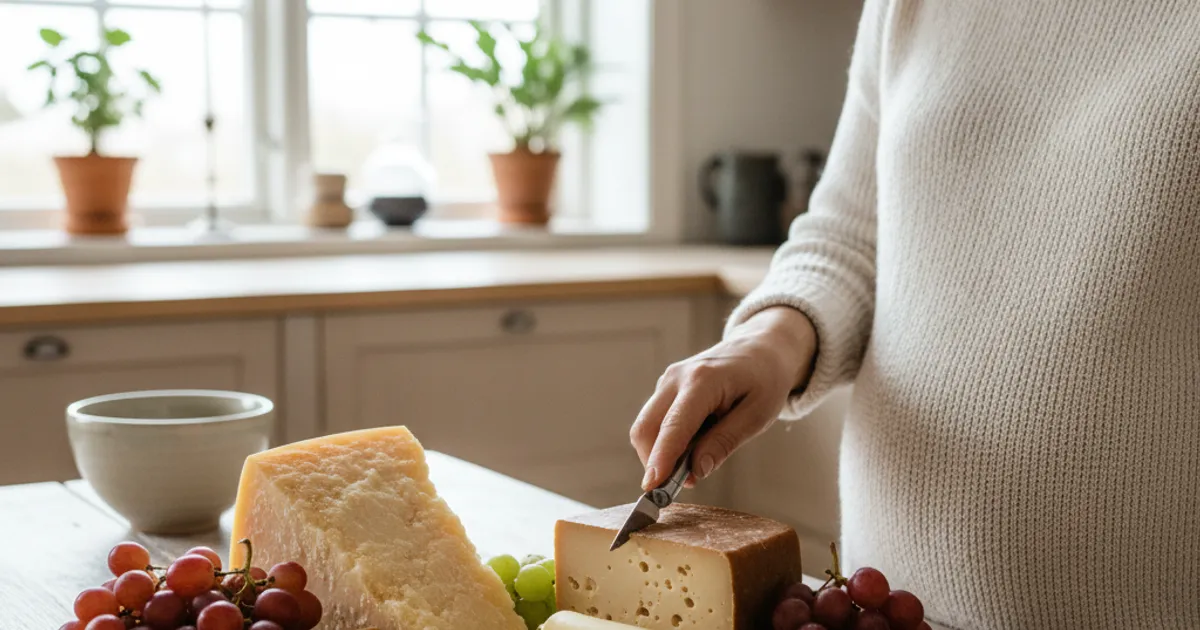
Yes! Parmesan is a hard, dry cheese that is extremely unfavorable for bacterial growth. It is safe for pregnant women, regardless of whether it is made from pasteurized or unpasteurized milk. The low moisture content and long aging (12-36 months) make it safe.
Can Pregnant Women Eat Unpasteurized Cheese?
Avoid unpasteurized soft cheeses. Some artisan and farm cheeses are made from unpasteurized milk. These may contain listeria. Hard, unpasteurized cheeses (like authentic Parmesan) are safe because bacteria cannot survive in dry, hard cheese.
Meat and Deli Products During Pregnancy
Cured Meats and Raw Delicacies
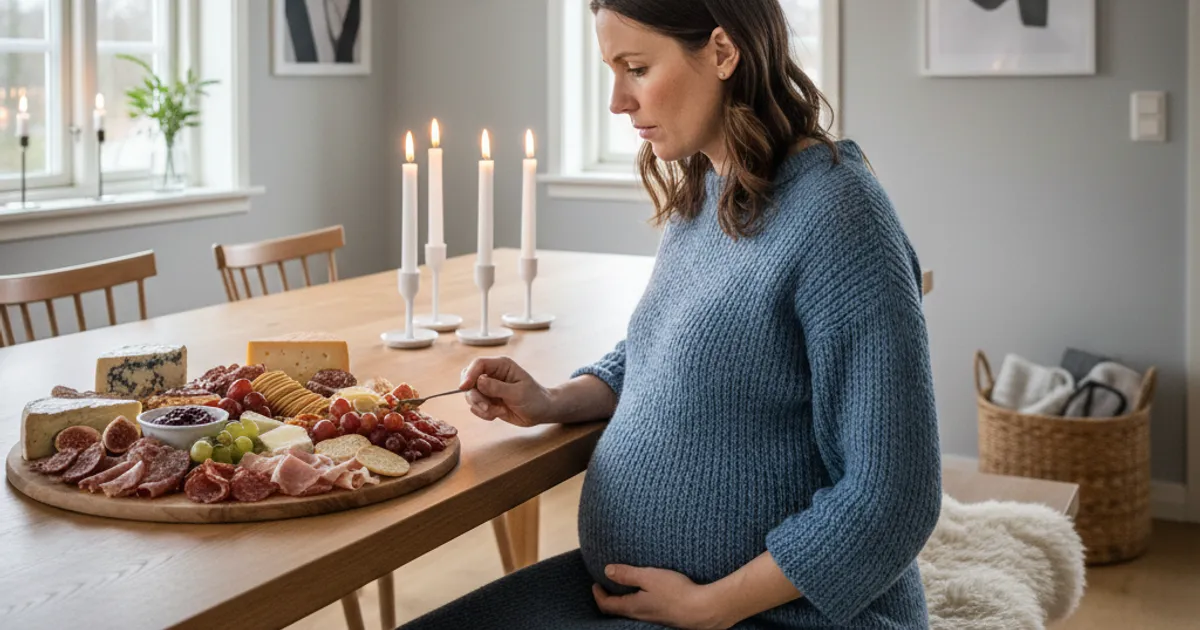
Cured and raw meat products are among the most important things to avoid during pregnancy.
Avoid entirely:
- Fermented or raw-cured fish delicacies, high listeria risk
- Dry-cured leg of lamb or pork, uncooked, cured meat
- Cured sausages (salami, chorizo, pepperoni, uncooked/unheated)
- Cured ham (prosciutto, serrano ham)
- Carpaccio, raw meat
- Steak tartare, raw meat
Cured meats on pizza are safe because they are heat-treated. Pepperoni pizza and cooked/baked salami pose no risk.
Can Pregnant Women Eat Liver Pâté?
Yes! Regular liver pâté is safe for pregnant women. It is heat-treated during production. Liver pâté is also a good source of iron, which many pregnant women need more of.
But: Do not eat liver as a main course in large amounts. Liver contains extremely high amounts of vitamin A (retinol), which can harm the fetus in large doses. 1-2 slices of liver pâté a day is perfectly fine.
Meat. Cooking Temperature and Safe Preparation
The correct cooking temperature is critical for avoiding toxoplasmosis and other infections. According to the FDA and USDA, the following rules apply for pregnant women:
Temperature requirements:
| Meat Type | Minimum Internal Temperature | Doneness |
|---|---|---|
| Poultry (chicken, turkey) | 165°F (74°C) | Always fully cooked |
| Pork | 160°F (71°C) | Fully cooked |
| Ground meat (all types) | 165°F (74°C) | Fully cooked through the middle |
| Beef (whole cuts) | 145-160°F (63-71°C) | Medium to well done |
| Lamb (whole cuts) | 145-160°F (63-71°C) | Medium to well done |
| Game/wild meat | 165°F (74°C) | Always fully cooked |
Important rules:
- All meat should be fully cooked. Juices should run clear, not pink.
- Poultry and pork should always be thoroughly cooked, never pink in the middle
- Ground meat (ground beef, burgers, meatballs) should always be fully cooked in the middle, bacteria can spread inward through the grinding process
- Whole cuts of beef/lamb can be medium, because bacteria only exist on the surface
- Leftovers should be reheated until thoroughly hot (above 165°F / 74°C)
- Use a meat thermometer to be sure
A meat thermometer is an inexpensive investment that makes safe cooking during pregnancy much easier. Insert it into the thickest part of the meat to check the internal temperature.
Eggs During Pregnancy
Can Pregnant Women Eat Eggs?
Yes, cooked and fried eggs are completely safe. Eggs are an excellent source of protein, choline, and B vitamins, all important for fetal development.
Safe:
- Hard-boiled eggs
- Fried eggs (fully cooked yolk)
- Scrambled eggs (fully cooked)
- Omelets
- Eggs in baked goods (cakes, bread)
Avoid:
- Soft-boiled eggs (with runny yolk)
- Raw egg dishes like homemade mayonnaise, mousse, or tiramisu
- Eggnog made with raw eggs
Can Pregnant Women Eat Mayonnaise?
Yes, commercially produced mayonnaise is safe. Store-bought mayo (Hellmann's, Best Foods, etc.) is made from pasteurized eggs and is completely safe. Avoid homemade mayonnaise made with raw eggs.
Fruits and Vegetables
Fruits and vegetables are an important part of the diet, but there are a few things to watch out for:
- Always wash fruits and vegetables thoroughly before eating them raw
- Avoid pre-packaged salads that have been sitting a long time, listeria can grow in moist environments
- Avoid raw sprouts (alfalfa, bean sprouts), can contain Salmonella or E. coli
- Frozen berries should be cooked or heated before use, can contain norovirus
Frozen fruits and vegetables are just as nutritious as fresh, and are safe when heated.
Drinks During Pregnancy
Coffee and Caffeine. How Much Is Safe?
Pregnant women can drink coffee, but stay under 200 mg caffeine per day (recommendation from WHO and AAP). Too much caffeine can increase the risk of low birth weight and miscarriage.
Caffeine content in common drinks and foods:
| Drink/food | Caffeine content | Daily amount (max) |
|---|---|---|
| Drip/filter coffee (8 oz cup) | Approx. 95-120 mg | 1-2 cups |
| Espresso (single shot) | Approx. 63-75 mg | 2-3 shots |
| Black tea (8 oz cup) | Approx. 47-70 mg | 2-3 cups |
| Green tea (8 oz cup) | Approx. 28-45 mg | 3-4 cups |
| Cola (12 oz can) | Approx. 35-40 mg | 4-5 cans |
| Energy drink (8 oz) | Approx. 80-150 mg | Best avoided entirely |
| Dark chocolate (1 oz) | Approx. 20 mg | Counts toward total |
| Hot cocoa (8 oz cup) | Approx. 5-10 mg | Unlimited |
Energy drinks should be avoided during pregnancy, not only because of caffeine, but also other stimulating substances like taurine and guarana. The FDA advises against energy drinks for pregnant women.
Practical tips for reducing caffeine:
- Switch to decaf coffee for some of your cups
- Choose green tea over black tea (less caffeine)
- Try rooibos tea as a caffeine-free alternative
- Drink hot cocoa instead of coffee in the evening
- Remember that caffeine is found in some medications (check the label)
Herbal Tea
Most common herbal teas are safe in moderate amounts:
- Safe: Ginger tea, peppermint, chamomile, rooibos
- Avoid in large amounts: Licorice root (can increase blood pressure), sage
Alcohol
Avoid alcohol entirely during pregnancy. There is no known safe level of alcohol consumption during pregnancy. Alcohol can damage fetal brain development and cause fetal alcohol spectrum disorders (FASD).
Juice and Smoothies
Pasteurized juice is safe. Avoid unpasteurized, freshly squeezed juice from markets or farms (risk of E. coli). Homemade smoothies with washed fruit are safe.
Supplements During Pregnancy
The WHO and AAP recommend the following supplements during pregnancy:
Folic Acid (Folate)
- Dose: 400 micrograms per day
- When: From when you plan to conceive through week 12
- Why: Prevents neural tube defects (spina bifida)
Vitamin D
- Dose: 600 IU (15 micrograms) per day
- When: Throughout pregnancy, especially in winter months
- Why: Important for baby's skeletal development and immune system
Iron
- Dose: Determined individually based on blood tests
- When: Many pregnant women need supplementation from the 2nd trimester onward
- Why: Blood volume increases by about 50% during pregnancy
Take iron and calcium at different times of day. Calcium inhibits iron absorption. Take iron with vitamin C-rich food (orange juice, bell peppers) for better absorption.
Omega-3 (DHA)
- Dose: 200-300 mg DHA per day
- When: Throughout pregnancy
- Why: Important for baby's brain and eye development
- Source: Fish 2-3 times per week meets the need. Otherwise: fish oil or omega-3 supplements
Iodine
- Dose: 150-220 micrograms per day total (food + supplement)
- When: Throughout pregnancy and breastfeeding
- Why: Important for baby's brain development and thyroid function
Supplements to Avoid
- Vitamin A (retinol), too much can harm the fetus. Avoid supplements containing retinol. Beta-carotene is safe.
- High-dose retinol supplements, too much retinol can harm the fetus. Fish oil is generally OK during pregnancy (per WHO/AAP), but do not take additional vitamin A supplements on top of fish oil. Choose omega-3 capsules without vitamin A if you are already taking other supplements containing vitamin A.
- Herbal supplements without documented safety for pregnant women
Listeria and Toxoplasmosis. What Are They?
Listeria
Listeria is a bacterium that can grow at refrigerator temperatures (39-46°F / 4-8°C). It is especially dangerous for pregnant women because:
- Pregnant women are about 10 times more likely to get listeriosis than other adults
- The infection can lead to miscarriage, premature birth, or serious illness in the newborn
Symptoms: Fever, muscle aches, nausea, diarrhea. Can appear 1-70 days after exposure.
Contact a doctor immediately if you have a fever and have eaten food with listeria risk.
Toxoplasmosis
Toxoplasmosis is a parasitic infection that can be transmitted through:
- Raw or undercooked meat
- Unwashed vegetables and fruit
- Contact with cat feces (use gloves when cleaning litter boxes)
- Soil (use gloves when gardening)
Prevention:
- Fully cook all meat
- Wash all fruits and vegetables
- Wash hands after gardening
- Have someone else clean the litter box, or use gloves
Quick Reference: Safe and Unsafe
| Food | Safe? | Notes |
|---|---|---|
| Cheddar, Swiss, Parmesan | Yes | Pasteurized, hard cheeses |
| Brie, Camembert | No | Soft, ripened cheese |
| Mozzarella | Yes | Pasteurized commercially |
| Parmesan | Yes | Hard cheese, always safe |
| Blue cheese | No | Listeria risk |
| Smoked salmon | Yes, but fresh | Eat quickly after opening |
| Cooked shrimp | Yes | Heat-treated |
| Sushi (salmon) | Yes, with caveats | From restaurant with good hygiene |
| Cured/deli meats (unheated) | No | Unless fully heat-treated |
| Liver pâté | Yes | Heat-treated |
| Fully cooked eggs | Yes | Thoroughly cooked |
| Soft-boiled eggs | No | Runny yolk |
| Filter coffee | Yes | Max 1-2 cups/day |
| Store-bought mayo | Yes | Pasteurized eggs |
Frequently Asked Questions
Can pregnant women eat sushi?
Yes, pregnant women can eat sushi made from fish that has been commercially frozen. Most sushi restaurants use frozen fish. Choose restaurants with good hygiene, and avoid sushi from buffets that has been sitting out. Vegetarian sushi is always safe.
Can pregnant women eat smoked salmon?
Yes, smoked salmon is safe for pregnant women, but eat it fresh and within a short time after opening the package. Listeria can grow in vacuum-packed products over time. Freezing kills listeria, so you can safely freeze and thaw smoked salmon.
Can pregnant women eat mozzarella?
Yes, commercially sold mozzarella is made from pasteurized milk and is completely safe. It has a different texture than soft ripened cheeses and does not carry a listeria risk. Eat fresh mozzarella quickly after opening.
Can pregnant women eat shrimp?
Yes, cooked shrimp are completely safe for pregnant women. Shrimp are heat-treated and pose no risk of listeria or parasites. They are a good source of protein, iodine, and selenium.
Is brie safe during pregnancy?
No, pregnant women should avoid brie. Even brie made from pasteurized milk should be avoided because its soft, moist texture provides ideal growth conditions for listeria. The same applies to Camembert and soft chèvre with white mold.
Is Parmesan safe during pregnancy?
Yes, Parmesan is completely safe for pregnant women. It is a hard, dry cheese with very low moisture content, which makes it unfavorable for bacterial growth. Parmesan is safe regardless of whether it is made from pasteurized or unpasteurized milk.
How much coffee can pregnant women drink?
The WHO and AAP recommend a maximum of 200 mg caffeine per day, which corresponds to roughly 1-2 cups of drip coffee. Too much caffeine can increase the risk of low birth weight. Remember that caffeine is also found in tea, cola, chocolate, and energy drinks.
Can pregnant women eat liver pâté?
Yes, regular liver pâté is safe. It is heat-treated during production and is a good source of iron. Limit to 1-2 slices per day. Avoid eating whole liver as a main dish, it contains extremely high amounts of vitamin A which can harm the fetus in large doses.
Is cured deli meat safe during pregnancy?
No, pregnant women should avoid untreated cured meats such as prosciutto, cured sausages, and serrano ham. These products are not heat-treated and may contain listeria or toxoplasmosis. Cured meats that have been fully heat-treated (such as pepperoni on pizza) are safe.
Can pregnant women eat mayonnaise?
Yes, commercially produced store-bought mayonnaise is completely safe. It is made from pasteurized eggs. Avoid homemade mayonnaise made with raw eggs.
Can pregnant women eat cream cheese?
Yes, cream cheese is safe during pregnancy as long as it is pasteurized. Brands like Philadelphia are made from pasteurized milk and pose no risk. Check the label on imported products. Cream cheese is entirely different from soft ripened cheeses like brie, it has no mold rind and is produced differently.
Can pregnant women eat feta cheese?
Feta in brine from grocery stores is usually made from pasteurized milk and is safe. Always check the label. Avoid unpasteurized feta from specialty delis or abroad. According to the FDA, pasteurized feta in brine is safe because the acidic environment inhibits bacterial growth.
Can pregnant women eat blue cheese?
No, pregnant women should avoid blue cheese like Roquefort, Gorgonzola, and Stilton. The mold cultures create an environment where listeria can grow. This applies regardless of whether the cheese is made from pasteurized or unpasteurized milk.
Is smoked salmon dangerous during pregnancy?
Smoked salmon is not dangerous per se, but the FDA recommends that pregnant women eat it fresh and within a short time after opening the package. Listeria can grow in vacuum-packed products, even in the refrigerator. Tip: Freezing kills listeria, you can safely freeze and thaw smoked salmon.
Can pregnant women eat store-bought sushi?
Yes, pre-packaged sushi from the grocery store is usually safe because the fish has been commercially frozen. According to the FDA, freezing to -4°F (-20°C) for at least 24 hours kills parasites in fish. Eat sushi before the expiration date and keep it refrigerated. Avoid sushi that has been sitting out for a long time.
Is it dangerous to eat something wrong during pregnancy?
Do not panic if you have accidentally eaten something you should avoid. The risk of infection from a single portion is very low. But contact your doctor if you develop fever, muscle aches, or stomach symptoms after eating food with listeria risk.
Related Tools and Articles
- SmartStart - food introduction for baby, when your baby is born and ready for solid foods
- Complete pregnancy nutrition guide
- Pregnancy checklist, everything you need to prepare
- Due date calculator, calculate your due date
- Pregnancy timeline, follow your pregnancy week by week
- Week-by-week pregnancy guide, what is happening with you and your baby
Sources
- U.S. Food & Drug Administration (FDA). "Advice About Eating Fish." Updated 2024. fda.gov
- FDA. "Foods to Avoid or Limit During Pregnancy." Updated 2024. fda.gov
- World Health Organization (WHO). "Healthy Diet." Updated 2024. who.int
- Centers for Disease Control and Prevention (CDC). "Listeria (Listeriosis)." cdc.gov
📖 Related Articles
- Deli Meats During Pregnancy: What Is Safe to Eat?. Can you eat deli meats and cured meats while pregnant? Learn about toxoplasmosis risk, which meat products are safe, and official guidelines for cured meats during pregnancy.
- Parmesan During Pregnancy: Which Cheeses Are Safe?. Can pregnant women eat parmesan, goat cheese, brie, and mozzarella? Complete guide to cheese during pregnancy with international guidelines on listeria risk.
- Feta Cheese During Pregnancy: Is It Safe?. Can you eat feta cheese while pregnant? Learn about pasteurized vs. unpasteurized cheese, listeria risk, and which cheeses are safe. Based on WHO and food safety guidelines.