Parmesan on pasta, goat cheese in a salad, brie for lunch, and suddenly you're pregnant and wondering if any of this is safe. The good news is that most cheeses are safe. But some should be avoided.
Here's the complete overview of which cheeses you can safely eat, which to avoid, and why, based on WHO guidelines and international food safety recommendations for pregnant women.
Overview: Safe and Unsafe Cheese During Pregnancy
| Cheese | Safe? | Explanation |
|---|---|---|
| Parmesan | Yes | Hard cheese, low moisture, kills listeria |
| Cheddar | Yes | Pasteurized, hard cheese |
| Gouda | Yes | Pasteurized, hard cheese |
| Mozzarella (store-bought) | Yes | Pasteurized |
| Cream cheese | Yes | Pasteurized, industrially produced |
| Cottage cheese | Yes | Pasteurized |
| Pasteurized goat cheese | Yes, with caveats | See details below |
| Brie | No | Soft mould-ripened, listeria risk |
| Camembert | No | Soft mould-ripened, listeria risk |
| Blue cheese | No | Mould-ripened, listeria risk |
| Unpasteurized cheese | No | Not heat-treated |
| Soft goat cheese with white rind | No | Soft mould-ripened, listeria risk |
The general rule from food safety agencies including WHO and the FDA: pregnant women should avoid soft, mould-ripened cheeses and unpasteurized cheese. Hard cheeses and pasteurized cheeses from supermarkets are generally safe.
Parmesan. Safe During Pregnancy
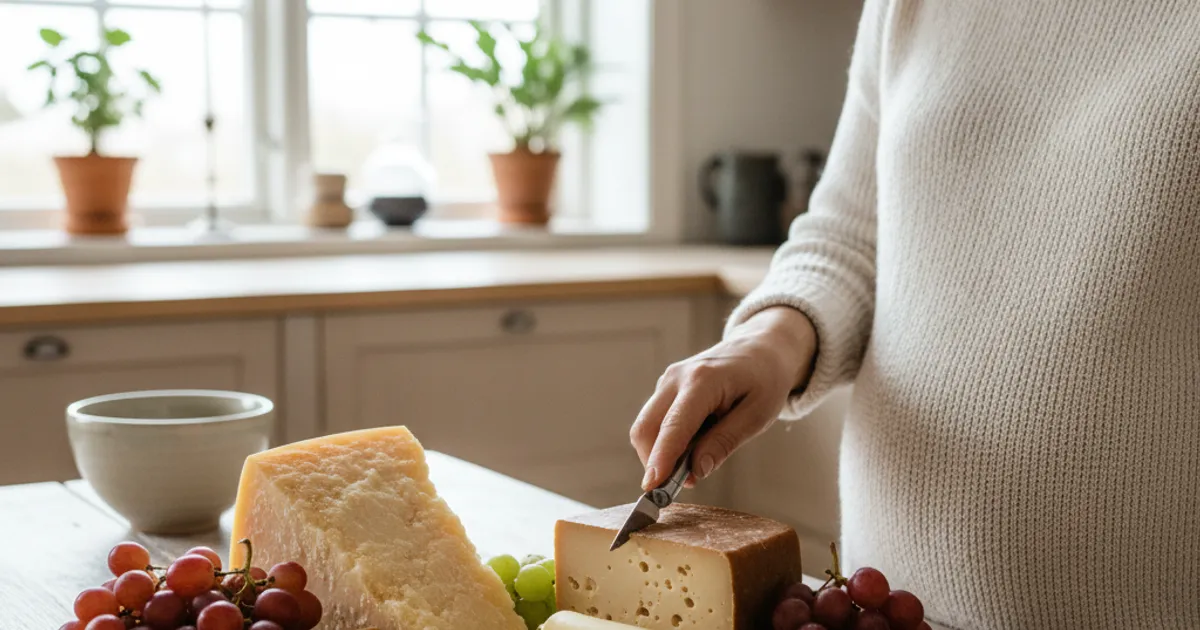
Yes, parmesan is safe during pregnancy. Parmesan (Parmigiano-Reggiano) is a hard cheese aged for at least 12 months, often 24–36 months. The low moisture content and high salt content make it extremely difficult for listeria bacteria to survive.
Why Parmesan Is Safe
- Low water activity, listeria needs moisture to grow
- High salt content, further inhibits bacterial growth
- Long aging, the cheese is aged a minimum of 12 months
- Even if made from unpasteurized milk, the aging process eliminates the risk
The same applies to other hard, long-aged cheeses like Grana Padano and Pecorino Romano.
Goat Cheese. It Depends on the Type
Goat cheese comes in many varieties. For pregnant women, it's important to distinguish between them:
Safe Goat Cheese
- Fresh, firm goat cheese (industrially produced), such as packaged rolls without a rind. Made from pasteurized milk with no mould surface
- Hard goat cheese, firm and aged varieties are safe
- Sliced goat cheese, pasteurized and industrially produced
Unsafe Goat Cheese
- Soft goat cheese with white mould rind, the soft, creamy type with a white crust (similar to brie). Has a moist environment that can promote listeria growth
- Unpasteurized goat cheese, from farm shops or specialty stores
- Fresh goat cheese from a deli counter, if you cannot confirm it is pasteurized
Unsure if a goat cheese is safe? Check the packaging for "pasteurized milk" and look for a white mould rind. No rind + pasteurized = safe. White mould rind = avoid.
Brie and Camembert. Avoid
Brie and Camembert are soft, white-mould-ripened cheeses with a moist centre. Food safety authorities recommend that pregnant women avoid these because:
- High moisture provides good growth conditions for listeria
- The ripening temperature is not high enough to kill bacteria
- The mould rind can conceal contamination
Exception: Thoroughly Heated Brie/Camembert
If brie or camembert is heated until thoroughly hot through (at least 74°C / 165°F internal temperature), it is safe to eat. For example:
- Baked brie in the oven
- Brie in a hot gratin or casserole
- Camembert on thoroughly cooked pizza
Blue Cheese. Avoid
Blue cheeses like Roquefort, Gorgonzola, Stilton, and Gorgonzola should be avoided by pregnant women. The mould cultures create channels in the cheese that provide moist environments where listeria can grow.
The same exception applies: thorough heating to at least 74°C (165°F) makes the cheese safe.
Mozzarella. Safe with Caveats
Store-bought mozzarella is generally safe during pregnancy. It is made from pasteurized milk and industrially produced under controlled conditions.
Safe Mozzarella
- Packaged mozzarella from the supermarket (standard brands)
- Pizza mozzarella, especially after being heated on a pizza
- Fresh mozzarella in salads, from the store, fresh and within date
Be Careful With
- Mozzarella from deli counters or restaurants, especially buffalo mozzarella, which may be made from unpasteurized milk
- Homemade mozzarella, unless you know the milk is pasteurized
Everyday Cheese. Safe Choices
The most common cheeses in households are safe for pregnant women:
Always Safe
- Cheddar, pasteurized hard cheese
- Edam, pasteurized hard cheese
- Gouda, pasteurized
- Swiss/Emmental, pasteurized hard cheese
- Cream cheese, pasteurized (Philadelphia, etc.)
- Cottage cheese, pasteurized
Safe in Moderate Amounts
- Feta, pasteurized feta from the supermarket is safe. Avoid feta from open deli counters or restaurants unless you can confirm it is pasteurized.
Pasteurized vs. Unpasteurized. What Does It Mean?
Pasteurization is a heat treatment where milk is heated to 72°C (161°F) for 15 seconds. This process kills disease-causing bacteria, including listeria.
In the Supermarket
Almost all cheese in supermarkets is made from pasteurized milk. Labeling varies by country, but in most Western countries, commercial dairy is pasteurized.
Unpasteurized Cheese
Unpasteurized cheese is found mainly:
- In specialty cheese shops and deli counters
- From small artisan dairies
- Imported from France, Italy, Switzerland
- Labeled "lait cru," "raw milk," or "made from unpasteurized milk"
Rule: If cheese is unpasteurized AND soft, pregnant women should avoid it. Hard cheeses with long aging (like parmesan) are safe even if made from unpasteurized milk.
Listeria and Cheese. Risk in Perspective
It's important to put the risk in perspective. Listeriosis is rare:
- Only a small number of cases are reported annually in most countries
- Pregnant women are at higher risk if infected, but overall incidence is low
- Cheese is only one of several possible sources of infection
Health agency recommendations are based on the precautionary principle. Following these guidelines gives you good protection without excessive worry.
If you've eaten a cheese you're now unsure about, there's no reason to panic. The chance of listeria is very low. Monitor yourself for symptoms (fever, muscle aches, nausea) over the coming weeks, and contact a doctor if you develop a fever above 38°C (100.4°F).
Tips for the Cheeseboard
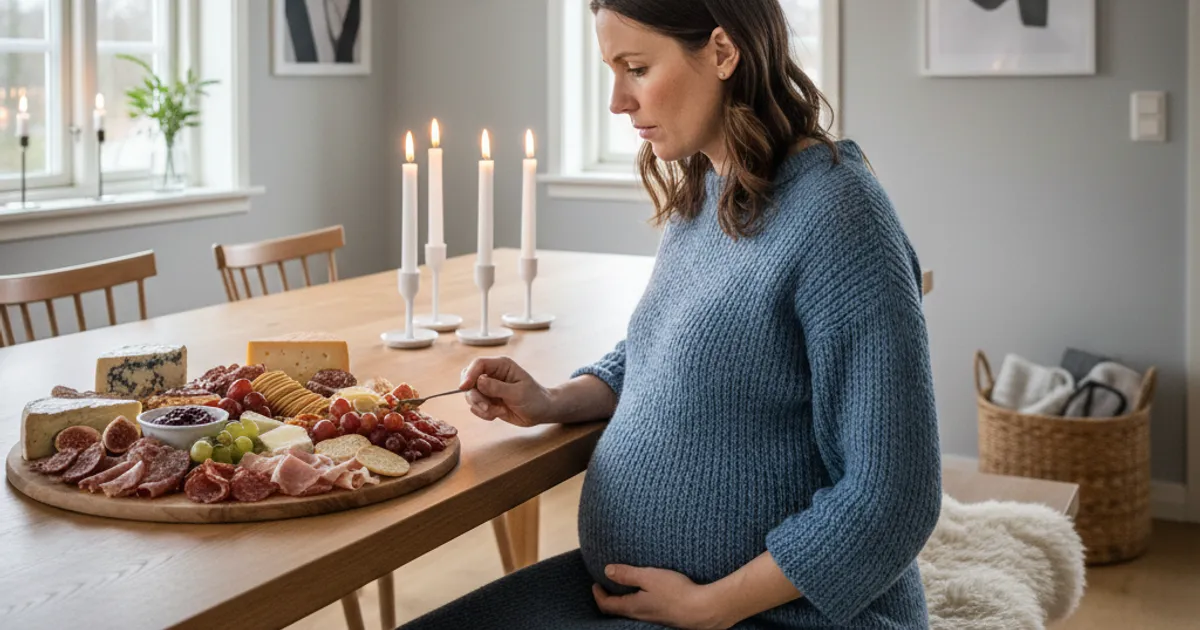
Planning to have or eat from a cheeseboard during pregnancy?
Safe Choices for the Cheeseboard
- Hard cheeses (cheddar, Parmesan, Gouda, Edam)
- Parmesan in pieces
- Cream cheese
- Pasteurized goat cheese without mould rind
- Fruit and nuts as accompaniment
Avoid on the Cheeseboard
- Brie and camembert
- Blue cheese
- Cheese of unknown origin
- Cheese that has been sitting at room temperature for more than two hours
Frequently Asked Questions
Can pregnant women eat parmesan on pasta?
Yes, completely safe. Parmesan is a hard cheese with low moisture and long aging that prevents listeria from surviving. Add as much as you like.
Is baked brie safe during pregnancy?
Yes, if brie is baked in the oven until thoroughly hot through (at least 74°C / 165°F), the listeria bacteria are killed. The classic appetizer of baked brie with honey and nuts is safe.
Can pregnant women eat pizza with cheese?
Yes. Mozzarella and other cheeses that are melted and thoroughly heated on pizza are safe. The heat from the oven kills any bacteria. Even blue cheese and brie are safe on thoroughly cooked pizza.
Is cottage cheese safe during pregnancy?
Yes, cottage cheese made from pasteurized milk is completely safe during pregnancy. It's also an excellent source of protein and calcium.
Read More
- Foods to Avoid During Pregnancy: Complete Guide to Safe Eating
- Smoked Salmon During Pregnancy: Is It Safe?
- Due Date Calculator
Sources
- WHO. Food safety for pregnant women
- FDA. Foods to avoid during pregnancy
- NHS. Foods to avoid in pregnancy
- European Food Safety Authority. Listeria risk assessment
🔧 Helpful Tools
- Due Date Calculator. Calculate your estimated due date
- Contraction Timer. Track your contractions during labor
- All Baby Tools. Browse all free tools for pregnancy and baby care
📖 Related Articles
- Feta Cheese During Pregnancy: Is It Safe?. Can you eat feta cheese while pregnant? Learn about pasteurized vs. unpasteurized cheese, listeria risk, and which cheeses are safe. Based on WHO and food safety guidelines.
- Foods to Avoid During Pregnancy: Complete Safety Guide. Complete guide to safe and unsafe foods during pregnancy. Sushi, smoked salmon, cheese, coffee, seafood, meat and supplements - based on FDA and WHO guidelines.
- Deli Meats During Pregnancy: What Is Safe to Eat?. Can you eat deli meats and cured meats while pregnant? Learn about toxoplasmosis risk, which meat products are safe, and official guidelines for cured meats during pregnancy.