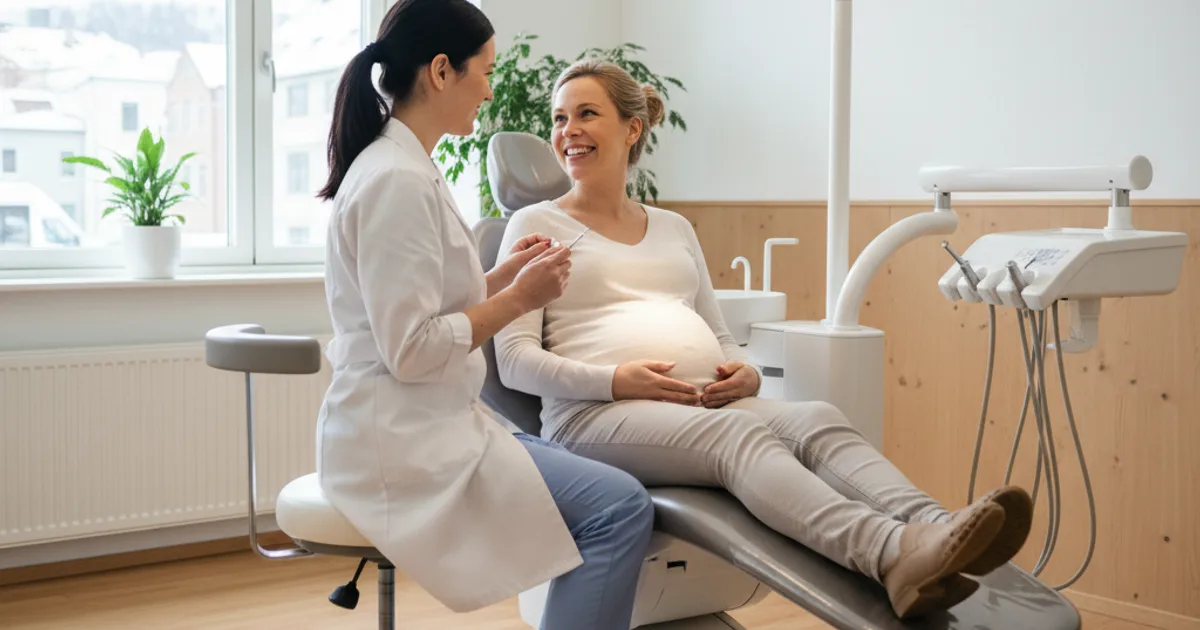
You have a toothache and you're pregnant. Or perhaps it's time for your six-month dental check-up and you're wondering whether to postpone it. Many pregnant women are unsure whether dental treatment is safe for the baby.
The short answer is: yes, it is safe to go to the dentist during pregnancy. In fact, it's more important than ever to take care of your oral health right now. Hormonal changes make you more susceptible to gum problems, and untreated infections in the mouth can negatively affect the pregnancy.
Here is everything you need to know about fillings, local anesthesia, X-rays, and oral health during pregnancy, based on guidelines from the WHO and the American Academy of Pediatrics (AAP).
Is it safe to get a dental filling while pregnant?
Yes, it is safe to get a dental filling during pregnancy. Modern filling materials (composite, i.e., tooth-colored filling) pose no known risk to the fetus. Your dentist will use materials approved for use in pregnant patients.
The most important thing is not to leave cavities untreated. An untreated cavity can develop into an infection, and oral infections are potentially more harmful to the pregnancy than the dental treatment itself.
According to the WHO and the American Dental Association (ADA), amalgam fillings should be avoided during pregnancy due to their mercury content. In practice, amalgam is rarely used today, most dentists use composite (tooth-colored filling) as standard.
What should you tell your dentist?
When booking an appointment, always let them know you are pregnant and how far along you are. Your dentist can then:
- Tailor the treatment to your trimester
- Choose medications and materials that are safe for pregnant women
- Decide whether treatment should be done now or can wait
- Adjust the chair position for your comfort
Which trimester is best for dental treatment?
The second trimester (weeks 13–27) is generally considered the safest and most comfortable period for dental treatment.
| Trimester | Recommendation |
|---|---|
| First trimester (weeks 1–12) | Avoid extensive treatment if possible. The fetus is in its most vulnerable developmental phase. Emergency treatment can be done when needed. |
| Second trimester (weeks 13–27) | The best period for planned dental treatment. Morning sickness has usually subsided and the belly isn't yet too large to be uncomfortable in the dental chair. |
| Third trimester (weeks 28–40) | Routine dental treatment can be done, but lying on your back for extended periods may be uncomfortable. If possible, postpone major procedures until after delivery. |
Emergency treatment and pain relief can and should be carried out at any point during pregnancy. Do not suffer from toothache or an infection because you think you need to wait, contact your dentist right away.
Schedule a dental visit early in pregnancy
A good strategy is to book a routine check-up and cleaning early in pregnancy. Your dentist can then identify any problems and plan treatment for the second trimester if necessary. Many dentists recommend an additional cleaning during pregnancy because pregnant women are more prone to gum inflammation.
Local anesthesia at the dentist, safe for pregnant women
One of the most common questions pregnant women ask is whether local anesthesia is safe. The answer is yes.
Local anesthesia used in dental treatment is approved for use in pregnant and breastfeeding women. The anesthetic works locally in the mouth and does not cross the placenta in amounts that could affect the fetus.
Practical information about anesthesia:
- Your dentist typically uses lidocaine, which is safe for pregnant women
- The anesthetic only affects the treated area
- It is better to receive anesthesia than to endure pain, stress hormones from pain can actually be more harmful
- Tell your dentist about any allergies or previous reactions to anesthesia
Epinephrine (adrenaline), which is often added to anesthesia to prolong its effect, is used in very low doses that do not affect the pregnancy. Your dentist may nonetheless choose to use anesthesia without epinephrine if preferred.
Dental X-rays during pregnancy
Dental X-rays involve very low radiation doses and are safe during pregnancy. The radiation is directed at the jaw, and the amount that reaches the abdominal area is negligible.
According to the American Dental Association and the American College of Obstetricians and Gynecologists (ACOG), the radiation dose from a dental X-ray is so low that it is comparable to natural background radiation received from spending a few hours outdoors. Digital X-rays, which most dental practices use today, emit even less radiation than older analog films.
Important to know about dental X-rays:
- A lead apron is not strictly necessary for dental X-rays, the dose is too low to have any practical effect, though it may still be offered for reassurance
- In the first trimester, it is advisable to avoid X-rays unless urgently necessary
- If you have a toothache or suspected infection, an X-ray is important for an accurate diagnosis, do not delay
Pregnancy gingivitis, gum inflammation during pregnancy
Between 60 and 70 percent of all pregnant women experience pregnancy gingivitis. This is a gum inflammation caused by hormonal changes, particularly the increase in progesterone, which makes the gums more sensitive to plaque bacteria.
Symptoms of pregnancy gingivitis
- Red, swollen, and tender gums
- Gums that bleed easily when brushing or flossing
- Bad breath
- Gums that appear darker red than usual
- You may feel that your teeth are slightly loose (this resolves after delivery)
Pregnancy gingivitis is most common during the first six months of pregnancy but can persist throughout.
How to prevent and treat it
- Brush thoroughly with fluoride toothpaste morning and evening for at least two minutes
- Floss or use an interdental brush daily, this is especially important during pregnancy
- Rinse with fluoride mouthwash for extra protection
- Visit your dentist for a professional cleaning, an extra appointment during pregnancy is often recommended
- Eat a balanced diet with sufficient calcium and vitamin D
Untreated gum inflammation can develop into periodontitis (inflammation of the tissue surrounding the teeth). Some studies suggest a link between severe periodontitis and an increased risk of preterm birth and low birth weight. Good oral hygiene is therefore especially important during pregnancy.
Morning sickness and dental health
Nausea and vomiting are common, especially in the first trimester. Stomach acid from vomiting can damage tooth enamel over time.
Tips for protecting your teeth during morning sickness:
- Do not brush your teeth immediately after vomiting, wait at least 30 minutes. The acid softens enamel and brushing can wear it away.
- Rinse your mouth with plain water or fluoride mouthwash right after vomiting
- Use fluoride toothpaste with at least 1,450 ppm fluoride (most adult toothpastes contain this)
- If brushing triggers a gag reflex, try a milder toothpaste without a strong flavor, or use a smaller toothbrush (child-sized)
Dental health myths during pregnancy
"You lose a tooth for every child"
This is an old myth. Babies do not take calcium from your teeth. The calcium in your teeth is locked into enamel and cannot be mobilized by the body. If you lose teeth during or after pregnancy, it is due to untreated decay or gum disease, not because the baby "took" your calcium.
What is true is that hormonal changes and altered eating habits (more sugar, more frequent meals) can make you more susceptible to cavities and gum problems. That is why prevention is especially important.
"Pregnant women should avoid the dentist"
On the contrary. Dental visits during pregnancy are safe and recommended. It is better to detect and treat problems early rather than let them develop.
"Tooth whitening is fine during pregnancy"
Most dentists recommend postponing tooth whitening until after delivery and the breastfeeding period. There is insufficient research on the effects of whitening agents during pregnancy, and it is a cosmetic procedure that can safely wait.
Medications and dental treatment during pregnancy
Sometimes you need pain relief or antibiotics in connection with dental treatment. Here is an overview of what is considered safe:
| Medication | Status during pregnancy |
|---|---|
| Acetaminophen (Tylenol, paracetamol) | Safe. First choice for pain relief during pregnancy. |
| Ibuprofen (Advil, Motrin) | Avoid, especially in the third trimester. Can affect the fetal circulatory system. |
| Antibiotics (penicillin, amoxicillin) | Safe when necessary. Your dentist will prescribe these for an infection. |
| Codeine | Should be avoided. Speak to your doctor for severe pain. |
Always consult your dentist or doctor before taking any medications during pregnancy. Acetaminophen/paracetamol is generally the recommended first-line pain reliever.
Diet and dental health during pregnancy
What you eat directly affects your dental health. During pregnancy, it is common to have increased appetite, cravings for sweets, and more frequent meals, all of which can increase the risk of cavities.
Dietary tips for good dental health:
- Limit sugary foods and drinks between meals
- Drink water as your main beverage instead of juice or soda
- Eat calcium-rich foods, dairy products, leafy green vegetables, nuts
- Get enough vitamin D, important for dental health. The WHO recommends adequate vitamin D intake during pregnancy
- Avoid constant snacking, each acid attack on your teeth lasts about 30 minutes after eating
Do you pay for dental treatment during pregnancy?
In most countries, adults pay for dental treatment themselves. However, some exceptions may apply:
- Insurance coverage may cover part of treatment for certain diagnoses (periodontitis, documented pregnancy gingivitis)
- Some health systems offer subsidized dental care during pregnancy through public health services
- Check with your provider and local health authority about available programs
Routine prenatal care is typically covered by health insurance or national health services, but dental treatment often falls outside this coverage.
Checklist: Oral health during pregnancy
Here is a simple checklist to follow:
- Schedule a dental check-up early in pregnancy
- Tell your dentist you are pregnant
- Plan any necessary treatment for the second trimester
- Brush your teeth thoroughly twice daily
- Floss or use an interdental brush daily
- Rinse with fluoride mouthwash
- Limit sugary foods and drinks between meals
- Schedule an extra cleaning if needed
- Do not delay treatment for toothache or infection
Frequently asked questions
Is it dangerous not to go to the dentist during pregnancy?
Not inherently dangerous, but it is recommended to visit the dentist at least once during pregnancy. Undetected problems such as cavities or gum disease can worsen due to hormonal changes, and oral infections should be treated promptly.
Can dental anesthesia harm the baby?
No. Local anesthesia used at the dentist is safe for pregnant and breastfeeding women. The anesthetic works locally and does not cross the placenta in amounts that could affect the fetus.
Should I delay a root canal until after delivery?
No, a root canal should not be postponed if you have an infection in the tooth. An untreated infection is more dangerous than the treatment itself. Root canal treatment can safely be done during pregnancy, preferably in the second trimester.
What should I do if I get a toothache in the third trimester?
Contact your dentist right away. Emergency treatment can and should be performed at any point in pregnancy. You do not need to endure pain, your dentist will tailor the treatment to your situation.
Can pregnancy gingivitis resolve on its own?
Pregnancy gingivitis often improves after delivery when hormone levels normalize. However, good oral hygiene during pregnancy is important to prevent the condition from developing into periodontitis, which can cause lasting damage.
Is it safe to have a tooth extracted during pregnancy?
Yes, tooth extraction can be safely performed during pregnancy when necessary. Local anesthesia is safe, and acetaminophen (paracetamol) can be used for pain relief afterward. Dentists prefer to schedule procedures during the second trimester when possible.
Read more
Sources: American Dental Association (ADA), American College of Obstetricians and Gynecologists (ACOG), World Health Organization (WHO). Oral health guidelines, National Institute of Dental and Craniofacial Research (NIDCR)
Last updated: March 2026
Sources
- ACOG. Clinical guidance on pregnancy and women's health
- WHO. Global recommendations for maternal health
- Mayo Clinic. Evidence-based pregnancy health information
🔧 Helpful Tools
- Due Date Calculator. Calculate your estimated due date
- Contraction Timer. Track your contractions during labor
- All Baby Tools. Browse all free tools for pregnancy and baby care