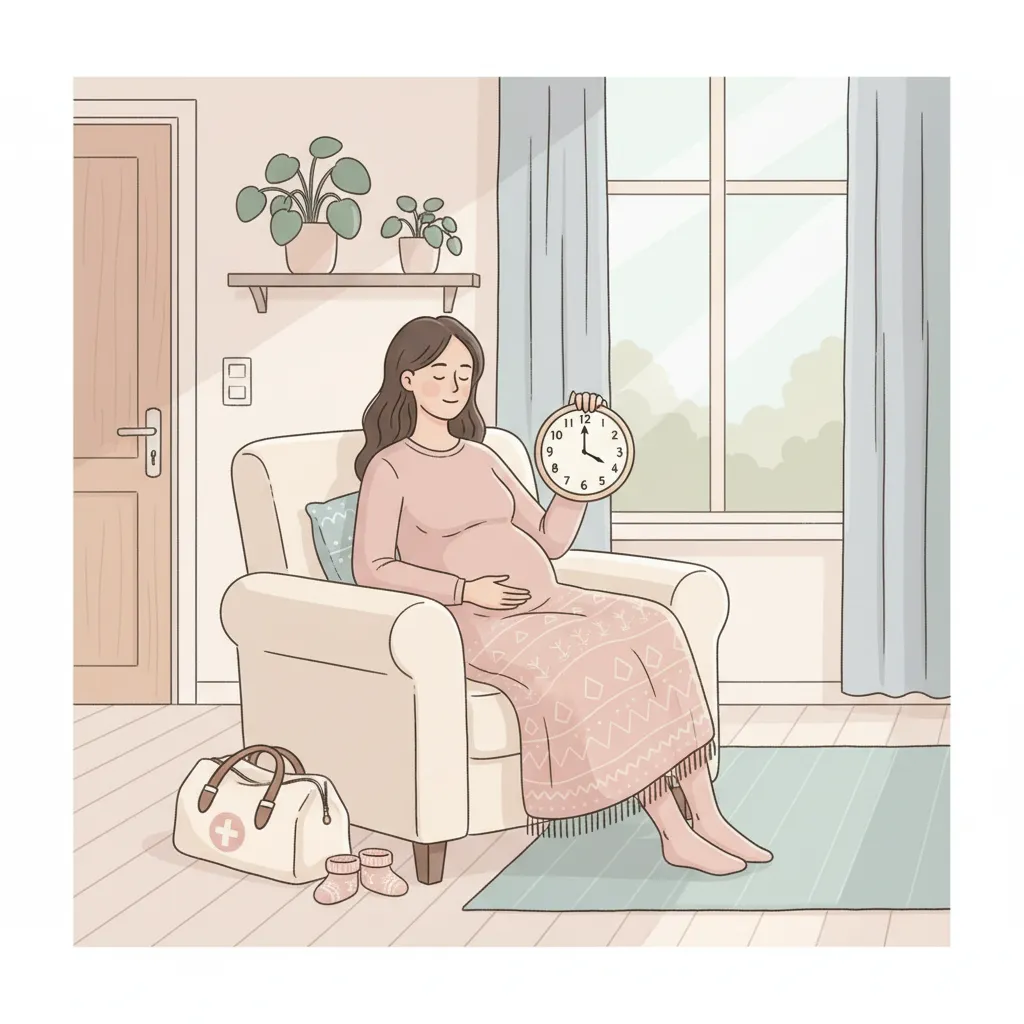
You feel the first contractions. Your belly tightens, releases, tightens again. Is this it? Should you go?
Most first-time parents head to the hospital too early. The 5-1-1 contractions rule takes the guesswork out of it. Here's exactly when it's time to go.
The 5-1-1 Rule, in One Paragraph
The 5-1-1 rule says: head to the hospital when your contractions are 5 minutes apart, last 1 minute each, and have followed that pattern for at least 1 hour. ACOG and Mayo Clinic both reference this guideline for low-risk, full-term first-time labors. Multiparas (anyone with a prior vaginal birth) often use a 4-1-1 pattern because labor moves faster. Some warning signs, water breaking with green fluid, heavy bleeding, decreased fetal movement, or contractions before 37 weeks, override the rule entirely; call your provider or head in immediately. Use a tool like our Contraction Timer to measure intervals and duration without doing the math while in labor.
What Is the 5-1-1 Rule?
The 5-1-1 rule is a simple guideline that midwives and OBs recommend. It tells you to head to the hospital when your contractions follow this pattern:
- 5 minutes apart, measured from the start of one contraction to the start of the next
- 1 minute long, each contraction lasts about one minute
- 1 hour of this pattern, the pattern has been consistent for at least one hour
When all three criteria are met, you're likely in active labor. It's time to call your birth team and get ready to go.
Some hospitals use the 4-1-1 rule instead (4 minutes apart). Check with your care provider or birth center to find out what they recommend.
How to Track Contractions Correctly
To use the 5-1-1 rule, you need accurate measurements. Here's what to track:
Interval: Start timing when a contraction begins. Stop when the next one begins. That's your interval.
Duration: Start timing when a contraction begins. Stop when it fully releases. That's the duration.
Pattern: Write down the times. After 4–5 contractions you'll be able to see if there's a pattern.
You can use pen and paper, but it's much easier with a tool that does the tracking for you. A free contraction timer app will measure intervals, duration, and pattern automatically, and can alert you when contractions hit the 5-1-1 pattern.
When Should You Call Your Provider?
Call your midwife, OB, or labor and delivery unit when:
- Contractions follow the 5-1-1 pattern
- You're unsure whether you're having "real" contractions
- Your water breaks
- You need guidance or reassurance
The person on the phone will ask about the frequency, duration, and intensity of your contractions. Have your timer in front of you so you can give precise answers.
It's always okay to call. Your care team would rather hear from you one time too many than one time too few.

Warning Signs: Go to the Hospital Immediately
Some situations require you to go to the hospital right away, regardless of your contraction pattern:
- Water breaking with green or brown fluid, may indicate meconium
- Heavy bleeding, more than a normal period
- Decreased fetal movement, baby is moving less than usual
- Intense, continuous pain, no pause between contractions
- You're before 37 weeks, this is considered preterm labor
- You feel something is wrong, trust your gut
If your water breaks, always contact your care provider even if contractions haven't started yet. Note the color, smell, and time it happened.
What to Do While You Wait
The time between your first contractions and leaving for the hospital can be long, especially for first-time parents. Here's how to stay comfortable:
- Move around, walk, sway your hips, sit on a birth ball
- Rest between contractions, save your energy
- Eat lightly, fruit, yogurt, or toast will give you fuel
- Stay hydrated, dehydration can make contractions irregular
- Practice breathing, slow, deep breaths help manage pain
- Check your hospital bag, is everything packed?
Tips for the Ride to the Hospital
When it's time to go:
- Know your route, do a practice drive so you know the way
- Bring pillows, sit comfortably in the back seat
- Have a towel handy, in case your water breaks in the car
- Avoid rush hour, leave with plenty of time if possible
- Call ahead, let labor and delivery know you're on your way

Frequently Asked Questions
Can contractions stop after they've started?
Yes. Many people experience contractions that start and stop, especially early in labor. This is completely normal and is sometimes called "false labor" or prodromal labor. Move around, rest, and wait for the pattern to become steady and predictable.
How do I tell the difference between Braxton Hicks and real contractions?
Braxton Hicks contractions are irregular, go away when you change position, and are mostly felt at the front of the belly. Real contractions come at regular intervals, get stronger and more frequent over time, and are often felt in the lower back as well. Use a contraction timer to see the pattern clearly.
Should my partner call the hospital for me?
It can be a good idea. During intense contractions it can be hard to talk. Your partner can relay the information from your contraction timer to your care team. Go over what to say beforehand.
Read More
- Stages of Labor: From First Contractions to Birth
- Breathing Techniques During Labor
- Partner's Guide to Supporting Labor
- Birth Anxiety and How to Cope
Sources
🔧 Helpful Tools
- Contraction Timer (Wave). Automatically detects the 5-1-1 pattern and gives a multipara advisory when a 4-1-1 pattern emerges. No math while in labor.
- Birth Plan Builder (Bloom). Build a printable birth plan to bring to the hospital alongside your hospital bag.
- Pregnancy Journal. Log late-pregnancy symptoms so anything unusual (decreased fetal movement, leaking fluid) is easy to flag with your provider.
- Hospital Bag & Newborn Checklists. Make sure your bag is packed before contractions start in earnest.
📖 Related Articles
- Contraction Timer Guide: How to Time Contractions. Learn how to use Babysential's contraction timer to time contractions safely. Know when to head to the hospital with the 5-1-1 rule.
- Braxton Hicks or Real Contractions - How to Tell the Difference. Wondering if it's Braxton Hicks or real contractions? Learn the difference between practice contractions and labor contractions, and when to contact the hospital.
- Stages of Labor: From First Contractions to Birth. How early, active, and transition labor differ, and what to expect at each stage on the drive in.