Baby Swimming. The Complete Guide for Parents
Your baby floats in the warm water, grabs your fingers, and smiles. Baby swimming isn't about swimming technique. It's about joy, closeness, and giving your child a safe start in the water.
Baby swimming has been popular for decades. Every year, thousands of families join classes. Here's everything you need to know, from the right age and water temperature to safety, chlorine, and practical packing lists.
What Is Baby Swimming?
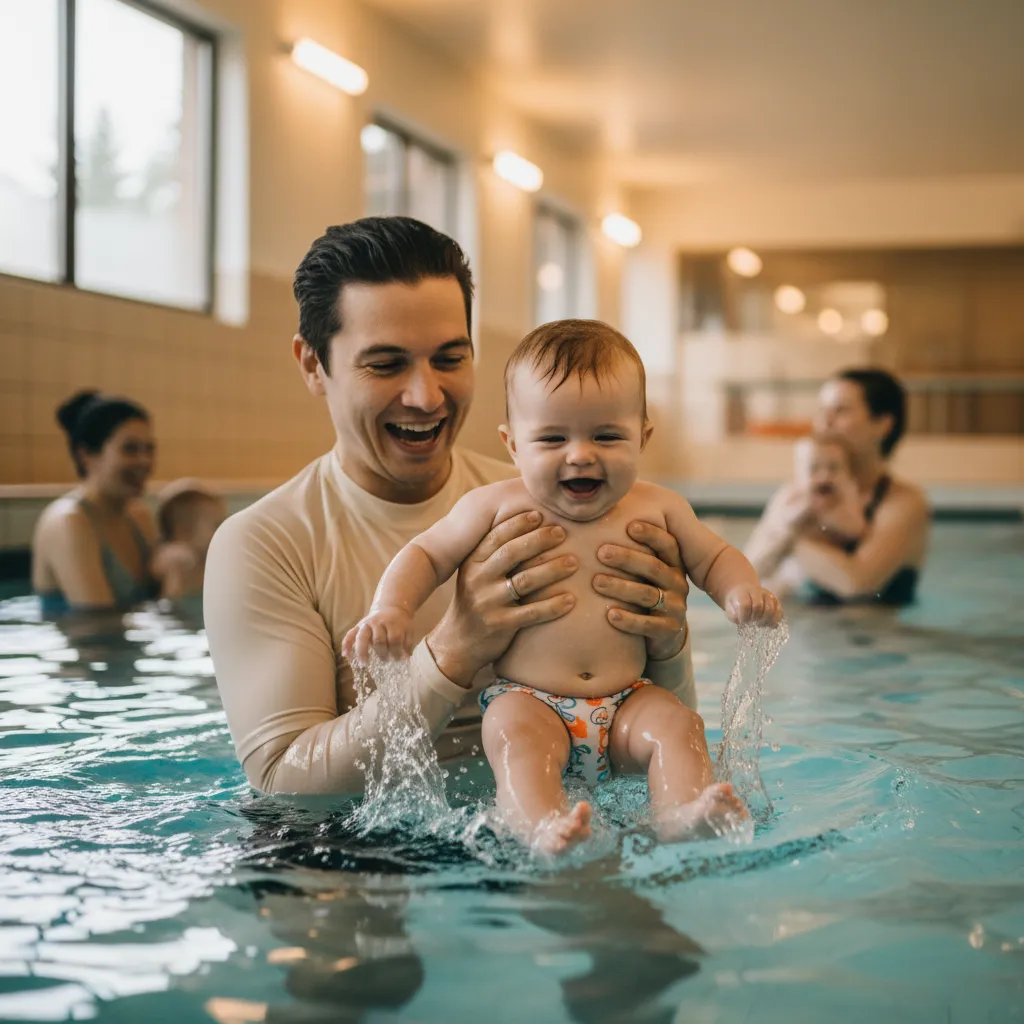
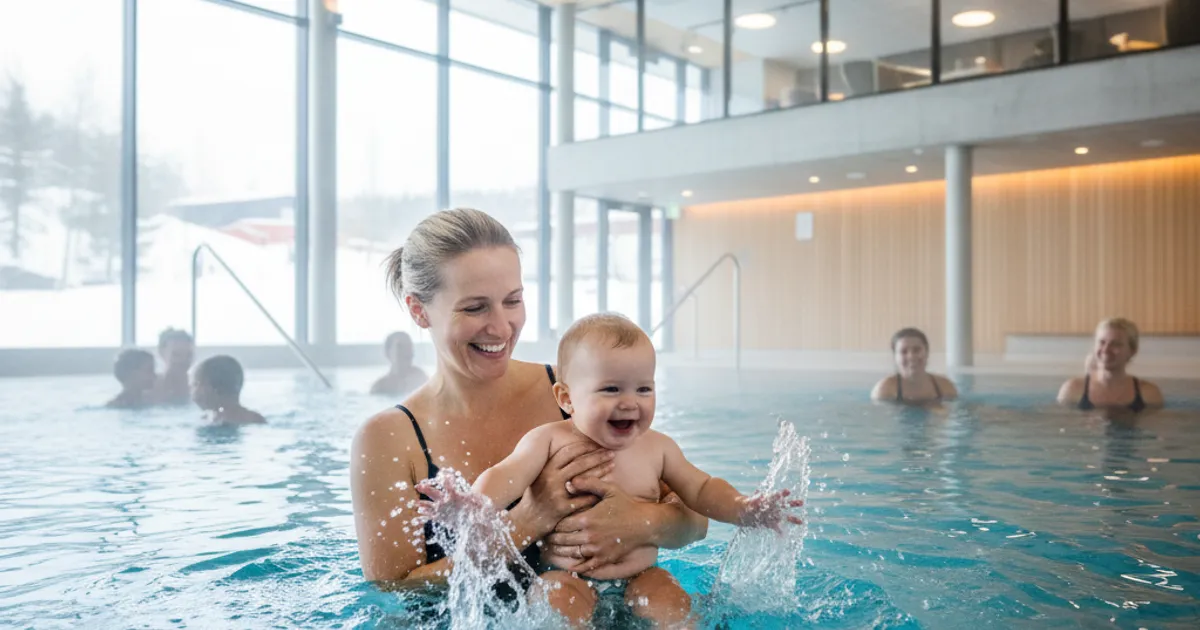
Baby swimming is water play and water familiarization for the youngest children, where parents actively participate in the pool. According to swimming experts, this is a play-based activity that emphasizes the close bond between parent and child. The activity should always happen on the baby's terms.
A typical class lasts 30-45 minutes and is led by an instructor with specialized training. You're in the water together the entire time. The group is small, usually 6-10 parents with babies.
The baby doesn't learn to swim, that's a skill that comes much later. Instead, it's about getting familiar with water through play, songs, and safe exercises.
When Can You Start Baby Swimming?
Age and Weight
In principle, there's nothing preventing you from starting baby swimming shortly after birth, as long as the water temperature is appropriate. In practice, most class providers set a minimum age of 6-8 weeks, or require the baby to weigh at least 4 kg (about 9 lbs).
Most parents choose to begin between 3 and 4 months, when the baby:
- Has good head control
- Weighs at least 4 kg (9 lbs)
- Has a fully healed belly button
- Has had their 6-week checkup
Pediatricians recommend waiting until after the 6-week checkup before starting baby swimming. This ensures the eardrums have been checked, which reduces the risk of ear infections.
Premature Babies
If your baby was born prematurely, many providers recommend using corrected age and a minimum weight of 5-6 kg (11-13 lbs). Talk to your pediatrician before signing up.
Upper Age Limit
Most baby swimming classes have an upper age limit of 2-3 years. After that, there are usually toddler swimming classes that build on the skills from baby swimming.
Benefits of Baby Swimming
For the Baby
- Motor development. Water provides resistance that strengthens muscles, and the buoyancy lets the baby practice movements they can't yet do on land.
- Water confidence. Babies who become familiar with water early are often more comfortable around water later. It's not the same as being able to swim, but it builds the foundation.
- Sensory stimulation. The sound of water, the temperature on the skin, the movements, all of this stimulates the senses.
- Better sleep. Many parents report that their baby sleeps especially well after baby swimming.
For the Parents
- Closeness and bonding. You and your baby are close together in the water, without phones and distractions.
- Social community. You meet other parents in the same life stage. Many form lasting friendships through baby swimming classes.
- Energy boost. Doing something active together with your baby gives you a boost in daily life.
Water Temperature. What's Right?
Water temperature is absolutely crucial for baby swimming to be safe and comfortable.
| Pool Type | Recommended Temperature |
|---|---|
| Baby pool (classes) | 90-93°F / 32-34°C (optimal 93°F / 34°C) |
| Public pool | Minimum 90°F / 32°C |
| Preparation at home | Start at 97-99°F / 36-37°C, lower gradually |
The optimal temperature for baby swimming is 93°F (34°C). The water should never be below 90°F (32°C).
At 91°F (33°C), the baby's body temperature drops by about 0.2°C over half an hour. That's so little you don't need to worry, but it's important to watch for signs that the baby is getting cold.
Prepare your baby at home by gradually lowering bath water temperature from 97-99°F (36-37°C) down to 93°F (34°C) over a few weeks. This makes the transition to the pool smoother.
Safety in the Water
Safety is the most important aspect of baby swimming. Experts report that no accidents directly related to baby swimming classes have been recorded.
Basic Rules
- Keep the baby within arm's reach at all times. Never let go, not even for a second.
- Don't submerge the baby. Most experts don't recommend submerging the youngest babies. Some classes practice it, but it's controversial.
- Maintain eye contact with the baby at all times.
- Get out of the water if the baby shows signs of being cold, blue lips, shivering, limp body.
- Never let the baby swallow pool water.
Drowning happens silently and quickly. Always keep the baby close, and never let another child or adult take over without your full attention. Slippery pool floors are also a risk factor, use non-slip socks once your baby is crawling age.
Signs the Baby Has Had Enough
- Crying and won't be comforted
- Blue or white lips
- Shivering or limp body
- Turns head away and avoids eye contact
- Seems generally uncomfortable
When the baby shows these signs, it's time to get out. It's perfectly fine to end early. You can try again next time.
Chlorine, Skin, and Ears
Is Chlorine Dangerous for the Baby?
Most public pools use chlorine as a disinfectant. Allergy organizations note that chlorine can irritate eyes, skin, and airways, but for the vast majority of babies, this is unproblematic.
Skin Care
- Babies under 6 months don't normally need to shower with soap before swimming
- After swimming: rinse off chlorinated water with clean water
- Apply a mild, fragrance-free moisturizer after swimming
- Never apply cream before swimming, it makes the skin slippery and the baby hard to hold
Some babies get dry or irritated skin from chlorine. If the baby develops a rash after swimming, take a break and talk to your pediatrician.
Ears
Wait until after the 6-week checkup to start baby swimming, to ensure the eardrums are intact. This reduces the risk of ear infections. If the child has already had an ear infection, follow your doctor's advice on when you can go back to the pool.
Ear plugs are not necessary for healthy babies with intact eardrums. Any water that gets into the ears will drain out on its own.
What Do You Need to Bring?
Packing List for Baby Swimming
- Swim diaper. Required in all pools. Available as disposable (convenient) or reusable (eco-friendly). Swim diapers contain solid waste but don't stop urine.
- Swimsuit or trunks for you. Choose something easy to take on and off while holding the baby.
- Large towel. Ideally two, one for the baby and one for you. A hooded towel is perfect for the baby.
- Change of clothes and diapers. Have ready in the changing room.
- Food or bottle. Babies often get hungry after swimming.
- Hat or hood. Babies lose a lot of heat through their heads. A hat after swimming keeps the baby warm.
- Non-slip socks. Recommended from crawling age, but smart to start with regular socks early so the baby gets used to them.
- Moisturizer. Fragrance-free, for use after showering.
What a Typical Swimming Lesson Looks Like
Warm-Up (5-10 minutes)
You enter the water gently. The instructor sings a welcome song. The baby adjusts to the water gradually, first feet, then body. Always in your grip.
Exercises (15-20 minutes)
Simple exercises together. The baby lies on their tummy in the water while you hold them, kicks their legs, or floats on their back with support. Everything is done at the baby's pace and on the baby's terms.
Play and Song (5-10 minutes)
Free play with water toys, balls, and singing. This is just about having fun and strengthening the bond between you and your child.
Closing (5 minutes)
A calm closing song. You get out of the water and pack up.
The instructor guides you through everything. You don't need any prior experience.
Preparing at Home
Start preparations before your first class:
- Bathe together at home. Let the baby play in the water so the pool isn't their very first water experience.
- Practice with water on the face. Gently pour a little water over the baby's head from behind with your hand. Gradually and gently. A little salt in the water can reduce irritation in the eyes and nose.
- Lower the temperature gradually. Start at 97-99°F (36-37°C) and lower toward 93°F (34°C) over a few weeks.
- Try the swim diaper at home so it's not completely new on the first class day.
Finding Baby Swimming Classes
Baby swimming is offered widely:
- Community pools. Many municipalities offer classes through recreation departments. Check your local community center's website.
- Private swim schools. Many private operators have dedicated baby pools with higher temperatures and smaller groups.
- National swimming organizations. Check your country's swimming federation for information about baby swimming programs.
What Does It Cost?
Prices vary, but a typical course costs between $100 and $250 for 8-10 sessions. Some communities offer subsidized spots.
Classes fill up fast, especially in urban areas. Sign up early, even when the baby is 1-2 months old, even if the course doesn't start until 3-4 months.
Tips for Nervous Parents
Many parents feel anxious before the first time. That's completely normal, and the instructors are used to it.
- Visit the pool beforehand. Call and ask if you can see the facility.
- Talk to the instructor. Tell them you're nervous. They'll accommodate you.
- Go with someone. Bring your partner or a friend for the first few times.
- Accept that it takes time. Some babies love the water from day one. Others need 3-4 sessions to relax.
- Remember that everyone in the group feels the same way.
After Swimming
The first few times, the baby may be extra tired and hungry. That's normal, the body has been working hard in the water.
Post-Swimming Routine
- Rinse the baby with clean water to remove chlorine
- Dry well and dress in indoor clothes in the changing room
- Feed or nurse when the baby is ready
- Apply fragrance-free moisturizer
- Wait to put on outerwear until you're ready to leave (temperature differences)
Expect the baby to sleep especially well after swimming. That's a bonus for you.
When Should You Skip Baby Swimming?
Stay home if the baby:
- Has a fever
- Has diarrhea or vomiting
- Has an eye infection
- Has open wounds or contagious rash
- Has contagious childhood illnesses (chickenpox, impetigo)
- Was recently vaccinated (wait a few days)
With a mild cold, baby swimming can actually help loosen mucus, but assess how the baby is feeling that day. For ear infections, always follow your doctor's advice.
Frequently Asked Questions
Is baby swimming safe?
Yes, it's safe when you always hold the baby and follow the safety rules. The most important thing is to choose a class with a qualified instructor and a pool with the right temperature.
What do I do if the baby poops in the pool?
It happens occasionally, even with a swim diaper. Get out of the water, change the diaper, and ask the staff about the procedure. No one judges you, all parents have been there.
Can the child get sick from pool water?
The risk is low in well-maintained pools. Adults showering before swimming is the most important measure for keeping chlorine levels down. Babies under 6 months don't normally need to shower with soap before swimming.
How long can the baby be in the water?
Start with 15-20 minutes and build up. Most classes are 30-45 minutes, which is suitable for babies from 3-4 months. Watch for signs the baby has had enough, and get out before time is up if needed.
Does the baby need ear plugs?
No, not for healthy babies with intact eardrums. Water that enters the ears drains out on its own. If the baby has had repeated ear infections, talk to your doctor.
Read More
- Baby's First Bath. Step-by-Step Guide
- Baby Motor Development
- Skin-to-Skin Contact with Newborns
- Baby Massage Guide
Sources
- American Academy of Pediatrics. Water Safety
- WHO. Physical Activity for Young Children
- CDC. Healthy Swimming
Last updated: March 2026
🔧 Helpful Tools
- Baby Sleep Tracker. Track and optimize your baby's sleep
- Baby Food Guide. Safe foods and introduction schedule for your baby
- All Baby Tools. Browse all free tools for pregnancy and baby care
📖 Related Articles
- Baby Swimming: How to Get Started Safely. Everything about baby swimming: when to start, what you need, and tips for a safe and fun experience in the water.