A baby stroller sounds simple until you start comparing models. Full-size, lightweight, jogging, modular, travel system, double stroller: they all promise easier days out, but the right choice depends on your baby, your home, your car, and the places you actually walk.
Start with safety and newborn fit, then choose the stroller type that matches your daily life.
What Type of Baby Stroller Should You Choose?
Most families do best with one main stroller for everyday life, plus a lighter travel stroller later if they need it. The main question is not "which stroller is best overall?" It is "which stroller solves my normal week?"
Full-size stroller
A full-size stroller is the everyday workhorse: sturdy frame, larger basket, good canopy, and a seat that can last through toddlerhood. It works well for parents who walk often and have enough storage space. Watch the weight and folded size.
Modular stroller
A modular stroller lets you swap pieces: bassinet, toddler seat, infant car seat, sibling seat, or ride-along board. Consumer Reports highlights modular strollers as flexible for growing families. Check compatibility before buying, because adapters and second seats can add cost.
Travel system
A travel system combines an infant car seat with a compatible stroller, which is useful for car-dependent families and short errands. Car seats are for transport, not routine sleep. If your baby falls asleep in a car seat or stroller, the AAP recommends moving them to a firm, flat sleep surface as soon as possible when you are no longer traveling.
Lightweight or travel stroller
Lightweight strollers are easier to fold, carry, and store. They are useful for flights, public transit, apartments, grandparents, and quick errands. Many are not suitable from birth unless they recline nearly flat or accept an approved newborn attachment.
Jogging stroller
Jogging strollers have larger wheels, stronger suspension, and a locking front wheel. Consumer Reports notes they are generally not appropriate for infants under 6 months and recommends not running with children under 1 year without checking with your pediatrician.
What Kind of Stroller Can You Use With a Newborn?
For a newborn, the most important feature is support. Babies under about 6 months usually do not have the head and neck control needed to sit upright for long periods.
Choose one newborn-safe setup:
- A bassinet or carriage attachment
- A near-flat reclining stroller seat
- A compatible infant car seat used for transport and short transitions
Consumer Reports recommends a near-flat stroller seat, bassinet, or infant car seat carrier for babies under 6 months. For longer walks, a bassinet or true flat recline is usually more comfortable than a car seat.
Do not use a regular upright stroller for a newborn. If the seat does not recline nearly flat and there is no approved newborn attachment, wait until your baby has strong head and neck control.
For the first months, read our guide to the best stroller for a newborn.
Baby Stroller Safety Features That Matter
Safety should be boring in the best way: stable frame, reliable brake, secure harness, and no clever feature that makes daily use harder.
Look for these basics:
- Five-point harness: straps over the shoulders, around the hips, and between the legs. The AAP recommends using it every ride.
- Wide, stable base: less likely to tip when turning, loading the basket, going over curbs, or carrying an older child on the back.
- Easy brakes: simple for adults to set, hard for a child to release.
- Safe folding hinges: keep your child away while folding or unfolding, and make sure the frame locks before use.
- Low storage basket: heavy diaper bags belong in the basket, not on the handlebar.
Quick store test: Put a weighted diaper bag in the basket, fold the stroller, lock the brake, and lift it as if you were putting it into your car. If any part feels awkward in the store, it will feel worse with a tired baby.
What Features Should You Look For?
Once the safety basics are covered, choose features based on your real terrain and routine.
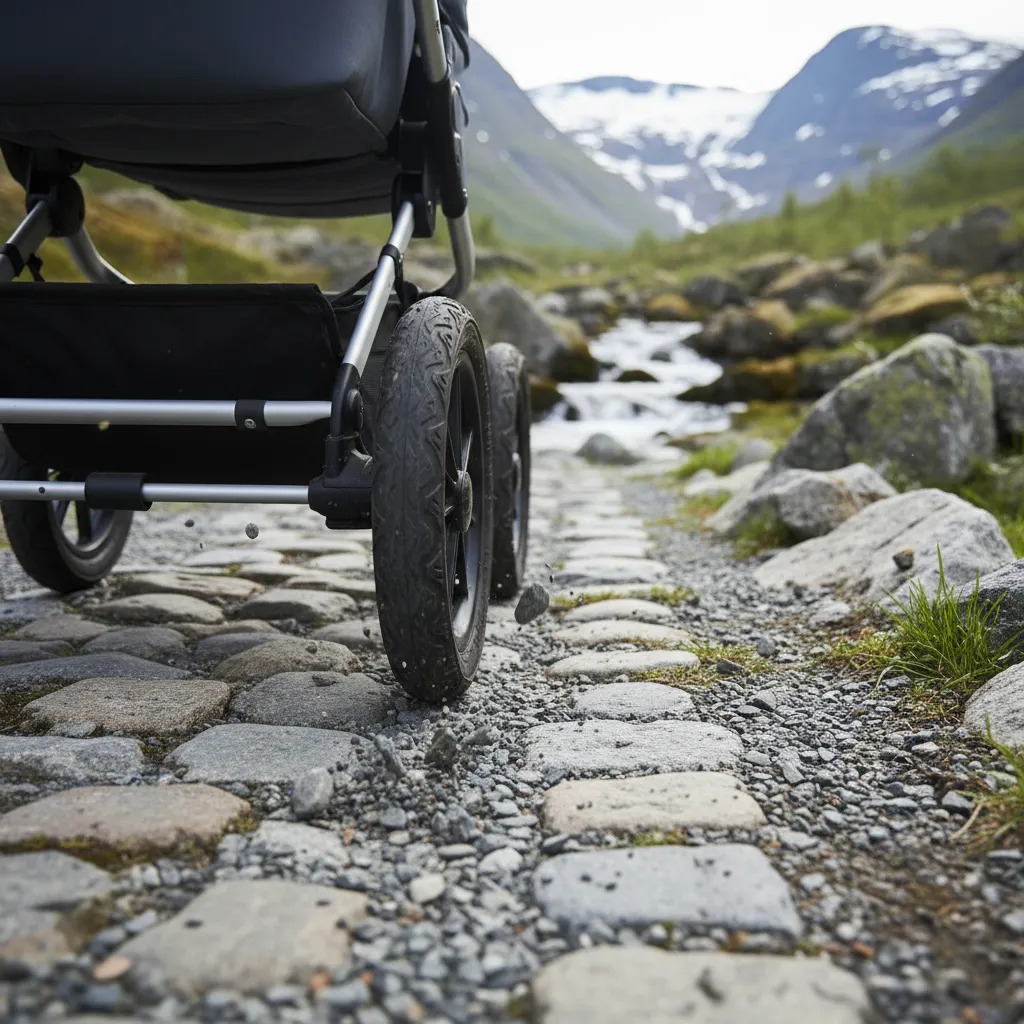
Large wheels handle cracked sidewalks, grass, gravel, and snow better than tiny wheels. Smaller wheels are easier for travel but feel bumpier on rough surfaces. If you walk daily, prioritize suspension and wheel quality. For stores, daycare pickup, and travel, compact folding may matter more.
Measure your trunk, hallway, elevator, and storage closet before buying. One-hand folding is helpful, but folded size matters just as much.
Ask these questions:
- Can you fold it while holding your baby?
- Does it stand on its own when folded?
- Does it fit in your car without removing the wheels?
- Can you carry it up your stairs?
A good canopy protects from sun, wind, and light rain. Look for breathable panels, especially if you live somewhere warm or use a rain cover often. An adjustable handlebar helps if caregivers are different heights, and the basket should be easy to reach when the seat is reclined.
Is an Expensive Baby Stroller Worth It?
Sometimes, but not always. Premium strollers often have better suspension, smoother steering, nicer materials, longer warranties, and more accessories. That can be worth it if you walk every day or plan to use the stroller through multiple children. But price is not the same as fit.
If buying used, check the model number, manufacture date, brake, wheels, harness, folding locks, and recall status. The AAP advises choosing a new stroller or one made in the past few years, and registering it for recall notices.
For a broader comparison of current models, see our best strollers 2026 buyer's guide.
Baby Stroller Checklist Before You Buy
Before buying, check:
- Suitable from birth, or clearly marked 6 months and up
- Adjustable five-point harness
- Brakes are easy to set and release
- Frame locks open securely
- Wide, stable base
- Fits your trunk, elevator, and storage space
- Weight is realistic for stairs and public transit
- Wheels match your terrain
- Canopy gives enough shade and airflow
- Basket is large enough and easy to access
- Product is registered and not recalled
Save your full pre-baby gear list in our baby gear checklist, and track sleep patterns after baby arrives with the sleep tracker.
Safe Daily Use
The safest stroller is still only safe when used well. Use the harness every ride, set the brake whenever you stop, keep bags in the basket, follow weight and age limits, and keep children away while folding or unfolding it.
If your baby falls asleep during a walk, keep them visible and supervised. When you get home, move them to a firm, flat sleep surface. The AAP warns against putting children to sleep in strollers, especially infants younger than 4 months, because they can move into positions that affect breathing.
Frequently Asked Questions About Baby Strollers
What is the best baby stroller?
The best baby stroller safely fits your baby's age and your daily routine. For newborns, choose a bassinet, near-flat recline, or compatible infant car seat. For toddlers, prioritize harness fit, brake quality, wheels, fold, and storage.
Can I use a stroller from birth?
Yes, but only if it is designed for newborn use. Look for a bassinet, carriage attachment, near-flat recline, or compatible infant car seat. A standard upright stroller is usually better from around 6 months, when your baby has stronger head and neck control.
Do I need a travel system?
You do not need one, but it can be practical if you drive often. If you mostly walk from home, a bassinet or full-size stroller may be more comfortable for longer outings.
What stroller is best for city life?
For city life, look for a compact fold, manageable weight, easy steering, a good brake, and wheels that handle uneven sidewalks.
Is it safe to hang a diaper bag on stroller handles?
No. Heavy bags on stroller handles can make the stroller tip backward. Put bags and groceries in the storage basket whenever possible.
Read More
- How to choose the right stroller
- How to choose the best stroller for a newborn
- Best strollers 2026 buyer's guide
- Baby gear checklists
Sources
- American Academy of Pediatrics. "How to Choose a Safe Baby Stroller." healthychildren.org
- American Academy of Pediatrics. "Safety tips help protect children from stroller injuries." publications.aap.org
- Consumer Product Safety Commission. "Carriages and Strollers Business Guidance." cpsc.gov
- Consumer Reports. "Choose the Right Stroller for Your Family." consumerreports.org
Last updated: May 2026