A stroller is the most expensive single purchase most new parents make. Choose wrong, and you end up with a pram gathering dust in the hallway while you carry your baby instead. Choose right, and it becomes your family's most-used piece of equipment for years.
Here is a complete overview of stroller types, features, and what to prioritize for your lifestyle.
Prices in this article are approximate and may have changed. Check current prices with retailers.
Which Type of Stroller Do You Need?
There are four main types. Most families start with a combination pram.
Combination Pram / Travel System (2-in-1 or 3-in-1)
The most common solution for new parents. A combination pram has a chassis with both a carrycot (for newborns) and a seat unit (from around 6 months). A 3-in-1 also includes a car seat adapter.
Best for: Families who want one solution from birth until the child is 3–4 years old.
Pros:
- Covers the whole period from newborn to toddler
- No need to buy separate strollers
- Carrycot provides safe flat-lying position for newborns
Cons:
- Heavy and large (often 12–16 kg)
- Not the very best sports stroller or the very best pram, but good enough at both
Pushchair / Lightweight Stroller
Lighter and more compact than a combination pram. Seat unit only, no flat carrycot for newborns.
Best for: Families who already have a pram or carrier, and need a lighter stroller for daily use from 6 months onwards.
Pros:
- Light (5–10 kg) and agile
- Easy to fold
- Fits well on buses, trams, and planes
Jogging Stroller
Three large wheels and built for rough terrain and exercise.
Best for: Active families who jog with their child or live in areas with gravel paths and uneven ground.
Pros:
- Superior terrain performance
- Great suspension for the child
- Perfect for trail walks and outdoor activities
Cons:
- Wide and hard to manoeuvre in shops
- Heavy
- Not suitable for newborns without an approved carrycot (some brands offer adapted solutions)
Double and Twin Stroller
For two children, either side by side or in tandem (front and back).
Best for: Twins, or families with a small age gap between children.
Tip: Before buying, measure your doorways at home and check the width of your lift or elevator. A side-by-side double stroller is often too wide for standard apartment building lifts.
What Features Matter Most?
Your terrain, lifestyle, and where you live will determine which features matter most to you. Here is what to focus on.
Wheels and terrain performance
Wheels are the single most important factor for everyday usability.
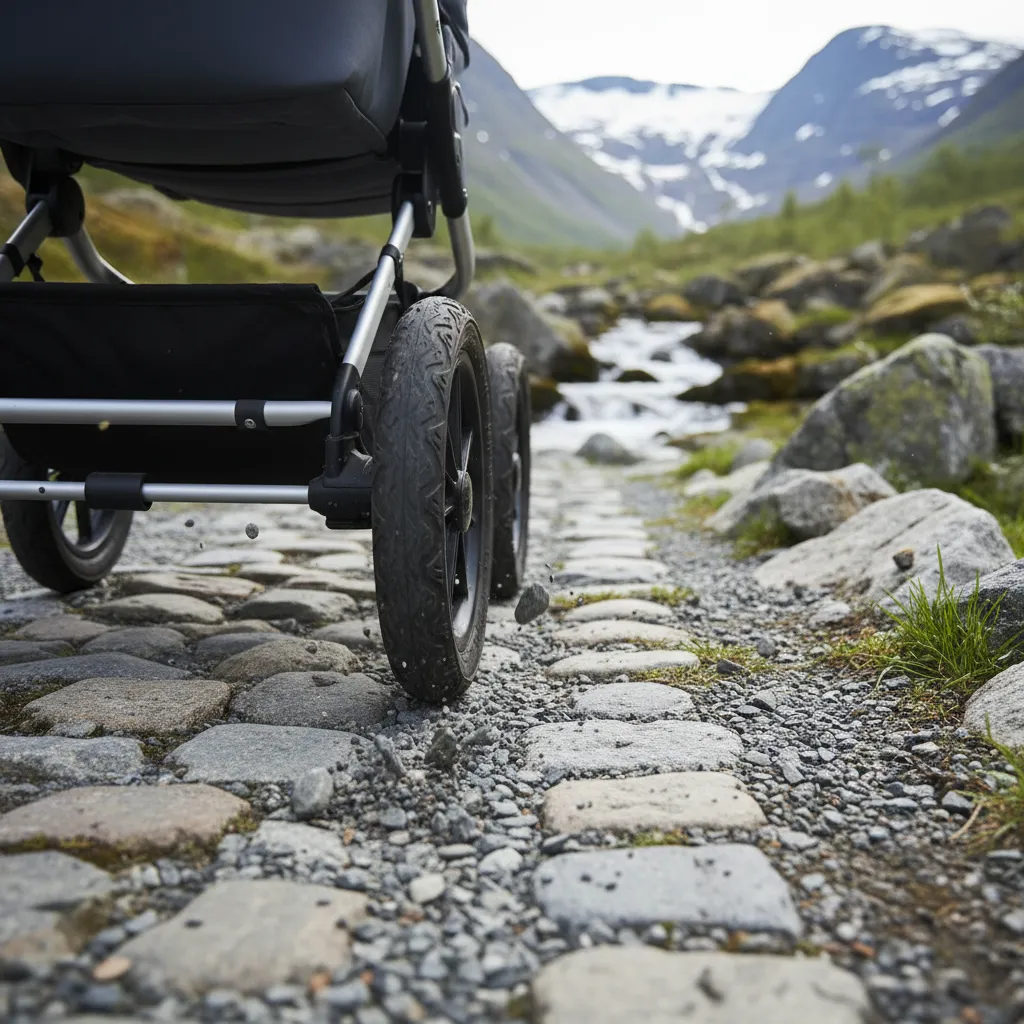
- Large wheels (25–30 cm) handle snow, gravel, and pavement edges better than small wheels
- Air-filled tyres give a softer ride on uneven terrain but can puncture
- Foam (puncture-proof) tyres are a good compromise, no maintenance and good cushioning
- Swivelling front wheels make the stroller agile in shops, but lock them on uneven surfaces for stability
- Four large wheels with suspension are the gold standard for mixed terrain
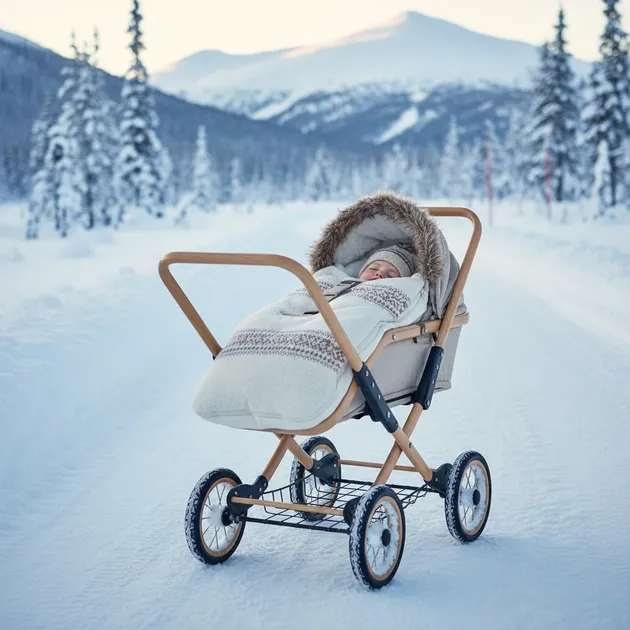
Winter tip: If you live somewhere with snowy winters, check whether the manufacturer offers ski attachments as an accessory. Brands like Thule, Emmaljunga, and Stokke have dedicated ski solutions for their strollers.
For cold or wet climates
- Footmuff/sleeping bag: Essential in colder months. Buy one that fits your specific stroller model
- Rain cover: Usually included, but check that it fits securely and does not blow off
- Sun shade: Even in cooler climates, low winter sun can dazzle and low temperatures combined with bright light mean a good canopy matters
- Ventilation: Your baby should not overheat. Choose a stroller where you can control airflow even with the rain cover on
Chassis and frame
- Weight: Under 10 kg is light; 10–13 kg is average; over 13 kg is heavy. Think about steps without a lift
- Folded size: Does it fit in your car boot? Measure before you buy
- High seat position: Better for your back and for maintaining eye contact with your baby. Many modern strollers have adjustable heights
- Brakes: Foot brake on both rear wheels is standard. Some models also have a handbrake, useful on steep hills
Flat lying and safety
- Fully flat position: Essential for newborns. Your baby should lie completely flat for the first months
- Adjustable backrest: Stepless adjustment gives flexibility as your child grows
- 5-point harness: Standard in seat units. Check that it is easy to adjust
Popular Brands
Premium / Specialist
- Stokke: Known for a high seat position and design-forward approach. Trailz and Xplory are popular models. Price: $1,200–$2,000+
- Emmaljunga: Handcrafted in Sweden. NXT90 is a classic for varied terrain. Large wheels and solid construction. Price: $1,000–$1,800
- Thule: Swedish. Spring and Sleek are popular. Great terrain strollers for active families. Price: $800–$1,500
Mid-range / International
- Bugaboo: Dutch. Fox 5 is the flagship, versatile and popular. Price: $1,200–$1,800
- Cybex: German. Priam and Balios are well-known models. Stylish design. Price: $800–$1,600
- UPPAbaby: US brand. Vista is the flagship; Cruz is a lighter option. Price: $900–$1,400
- Joolz: Dutch. Hub+ is compact and urban. Price: $900–$1,400
Try before you buy: Visit a baby store and test-drive at least three models. Pull them over a kerb, fold them, and lift them. You quickly notice the difference.
How Much Should You Spend?
Budgets vary widely, and there are good options at every price point.
| Price range | Price | What you get |
|---|---|---|
| Budget | $400–$700 | Simpler brands, fewer adjustment options. Works well for city use on flat surfaces. |
| Mid-range | $700–$1,200 | Good all-round strollers with solid terrain performance. Covers most needs. |
| Premium | $1,200–$2,000+ | Top brands with the best materials, long warranties, and best terrain performance. |
Second-hand strollers are a great option. Check online marketplaces, parent groups, and consignment stores. A stroller worth $1,500 new often sells for $400–$800 second-hand. Check that the harness is intact, the wheels roll freely, and the brake works.
Safety: All strollers in major markets should comply with safety standards (EN 1888 or equivalent). If buying second-hand or from abroad, check for relevant safety certification. Avoid recalled models, check your country's consumer safety authority for recall lists.
Checklist: Before You Buy
Go through these points before making a decision:
- Do the wheels suit the terrain where you live? (pavement, gravel, snow)
- Can you fold the stroller with one hand?
- Does it fit in your car boot?
- Does it fit through your doorways and elevator?
- Does it have a flat lying position for newborns?
- Is the harness easy to adjust?
- Does a rain cover come included?
- Is the accessory you need available? (footmuff, cup holder, sun shade, ski runners)
- What is the warranty period?
- Are there service points or spare parts available near you?
Accessories to Consider
Essential:
- Footmuff (for cold climates)
- Rain cover
- Mosquito net (summer)
Useful:
- Cup holder
- Handlebar organizer / bag
- Car seat adapter (for 3-in-1 use)
- Ski/snow runners (for snowy climates)
- Under-basket net or storage bag
Frequently Asked Questions
What is the best stroller for city use?
For city use on mostly flat pavements, prioritize a lightweight, easy-to-fold stroller with a compact footprint. Brands like Bugaboo, UPPAbaby, Cybex, and Joolz all make excellent urban strollers. Puncture-proof wheels are a practical choice for city pavements.
Combination pram or pushchair, what should I choose?
Most families start with a combination pram (2-in-1 or 3-in-1) that covers the full period from newborn to 3–4 years. A lightweight pushchair is lighter and more compact but only suitable from around 6 months, meaning you need another solution for the newborn stage.
How much does a stroller cost?
Prices range from around $400–$700 for budget models to $1,200–$2,000+ for premium brands. A second-hand stroller from an online marketplace can cost $400–$800. Check that the harness is intact and the brake works.
Summary
The best stroller is the one that fits your daily life. Living in the city with a lift and flat pavements? A light, agile combination pram is plenty. Living somewhere rural with gravel paths and steep hills? Prioritize large wheels and a robust chassis.
Do not be tempted by the most expensive model just because it looks beautiful. A $700 stroller with the right wheels for your terrain will outperform a $1,800 premium stroller that only works on flat surfaces.
Further Reading
- Best Strollers 2026: Top-Rated Prams Reviewed
- Newborn Essentials Checklist
- Car Seat Guide: Safety Rules
- Baby Carrier and Sling Guide
Sources
- Consumer Product Safety Commission. Stroller Safety
- AAP. Safe Stroller Use
- Which?. Pram and Pushchair Reviews
🔧 Helpful Tools
- All Baby Tools. Browse all free tools for pregnancy and baby care
📖 Related Articles
- Baby Clothes: Complete Buying Guide for New Parents. What do you need for baby clothes? Complete buying guide with quantities, sizes, materials, and recommended brands.
- Best Strollers 2026: Top-Rated Prams and Pushchairs Reviewed. An overview of the best strollers for 2025/2026. Comparison of top-rated prams and pushchairs with prices, pros, and cons. Updated buying guide for new parents.
- Stroller Bag: How to Choose the Right One for Your Pram. Complete guide to stroller bags for babies. Find the right type, material, and tog rating for any climate. Tips for winter and summer use.