The best baby photoshoot is the one where your baby looks like your baby, not like a tiny adult forced into a theme.
Ready before the day comes.
Hospital bag, nursery and baby gear lists you can tick off as you go.
Start a checklistYou do not need a studio, a trunk of props, or a perfect nursery. You need soft light, a calm room, a clean surface, and a plan that puts comfort before the shot list.
A safe baby photoshoot keeps your baby supported, warm but not overheated, and supervised the whole time. Use simple outfits, natural light, and floor-level setups before trying anything styled or complicated.
In short
- Keep newborn and young-baby photos simple: parent arms, floor mats, close-ups, and awake supervised moments are safer than elaborate poses.
- Treat any setup where your baby might fall asleep like a sleep-safety setup: firm, flat, bare, and on the back.
- Skip props that can tip, roll, cover the face, trap the airway, or make you step away from the baby.
- Plan around feeding, diaper changes, and short windows. A 20-minute calm session beats a two-hour production.
- Use Babysential's checklists to prep outfits, wipes, backup blankets, and feeding supplies before the session starts.
Baby Photoshoot Ideas by Age
The easiest way to choose a setup is to match it to your baby's stage. A newborn cannot safely hold a pose. A 6-month-old may roll without warning. A 1-year-old may crawl away from the backdrop in two seconds.
| Age | Easy photo ideas | Safety note |
|---|---|---|
| 0-2 weeks | Parent hands, swaddled close-ups, feet, side-lit crib-side portraits | Keep baby supported and avoid forced poses |
| 2-8 weeks | Awake blanket photos, parent chest, tiny details, nursery window light | Use floor-level setups and short sessions |
| 2-5 months | Tummy-time smiles, overhead mat photos, sibling hand-holding | Tummy time must be awake and supervised |
| 6-9 months | Sitting practice, favorite toy, food-free milestone setup | Stay within arm's reach because sitting can tip fast |
| 9-12 months | Crawling, pulling up, first birthday details | Clear cords, small props, and sharp decor |
For milestone planning, the milestones tool can help you choose photos that match what your baby is actually doing this month instead of copying a pose that does not fit yet.
How Do You Do a Baby Photoshoot at Home?
Start with the room, not the outfit.
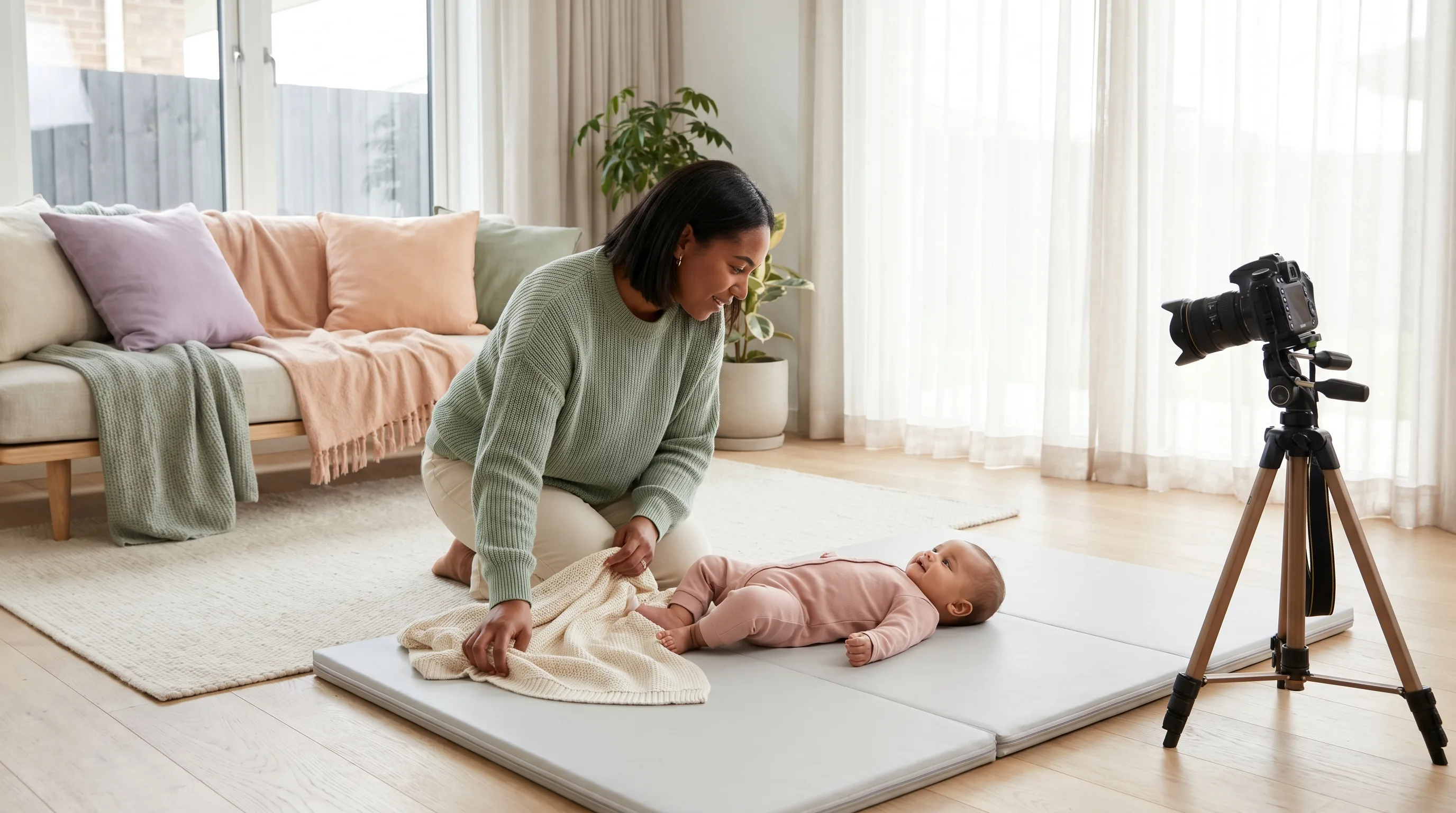
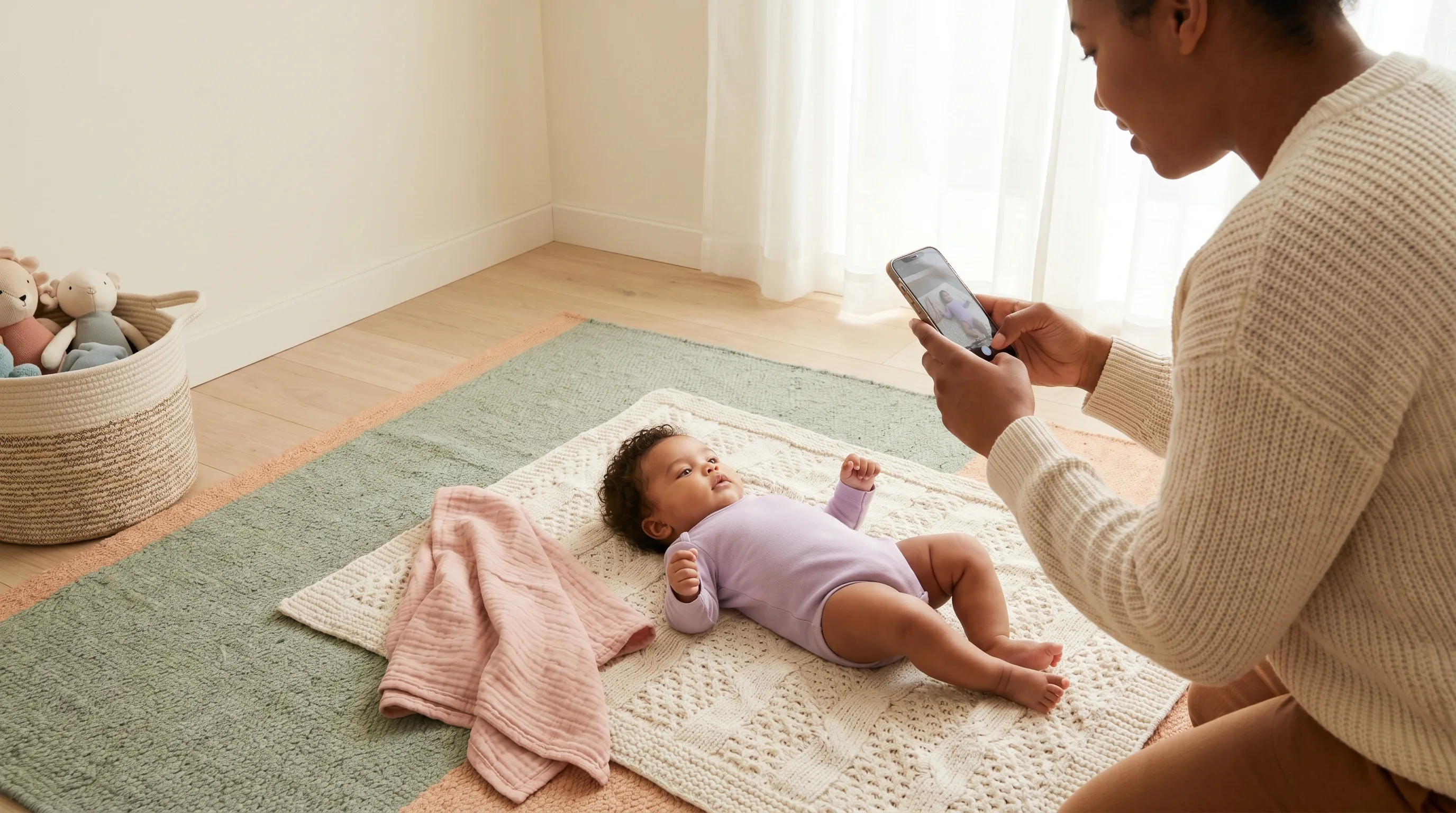
Choose a bright spot near a window where the light falls across the baby rather than directly into their eyes. Turn off harsh overhead lights. Clear the floor so there are no cords, cups, pets, or loose objects near the setup.
Then build one small scene:
- Surface: A firm floor mat, clean rug, or play mat.
- Base layer: One fitted blanket or simple muslin, pulled flat.
- Outfit: One soft outfit that fits now.
- Backup: Diaper, wipes, burp cloth, pacifier if used, and a second outfit.
- Camera: Phone lens wiped clean, portrait mode ready, flash off if natural light is enough.
Put your baby down only when everything is ready. Babies have limited patience for costume changes, test shots, and adults moving furniture around them.
If your baby starts rooting, hiccupping, yawning, turning red, arching, or staring away, pause. Feed, burp, change, or cuddle. The photo can wait.
Safe Baby Photoshoot Setup: What Matters Most
Most photo mistakes happen when adults treat a baby like a prop for a few seconds. A baby can roll, slump, startle, spit up, or fall asleep faster than the camera can refocus.
Use these rules:
- Keep one adult within arm's reach.
- Use floor-level setups whenever possible.
- Do not balance a baby in a basket, bucket, chair, suitcase, shelf, or raised surface.
- Keep fabric away from the nose and mouth.
- Do not use pillows or soft props to hold a sleeping baby in place.
- Avoid strings, beads, small flowers, confetti, loose buttons, and tiny decorations.
- Stop any pose that makes the baby stiffen, cry, slump, or look uncomfortable.
The CDC safe sleep guidance supports the AAP recommendation to place babies on their back for sleep, use a firm flat surface, and keep soft bedding out of the sleep area. That matters for photos because many newborn sessions happen when babies are sleepy.
If your baby falls asleep during the session, move them to a safe sleep space instead of leaving them in a styled setup.
A photo prop is not a safe sleep space. If your baby falls asleep in a basket, on a pillow, in a lounger, or on a soft blanket pile, move them to a crib, bassinet, play yard, or other safe sleep surface.
What Props Are Safe for Newborn Photos?
The safest props are usually the boring ones: a plain blanket, a parent hand, a simple onesie, a soft hat that does not cover the face, and a meaningful keepsake placed near the baby rather than under the baby.
Good prop ideas:
- A neutral blanket pulled flat on the floor
- A parent's hands around the baby's feet
- A book placed beside the baby, out of reach
- A small stuffed toy behind the baby for scale, not near the face
- A family quilt used as a background while the baby is awake and supervised
- A letter board photographed separately, then paired with the baby photo in an album
Props to skip or handle with professional help:
- Buckets, baskets, crates, and drawers
- Pillows under the head or chest
- Hammocks, swings, hanging wraps, or suspended fabric
- Flower crowns with wires or small detachable pieces
- Loose beads, buttons, confetti, petals, or tiny toys
- Anything heated, weighted, scented, or hard to clean
The CPSC safe sleep guidance says soft objects such as pillows, blankets, toys, bumpers, and positioners can create suffocation risks in sleep spaces. Even when a setup is only "for a quick photo," the same objects can block a baby's airway if the baby turns, slumps, or falls asleep.
What Should a Baby Wear for Photos?
Choose comfort first. Babies photograph beautifully in simple clothes because their face, hands, and expressions do the work.
Reliable outfit choices:
- A plain white, cream, sage, blush, or soft blue onesie
- A footed sleeper that fits snugly but not tightly
- A simple knit romper
- A swaddle for awake, supervised close-ups
- Bare feet if the room is warm enough
Avoid outfits that need constant adjusting. Tiny suspenders, stiff dresses, scratchy lace, large bows, and tight headbands can make the session feel harder than it needs to be.
If relatives gave you a special outfit, take two versions of the photo: one in the sentimental outfit and one in a simple backup. The simple one is often the frame-worthy shot.
Can You Use Flash for Baby Photos?
Natural window light is the easiest choice at home. It is softer, more forgiving, and less startling than a direct phone flash.
If you need more light, move the setup closer to a window or use a lamp bounced off a wall. Do not aim lasers or intense directed lights at a baby's face. The FDA warns that intense laser light can cause temporary flash blindness, and baby photos do not need that risk.
For phone photos:
- Turn off flash.
- Tap the baby's face to focus.
- Lower exposure slightly if the window is very bright.
- Take bursts during tiny expressions.
- Step closer instead of using heavy digital zoom.
Clean, soft light will do more than any filter.
What Photos Are Worth Taking?
A good baby gallery mixes portraits, details, and real moments. You do not need 40 poses. Ten thoughtful frames are enough.
Try this shot list:
- Baby lying awake on a flat blanket
- Parent holding baby against the chest
- Parent hands around baby's feet
- Baby hand wrapped around one finger
- Overhead nursery mat photo
- Profile of baby looking toward window light
- Feeding or burping moment, if the parent wants it documented
- Sibling or grandparent hand near baby's hand
- Outfit detail
- One honest photo after the "perfect" shot
If you are preparing for a shower, registry, or birth announcement, the baby name finder can pair well with a simple name-reveal image. Keep the name sign separate from the baby if it has sharp corners, magnets, small pieces, or loose letters.
How to Choose a Newborn Photographer
Professional newborn photographers vary widely. Some are excellent with safety. Others mainly know how to recreate social-media poses.
Ask these questions before booking:
- Do you use baby-led posing?
- Will an adult support the baby during every composite or complex pose?
- Do you avoid suspended poses, unsupported head poses, and unsafe props?
- How do you clean blankets, wraps, and outfits between babies?
- What happens if my baby needs feeding, changing, or a long break?
- Can parents stay close and stop a pose at any point?
- Do you carry insurance and have newborn-specific training?
Be careful with any photographer who promises a specific pose no matter what. Babies are not predictable. The right answer is: "We follow the baby."
A Simple 20-Minute Baby Photoshoot Plan
This plan works when everyone is tired and you still want the photos.
- Feed and burp the baby.
- Change the diaper.
- Put baby in one simple outfit.
- Lay a flat blanket on the floor near a window.
- Take 10 overhead photos.
- Take 10 side-light photos.
- Add one parent-hand photo.
- Add one close-up of feet or fingers.
- Stop before the baby gets upset.
- Save favorites immediately.
Use the baby checklists to prep the basics beforehand so the photo window is spent taking pictures, not searching for wipes.
Frequently Asked Questions
When is the best time for a baby photoshoot?
For sleepy newborn-style photos, many families schedule during the first two weeks. For easier eye contact and smiles, wait until 6 to 12 weeks or use monthly milestone photos.
There is no missed deadline. A 3-month-old with eye contact can be easier and more personal than a sleepy newborn session.
How do you do a baby photoshoot at home safely?
Use natural light, keep the baby on a firm floor mat or in a caregiver's arms, skip loose props near the face, and stop whenever the baby seems tired, cold, hungry, or upset.
Keep the setup boring enough that you would feel calm if your baby moved suddenly. That is usually the right safety test.
What should a baby wear for photos?
Choose one soft, well-fitting outfit in a simple color. Avoid scratchy fabrics, tight headbands, loose strings, and anything that needs constant adjusting.
Bare feet, clean hands, and a relaxed face matter more than a complicated outfit.
Are baskets and pillows safe for baby photos?
Baskets and pillows can look cute but need caution. Never leave a baby unsupported, elevated, or sleeping in a prop that is not made for safe infant sleep.
If you love the basket look, photograph the basket separately with a blanket, then take your baby photos safely on the floor or in a caregiver's arms.
This article is for informational purposes only and does not replace professional medical advice. Always consult your pediatrician for guidance specific to your child.