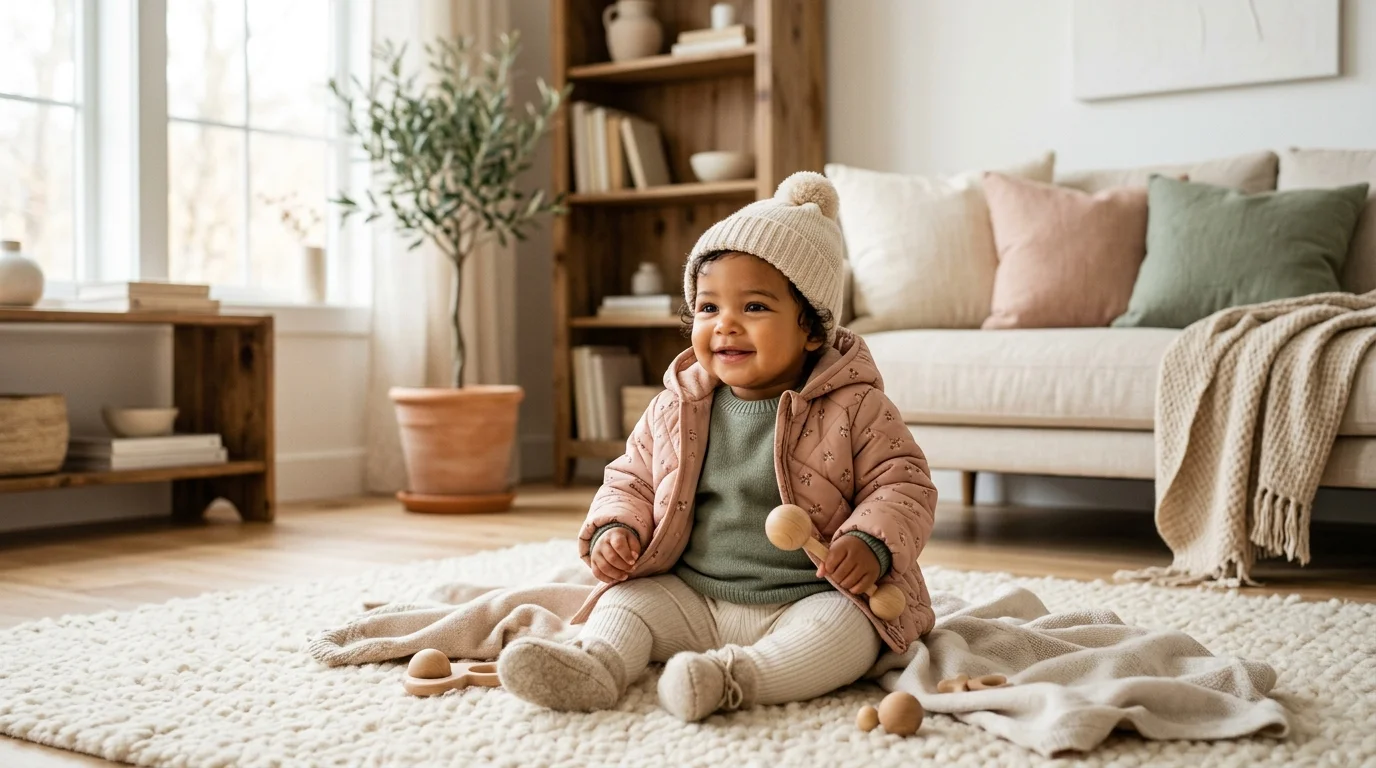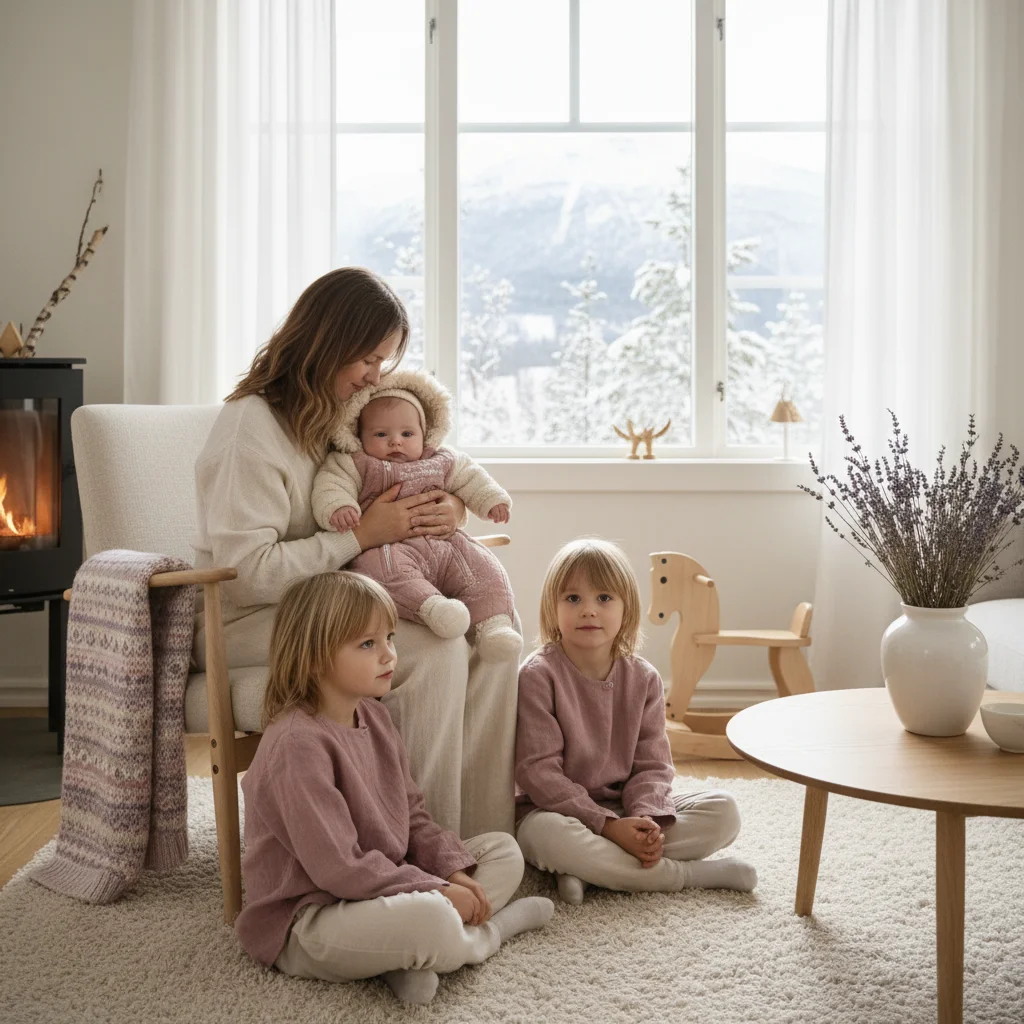
It's 10°F outside. The stroller is waiting in the hallway. Your baby just fell asleep after nursing. And you're wondering: are two wool layers enough, or do they need fleece on top as well?
Dressing a baby for cold weather is a skill no one teaches you in prenatal class. But once you understand the layering principle, it becomes more intuitive than you'd think.
Why Layering Works
Layering isn't about piling on as many clothes as possible. It's about creating air pockets between layers that trap warmth. The principle is the same as for adults, with one important difference: babies regulate body temperature less effectively than adults do.
According to the AAP, babies lose heat quickly, especially through their heads. They also can't tell you when they're cold. That's why you need to check proactively.
Temperature check: Feel your baby's neck or chest, not their hands. Cold hands are normal. If the neck is warm and dry, your baby is comfortable. If it's damp and sweaty, they have too much on. If it's cold, they need more.
The Three Layers
Layer 1. Base (moisture-wicking): Wool or wool/silk blend next to the skin. This layer pulls moisture away from the body. Cotton holds moisture against the skin and should be avoided as a base layer in cold weather.
Layer 2. Mid (insulating): Wool, fleece, or wool-fleece blend. This layer traps warmth. In moderate cold (down to about 23°F / -5°C), one mid layer is enough. In colder conditions, add an extra layer.
Layer 3. Outer (protective): A windproof and ideally waterproof outer layer. A snowsuit or winter coverall that stops wind and keeps cold out. For stroller babies, a good insulated footmuff works here as well.
Materials: What Works Best?
Wool, the cold-weather staple
Wool is nature's own technical fabric. It keeps you warm even when damp, regulates temperature, and is naturally antibacterial. Merino wool is soft enough for baby skin and rarely causes irritation.
Brands like Joha, Smartwool, and Icebreaker make wool garments specifically designed for babies, with flat seams and good fit.
Wool/silk blend
A mix of wool and silk creates a thinner, softer fabric that works well as a base layer. Particularly good for babies with sensitive skin.
Fleece
Synthetic fleece is lightweight, dries quickly, and insulates well. It works fine as a mid layer, but doesn't regulate temperature as well as wool. Best worn over wool, not directly on skin.
Cotton
Cotton is fine indoors and in warm weather, but not ideal as a cold-weather base layer. It absorbs sweat and dries slowly, which can chill your baby.
Avoid thick down quilts or heavy blankets in the stroller. They can cause overheating, which the AAP identifies as a risk factor for SIDS. Use multiple thin, adjustable layers instead.
Dressing Guide by Temperature
Above 32°F / 0°C (mild winter weather)
- Wool or wool/silk bodysuit and wool leggings
- Wool sweater or fleece suit
- Light snowsuit or stroller bunting
- Hat and thin wool mittens
32°F to 14°F / 0°C to -10°C
- Wool/silk bodysuit and wool leggings
- Wool suit or wool sweater and pants
- Fleece or wool-fleece suit
- Warm snowsuit or thick stroller footmuff
- Wool hat, wool mittens, wool socks
Below 14°F / -10°C
- Double wool base layer (two wool layers or extra wool bodysuit)
- Wool suit
- Fleece suit
- Thick snowsuit and footmuff
- Balaclava or wind-blocking hat, extra-thick mittens, wool booties
At temperatures below 5°F / -15°C, many pediatric sources recommend keeping outings short and placing the stroller in a sheltered, windless spot for any outdoor naps. Newborns under four weeks are more vulnerable than older babies.
Outdoor Naps in Cold Weather
Outdoor napping in cold weather is a Nordic tradition that many parents swear by. Babies often sleep longer and more deeply outside in fresh air. But it requires the right clothing and supervision.
Guidelines for safe outdoor naps
- Never leave your baby outside alone and unsupervised
- Use a good stroller footmuff or sleeping bag with a windproof outer layer
- Check the neck temperature regularly, at least every 20 minutes in severe cold
- Position the stroller in a sheltered spot, ideally against a wall or windbreak
- Newborns should have shorter outdoor periods in very cold weather
Common Mistakes Parents Make
Too many clothes
Overheating is more common than underdressing. A sweaty baby who's then exposed to cold gets cold fast. Check the neck regularly and remove a layer if your baby feels clammy.
Cotton as a base layer in cold weather
A cotton bodysuit under a wool suit traps moisture against the skin. Swap it for a wool or wool/silk bodysuit, the difference is surprisingly significant.
Clothes that are too tight
Layers need enough room to create air pockets between them. Clothing that's too snug provides worse insulation. Go a size up in outer layers.
Forgetting the feet
Babies lose significant heat through their feet. Wool socks (double-layered if possible) and wool stroller booties or sheepskin shoes keep the toes warm.
Frequently Asked Questions
How many layers does my baby need?
A general rule: one more layer than you're wearing. But always check the neck, babies vary, and some run warmer than others.
Can my baby get cold without crying?
Yes. Cold babies can become quiet and lethargic instead of crying. Check temperature actively, especially on longer outings.
Is outdoor napping safe at -4°F / -20°C?
In short periods, with proper layering, a windless spot, and active monitoring, yes. But many pediatric sources recommend limiting outdoor naps below about 5°F / -15°C for young babies. Use common sense and know your child.
Does everything against the skin need to be wool?
Wool or wool/silk is best for temperature regulation. If your baby reacts to wool (rare with merino), bamboo or synthetic base layers can work, but regulate moisture less effectively.
Dress Smart, Not Heavy
Cold-weather dressing with a baby isn't about buying the most wool. It's about understanding the system and adjusting for weather, activity, and your baby's signals. A well-dressed baby is a safe, comfortable baby, and a much less stressed parent.
Further Reading
- Winter Activities with Baby and Toddler
- Baby Clothes Through the Seasons
- Outdoor Naps with Baby. Complete Guide
- Baby's Sleep Environment
Sources
- American Academy of Pediatrics. Safe Sleep
- AAP. Cold Weather Safety Tips
- WHO. Safe Sleep Recommendations
🔧 Helpful Tools
- Baby Milestones Tracker. Track your baby's developmental milestones
- All Baby Tools. Browse all free tools for pregnancy and baby care
📖 Related Articles
- Dressing Baby for Winter. The Layering Guide. How to dress your baby for winter. A complete guide to the layering principle, the right materials, and temperature checks.
- How to Dress Your Baby by Season and Temperature. How many layers does your baby need? Complete guide to dressing your baby right, from cold winter to warm summer.
- Baby and Child Hats: A Complete Guide for All Seasons. Complete guide to hats for babies and children. Wool hats, balaclavas, sun hats, and UV hats. Sizes, materials, and tips for every season.