Wool is one of the smartest materials for children's clothing in cold climates. It warms when it's cold, cools when it's warm, and manages moisture better than any synthetic alternative. No wonder parents have been dressing their children in wool for generations.
This guide covers everything you need to know about wool clothing for children, from choosing the right type of wool and garments to washing, care, and the best brands.
Why Wool Is Perfect for Children
Temperature Regulation
Wool regulates body temperature naturally. Wool fibers trap warm air when it's cold outside and release heat when the child is active. That means the child stays comfortable in wool clothing throughout the day, from quiet indoor play to active outdoor adventures.
For babies who can't communicate whether they're cold or warm, this self-regulation is invaluable.
Moisture Management
Wool absorbs up to 30 percent of its own weight in moisture without feeling wet. Sweat is wicked away from the skin and gradually evaporates. This makes wool the best inner layer for active children.
Synthetic materials wick moisture faster but can feel clammy. Cotton retains moisture and becomes cold, which is why cotton is a poor choice as a base layer in winter.
Odor-Resistant and Self-Cleaning
Wool fibers have a natural ability to neutralize odors. The bacteria that cause sweat odor don't thrive in wool. This means wool garments can be worn several days in a row without washing, a real advantage during busy daycare days.
Hang the wool garment to air overnight, and it's ready to use again the next day.
Save time: Wool rarely needs washing. Air wool garments between uses, and only wash when visibly dirty or stained. This saves time, energy, and extends the garment's life.
Flame Resistant
Wool is naturally flame resistant. It is difficult to ignite, burns slowly, and self-extinguishes. For children's clothing, this provides a level of safety that few other materials can match.
Merino Wool vs Regular Wool
Merino Wool
Merino wool comes from Merino sheep and has exceptionally fine fibers (under 20 microns). The fine fibers make the fabric feel soft against the skin and non-itchy. Merino wool is the first choice for children with sensitive skin.
Benefits of merino wool:
- Soft and comfortable against the skin
- Non-itchy, suitable for sensitive children's skin
- Fine fibers give a lightweight and flexible fabric
- Excellent moisture regulation
The downside is the price. Merino wool costs more than regular wool and is somewhat less durable.
Regular Wool (crossbred)
Regular and crossbred wool has thicker fibers (over 25 microns). The fabric is more durable and holds its shape better over time. In return, it can feel rougher against the skin.
Regular wool works well as a mid layer (sweater, pants) where it doesn't sit directly against the skin. It is also a more affordable alternative to merino wool.
Rule of thumb: Merino wool next to the skin, regular wool as a mid layer. That way the child gets the best of both worlds, comfort inside and durability outside.
Wool/Silk Blend
Many manufacturers offer wool garments with a silk blend (typically 70/30 wool/silk). Silk adds extra softness and gives a slightly cooler feel. Wool/silk blends work well as the innermost layer in summer or during transitional periods.
For children with very sensitive skin, a wool/silk blend can be a good alternative to pure merino wool.
Wool Garments by Type. What Does Your Child Need?
Base Layer (innermost layer)
The base layer sits closest to the skin and should wick moisture away. Merino wool is the clear first choice here.
Wool bodysuit (0–2 years): A wool bodysuit covers the entire upper body and is easy to put on and take off with snap buttons. Choose styles with flatlock seams that don't irritate the skin. See our detailed guide to wool underwear for children.
Wool top and leggings (2+ years): As the child grows out of bodysuits, move to long-sleeved wool tops and wool leggings. Choose styles with a good fit that don't bunch up under outer layers.
Wool socks: Wool footwear is important because feet lose a lot of heat. Merino wool socks keep feet warm and dry. Always keep a spare pair in the daycare bag.
Mid Layer
The mid layer provides insulation and should retain heat. Both merino and regular wool work here.
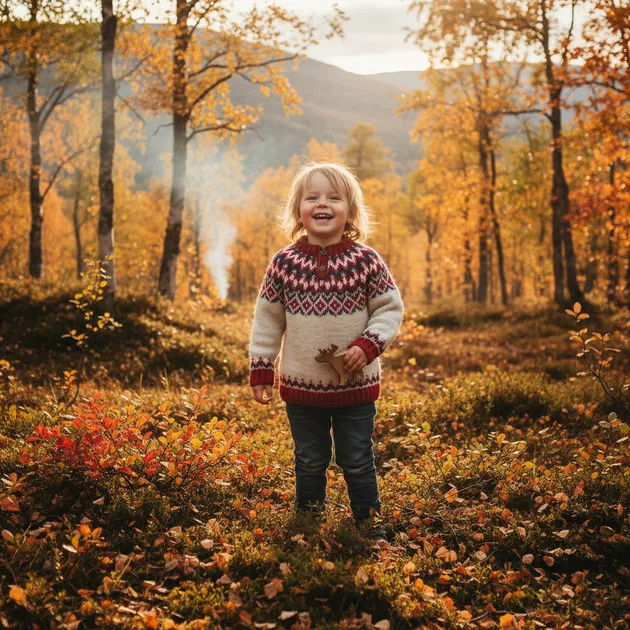
Wool sweater: A classic wool sweater is a versatile mid layer suitable from daycare to a day hike. Choose knitted wool for extra warmth or lighter merino for active days.
Wool pants: Wool pants range from thin leggings to thick knitted trousers. For daycare use, a medium-weight wool pant with a good waistband is most practical.
Wool fleece/jacket: A wool fleece combines wool's properties with the softness of fleece. Works as a mid layer under a winter suit or as an outer layer on mild days.
Outer Layer
Wool is rarely used as an outer layer in cold, wet weather, that requires a waterproof winter suit or rain gear. But knitted wool can function as an outer layer on dry, mild days.
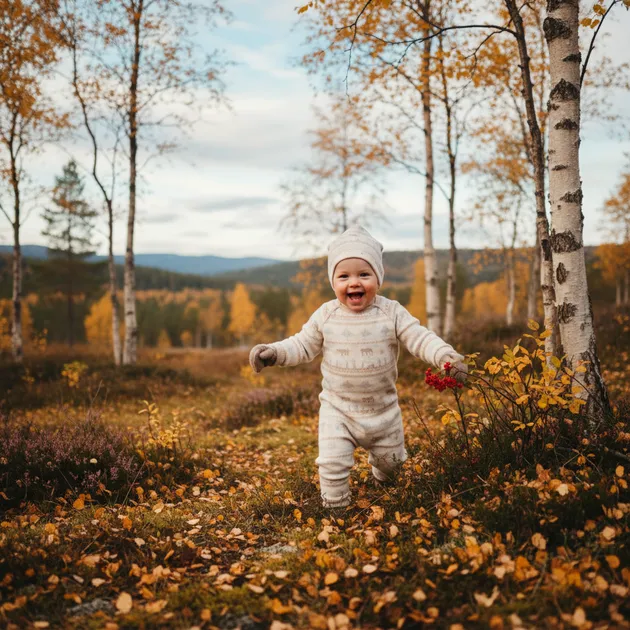
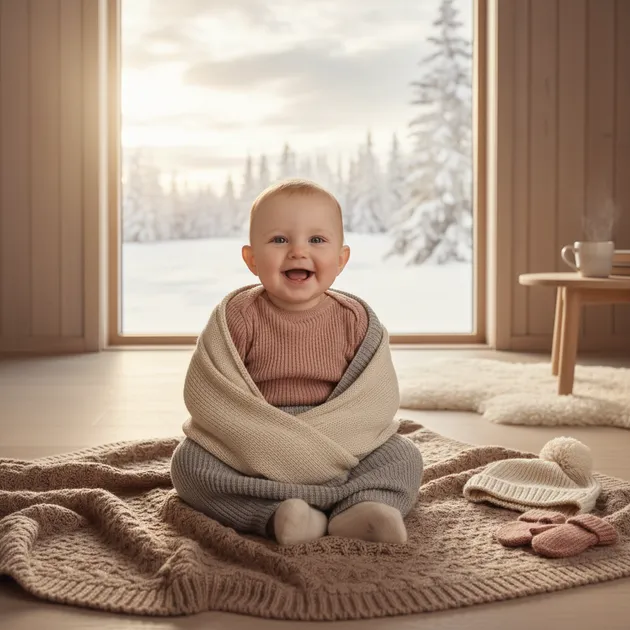
Wool overall: A knitted wool overall is perfect for babies indoors or on mild autumn days. It covers the whole body and keeps the child warm without restricting movement.
Wool Accessories
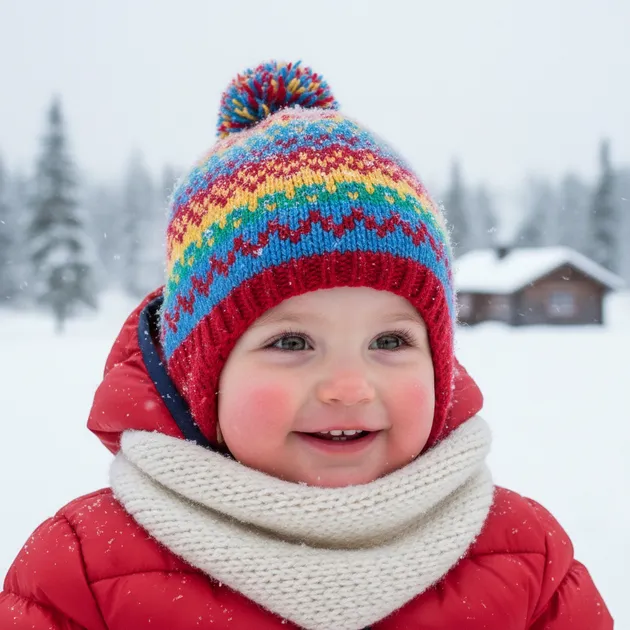
Wool hat: Babies can lose up to 40 percent of body heat through their heads. A wool hat is one of the most important single items in the wardrobe. Choose merino wool for the smallest babies, and a double layer for cold days.
Wool mittens: Wool mittens keep hands warmer than gloves because the fingers warm each other. For babies, mittens with a long cuff are best, they're hard to pull off.
Wool neck gaiter/balaclava: A wool gaiter protects the neck and throat from cold wind. A balaclava covers the whole head and neck in one garment, practical for the youngest children who pull off their hat and gaiter separately.
The Layering Principle with Wool
Layering is the foundational principle for dressing children in cold climates. Multiple thin layers insulate better than one thick layer because the air between the layers acts as additional insulation.
Three Layers for Winter
Layer 1, innermost: Merino wool bodysuit or wool top and leggings. Close to the skin, wicks moisture.
Layer 2, middle: Wool sweater and wool pants. Insulates and retains heat. In very cold weather (below 14°F/-10°C) you can add another wool layer.
Layer 3, outermost: Waterproof and windproof winter suit. Protects against weather and wind.
Adjusting for Temperature
| Temperature | Layer 1 | Layer 2 | Layer 3 |
|---|---|---|---|
| +41°F to +23°F (5°C to -5°C) | Thin merino | Wool sweater + wool pants | Winter suit |
| +23°F to +5°F (-5°C to -15°C) | Thick merino | Double wool sweater | Winter suit |
| Below +5°F (-15°C) | Thick merino | Double wool + fleece | Winter suit + extra blanket |
| +41°F to +59°F (5°C to 15°C) | Wool/silk | Lighter wool sweater | Softshell or fleece jacket |
Overheating: Check the child's neck regularly. It should be warm and dry, not clammy or sweaty. An overheated child is more vulnerable to getting cold afterward.
Wool at Daycare
Daycare workers appreciate the layering system because it makes it easy to adjust clothing throughout the day. Label all wool garments clearly with the child's name, wool sweaters look alike and items go missing easily in the cloakroom.
Always keep a spare pair of wool socks and a wool sweater in the daycare bag. Children get wet, and a dry wool change can save the rest of outdoor play.
Wool Brands for Children
Janus (Norway)
Norway's oldest wool producer, founded in 1895. Janus produces in Norway using both Norwegian and merino wool. Known for good quality at reasonable prices.
Lillelam (Norway)
Specializes in children's clothing in merino wool. Lillelam is known for soft, comfortable garments with charming designs. Everything is produced in high-quality merino wool.
Devold (Norway)
Norwegian wool producer since 1853. Devold is known for technical wool for outdoor activities and has its own children's collection with base layer and mid layer in merino wool.
Dale of Norway (Norway)
Best known for knitted sweaters with traditional Nordic patterns. Dale also produces children's clothing in wool, from traditional fair isle to lighter merino pieces.
Joha (Denmark)
Danish producer with a wide selection of base layer in merino wool and wool/silk for children. Popular for their soft, allergy-friendly wool garments.
Hust & Claire (Denmark)
Offers children's clothing in merino wool with a focus on design and comfort. Good quality in the mid-price range.
Save money: High-quality wool garments are durable and can be used by several children. Check secondhand marketplaces and local resale groups for used merino wool, often in near-new condition.
Price Guide. What Does Children's Wool Clothing Cost?
Prices vary by region and brand. As a general guide, expect to pay:
| Garment | Budget | Mid-range | Premium |
|---|---|---|---|
| Wool bodysuit | $ | $$ | $$$ |
| Wool top | $ | $$ | $$$ |
| Wool leggings | $ | $$ | $$$ |
| Wool sweater | $$ | $$$ | $$$$ |
| Wool pants | $$ | $$$ | $$$$ |
| Wool hat | $ | $$ | $$$ |
| Wool socks (2-pack) | $ | $$ | $$$ |
Quality wool garments are an investment that pays off, they last through multiple children.
Washing and Caring for Wool
Proper washing is key to preserving wool's properties over time. Incorrect washing can shrink, felt, or ruin a garment.
Machine Washing
Most modern children's wool garments can be machine washed on a wool or delicate program (86–104°F / 30–40°C). Use a wool detergent without enzymes, regular detergent breaks down wool fibers.
How to machine wash wool:
- Turn the garment inside out
- Select wool or hand wash program (86°F / 30°C)
- Use wool detergent (Eucalan, Woolite, or similar)
- Spin on low speed (600–800 rpm)
- Dry flat on a towel, never in a dryer
Hand Washing
For finer wool garments or items labeled "hand wash only":
- Fill a basin with lukewarm water (86°F / 30°C)
- Add wool detergent
- Submerge the garment and press gently, never wring or scrub
- Rinse in water at the same temperature (temperature shock can shrink wool)
- Gently press out water with a towel
- Dry flat
Three things that ruin wool: Hot water (over 104°F/40°C), regular detergent with enzymes, and the tumble dryer. All three can shrink a wool garment to half its size.
Stain Removal
Treat stains as quickly as possible:
- Food stains: Scrape off residue, dab with cold water and wool detergent
- Mud/dirt: Let dry completely, brush off dry soil, then wash
- Spit-up/milk: Rinse with cold water immediately, then wash on wool program
Storage
When wool season is over:
- Wash all garments before storing (moths are attracted to body oils and food stains)
- Store in a sealed bag or box with lavender or cedar (to deter moths)
- Avoid hanging storage, wool stretches. Fold garments flat.
Wool Through the Seasons
Wool isn't just for winter. With the right thickness and blend, wool works year-round.
Winter: Thick merino as base layer, regular wool as mid layer. Two to three wool layers under a winter suit.
Spring/Autumn: Thinner merino as base layer, a wool sweater as mid layer. Perfect under a softshell or rain jacket.
Summer: Thin wool/silk blend as a single layer. Regulates temperature on warm days and protects against sunburn, especially useful for babies who shouldn't wear sunscreen.
Size Guide for Wool Clothing
Wool garments fit best when they are close-fitting (base layer) or with a little room (mid layer). Avoid oversized wool garments on the inside, they bunch up in folds and lose insulation.
- Base layer: Buy in the correct size or one up. Should fit close without being tight.
- Mid layer: One size up allows room for base layer underneath and air between the layers.
- Wool shrinks: Even with correct washing, wool can shrink slightly. Account for this when buying.
Wool Wardrobe Checklist
Here is a minimum wool wardrobe for one child:
- ✅ 3–4 wool bodysuits/wool tops (base layer)
- ✅ 3–4 wool leggings/wool pants (base layer)
- ✅ 2 wool sweaters (mid layer)
- ✅ 2 wool pants (mid layer)
- ✅ 5–6 pairs of wool socks
- ✅ 2 wool hats (one thin, one thick)
- ✅ 1–2 pairs of wool mittens
- ✅ 1 wool neck gaiter or balaclava
Frequently Asked Questions About Wool Clothing for Children
Can babies with eczema wear wool?
Merino wool with fibers under 18.5 microns is tolerated by most children with eczema. Studies show that fine merino wool can relieve symptoms because it regulates moisture better than cotton. Start with a short trial garment and observe the skin. Coarse wool should be avoided with eczema.
How often should children's wool clothing be washed?
Wool rarely needs washing. Base layers can generally be worn 3–5 days between washes, provided they are aired overnight. Mid layers like wool sweaters can go weeks without washing. Wash only when visibly dirty, stained, or smelly.
What is the difference between merino wool and regular wool?
Merino wool has fibers under 20 microns, making it softer and non-itchy compared to regular wool (over 25 microns). Merino wool doesn't itch and is suitable directly against the skin. Regular wool is more durable and more affordable, but works best as a mid layer.
Is wool clothing worth the price?
Yes, for most families wool is a good investment. Wool garments last longer than cotton or synthetics, rarely need washing (saves energy), and can be used by multiple children. A quality merino garment can be handed down through 2–3 siblings without losing its properties.
Can children wear wool in summer?
Yes, thin merino wool or a wool/silk blend works well in summer. The wool regulates temperature and keeps the child cool by wicking sweat away from the skin. For babies under one year, a thin wool layer also provides protection against UV radiation.
Sources
- AAP. Infant and toddler nutrition guidelines
- WHO. Global infant feeding recommendations
- CDC. Infant and toddler nutrition resources
🔧 Helpful Tools
- All Baby Tools. Browse all free tools for pregnancy and baby care
📖 Related Articles
- Wool Underwear for Children. Guide to Merino Wool and Layering. Everything about wool underwear for children and babies. Merino wool, sizing, washing, and top brands. How to dress your child using the layering system.
- Dressing Your Baby for Winter: The Complete Layering Guide. How to dress your baby for cold weather. A complete guide to the layering system, the right materials, and how to check if your baby is the right temperature.
- Dressing Baby for Winter. The Layering Guide. How to dress your baby for winter. A complete guide to the layering principle, the right materials, and temperature checks.