Your shoulders creep upward. Your neck is stiff. Your back carries the baby, the car seat, and the constant bending over the changing table. And your mind? It never stops.
Yoga gives you a break from all of that. Not the Instagram-worthy version with advanced poses, but the real kind: breath, stretching, and quiet minutes just for you.
Why Yoga Is Perfect After Birth
Yoga is one of the safest things you can do after giving birth. According to the ACOG, light physical activity can begin as soon as you feel ready, and gentle stretching is among the very lightest forms of exercise.
The benefits are many:
- Stress reduction. Deep breathing exercises activate the parasympathetic nervous system. Your body shifts from alarm mode to calm.
- Flexibility. Pregnancy and birth tighten the hips, back, and shoulders. Yoga gently releases tension.
- Core rebuilding. Yoga activates the deep core muscles without the abrupt movements that can worsen diastasis recti.
- Better sleep. Just 10 minutes of relaxation before bedtime can improve sleep quality, even with nighttime wake-ups.
- Self-care. Doing something for yourself, no matter how brief, builds self-esteem in a phase where everything revolves around the baby.
When Can You Start?
Gentle stretching and breathing exercises can be done from the very first days. Listen to your body. If you feel pain, stop.
For more active postures, like standing positions and balance work, most women are ready after 4–6 weeks, depending on the birth.
After a C-section, you should wait with core-intensive exercises and deep twists until the incision has healed, usually 6–8 weeks. Start with breathing and gentle upper body and hip stretching.
6 Safe Yoga Exercises After Birth
You don't need a mat, a class, or an instructor. Just a quiet corner and 10–15 minutes.
1. Cat-Cow
Get on all fours. Hands under shoulders, knees under hips. Arch your back up toward the ceiling as you exhale (cat). Lower your belly toward the floor as you inhale (cow). Repeat 8–10 times.
This exercise mobilizes the entire spine and relieves stiffness in the lower back. Perfect after long nursing sessions.
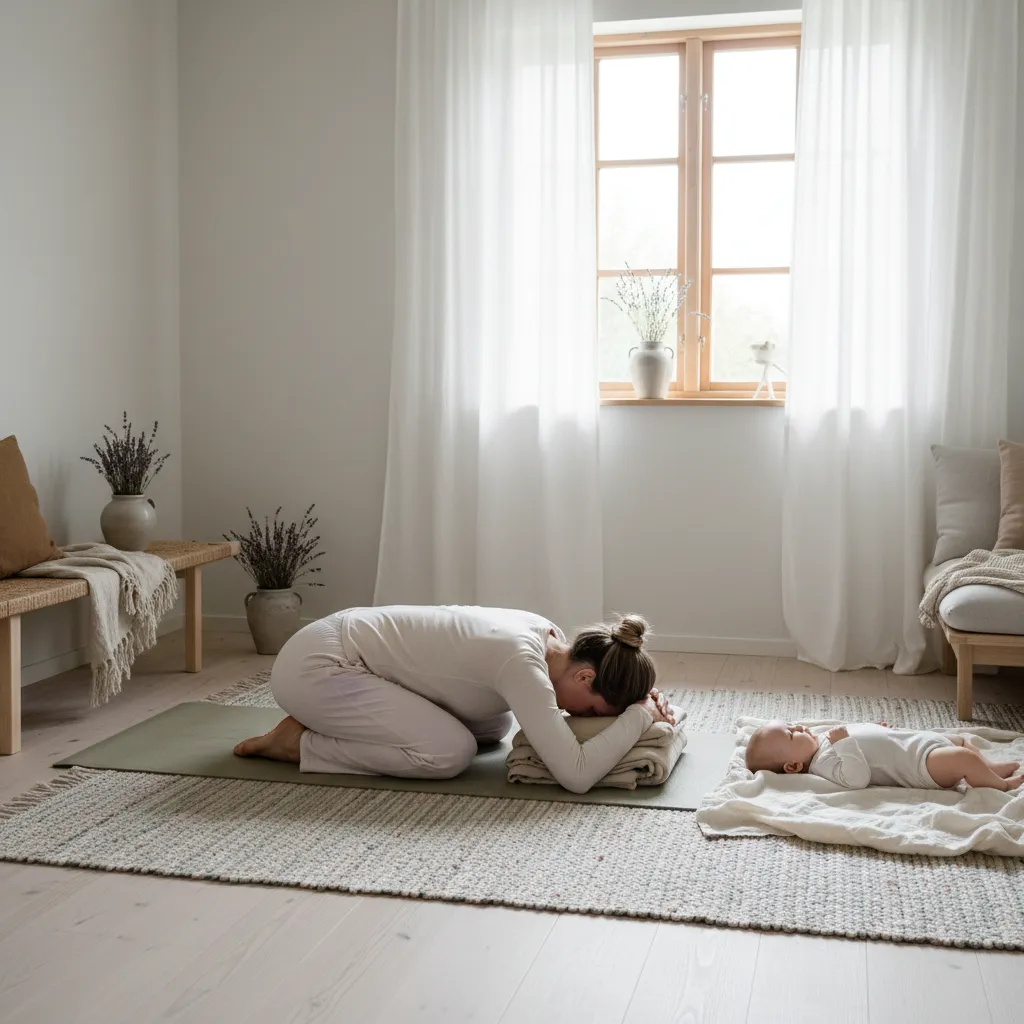
2. Child's Pose
Sit on your heels with your knees slightly apart. Stretch your arms forward along the floor and lower your forehead down. Breathe deeply for 5–10 breaths.
One of the most calming poses in yoga. Opens the hips and back, and gives you a moment of peace.
3. Bridge Pose
Lie on your back with bent knees and feet on the floor. Press your hips up toward the ceiling. Hold for 5 seconds. Lower slowly. This strengthens the glutes and activates the pelvic floor. 3 sets of 8 repetitions.
4. Tree Pose
Stand on one leg. Place the other foot against your calf or thigh (never against the knee). Hands in front of your chest. Hold for 5–10 breaths. Switch sides.
Builds balance and concentration. Use a wall for support the first few times.
5. Supine Twist
Lie on your back. Bend your knees and lower them to one side. Stretch your arms out to the sides. Breathe deeply for 5–8 breaths. Switch sides.
Opens the hips and back. After a C-section: wait until 6–8 weeks, and start with small movements.
6. Reclining Butterfly
Lie on your back. Let the soles of your feet meet and your knees fall out to the sides. Place your hands on your belly or beside your body. Breathe deeply for 1–2 minutes.
Gently opens the hips. Many people feel a deep relaxation in the pelvic floor.
Try doing the exercises in this order. They build on each other, from activation to strength to relaxation.

Breathing Exercises for Calm and Pelvic Floor Support
Your breath is the most powerful tool you have. Here are two techniques you can use daily.
Deep Diaphragmatic Breathing
Sit or lie comfortably. Place one hand on your chest and one on your belly. Breathe in through your nose, let your belly expand. Breathe out through your mouth, let your belly sink back. Your chest should move very little.
5 minutes of this noticeably calms the nervous system. Do it when the baby sleeps, or in the car before going into the store.
The 4-7-8 Technique
Breathe in through your nose for 4 seconds. Hold your breath for 7 seconds. Slowly breathe out through your mouth for 8 seconds. Repeat 3–4 times.
This technique is especially good for falling asleep. It signals to your body that it's safe to rest.
Yoga with Baby
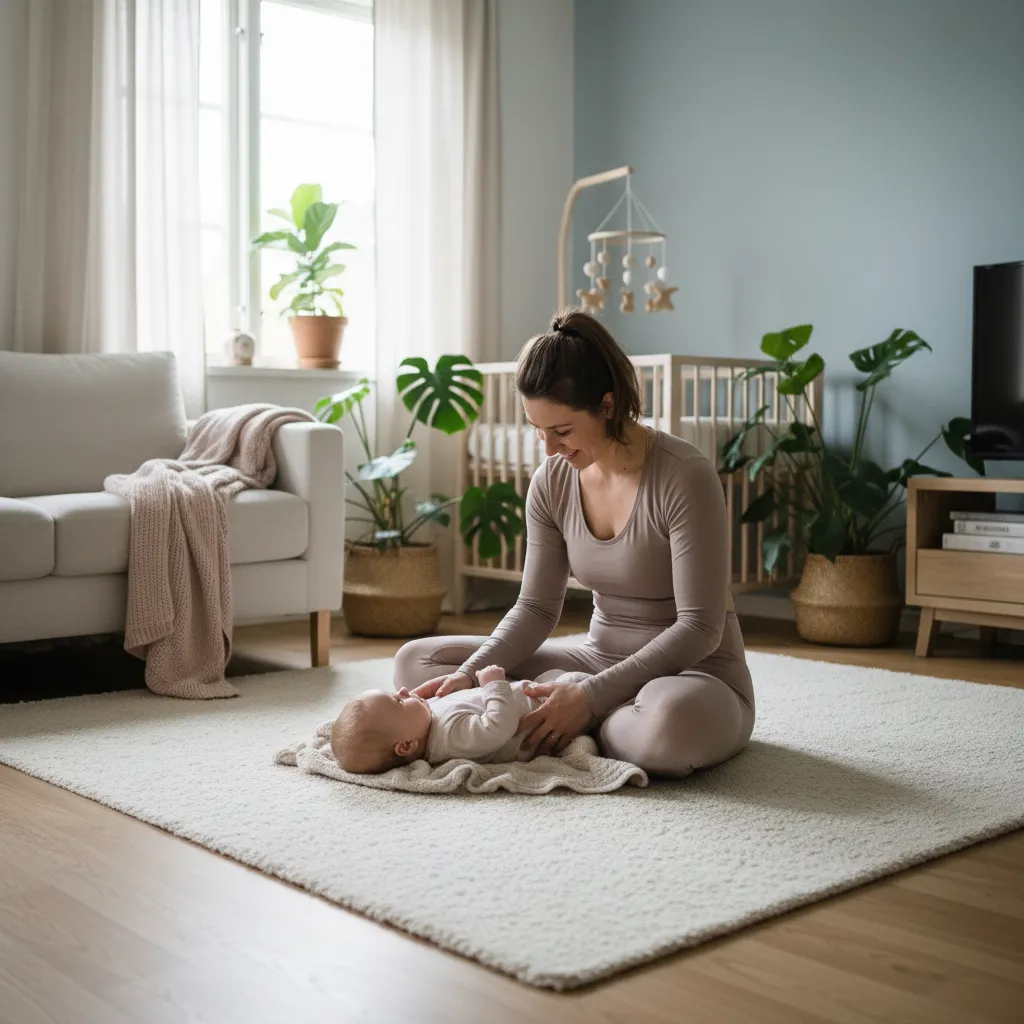
The baby doesn't have to be an obstacle, they can become part of the session.
- Child's Pose with the baby in front of you. Eye contact and tummy tickles while you stretch.
- Reclining Butterfly with the baby on your chest. Closeness and relaxation at the same time.
- Bridge Pose with the baby sitting on your hips. A little extra resistance, lots of laughter.
- Cat-Cow over the baby. Funny faces every time you look down. Entertainment for both.
Don't expect a quiet, meditative session. Expect laughter, interruptions, and 7 out of 10 exercises completed. That's enough.
Many communities offer mom-and-baby yoga through local community centers or yoga studios. Ask your pediatrician or check local community boards.
After a C-Section. Extra Caution
A C-section requires adjustments for the first 6–8 weeks:
- Avoid deep twists and poses that stretch the abdomen
- Start with breathing exercises, neck and shoulder stretching, gentle cat-cow
- Wait with bridge pose until 4–6 weeks (depending on wound healing)
- Listen to the scar. Stinging, pulling, or pain means you should stop
After the scar has healed (8–10 weeks), you can gently begin scar mobilization. Light massage around the scar improves circulation and reduces stiffness.
Frequently Asked Questions
When can I start yoga after giving birth?
After a normal vaginal delivery, you can start with gentle breathing exercises and pelvic floor activation within the first few weeks. Milder yoga exercises can begin after 6–8 weeks. After a C-section, you should wait longer and get clearance from your doctor. Always listen to your body and avoid exercises that cause pain.
Which yoga exercises should I avoid after birth?
Avoid deep backbends, intense abdominal work, and exercises that put pressure downward on the pelvic floor during the first months. Sit-ups and planks should wait until the core muscles are stable. If you have diastasis recti, avoid exercises that cause the belly to bulge forward.
Can I do yoga with my baby?
Yes, many mothers do yoga with their baby beside them or on the mat. The baby can lie on a blanket next to you and watch your movements. Some yoga studios offer dedicated mom-and-baby classes. Be prepared for interruptions, that's completely normal and part of the experience.
Get More from Your Training
Yoga is a perfect complement to strength training and pelvic floor exercises. Combine them for best results:
- Pelvic floor exercises daily
- Yoga 2–3 times a week for flexibility and calm
- Strength training 2–3 times a week for functional strength
- Walking or running programs when you're ready
Read More
Sources
🔧 Helpful Tools
- Pelvic Floor Trainer. Guided pelvic floor exercises for pregnancy and postpartum
- All Baby Tools. Browse all free tools for pregnancy and baby care