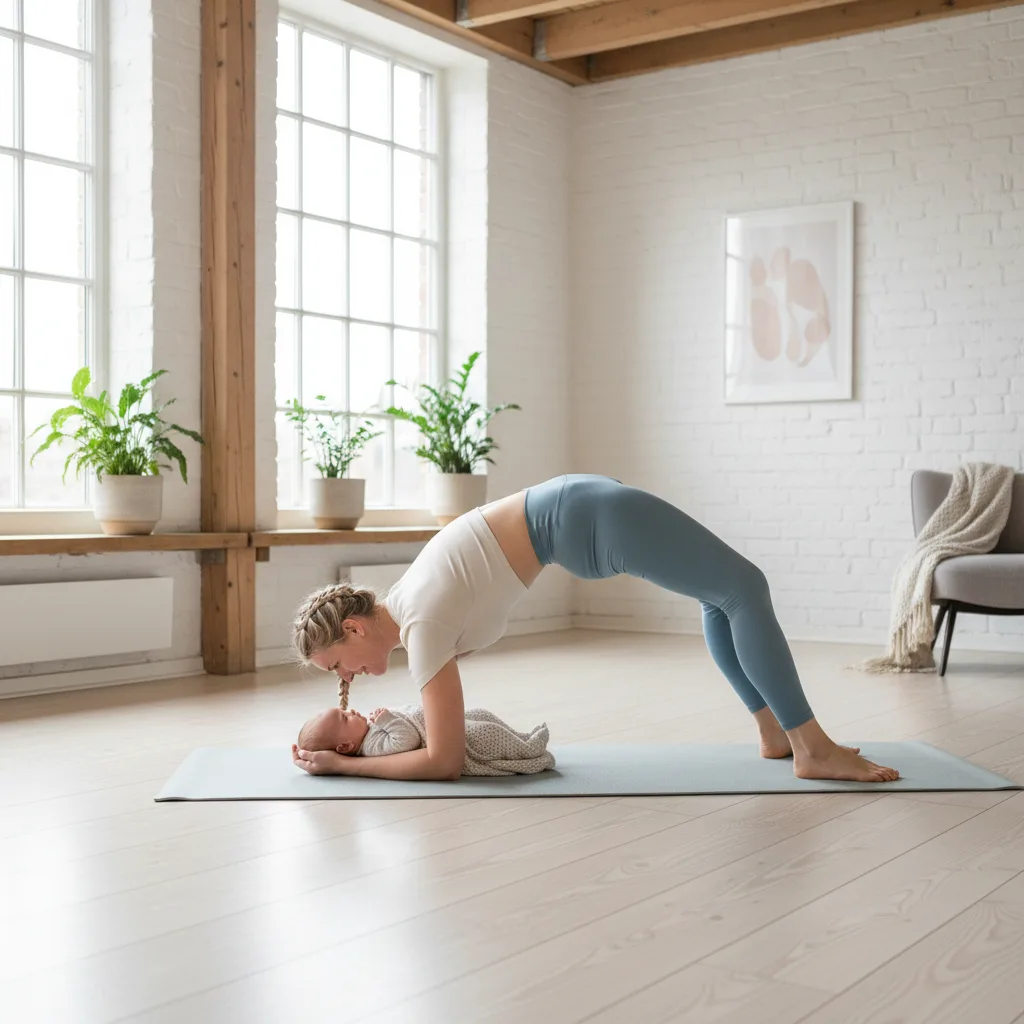
You feel it in your back when you lift the baby. In your arms when you carry the car seat. In your legs when you get up off the floor for the fifth time in an hour.
Your body has done something incredible. Now it deserves to become strong again, at your own pace.
When Can You Start Strength Training After Birth?
Forget the old rule about waiting six weeks. According to the American College of Obstetricians and Gynecologists (ACOG), you can begin light activity as soon as you feel ready after an uncomplicated vaginal birth.
But "light activity" means exactly that. Your body has been through enormous changes. The pelvic floor, abdominal muscles, and joints all need time.
The first weeks are not about getting strong, they are about re-establishing your connection with your body.
Had a cesarean section, significant tearing, or other complications? Talk to your doctor or midwife before starting. A C-section is major surgery that requires extra healing time.
Why Strength Training Matters After Birth
Many people think cardio is what counts postpartum. But strength training gives you something cardio cannot:
- Back support. You lift, carry, and bend hundreds of times a day. A strong back and core keeps you pain-free.
- Pelvic floor support. Strength training activates the muscles around the pelvic floor and gives it the support it needs to heal.
- Bone density. Pregnancy and breastfeeding draw calcium from the skeleton. Strength training helps rebuild bone mass.
- Energy. Counterintuitively, strength training gives you more energy, even with little sleep.
Phase 1: Gentle Activation (0–6 weeks)
This phase is about waking the body up gently. No weights, no resistance, just movement and awareness.
Breathing Exercises
Diaphragmatic breathing is the foundation of all postpartum training. Lie on your back with knees bent. Breathe in deeply through your nose, feel your ribcage expand. Exhale slowly through your mouth.
Do 10 deep breaths, three times a day. Simpler than it sounds, and more important than you think.
Pelvic Floor Exercises
Begin pelvic floor exercises within the first few days. Squeeze and hold for 5 seconds, release for 5 seconds. Start with 5 repetitions and build to 10.
Three sets daily is enough to feel a difference after 4–6 weeks.
Walking
Walking is the most underrated form of exercise after birth. Start with 10–15 minutes and increase gradually. Fresh air does good for both body and mood.
You can do pelvic floor exercises while breastfeeding, lying in bed, or waiting in line. Nobody can tell you're training.

Phase 2: Light Resistance (6–12 weeks)
After your postpartum checkup and clearance from your doctor, you can begin light strength exercises. Use your own bodyweight as resistance.
5 Exercises for Phase 2
1. Glute Bridges Lie on your back with knees bent. Press your hips up toward the ceiling. Hold for 3 seconds. 3 sets of 10 repetitions.
2. Wall Push-Ups Stand an arm's length from the wall. Bend your arms and push back. Easier than regular push-ups, but builds chest and shoulders.
3. Modified Squats Stand with feet shoulder-width apart. Bend down as if sitting in an invisible chair, no deeper than 90 degrees. 3 sets of 8 repetitions.
4. Pelvic Tilts Stand with your back against the wall. Tilt your pelvis forward and backward. Activates the core without overloading the abdominal muscles.
5. Side-Lying Leg Raises Lie on your side with legs straight. Slowly raise the top leg up and down. 10 repetitions on each side. Builds hips and stability.
Check for diastasis recti (separation of the abdominal muscles) before doing core exercises. Read more in our guide on diastasis recti after birth.
Phase 3: Progressive Loading (12+ weeks)
Now begins progressive strength building. You can gradually add resistance using dumbbells, resistance bands, or kettlebells.
How to Progress Safely
- Start light. 2–4 lb dumbbells are enough in the first weeks.
- Increase by 1–2 lbs when exercises feel easy at 3 sets of 12 repetitions.
- Train 2–3 times per week. More is not better, your body needs recovery.
- Include the whole body. Upper body, lower body, and core each session, or split them up.
Good Exercises for Phase 3
- Goblet squats (squat holding weight at chest)
- Romanian deadlifts with dumbbells
- Shoulder press
- Rows with band or dumbbells
- Lunges with bodyweight or light weight
- Dead bugs (core exercise safe after diastasis check)
Have a resistance band at home? Bands provide smooth resistance and are gentle on joints. Perfect for training at home while the baby sleeps.
Red Flags. Stop and Adjust
Your body gives you clear signals. Take them seriously:
- Urinary leakage during or after exercise, the pelvic floor is not ready
- Heaviness in the pelvic area, reduce the load
- Pain in the pelvis or lower back, adjust the exercise or weight
- Stomach bulging along the midline, sign of diastasis strain
- Increased bleeding after training in the first weeks, you are doing too much
None of these are "normal because you gave birth." They are signals to adapt your training.
Strength Training with Baby
Logistics are often the hardest part. Here are some tips:
- Train during naps. A 20-minute session while the baby sleeps is realistic.
- Baby as weight. Hold the baby on your chest during glute bridges or walk with them in a carrier.
- Floor time. Place baby on a blanket beside you. Eye contact and funny faces are entertainment enough.
- Lower your expectations. Two out of three planned sessions is a win. Flexibility beats perfection.

Frequently Asked Questions
When can I start strength training after birth?
After an uncomplicated vaginal birth, you can begin light exercises after 6–8 weeks. After a C-section, wait at least 8–12 weeks. Always start with pelvic floor exercises first, and listen to your body. Speak with your doctor or physical therapist if you are unsure.
Can strength training affect breastfeeding?
No, moderate strength training does not affect milk production or milk quality. Drink enough water, eat well, and train after nursing rather than right before. Wear a supportive sports bra.
What are the most important exercises to start with after birth?
Pelvic floor exercises, core activation (not sit-ups), squats, and lunges are good starting exercises. Focus on rebuilding the core and avoid exercises that put downward pressure on the pelvic floor until it is stable enough.
From Strength to Running
When your strength returns and the pelvic floor is stable (typically after 12 weeks), you can consider running.
A structured return-to-running program starts with a readiness check and adapts to your phase, safe and evidence-based.
Read More
Sources
🔧 Helpful Tools
- Pelvic Floor Trainer. Guided pelvic floor exercises for pregnancy and postpartum
- All Baby Tools. Browse all free tools for pregnancy and baby care