The Short Answer
Most babies say their first recognisable word between 10 and 14 months, with 12 months being the average. By 18 months, most children have a vocabulary of around 10–20 words. By 24 months, they typically combine two words into simple phrases.
Key Takeaways
- Average age for first words is 12 months: The normal range is 10–14 months. By 18 months, most babies have 10–20 words; by 24 months, two-word phrases like "more milk."
- "Mama" and "dada" only count when intentional: Random babble ("mamama") is not a first word, it counts once used specifically and consistently to refer to a parent.
- Talk, read, and respond daily: The AAP recommends reading aloud from birth. Narrating routines and responding to babble as if it is meaningful are among the most effective ways to support language.
- Screen time delays language: The AAP recommends no screen time for children under 18 months (except video calls), language develops best through live, face-to-face interaction.
- Act early if concerned: If your baby has no words by 16 months or no two-word combinations by 24 months, consult a speech-language therapist, early intervention has strong evidence of effectiveness.
What Counts as a "First Word"?
A first word is any consistent, intentional sound or approximation that a baby uses to refer to a specific person, object, or action, even if it does not sound exactly like the adult word.
Common first words include:
- People: "mama," "dada," "baba"
- Animals: "dog" (often "da" or "daw"), "cat" ("ca")
- Objects: "ball," "cup," "bye" (as a gesture-word combination)
- Actions: "more," "up," "no"
Note: "Mama" and "dada" only count as first words once a baby uses them specifically for a parent, not just as babble sounds.
Language Development Timeline
0–3 Months
- Coos and makes soft vowel sounds
- Reacts to voices and startles at loud sounds
- Cries differently for hunger, discomfort, and tiredness
4–6 Months
- Babbles with consonant-vowel combinations ("ba," "ma," "da")
- Laughs and vocalises in response to interaction
- Begins to recognise their own name
7–9 Months
- Babble becomes more complex and varied ("bababa," "mamama")
- Imitates sounds and intonation patterns
- Uses gestures (reaching, pointing) alongside vocalisations
10–12 Months
- First recognisable words emerge (10–14 months is normal range)
- Understands simple instructions ("wave bye-bye," "give me the ball")
- Combines gestures and vocalisations intentionally
12–18 Months
- Vocabulary grows to 10–20 words by 18 months
- Uses words to request, label, and greet
- Points to pictures in books when named
18–24 Months
- Vocabulary expands rapidly (a new word every few days)
- Begins combining two words: "more milk," "daddy go," "big dog"
- By 24 months, should have at least 50 words and some two-word combinations
How to Support Language Development
- Talk constantly: Narrate what you are doing, "Now I'm putting on your socks. One sock, two socks."
- Read aloud daily: Even before babies understand words, hearing language rhythms builds the neural foundation for speech. The AAP recommends reading from birth.
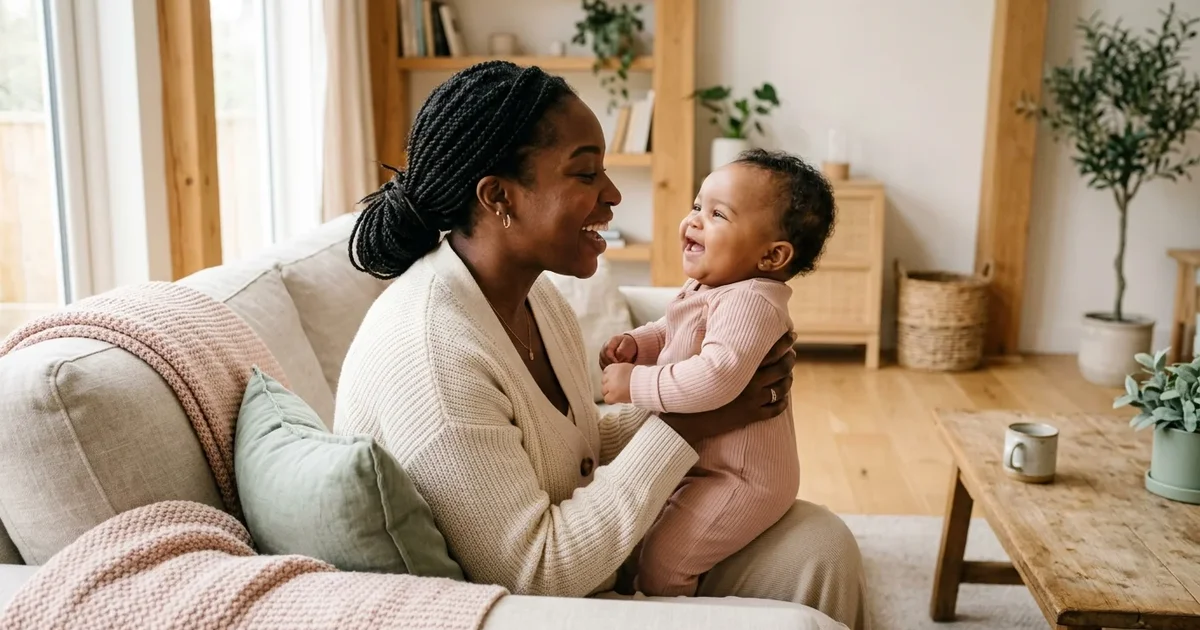
- Respond to babble: When your baby babbles, respond as if they said something meaningful. This teaches conversational turn-taking.
- Reduce screen time: The AAP recommends no screen time for children under 18 months (except video calls). Language develops best through live interaction.
- Sing songs and nursery rhymes: Rhythm and repetition strengthen auditory memory and phonological awareness.
- Name everything: "This is a spoon. Red spoon. You're holding the spoon."
Signs of Possible Speech Delay
Talk to your paediatrician or a speech-language therapist if your baby:
- Is not babbling by 12 months
- Has no gestures (pointing, waving) by 12 months
- Says no single words by 16 months
- Says no two-word combinations by 24 months
- Loses language skills they previously had (regression always warrants immediate evaluation)
Early speech therapy has strong evidence of effectiveness, the earlier a delay is addressed, the better the outcome. There is no benefit to "waiting and seeing" beyond the recommended milestone windows.
Bilingual Babies
Babies raised in bilingual households may have slightly smaller vocabularies in each individual language initially, but their total vocabulary across both languages is equivalent to monolingual peers. Bilingualism does not cause speech delay. The timeline for first words is the same.
Frequently Asked Questions
When do babies say their first words?
Most babies say their first recognisable word between 10 and 14 months, with 12 months being the average. By 18 months, most children have a vocabulary of around 10–20 words. By 24 months, they typically combine two words into simple phrases such as "more milk" or "daddy go."
Does "mama" and "dada" count as a first word?
"Mama" and "dada" only count as first words once a baby uses them specifically and consistently to refer to a parent, not just as random babble sounds. Many babies babble "mamama" and "dadada" from 6–7 months without these being intentional labels. The intentional, specific use is what makes it a true first word.
What is the difference between babbling and real words?
Babbling is repetitive sound play without consistent meaning ("bababa," "mamama"). A first word is a consistent, intentional sound, even if imperfect, used to refer to a specific person, object, or action every time. A baby saying "ba" consistently and specifically for ball is a first word, even though it does not sound exactly right.
When should I be concerned about a speech delay?
Contact your paediatrician or a speech-language therapist if your baby is not babbling by 12 months, has no gestures (pointing, waving) by 12 months, says no single words by 16 months, says no two-word combinations by 24 months, or loses language skills they previously had. Early speech therapy has strong evidence of effectiveness, earlier is better.
Does bilingualism cause speech delay?
No, bilingualism does not cause speech delay. Babies raised in bilingual households may have slightly smaller vocabularies in each individual language initially, but their total vocabulary across both languages is equivalent to monolingual peers. The timeline for first words is the same regardless of the number of languages in the home.
How can I support my baby's language development?
Talk constantly and narrate daily activities. Read aloud from birth, even before babies understand words, exposure to language rhythms builds neural foundations for speech. Respond to babble as if it is meaningful to model conversational turn-taking. The AAP recommends no screen time under 18 months (except video calls) as language develops best through live interaction.
Key Sources
- AAP. Language Development: 8 to 12 Months
- CDC. Developmental Milestones: 12 Months
- ASHA. How Does Your Child Hear and Talk?
- NHS. Your Baby's Development: Language
Sources
- AAP. Developmental milestones for children
- CDC. Learn the Signs. Act Early., milestone tracking
- WHO. Child health and development
🔧 Helpful Tools
- Baby Milestones Tracker. Track your baby's developmental milestones
- All Baby Tools. Browse all free tools for pregnancy and baby care
📖 Related Articles
- Baby's First Words: Documenting Language Development. Tips for documenting your baby's first words and language development. Practical advice for memory books, video, and digital diaries.