The Short Answer
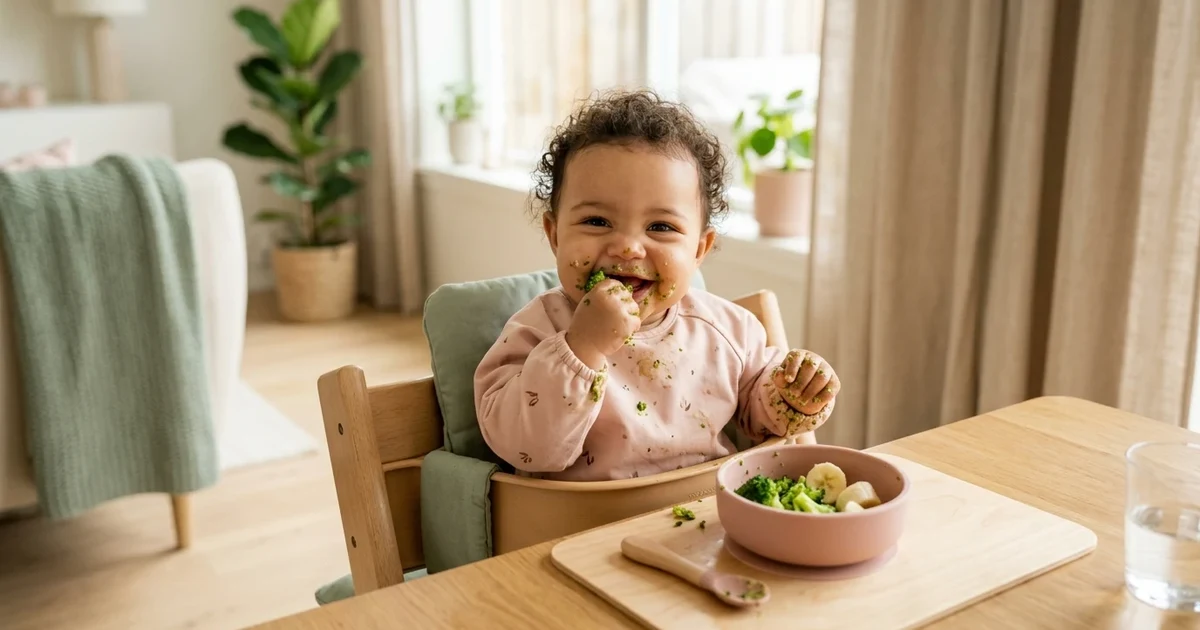
Baby-led weaning (BLW) means offering soft, appropriately-sized finger foods from around 6 months, letting your baby self-feed instead of starting with spoon-fed purees. It is safe when signs of readiness are met and foods are prepared correctly.
Key Takeaways
- BLW can start at around 6 months, not before 4 months, when all three readiness signs are present (sits with support, lost tongue-thrust reflex, shows interest in food)
- Food must be soft enough to squash between thumb and forefinger and cut into stick/chip shapes long enough to stick out of a fist
- Gagging is normal and protective, it differs from choking, which is silent; learn infant first aid before starting BLW
- The AAP recommends introducing common allergens (peanut, egg, fish, sesame) early from 6 months to reduce allergy risk
- Breast milk or formula remains the primary nutrition source until 12 months, regardless of how much solid food baby eats
What Is Baby-Led Weaning?
Baby-led weaning was popularised by UK midwife and researcher Gill Rapley. Instead of purees, babies are offered whole soft foods they can pick up and bring to their mouth themselves. This approach:
- Develops fine motor skills and hand-eye coordination
- Exposes babies to varied textures from the start
- Supports self-regulation of appetite (babies stop when full)
- Research suggests potential benefits for healthy weight development
The AAP supports both BLW and traditional spoon-feeding, noting that a combination approach works well for many families.
Readiness Checklist
Only begin BLW when all three signs are present:
- ✅ Can sit up unsupported (or with minimal support) and hold head steady
- ✅ Has lost tongue-thrust reflex (doesn't push food straight back out)
- ✅ Shows clear interest in food, reaches, watches, opens mouth
Most babies reach this point at around 6 months. Starting before 4 months is unsafe regardless of readiness signs.
How to Prepare BLW Foods Safely
The right shape and texture is everything in BLW:
Shape:
- Cut food into stick/chip shapes (roughly finger-length, thumb-width)
- Babies use a palmar grasp first, they need enough food to stick out of their fist
- After 8–9 months, as the pincer grasp develops, offer smaller pieces
Texture:
- Food should be soft enough to squash between your thumb and forefinger
- If it needs chewing, it's too hard for BLW beginners
- Cook vegetables until tender; avoid raw hard vegetables in the early weeks
Slippery foods (like avocado or banana):
- Roll in baby cereal, hemp seeds, or finely ground flaxseed for grip
First Foods for BLW
Excellent starting foods include:
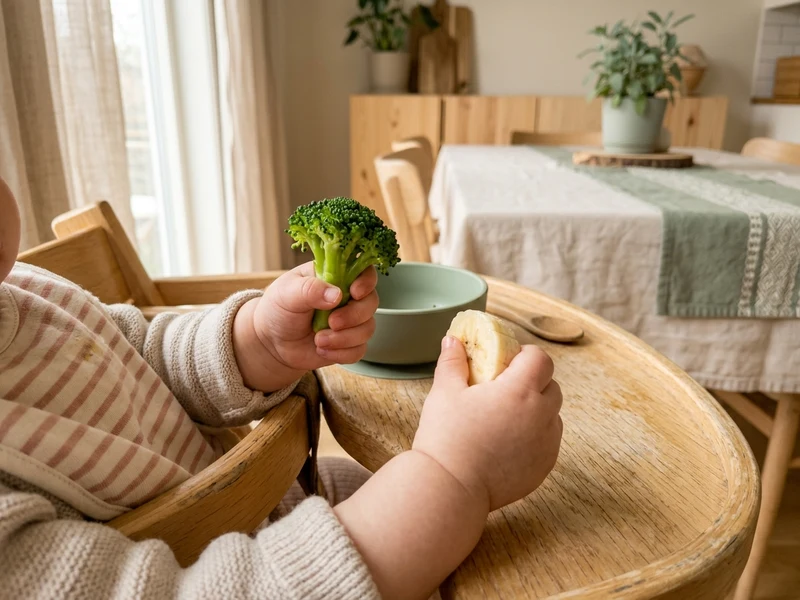
- Steamed broccoli florets, the "handle" makes them easy to hold
- Roasted sweet potato sticks, soft, nutritious, easy to grip
- Thick slices of ripe banana or avocado (rolled in cereal)
- Soft-cooked carrot sticks
- Toast fingers with mashed avocado, hummus, or thinned nut butter
- Scrambled egg, soft, iron-rich, introduces eggs early
- Lamb or beef strips (well-cooked, soft), excellent iron source
What About Gagging vs. Choking?
Gagging is normal and protective. Babies have a highly sensitive gag reflex positioned further forward in the mouth than adults. You will see gagging often, this is the reflex working correctly. Stay calm, do not intervene.
Choking is different:
- Baby is silent (not making noise)
- Face may turn red or blue
- Cannot cough or cry
Learn infant first aid before starting BLW. The NHS and Red Cross offer free online guidance.
How Often to Offer Food
- Start with one meal per day, around the same time as a family meal when possible
- By 7–8 months: 2 meals per day
- By 9–12 months: 3 meals per day
- Breast milk or formula remains the main nutrition source until 12 months
Introducing Allergens Early
AAP now recommends introducing common allergens (peanut, egg, fish, sesame, dairy, wheat, soy, tree nuts) early, from 6 months, to reduce allergy risk. Introduce one allergen at a time with a few days between each.
Explore Tools
Track your baby's food introduction with our SmartStart Food Guide, or explore age-appropriate BLW recipes with the Meal Planner.
Related Articles
- When Can Babies Start Eating Solid Food?
- What Foods to Avoid for Babies Under 1
- When Can Babies Eat Avocado?
Frequently Asked Questions
When can I start baby-led weaning?
Baby-led weaning can begin at around 6 months, not before 4 months. The key is readiness, not age: your baby must be able to sit up with minimal support, have lost the tongue-thrust reflex, and show clear interest in food. Starting before these signs are present increases choking risk.
Is baby-led weaning safe, won't my baby choke?
BLW is safe when foods are prepared correctly: soft enough to squash between thumb and forefinger, cut into stick shapes baby can grip. Gagging is normal and protective, it is the baby's gag reflex working as designed. Choking (silent, no coughing, face turning blue) is different and rare when foods are prepared appropriately. Learn infant first aid before starting.
What is the difference between gagging and choking in BLW?
Gagging is loud, involves coughing or retching, and the baby's face may redden, this is the gag reflex clearing food from the airway and is completely normal. Choking is silent: the baby cannot cough, cry, or breathe. The NHS recommends staying calm during gagging and only intervening during true choking.
What are the best first foods for baby-led weaning?
The best BLW starter foods are soft, easy to grip, and nutritious: steamed broccoli florets, roasted sweet potato sticks, ripe banana (rolled in baby cereal for grip), soft-cooked carrot sticks, scrambled egg, and well-cooked lamb or beef strips. Iron-rich foods are especially important as breast milk alone no longer meets iron needs from 6 months.
Do I still need to breastfeed or give formula during BLW?
Yes, breast milk or formula remains the primary nutrition source until 12 months, regardless of how much solid food your baby eats. BLW meals at 6–9 months are primarily exploratory. The AAP and WHO both recommend maintaining milk feeds throughout the first year.
When should I introduce allergens during baby-led weaning?
The AAP now recommends introducing common allergens, peanut, egg, fish, sesame, dairy, wheat, soy, tree nuts, early, from around 6 months, to reduce the risk of allergy developing. Introduce one allergen at a time with a 3–5 day gap between each new one to identify any reactions.
How do I make slippery foods like avocado easier for baby to grip?
Roll slippery foods in baby cereal, finely ground hemp seeds, or flaxseed to add texture and grip. For banana, leave a small section of peel on as a natural handle. Avocado can also be served on toast which provides a more grippable vehicle.
Sources
- American Academy of Pediatrics (AAP), Starting Solid Foods
- NHS Start4Life, Baby-Led Weaning
- World Health Organization (WHO), Complementary Feeding
- Mayo Clinic, Solid foods: How to get your baby started
🔧 Helpful Tools
- Baby Food Guide. Safe foods and introduction schedule for your baby
- Baby Milestones Tracker. Track your baby's developmental milestones
- All Baby Tools. Browse all free tools for pregnancy and baby care