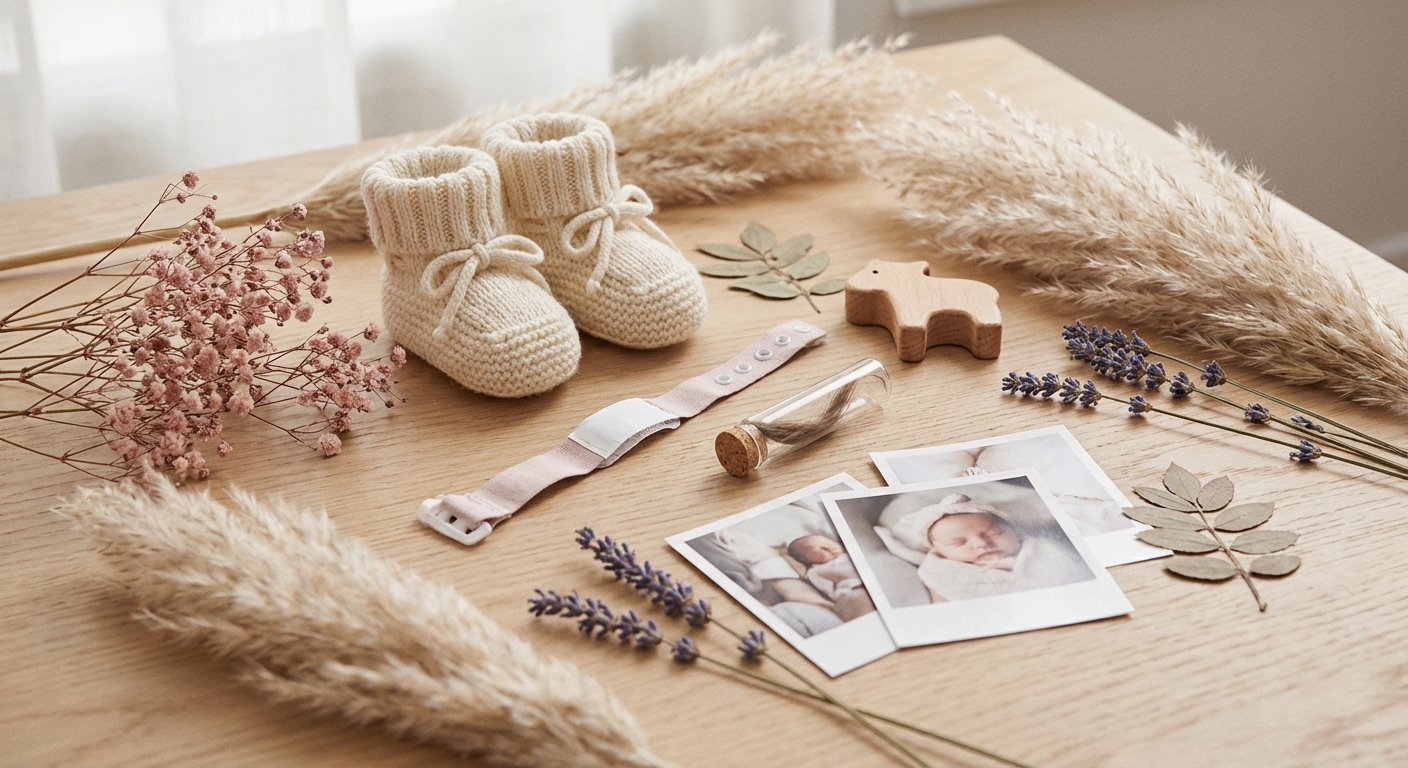
You have a baby book, given as a gift or bought yourself. It sits there with blank pages, waiting. But what do you actually write?
Many parents feel a kind of performance anxiety about the baby book. The pages look so nice, and it feels like everything you write has to be perfect. The result? The book sits untouched.
Here is the truth: it does not have to be perfect. It just has to be real. And with a few concrete tips and templates, getting started becomes much easier.
The Most Important Chapters in a Baby Book
A good baby book is about capturing life as it was when your baby was small. You do not need to cover everything, but some topics are gold to include.
The Birth Story
Details you think you will never forget can disappear surprisingly fast. Write down:
- Date, time, and place, when and where your baby was born
- Weight and length, the first numbers in your baby's life
- Who was there, partner, midwife, grandparents in the waiting room?
- How it felt, the very first moment you held your baby
- The name, why you chose that particular name
Milestones and "First Times"
Milestones are perhaps the most classic content in a baby book. Children develop at their own pace, but these typical milestones to include in a baby book:
- First smile (around 6–8 weeks)
- First laugh (3–4 months)
- Rolls over independently (4–6 months)
- Sits without support (6–8 months)
- First tooth (6–10 months)
- First word (around 12 months)
- First steps (9–16 months)
Use the Milestones tracker in Babysential to log all milestones with dates and photos. That way you always have the details ready when you want to fill in the baby book.
The Family Tree
The baby book is a historical document. Include an overview of the family: grandparents, aunts, uncles, cousins. In 20 years, this will be invaluable.
Personality and Habits
What is typical of your baby right now? Does she sleep with her arms above her head? Is he suspicious of anything green? Does she love bath time? These details bring the baby book to life and make it personal.
Writing Templates for Each Chapter
The hardest part is often just getting started with the actual writing. Here are concrete templates you can use right out of the box.
Template for the Birth Story
You came into the world on [date] at [time] at [hospital/birthplace]. You weighed [weight] and were [length] long. [Brief description of the birth, quick, long, calm, intense]. The first thing I thought when I saw you was [feeling/thought]. We had chosen the name [name] because [reason].
Template for Milestones
Today, [date], it happened! You [milestone, smiled for the first time / said your first word / took your first steps]. We were at [location], and [who was present]. [One sentence about how it felt or what happened next].
Template for Personality
Right now you are [age]. You are a [description, curious, calm, energetic] little person who loves [activity]. Your favorite food is [food], and you cannot stand [something]. You do this funny thing where you [funny habit].
You do not need to follow the templates strictly. Use them as a starting point and let your own voice shine through. What your child will value most is your own words.
Monthly Updates
One of the most valuable things you can do is write a short update every month during the first year. It takes five minutes, and in a few years it will be pure gold.
What to Include
- What your baby has learned this month
- Favorite activities right now
- Sleep and feeding, what daily life looks like
- Personality, what is typical of your baby?
- A funny moment from the month
Example Monthly Entry
"6 months! You are almost sitting on your own now, and you love banging the spoon on the table. Your favorite food is avocado, and you giggle every time dad hides behind his hands. You are finally sleeping a bit better at night, four hours in a row is a new record! This month we started with some porridge, and you are very suspicious of anything green."
Example for an Older Baby
"11 months! You crawl at record speed and are trying to pull yourself up on everything you can find. Your favorite word is 'da-da', which seems to mean pretty much everything. You love reading books, or rather eating books. This month we took you to the aquarium for the first time, and you were completely fascinated by the fish."
Set a reminder in your calendar on your baby's birth date each month. Use five minutes that evening to write a short update. It is the easiest way to keep it going.
Tips for Getting Started
The baby book does not need to be filled out chronologically or all at once. Here are some strategies for actually getting it done.
Start with What You Remember
Do not stress about starting from the beginning. Write down what you remember right now, and fill in the rest later. A half-full book is better than an empty one.
Write Imperfectly
Three sentences is better than zero sentences. A date and a keyword is better than nothing. Give yourself permission to write briefly and unpolished.
Use Your Phone
Keep a notes app ready on your phone. When your baby does something wonderful, write it down right away. You can always edit it later.
Make It a Habit
Many parents find it easiest to write in the evening, after the baby has gone to sleep. Others prefer Sunday evening as a weekly ritual. Find what works for you.
Do Not Compare
The Instagram version of the baby book is not reality. Your book does not need calligraphy and perfect watercolor paintings. It just needs your words.
Digital Baby Books Make It Easier
Many parents find the physical baby book sits unused because the barrier to writing in it is too high. A digital solution lowers that barrier dramatically.
Benefits of a Digital Baby Book
- Always accessible, write from your phone any time
- Photos and text together, link photos directly to milestones
- No perfectionism required, easy to edit and update
- Sharing, let grandparents and family follow along
- Safely stored, no risk of the book being damaged
Combine Digital and Physical
Use a digital memory book to collect everything as you go, then create a printed photo book as a gift for grandparents. The best of both worlds.
Frequently Asked Questions
When should I start writing in the baby book?
The earlier the better. Many parents start while still pregnant, writing down thoughts and expectations. But it is never too late. Even if your baby is six months or a year old, you can write down what you remember and continue from there.
What if I am not a good writer?
A baby book is not a writing competition. Short, honest sentences are more valuable than polished paragraphs. Your child will love reading your words regardless of how they are written.
Should both parents write?
It is nice if both parents contribute, but there is no obligation. You can alternate months, write together, or let one person take the lead. Some parents like having two voices in the book, it gives a richer picture of who the family was.
What if I have already missed a lot?
Write down what you remember. Even incomplete memories are valuable. Check the photos on your phone to refresh your memory, and start writing regularly from now. The best time to plant a tree was 20 years ago. The second best time is now.
Can I use the baby book as therapy?
Many parents find that writing down thoughts and feelings about parenthood is therapeutic. It is completely fine to write about the hard days too. Your child will appreciate the honesty.
Sources
🔧 Helpful Tools
- Baby Sleep Tracker. Track and optimize your baby's sleep
- Baby Food Guide. Safe foods and introduction schedule for your baby
- All Baby Tools. Browse all free tools for pregnancy and baby care
📖 Related Articles
- 52 Baby Memories from the First Year You Won't Want to Forget. Week by week baby memories to treasure. A complete list of moments to document during your baby's first year.
- Digital Memory Book for Baby: Preserve the Moments That Matter. Create a digital memory book for your baby. Tips on apps, photos, and writing that preserve the precious moments forever.
- A Letter to Your Baby: How to Write One They'll Treasure. Write a letter to your baby that becomes a cherished keepsake. Tips, templates, and inspiration for time capsule letters and birthday letters.