Your baby's tiny nails are surprisingly sharp. Their face is covered in scratch marks, and you know it's time to do something. But the thought of trimming those itty-bitty nails on those itty-bitty fingers makes you nervous. You're not alone.
Trimming baby's nails is one of those tasks nearly all parents dread at first, but it quickly becomes an easy routine. Here's everything you need to know to do it safely and effectively.
Key Takeaways
- Baby fingernails grow faster than adult nails relative to their size, they typically need trimming 1–2 times per week, while toenails need trimming about every 2 weeks.
- For the first 4–6 weeks, use a soft nail file rather than clippers: newborn nails are too soft to clip cleanly and the risk of nicking skin is higher.
- The safest time to trim is during deep sleep or right after a bath when nails are softest and baby is most relaxed.
- Never bite or tear baby's nails, this can introduce bacteria and cause jagged edges that scratch more.
- If you nick the skin, apply gentle pressure with a clean cloth for 1–2 minutes; the bleeding stops quickly and small cuts heal fast on babies.
When Should You Start Trimming Nails?
Newborns
Baby's nails grow in the womb, and some babies are born with surprisingly long nails. In the first weeks, nails are often soft and may peel off on their own, but they can still be sharp enough to scratch the face.
- 0–4 weeks, use a soft nail file or baby mittens instead of trimming
- From 4–6 weeks, nails become firmer and are easier to trim
Frequency
- Fingernails, grow quickly and need trimming 1–2 times per week
- Toenails, grow slower and need trimming about every 2 weeks
Baby's nails grow surprisingly fast, actually faster than adult nails relative to their size. Check nails regularly and trim before they become sharp enough to scratch.
Tools You Need
Nail File (for the smallest)
- Safest option for the first weeks
- Use a soft emery board or special baby file
- File in one direction (not a sawing motion) to prevent splitting
- Perfect for nervous parents who want to start gently
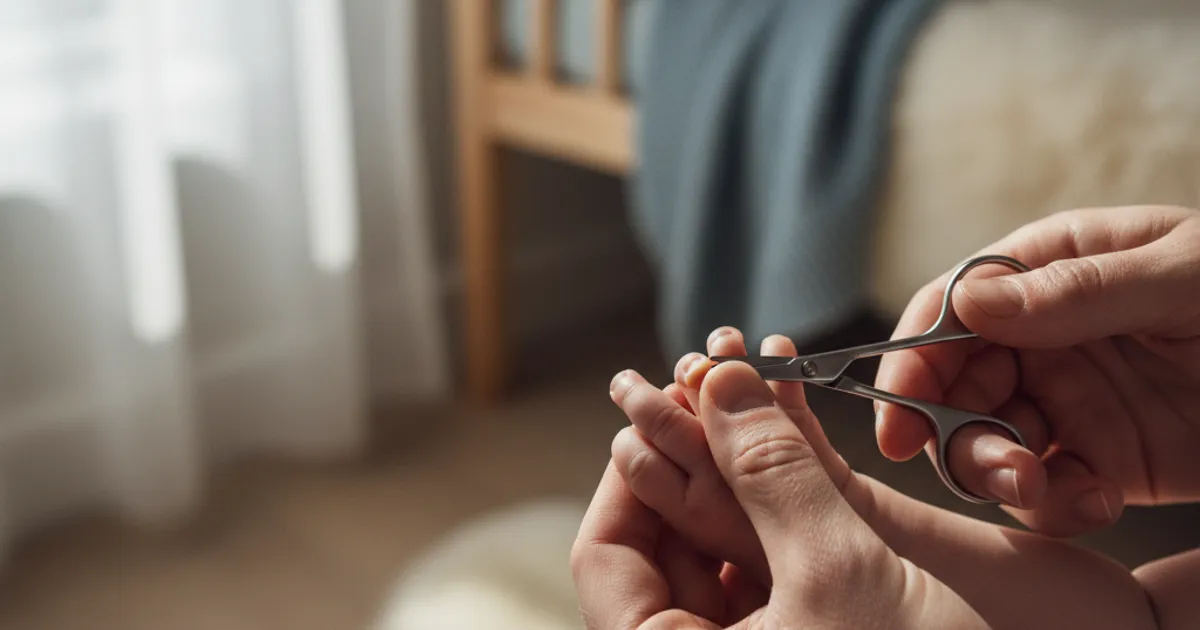
Baby Scissors with Rounded Tips
- Most popular tool for babies
- Rounded tips prevent poking the skin
- Easier to control than nail clippers
- Found in most baby grooming kits
Baby Nail Clipper
- Small size designed for tiny nails
- Gives a clean cut
- Some parents prefer these over scissors
- Requires a bit more practice
Electric Nail File
- Vibrates gently against the nail
- Minimal risk of cutting too much
- Can be used while baby sleeps
- More expensive, but many parents swear by it
Step-by-Step: How to Trim
Preparation
- Wash hands, yours and baby's
- Good lighting, make sure you can see well
- Have tools ready, scissors/clippers, possibly a soft cloth
- Choose the right time, see tips below
Technique for Fingernails
- Hold baby's hand, take a firm but gentle grip on the finger you're trimming
- Press the fingertip down, with your thumb, gently push baby's fingertip away from the nail. This gives you better visibility and protects the skin.
- Cut in a curve, follow the nail's natural shape in a gentle arc
- Cut little by little, take several small cuts rather than one big one
- Check the result, run your finger over the nail to feel for sharp edges
- File if needed, smooth out any unevenness with a soft file
Technique for Toenails
- Cut straight across, unlike fingernails, toenails are cut straight (not curved)
- Don't cut too short, leave a little white nail visible
- Be careful with corners, cutting corners too short can cause ingrown nails
Many experienced parents recommend trimming nails while baby sleeps. Baby is completely relaxed, fingers are open, and there are no movements to worry about. Try it during a deep sleep phase, about 20 minutes after baby has fallen asleep.
Best Times for Nail Trimming
While Baby Sleeps (parent favorite)
- Baby is calm and relaxed
- No sudden movements
- Hands are naturally open
- Works best during deep sleep
After Bath Time
- Nails are soft and easier to trim
- Baby is often calm and relaxed after bath
- Part of a regular care routine
During Breastfeeding or Bottle-Feeding
- Baby is busy eating and stays still
- Works well with two parents, one feeds, one trims
- Baby is content and relaxed
With Distraction
- Sing a song or show a toy
- Have another adult entertain baby
- For slightly older babies: let them watch a short video (occasionally)
If You Cut Too Deep
It happens, almost all parents cut too deep at least once. Don't be too hard on yourself. Here's how to handle it:
- Don't panic, it looks worse than it is
- Press gently with a clean, soft cloth on the finger
- Hold pressure for 5–10 minutes, most bleeding stops quickly
- Don't use a bandage, it can be a choking hazard if baby puts the finger in their mouth
- Comfort baby, a little nursing or cuddling works wonders
A small nick is not dangerous and heals quickly. Babies have good blood supply to their fingertips, so it bleeds a bit but stops fast. Keep the area clean and watch for signs of infection (redness, swelling, pus) over the next few days.
Common Mistakes to Avoid
- Biting nails, some parents bite off baby's nails. This is not recommended as it can leave jagged edges and increase infection risk
- Cutting too short, always leave a little white nail visible
- Using adult nail clippers, too big and clumsy for baby fingers
- Trimming when baby is fussy, wait until baby is calm or sleeping
- Ignoring long nails, sharp nails can scratch eyes and skin
Baby Mittens. A Temporary Alternative
In the first weeks, baby mittens (scratch mitts) can protect against scratching:
- Useful for the first 2–4 weeks
- Not a permanent solution, baby needs to use their hands
- Can hinder tactile development if used too much
- Combine with regular nail filing
Ingrown Nail in Baby
Ingrown nails are rare in babies but can occur, especially on the big toe. Signs include:
- Redness and swelling around the nail
- Baby reacts to touching the toe
- Possible pus
Prevention:
- Cut toenails straight across, not curved
- Don't cut too short at the corners
- Use properly fitting shoes/socks that don't squeeze
Contact your pediatrician if you suspect an ingrown nail with infection.
Frequently Asked Questions
Can I file nails instead of cutting?
Yes, especially in the first weeks, filing is a safe and effective alternative. Use a soft baby file and file in one direction. For older babies with thicker nails, cutting may be more effective, but filing is always a great addition for smoothing edges.
What do I do about nails that peel?
Newborns often have nails that peel or loosen at the edges. You can gently pull off loose bits, but always pull downward (toward the fingertip), never upward. Use a file to smooth out if needed.
My baby protests intensely during nail trimming. What do I do?
Try trimming while baby sleeps, or break up the job, do a few fingers at a time. Some parents trim one hand during a diaper change and the other hand next time. Make it a calm, safe routine.
How short should I trim the nails?
Ideally, trim so that a small sliver of white nail is still visible. Too short increases the risk of cutting skin and can cause discomfort. Too long leaves sharp edges that scratch.
Does nail trimming hurt baby?
No, nail trimming doesn't hurt as long as you don't cut into the skin. Nails have no nerves. Most babies who cry during trimming are reacting to being held still, not to the trimming itself.
Read More
Sources
- AAP - Newborn Care. Official pediatric guidelines
- Healthline - Baby Nail Care. Medical information
🔧 Helpful Tools
- Newborn Milestones Tracker. Track your baby's developmental milestones week by week
- All Baby Tools. Browse all free tools for pregnancy and baby care