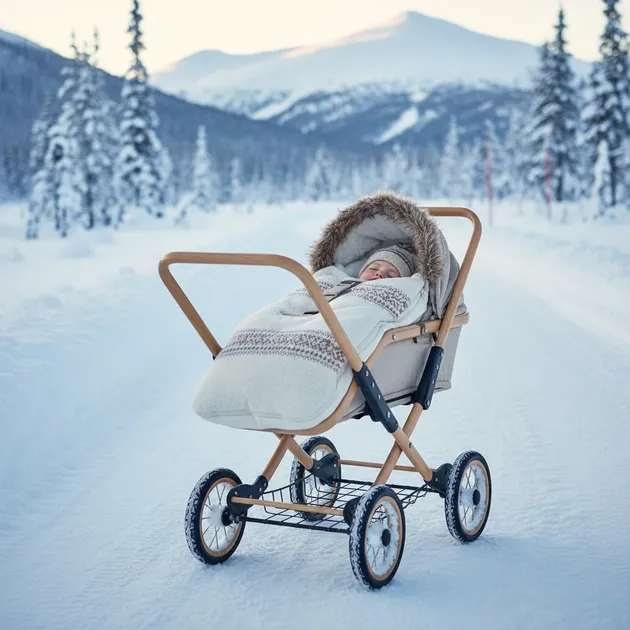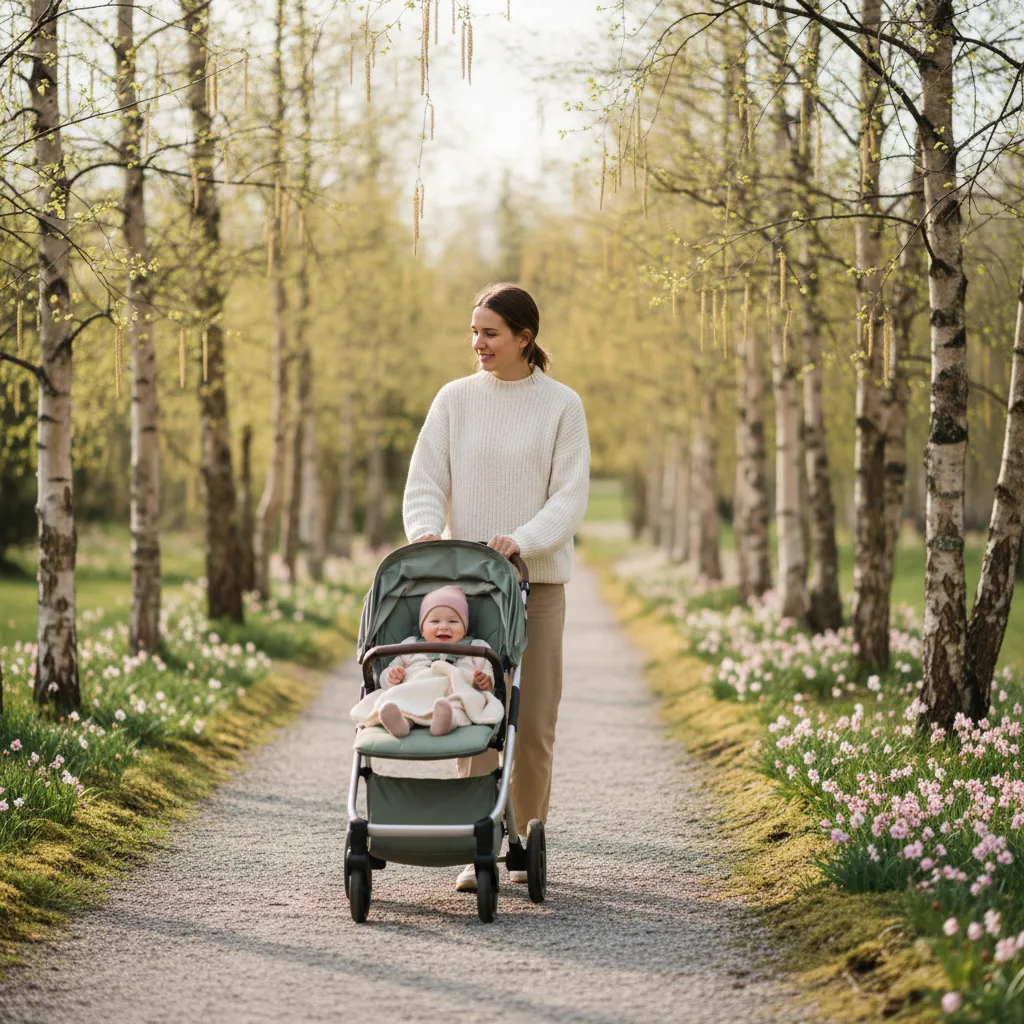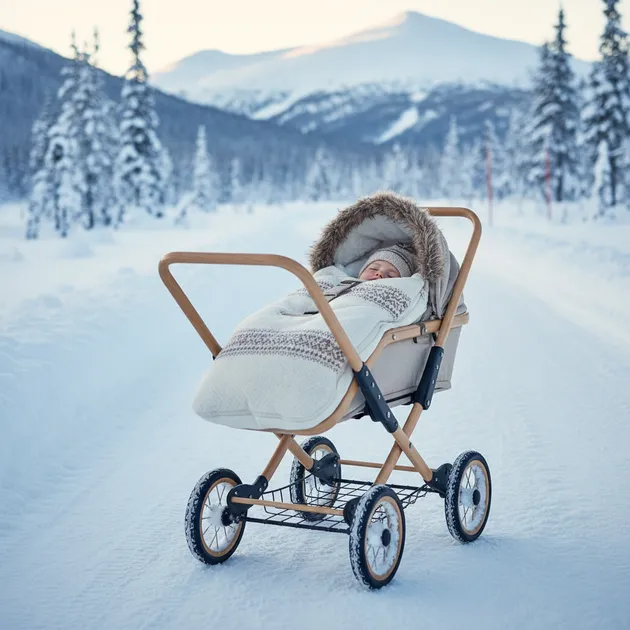
A good stroller footmuff may be the single most important accessory you buy for your pram in cold climates. It keeps your baby warm and protected whatever the weather, and makes dressing and undressing far easier than a snowsuit.
Here is a complete guide to stroller footmuffs, what types are available, what to look for, and how to choose the right one.
What is a stroller footmuff?
A footmuff is an insulated bag that the baby lies or sits in inside the stroller. Think of it as a sleeping bag designed for the pram, it keeps your baby warm from all sides and is easy to open and close with a zipper.
Most footmuffs have an opening at the bottom for the harness strap so that your baby can be secured in the stroller while inside the footmuff. Many models also have a windproof outer shell and a soft lining against the baby.
A footmuff doesn't replace clothing, but it does reduce the number of layers your baby needs. With a good winter footmuff, you can skip the outer snowsuit and simply dress your baby in thermal layers underneath.
Why do you need a stroller footmuff?
In cold climates with harsh winters and unpredictable weather, a footmuff is almost essential. Here are the main reasons:
- Quick on and off, place the baby inside, zip it up, done
- Even warmth, insulates from all sides, not just from above like a blanket
- Wind protection, keeps cold and wind out
- Safer than loose blankets, cannot slip over the face and stays secured to the harness
- Practical for daily use, no need to remove and replace a snowsuit every time your baby goes in and out of the stroller
Types of footmuffs
There are four main types. Which one you need depends on the season, your climate, and how you use the stroller.
Down footmuff
The warmest option. Filled with goose or duck down, just like a quality down jacket.
Advantages:
- Excellent insulation with low weight
- Compressible and easy to store
- Breathes well
Disadvantages:
- More expensive than synthetic alternatives
- Loses insulating ability when wet
- Can be too warm on mild days
- More difficult to wash
Best for: Cold winters, particularly in northern or inland regions.
Synthetic footmuff
Filled with polyester or other synthetic material. The most common and versatile choice.
Advantages:
- Lower price point
- Insulates even when damp
- Machine washable
- Wide range of models available
Disadvantages:
- Heavier than down for the same warmth level
- Doesn't breathe as well as natural materials
Best for: Most families, particularly in milder coastal climates.
Wool footmuff
Made with a wool lining, often merino. Combines natural properties with great comfort.
Advantages:
- Temperature-regulating, warm in winter, cool in milder weather
- Natural moisture wicking
- Antibacterial and odor-resistant
- Sustainable material
Disadvantages:
- Often more expensive
- Requires gentle washing
- Not quite as warm as down in extreme cold
Best for: Families who want a natural option that works year-round.
All-season footmuff
A footmuff with detachable layers so you can adjust the insulation by season, typically a thin summer layer plus a warmer winter inner.
Advantages:
- Works all year
- Cost-effective, no need for two separate footmuffs
- Flexible
Disadvantages:
- Neither layer is best in its category
- Can feel bulky with both layers attached
Best for: Families who want one solution for all seasons.
How to choose the right footmuff
Here are the most important things to consider.
1. Tog rating (thermal insulation)
The tog rating tells you how well the footmuff insulates. The higher the tog, the warmer the footmuff.
| Tog rating | Temperature | Season |
|---|---|---|
| 0.5–1.0 | 68–77°F (20–25°C) | Summer |
| 1.0–2.5 | 50–68°F (10–20°C) | Spring/fall |
| 2.5–3.5 | 32–50°F (0–10°C) | Mild winter |
| 3.5+ | Below 32°F (0°C) | Cold winter |
Overheating is more dangerous than a baby being slightly cool. The AAP warns against too many layers and excessive heat, as overheating is a risk factor for SIDS. Always check the back of the neck, it should feel warm and dry, not sweaty.
2. Size and fit
The footmuff must fit your specific stroller. Most major brands make universal models, but always check:
- Width, the footmuff should lie flat in the stroller without bunching up
- Length, your baby shouldn't outgrow it too quickly
- Harness openings, the gaps for the straps must align with your stroller's anchor points
- Footrest, for seated strollers, you need a footmuff designed for an upright position
Most footmuffs fit babies from newborn to around 3 years, but check the manufacturer's guidelines.
3. Materials and safety
Choose a footmuff with:
- Windproof outer shell, keeps the cold out
- Breathable material, prevents sweating
- Free from harmful substances, look for Oeko-Tex certification
- Solid zipper, should be easy to operate with one hand
- Reflective elements, important for visibility in dark winter conditions
4. Washing instructions
Babies make messes, and the footmuff will need washing. Check that your chosen model can be machine washed, ideally at 104°F (40°C). Down footmuffs need special care, use dryer balls in the tumble dryer to redistribute the filling evenly.
Footmuffs by season
Winter (November–March)
Cold winters call for a footmuff with solid insulation. Choose a model with a tog rating above 3.5 if you live in a cold inland or northern region. Milder coastal areas are usually fine with 2.5–3.5 tog.
Winter tips:
- Place a sheepskin or wool liner at the bottom for extra warmth from below
- Layer wool clothing under the footmuff, thermal base layers, then footmuff on top
- Use a rain/wind cover on the stroller for added protection
- Check your baby regularly by feeling the back of the neck
Spring and fall (April–May, September–October)
The transitional seasons are the trickiest. Temperatures can swing from 40°F to 70°F (5–20°C) in a single day. An all-season footmuff with a detachable layer is ideal for these months.
Tips for transitional weather:
- Keep a light blanket in the bag in case it gets colder than expected
- Use just the thin layer on mild days
- Add both layers on chilly mornings
Summer (June–August)
In summer you generally don't need a thick footmuff. Many parents use just the thin summer layer or a light blanket instead.
Have an all-season footmuff? Use just the thin summer insert. If temperatures climb above 77°F (25°C), your baby can go without, just make sure the stroller has a sun canopy and good airflow.
Footmuff vs. sleeping bag
Many parents wonder about the difference between a stroller footmuff and a sleeping bag (for the crib). Here are the key differences:
| Stroller footmuff | Sleeping bag | |
|---|---|---|
| Use | Stroller, outdoors | Crib, indoors |
| Insulation | Windproof, warmer | Lighter, more breathable |
| Harness opening | Yes | No |
| Windproof shell | Yes | No |
| Size | Fitted to stroller | Fitted to baby's size |
Never use a stroller footmuff as a sleeping bag indoors. Footmuffs are designed for outdoor use and can become too warm inside. Use a dedicated sleeping bag for nighttime sleep and outdoor naps in summer.
Popular footmuff brands
Voksi
A Scandinavian brand that is particularly well-regarded. Known for high quality and thoughtful design.
- Voksi Classic, down-filled, designed for cold winters
- Voksi Urban, lighter model for city use and milder winters
- Voksi Woolly, with merino wool lining
Easygrow
Another Nordic brand with solid options for cold-weather use.
- Easygrow Nord, heavy-duty winter model
- Easygrow Lite, lighter spring/fall option
Janus
Known for wool products. Makes wool footmuffs with merino.
- Janus Footmuff, 100% merino, temperature-regulating
Prices vary by retailer and region. Check current prices before purchasing.
Safety tips for using a footmuff
Follow these guidelines for safe use:
- Check temperature regularly, feel the back of the neck; it should be warm and dry
- Never use the footmuff indoors, stroller footmuffs are for outdoor use only
- Thread the harness through the openings, your baby must always be secured in the stroller
- Don't place loose blankets over the face, the footmuff should provide sufficient warmth on its own
- Adjust clothing to match the footmuff's insulation, avoid overdressing
- Air the footmuff between uses, especially wool models need to dry out between outings
Care and storage
A well-maintained footmuff can last for several years and be reused for subsequent children.
- Wash at the end of each season, follow the manufacturer's care instructions
- Dry thoroughly, never store a damp footmuff
- Store in a dry place, a breathable storage bag is better than plastic
- Down footmuffs, shake them out regularly to redistribute the filling evenly
Frequently asked questions
Do I need a footmuff in summer?
Most people don't need a footmuff in summer. A thin blanket or the summer insert from an all-season footmuff is enough for cooler days. Above 68°F (20°C), your baby can usually go without.
Can I use a footmuff in a car seat?
No, standard footmuffs should not be used in a car seat. They are too thick and prevent the harness from fitting snugly. There are dedicated car seat footmuffs that are thinner and designed to work with the car seat harness.
When is a baby too big for a footmuff?
Most footmuffs fit babies from newborn to around 3 years. When your child starts wanting to climb out of the footmuff and move around freely, it's time to switch to a winter overall or snowsuit instead.
How many footmuffs do I need?
Most families manage with one good all-season footmuff. If budget and storage allow, a warm winter footmuff plus a lighter spring/fall model is the ideal combination.
Is it safe to buy a used footmuff?
Yes, used footmuffs are perfectly safe as long as they are in good condition. Check that the zippers work, the lining isn't clumped, and there are no holes or signs of significant wear. Wash thoroughly before use.
Read more
Sources
- AAP. "Safe Sleep Recommendations." healthychildren.org
- Safe to Sleep Campaign. "Reduce the Risk of SIDS." safetosleep.nichd.nih.gov
🔧 Helpful Tools
- All Baby Tools. Browse all free tools for pregnancy and baby care
📖 Related Articles
- Stroller Bag: How to Choose the Right One for Your Pram. Complete guide to stroller bags for babies. Find the right type, material, and tog rating for any climate. Tips for winter and summer use.
- Best Strollers 2026: Top-Rated Prams and Pushchairs Reviewed. An overview of the best strollers for 2025/2026. Comparison of top-rated prams and pushchairs with prices, pros, and cons. Updated buying guide for new parents.
- How to Choose the Right Stroller in 2026: A Complete Buying Guide. A complete guide to choosing a stroller. We help you find the right type, size, and features for your lifestyle and terrain.