A good snowsuit may be the single most important piece of clothing your child needs in a cold winter climate. The right suit is the difference between a baby who happily spends time outdoors in freezing temperatures and one who's miserable after five minutes.
But the options are overwhelming, and it's hard to know what to actually look for. This guide helps you choose the right snowsuit, whether you have a newborn in a stroller or an active toddler who wants to play in the snow all day.
Three Types of Snowsuits. Which Is Right for Your Child?
Snowsuits come in three main categories, each with their strengths. The best type depends on your child's age and activity level.
Down-filled Snowsuit
Down is nature's best insulating material. A down snowsuit provides exceptional warmth for its weight, making it ideal for babies in strollers or carriers. Down compresses easily and gives excellent freedom of movement.
The downside: down loses its insulating ability when wet. Down suits work best on cold, dry days, not for playing in slushy or wet snow.
Fill power is measured in cuin (cubic inches per ounce). The higher the number, the better the down insulates. Look for a minimum of 550 cuin for stroller use and 650+ cuin for active children.
Synthetic Snowsuit
Synthetic insulation (like PrimaLoft, Thermolite, or Polartec) stays warm even when wet. This makes synthetic suits more versatile than down, they handle snow, slush, and rain showers.
Synthetic suits are often less expensive than down, easier to wash, and dry faster. For daycare use, this is typically the safer choice.
Fleece-lined Snowsuit
Fleece-lined suits are thinner and more flexible. They work best as a mid-layer or outer layer on mild winter days (down to about 23°F / -5°C).
The advantage is freedom of movement. The downside is that fleece alone won't keep your child warm in real cold.
How to Choose the Right Snowsuit
Water resistance: how waterproof is it?
The waterproof rating tells you how much water pressure the fabric can withstand before moisture seeps through. For snowsuits, look for:
- 3,000 mm. Adequate for stroller use and short outings
- 5,000 mm. Good for active children playing in snow
- 10,000 mm+. Handles heavy use in wet, snowy conditions
For daycare, choose at least 5,000 mm. Children sit in snow, roll around, and play hard, the suit gets exposed to far more moisture than you might expect.
Breathability
A suit that doesn't breathe causes sweating and discomfort. Look for a moisture vapor transmission rate (MVTR) of at least 3,000 g/m²/24h. The higher the number, the better moisture escapes.
Reflective elements
In winter, daylight hours are short. Choose a snowsuit with reflective strips on the arms, legs, and back. Many quality brands integrate reflectors into the design.
Safety first: Avoid suits with drawstrings in the hood, they can catch on playground equipment. Look for models with elastic or hook-and-loop closures instead.
Sizing: go a little bigger
A snowsuit needs room for wool layers underneath without pulling tight. As a rule of thumb, go one size up from your child's normal clothing size.
For example: if your child normally wears size 12–18 months, choose an 18–24 month snowsuit. You'll have room for extra layers on the coldest days.
Many suits have fold-over cuffs on the arms and legs that can be extended for extra length, often giving you an additional season from the suit.
Snowsuits by Age
0–6 Months. Stroller Baby
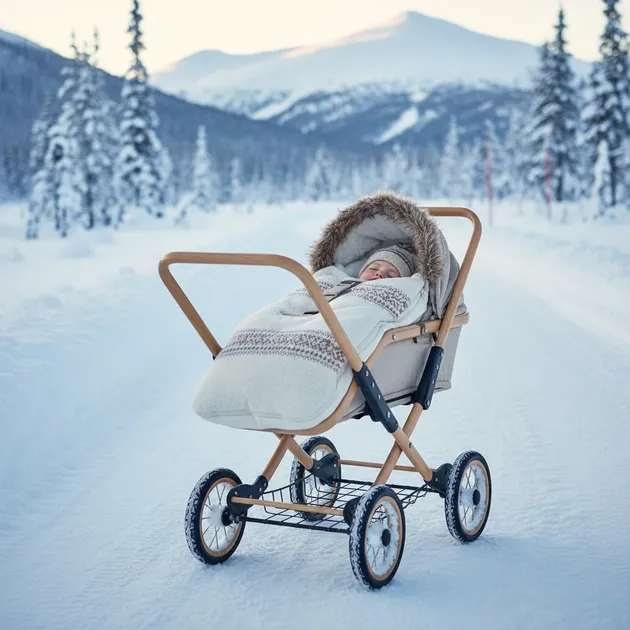
Babies who spend their time in a stroller need significant insulation because they're not generating heat through movement. A down suit with high fill power, or a thick synthetic suit, is the best choice. Combine with warm layering underneath.
Look for suits with integrated mittens and footie closures, or use separate accessories. Babies lose substantial heat through hands and feet.
6–12 Months. The Crawler
Your baby is starting to move more and needs a suit that allows freedom of movement. Choose a softer suit with good arm mobility. Synthetic insulation is a good choice as your baby begins exploring snow.
1–3 Years. The Active One
Toddlers run, climb, and roll in snow. You need a durable suit with reinforced knees and seat. A water resistance rating of at least 5,000 mm is important, and the suit should withstand frequent washing.
Daycare tip: Choose a suit your child can take on and off independently (or with minimal help). Long front zippers and wide openings make the coat room much easier for everyone involved.
Top Brands for Cold-Weather Snowsuits
Scandinavian and European outdoor brands know cold winters and make suits built for the conditions. Here are the most popular:
Reima (Finland)
Reima snowsuits consistently score well in Nordic comparative tests. They use proprietary materials with a focus on freedom of movement. Price range: $80–$180.
Polarn O. Pyret (Sweden)
Known for durability, they offer a wear guarantee on many items. PO.P suits have reinforced knees and back, and good fit for layering. Price range: $100–$200.
Didriksons (Sweden)
Didriksons makes suits with high water resistance and good breathability. A popular choice for daycare. Generally the most accessible of the Nordic quality brands. Price range: $70–$140.
Patagonia (USA)
Excellent synthetic insulation options with strong sustainability credentials. Patagonia's baby and toddler suits are durable and well-made. Price range: $100–$180.
Columbia Sportswear (USA)
A widely available option with solid waterproofing and warmth at mid-range prices. Good value for everyday winter use. Price range: $60–$130.
Price Guide
| Category | Price Range | What you get |
|---|---|---|
| Budget | $40–$70 | Basic synthetic suit, fine for mild winter days |
| Mid-range | $70–$140 | Good insulation, solid waterproofing, lasts 1–2 seasons |
| Premium | $140–$220+ | Top materials, long durability, high fill power |
Save money: Snowsuits are typically worn for 4–5 months per season. A child in 18M sizing may wear the same suit all winter if you buy slightly large. Secondhand snowsuits in good condition are an excellent option, children grow so quickly that used suits are often barely worn.
When to Buy a Snowsuit
Shop at the start of the season. New winter collections typically arrive in August–September, giving you the best selection and the chance to try sizes properly while you have time.
Wait until November and popular models and sizes may already be sold out. Many parents buy snowsuits in late summer.
End-of-season sales can offer great deals, but only if you're buying for next winter in a larger size. Factor in how much your child will grow.
Washing and Care
Proper care significantly extends the life of a snowsuit:
- Synthetic suit: Wash at 104°F / 40°C with standard detergent. Tumble dry on low heat or hang to air dry.
- Down suit: Use down-specific detergent. Wash at 86°F / 30°C. Tumble dry with wool dryer balls to help the down loft back up.
- Re-waterproofing: Re-treat the suit once per season with a DWR spray or wash-in treatment. This maintains water repellency.
Close all zippers and hook-and-loop fasteners before washing. Wash inside-out. Avoid fabric softener, it degrades the water-repellent coating.
Layering Under the Snowsuit
The snowsuit alone doesn't keep your child warm. What's underneath matters just as much. Here's a simple setup:
Layer 1 (base): Wool bodysuit and wool pants against the skin. Merino wool is soft and regulates moisture. Read more in our layering guide.
Layer 2 (mid): Wool sweater or fleece. In severe cold (below 14°F / -10°C), add an extra wool layer.
Layer 3 (outer): Snowsuit.
Accessories: Wool hat, wool mittens, and warm boots. Remember that children lose significant heat through their heads.
Overheating: A too-warm baby is more dangerous than a slightly cool baby. Check the back of the neck regularly, it should be warm and dry, not damp. A sweaty baby who then goes outside gets cold fast.
Safety Tips for Snowsuits
- Car seats and snowsuits: Thick snowsuits can prevent the harness from tightening correctly. Remove the suit in the car and use a blanket over the buckled harness instead.
- No drawstrings: Choose models without loose cords that can catch on equipment.
- Reflectors: Make sure your child is visible in low light. A reflective vest over the snowsuit adds an extra layer of visibility.
- Check temperature indoors: Babies can overheat quickly indoors in a snowsuit. Remove it as soon as you come inside.
Summary and Checklist
A good cold-weather snowsuit should have:
- ✅ Water resistance of at least 3,000 mm (5,000+ for daycare)
- ✅ Good breathability (3,000+ g/m²/24h)
- ✅ Reflective elements on arms, legs, and back
- ✅ Room for wool layers underneath
- ✅ Reinforced knees and seat (for active toddlers)
- ✅ No drawstrings in the hood
Frequently Asked Questions
Which snowsuit is best for babies?
Down-filled suits excel for stroller babies who need maximum warmth with minimal weight. For crawlers and toddlers who will play in snow, a durable synthetic suit with 5,000+ mm water resistance is the better all-around choice.
How many snowsuits does my child need?
Most families manage with one suit per season. If your child is in daycare, having two can be convenient, one in use while the other dries. A lighter fleece outer layer for milder days can also supplement the main snowsuit.
When do kids stop wearing one-piece snowsuits?
One-piece snowsuits are typically used through age 4–5. After that, most children transition to a jacket and snow pants combination. Some children prefer separates from age 3 because it's easier for bathroom trips.
Can my baby wear a snowsuit in a car seat?
No. Thick snowsuits should be removed for car travel. The bulky material prevents the harness from tightening properly, meaning the child could slip through during a collision. Use a thin fleece suit instead and place the snowsuit or a blanket over the buckled harness.
What's the difference between 3,000 mm and 10,000 mm water resistance?
The rating measures how much water pressure the fabric can resist. 3,000 mm handles light snow and stroller use. 5,000 mm means a child can sit in wet snow without getting wet through. 10,000 mm is near-fully waterproof and handles the most demanding conditions. For daycare, 5,000 mm is the recommended minimum.
Sources
- AAP. Infant and toddler nutrition guidelines
- WHO. Global infant feeding recommendations
- CDC. Infant and toddler nutrition resources
🔧 Helpful Tools
- All Baby Tools. Browse all free tools for pregnancy and baby care
📖 Related Articles
- Sledding with Kids: A Complete Guide to Safe Winter Fun. Complete guide to sleds and sledding for children. Types, age recommendations, safety tips, and what to look for. Find the right sled, snow tube, or steerable sled for your child.
- Snowsuit for Kids - How to Choose the Right One for Winter. Complete guide to snowsuits for babies and children. Materials, waterproofing, sizing, and top brands. Find the best snowsuit for your child.
- Stroller Bag: How to Choose the Right One for Your Pram. Complete guide to stroller bags for babies. Find the right type, material, and tog rating for any climate. Tips for winter and summer use.