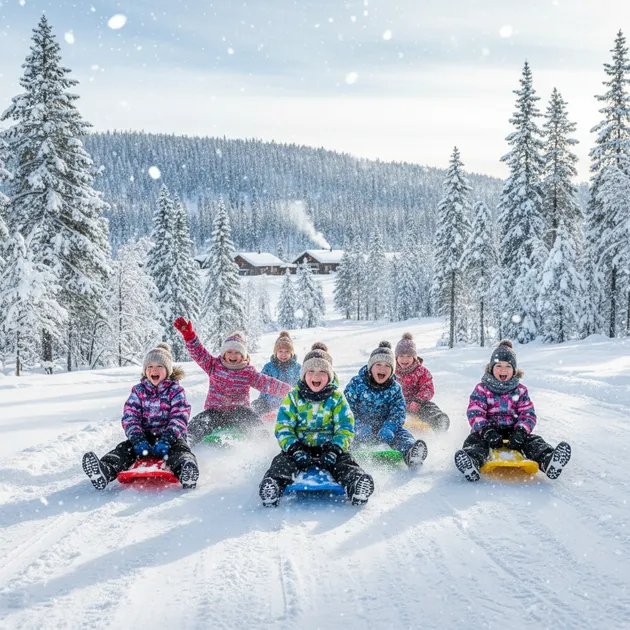
Sledding is one of the most popular winter activities for children and families. From around one year old, even the youngest kids can experience their first ride down a hill, sitting safely in a parent's lap.
But the range of sleds, snow tubes, steerable sleds, and toddler pull sleds can be overwhelming. This guide helps you choose the right gear for your child's age and gives you the safety tips you need to make sledding a great time.
Five Types of Sledding Gear. What's Right for Your Child?
Plastic Sled (Classic Disc or Flat Sled)
The classic plastic sled is a simple flat plate, often with handles and a raised edge. It's lightweight, affordable, and easy to carry. A plastic sled delivers good speed and is best on groomed hills with smooth surfaces.
Plastic sleds are best for children from 3–4 years who can sit steadily and hold on independently.
Important: Plastic sleds without brakes can reach high speeds. Choose hills without obstacles at the bottom, and avoid icy surfaces with young children.
Snow Tube / Snow Mat
A snow tube or inflatable snow sled is soft and cushioned. It's easy to roll up and carry in a backpack. Snow tubes reach lower speeds than hard sleds and are easier to steer with your feet.
Snow mats work well for children from 2–3 years. The soft surface makes the ride more comfortable for little ones.
Steerable Sled
A steerable sled combines a sled with a steering wheel or handle and brakes. Children can steer the direction and slow themselves down, giving them a sense of control that makes sledding safer.
Steerable sleds are recommended from age 3 and up. Choose a model with a low center of gravity for better stability.
Baby Pull Sled (Toddler Sled with Handle)
A baby pull sled is the best choice for the very youngest children. The child sits in a bucket-shaped seat with high back support, often including a harness and footrest. An adult steers and pulls the sled with a handle or rope.
A pull sled can be used once a baby can sit independently, usually around 8–10 months. Many families use them for winter transport as well as sledding fun.
Pull sled tip: A good baby sled has a five-point harness, windshield, and room for a blanket. Check that your child sits stably and cannot tip sideways.
Traditional Wooden Toboggan
The classic wooden toboggan with metal runners is a timeless choice. It glides smoothly, has room for both parent and child, and can be used as a pull sled with a rope. Some models have a backrest that can be added for younger children.
A wooden toboggan with a backrest works from around 1 year. Without a backrest, children should be at least 2–3 years and able to hold on.
Age Recommendations for Sledding
| Age | Recommended Gear | Notes |
|---|---|---|
| 8–12 months | Baby pull sled with harness | Child must sit independently. Always low speed with adult steering |
| 1–2 years | Pull sled or toboggan with backrest | Sled in a parent's lap on gentle slopes |
| 2–3 years | Snow mat, toboggan | Can begin short, gentle runs with adult alongside |
| 3–4 years | Plastic sled, steerable sled | Can sled alone on safe hills. Teach them to brake with feet |
| 4+ years | All types | Can handle steeper hills. Helmet still recommended |
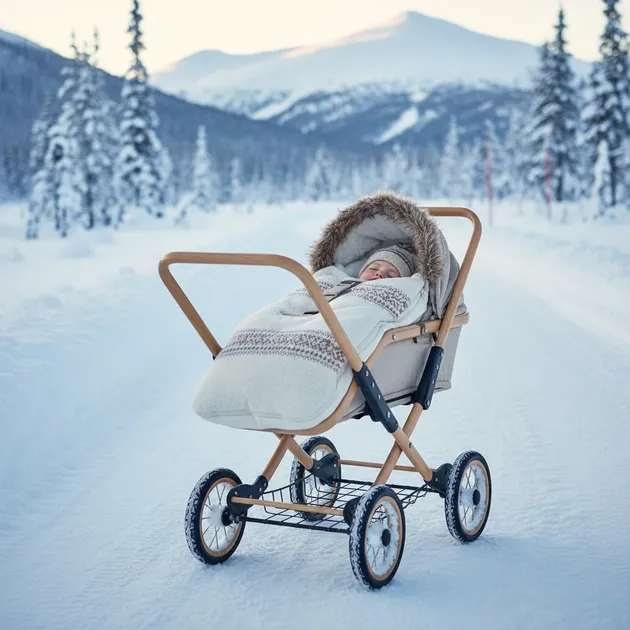
Never sled in a stroller or baby carrier. Strollers can tip over at speed, and a carrier provides no protection in a collision. Always use proper sledding equipment.
Sledding Safety for Kids
Wear a Helmet
Head injuries are the most common sledding injury. Pediatric safety organizations recommend helmets for all children who sled, regardless of age or slope steepness. A regular ski helmet or bike helmet provides good protection.
Helmets are especially important on steep hills, on icy surfaces, and when children sled alone.
Choose the Right Hill
A good sledding hill for children has:
- Gentle to moderate slope, avoid extremely steep runs with young children
- Good runout zone, a flat area at the bottom where the sled naturally comes to a stop
- No obstacles, check for trees, rocks, fences, or roads at the bottom
- Good snow cover, avoid icy hills where speed becomes uncontrollable
- Clear sightlines, you should be able to see the whole hill from the top
Control Speed
Speed is fun, but can be dangerous for young children. Here's how to keep it safe:
- Sled with your child in your lap until they're old enough to go alone
- Use a snow mat instead of a hard sled for lower speeds
- Choose a steerable sled with brakes for children who want to go solo
- Avoid sledding face-first (head forward), sitting upright is safer
Dress Your Child Properly
Sledding is active play that can make children sweaty, but breaks at the bottom can bring on the chill. Dress your child in moisture-wicking layers with wool against the skin and a waterproof snow suit on the outside.
Waterproof mittens and warm boots are essential. Children use their hands to hold on and their feet to brake, both will get wet.
What to Look for When Buying a Sled
Material and Durability
Cheap sleds made of thin plastic can crack in cold temperatures. Look for models made from HDPE (high-density polyethylene), which stays flexible and strong in freezing conditions. Thicker plastic generally means a longer lifespan.
Handles and Grip
Good handles make a big difference. Look for:
- Ergonomic grips that are easy to hold with mittens on
- Handles on both sides (not just at the front)
- A rope or strap for pulling the sled back up the hill
Seat Comfort
A sled with a raised edge and slight contour keeps children better seated. Some models have a padded seat cushion that makes longer sledding sessions more comfortable.
Brakes
Steerable sleds and some plastic sleds include built-in brakes. For children under 5–6, this is a safety feature that lets them stop independently. The brake should be easy to use with mittens on.
Price Guide
| Type | Price Range | Durability |
|---|---|---|
| Snow mat | $15–40 | 2–4 seasons |
| Basic plastic sled | $20–50 | 3–5 seasons |
| Quality plastic sled | $50–100 | 5+ seasons |
| Steerable sled | $60–180 | 5+ seasons |
| Wooden toboggan | $40–150 | 10+ seasons |
| Baby pull sled | $100–350 | Can be used for multiple children |
Save money: Sleds and toboggans hold up for many seasons and can be handed down between siblings. Check secondhand marketplaces for used baby pull sleds, they're durable and lose little quality over time.
Sledding as a Family Winter Activity
Sledding is one of the easiest ways to get kids outside in winter. It requires minimal gear, no lessons, and can be done on almost any snowy slope.
For the very youngest, a ride in a pull sled is a wonderful way to experience winter. They sit warm and safe while taking in the sights, sounds, and feel of snow.
For older children, the sledding hill is a social gathering point. They meet other kids, learn to take turns, and experience the satisfaction of tackling a steeper slope.
Combine sledding with other winter activities:
- Build a snowman or snow fort at the bottom of the hill
- Bring hot chocolate in a thermos for warm-up breaks
- Play "train" by tying multiple sleds together with a rope
- Let kids make jumps and bumps in the snow (for ages 4–5 and up)
Sled Maintenance
Sleds and toboggans need little maintenance, but a few simple steps extend their life:
- Wipe off snow and ice after use. Moisture that freezes can make plastic brittle over time.
- Store indoors during summer. UV rays from the sun break down plastic.
- Check for cracks at the start of each season. A cracked edge can create sharp points.
- Wax the runners on wooden toboggans for better glide.
Safety Checklist Before You Go
Use this checklist before heading out:
- ✅ Helmet on the child
- ✅ Waterproof clothing and mittens
- ✅ Hill is clear of obstacles
- ✅ Good runout zone at the bottom
- ✅ Sled in good condition (no cracks)
- ✅ Adult present and watching
- ✅ Child knows how to brake
Frequently Asked Questions
From what age can children start sledding?
Children can start riding in a pull sled once they can sit independently, usually around 8–10 months. Sitting in a parent's lap on a toboggan can begin around 1 year. Solo sledding on a sled is recommended from 3–4 years, when children can hold on and brake with their feet.
Should kids wear a helmet when sledding?
Yes, helmets are recommended for all children who sled. Head injuries are the most common sledding injury. A ski helmet or bike helmet provides good protection and is especially important on steep hills, icy surfaces, and when children sled alone.
What's the difference between a plastic sled and a snow mat?
A plastic sled is a hard plate that gives higher speed and a long glide. A snow mat is soft and cushioned, provides lower speed and better comfort. Snow mats are easier to brake and suit younger children (2–3 years), while plastic sleds are better from 3–4 years.
What type of sled is best for toddlers?
For children under 2, a baby pull sled with a harness is the safest option. The child sits protected with back support, and an adult controls the speed. For children between 2–4 years, a toboggan with a backrest or a steerable sled are good options that give gradually more independence.
Can you sled on grass without snow?
Some sled mats can be used on grass slopes in summer, but it wears down the equipment quickly and provides little glide. For snow-free sledding, specialized grass sleds or wheeled sleds are available. Standard sleds are designed for snow and ice.
Sources
- AAP. Infant and toddler nutrition guidelines
- WHO. Global infant feeding recommendations
- CDC. Infant and toddler nutrition resources
🔧 Helpful Tools
- Due Date Calculator. Calculate your estimated due date
- All Baby Tools. Browse all free tools for pregnancy and baby care
📖 Related Articles
- Sledges for Children - Complete Guide to Safe and Fun Sledding. Complete guide to sledges for children. Types, age recommendations, safety tips and what to look for. Find the right sledge, sled mat or wheeled sled.
- Stroller Bag: How to Choose the Right One for Your Pram. Complete guide to stroller bags for babies. Find the right type, material, and tog rating for any climate. Tips for winter and summer use.
- Stroller Footmuff Guide: How to Choose the Right One for Your Pram. Complete guide to stroller footmuffs for baby. Find the right type, material, and tog rating for cold climates. Tips for winter and summer use.