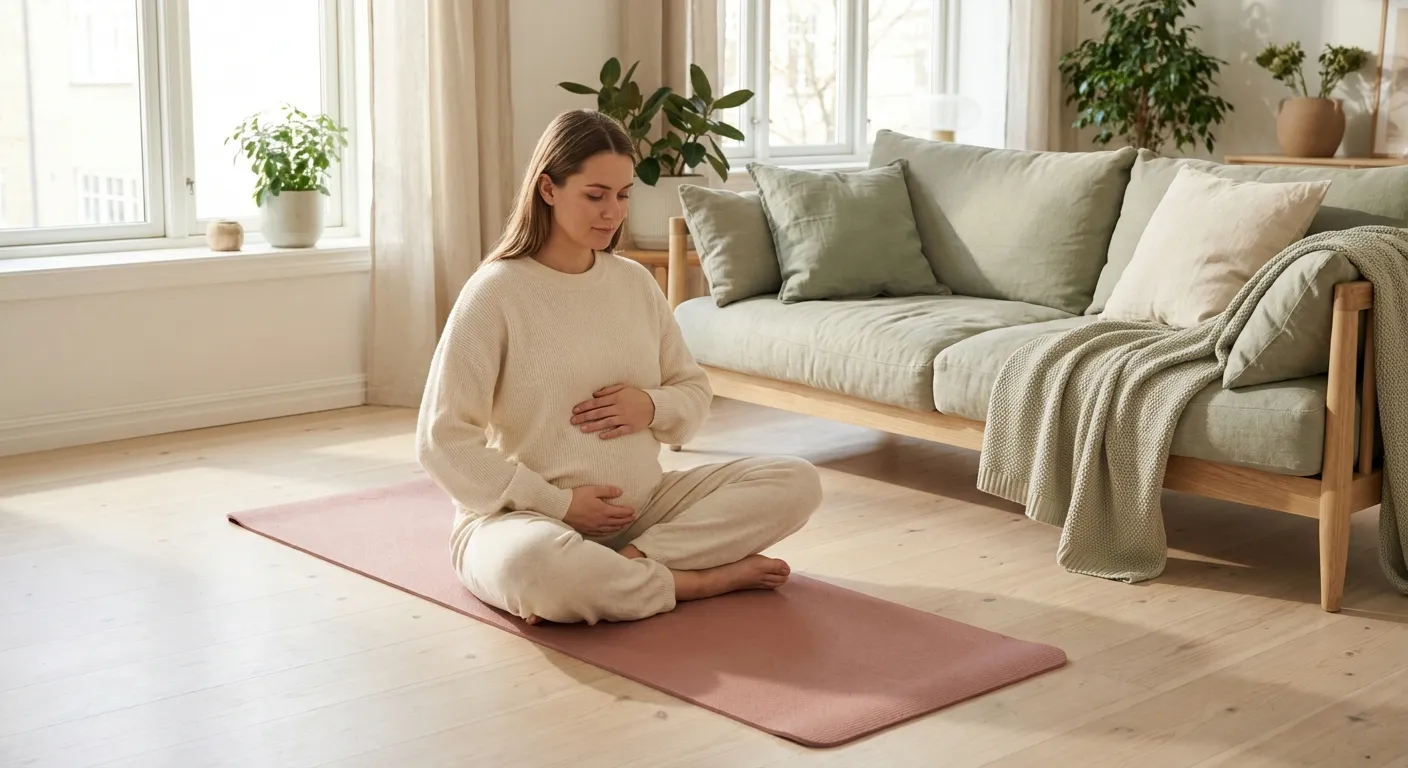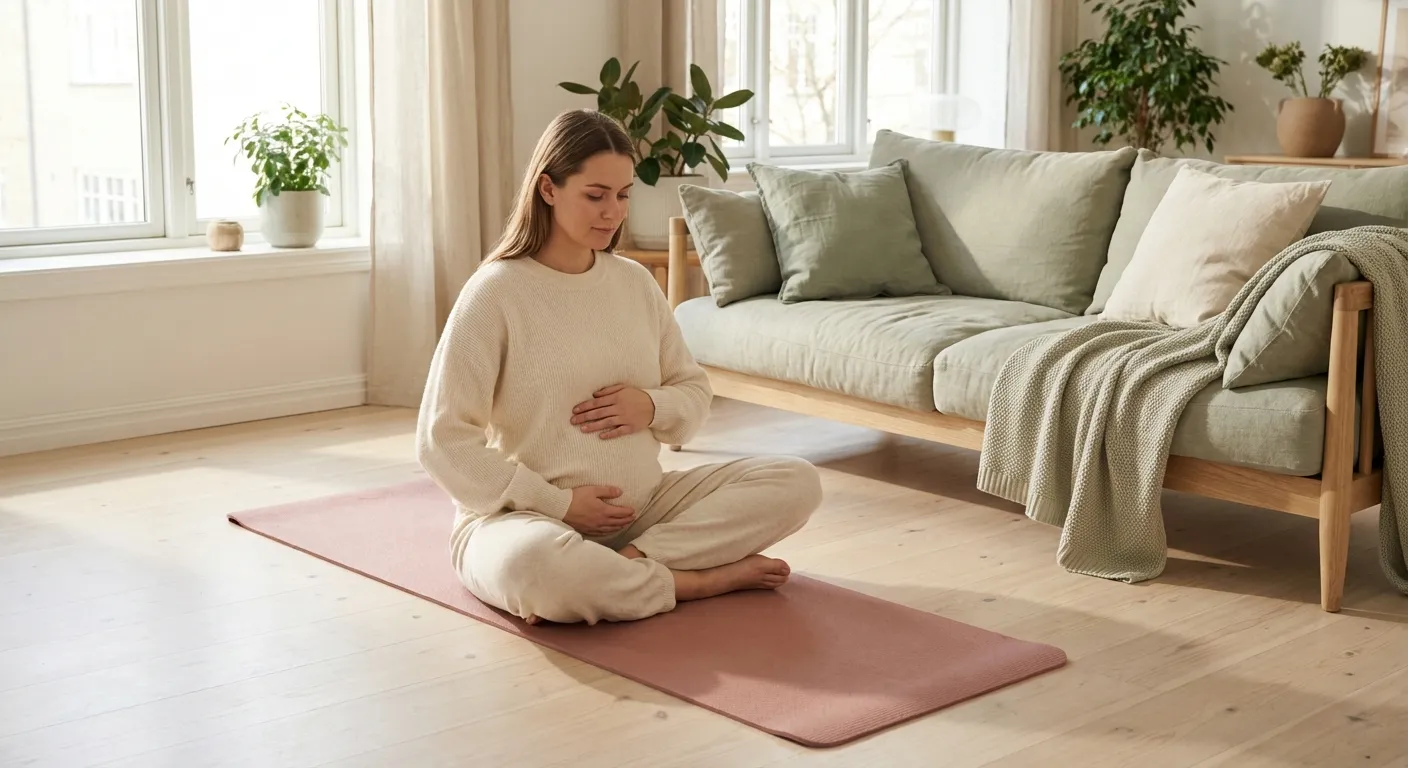
The pelvic floor is a muscle group most people don't think about, until problems arise. After pregnancy and birth, Kegel exercises are the most effective thing you can do to prevent urinary incontinence, strengthen the pelvis, and regain control.
According to research, about one-third of women experience urinary incontinence after birth. The good news is that pelvic floor training is highly effective, and you can start during pregnancy.
What Is the Pelvic Floor?
The pelvic floor is a layer of muscles that stretches from the pubic bone in front to the tailbone in back, like a hammock at the bottom of the pelvis. These muscles support:
- The uterus
- The bladder
- The bowel
In addition, the pelvic floor muscles are important for controlling urine and bowel movements, for sexual function, and for stability in the lower back and pelvis.
Why Does the Pelvic Floor Weaken?
Several factors can weaken the pelvic floor muscles:
- Pregnancy, the weight of the baby, uterus, and amniotic fluid presses downward
- Vaginal birth, the muscles stretch significantly during delivery
- Hormonal changes, lower estrogen levels after birth and during menopause
- Excess weight, increased pressure downward in the pelvis
- Heavy lifting, without proper technique
- Chronic cough, creates repeated pressure against the pelvic floor
Health experts recommend that all women train their pelvic floor regularly, not just after birth. Prevention is much easier than treatment.
How to Find Your Pelvic Floor Muscles
Before you start training, you need to make sure you're activating the right muscles. Many women squeeze incorrectly, they tighten their buttocks, thighs, or abdominal muscles instead.
Test 1: Stop the Urine Stream
Next time you're on the toilet, try to stop the urine stream midway. The muscles you use to stop are the pelvic floor muscles.
Important: This is only a test to identify the muscles. Do NOT do this as a regular exercise, regularly interrupting the urine stream can disturb bladder function.
Test 2: The Lifting Sensation
Lie down with bent knees. Imagine you're picking up a blueberry with the muscles between the vagina and rectum. You should feel an inward and upward movement. The buttocks and thighs should stay relaxed.
Test 3: Check with Your Fingers
You can gently feel with a finger inside the vagina. Squeeze as in test 1. You should feel the muscles tightening around your finger and lifting upward.
Basic Kegel Exercises. Step by Step
Once you've found the right muscles, you can begin training. Start with the basic exercises and gradually build up.
Exercise 1: Slow Squeeze (Strength)
- Lie down with bent knees, or sit upright
- Breathe in calmly
- Breathe out and squeeze the pelvic floor muscles, pull up and in
- Hold the squeeze for 3–5 seconds (build up to 8–10 seconds)
- Release slowly and in a controlled manner
- Rest for as long as you held
- Repeat 8–12 times
Exercise 2: Quick Squeeze (Endurance)
- Squeeze quickly and firmly
- Release immediately
- Repeat 10 times at a quick pace
- Rest for 10 seconds
- Do 3 sets
Exercise 3: Elevator Squeeze (Control)
- Squeeze lightly, as if you're on the first floor
- Gradually increase, second floor, third floor
- Hold at the top for 3 seconds
- Release slowly downward, third, second, first floor
- Release completely
- Repeat 5 times
A pelvic floor training app can guide you through exercises with timing, reminders, and progress tracking. It adapts the program based on whether you're pregnant, recently gave birth, or training preventively.

Training Program: Week by Week
Week 1–2: Awareness
- Find the right muscles using the tests above
- 3 times daily: 5 slow squeezes (hold 3 sec) + 5 quick squeezes
- Train lying down to eliminate gravity
Week 3–4: Building Strength
- 3 times daily: 8 slow squeezes (hold 5 sec) + 8 quick squeezes
- Begin training in a seated position as well
- Add the elevator squeeze
Week 5–8: Increasing Endurance
- 3 times daily: 10 slow squeezes (hold 8 sec) + 10 quick squeezes
- Train in a standing position
- Begin squeezing before you cough, sneeze, or lift (the "squeeze before you sneeze" principle)
Week 9–12: Functional Training
- 3 times daily: 12 slow squeezes (hold 10 sec) + 12 quick squeezes
- Integrate squeezing into everyday activities (lifting baby, carrying groceries)
- Start light exercise like walking and yoga with conscious pelvic floor activation
Maintenance (Lifelong)
- At least once daily: 10 slow + 10 quick squeezes
- Automatic squeeze before exertion
- Continue using reminders for motivation
Kegel Exercises During Pregnancy
Pelvic floor training during pregnancy prepares the muscles for the strain ahead. According to medical guidelines, pregnant women can safely train their pelvic floor throughout pregnancy.
Benefits of Training During Pregnancy
- Less urinary incontinence during and after pregnancy
- Better support for the growing uterus
- Faster recovery after birth
- Better body control during the pushing phase of labor
Adaptations for Pregnant Women
- Avoid lying flat on your back after week 20, train on your side, sitting, or standing
- Listen to your body, some days the pelvis is more strained than others
- Don't overdo it, moderate training is better than too much
- Combine with breathing exercises, this prepares you for labor
Kegel Exercises After Birth
The first weeks after birth are crucial for getting started with training again.
The First Days (0–2 weeks)
- Start with gentle squeezes 1–2 days after birth
- Short, mild squeezes, 2–3 seconds
- 3–5 repetitions, 2–3 times daily
- Feel around, it's normal for the sensation to be dulled
Week 2–6
- Gradually increase to 5–8 second squeezes
- 8–10 repetitions, 3 times daily
- Add quick squeezes
- Raise any concerns with your provider at the 6-week check-up
After the 6-Week Check-Up
- Follow the full training program above
- Begin gently with other exercise (walking, yoga)
- Avoid running and jumping until the pelvic floor is strong enough
According to medical guidelines, women who experience persistent urinary incontinence 3 months after birth should be referred to a physical therapist specializing in pelvic floor rehabilitation.
Common Mistakes with Kegel Exercises
Even with good intentions, it's easy to make mistakes. Here are the most common:
Mistake 1: Wrong Muscles
Many tighten the abdomen, buttocks, or thighs instead of the pelvic floor. Check: Place your hand on your stomach, it should stay relaxed during the squeeze.
Mistake 2: Holding Your Breath
It's tempting to hold your breath during the squeeze, but this increases downward pressure. Correct: Breathe normally the entire time. Squeeze on the exhale.
Mistake 3: Pushing Downward
Some push downward instead of lifting up. Check: Imagine you're lifting, upward and inward, not downward.
Mistake 4: Too Much Training
The pelvic floor needs rest between sessions. Recommendation: 3 times daily is enough. Don't train to exhaustion.
Mistake 5: Giving Up Too Early
It takes 6–8 weeks before you notice real change. Tip: Use a tracking app to monitor progress and stay motivated.
When Should You Seek Help?
Contact your doctor or physical therapist if:
- You experience leakage that doesn't improve after 3 months of training
- You have a feeling of heaviness in the pelvis
- You can't find the right muscles
- You have pain during or after training
- You suspect prolapse
A physical therapist specializing in the pelvic floor can do a thorough examination and create an individualized training program.

Frequently Asked Questions
How often should I do Kegel exercises?
Health guidelines recommend 3 times daily to build strength. Each session should include 8–12 slow squeezes and 8–12 quick squeezes. After 3 months, you can move to a maintenance frequency of once daily.
Can men also do Kegel exercises?
Yes. Men also have pelvic floor muscles that can be trained. Pelvic floor training for men can help with urinary incontinence (especially after prostate surgery), improve erectile function, and prevent problems with aging.
How long does it take for Kegel exercises to work?
Most people notice improvement after 6–8 weeks of regular training. Significant improvement in strength and control typically comes after 3–6 months. The most important thing is consistency, a little every day is better than a lot occasionally.
Is it dangerous to do Kegel exercises incorrectly?
It's not directly dangerous, but you won't get results if you're using the wrong muscles. If you push downward instead of lifting up, it could potentially worsen incontinence problems. Consider a session with a physical therapist to check your technique.
Can I do Kegel exercises during sex?
Yes, the pelvic floor muscles are active during sex, and many find that conscious squeezing can enhance pleasure for both partners. It's also a good opportunity to feel whether you're activating the right muscles.
Sources and References
- AAP. Postpartum Health
- ACOG. Pelvic Floor Disorders
- WHO. Maternal Health Guidelines
- Mayo Clinic. Kegel Exercises
🔧 Helpful Tools
- Pelvic Floor Trainer. Guided pelvic floor exercises for pregnancy and postpartum
- All Baby Tools. Browse all free tools for pregnancy and baby care
📖 Related Articles
- Kegel Exercises: Complete Pelvic Floor Training Guide. Learn the correct technique for Kegel exercises. Training program with sets and reps, based on WHO and medical guidelines.
- Kegel Exercises: Complete Training Guide for Your Pelvic Floor. Learn the correct technique for Kegel exercises. Training program with sets and reps, based on expert recommendations.
- Pelvic Floor Exercises After Birth: A Week-by-Week Program. A complete week-by-week pelvic floor training program after birth. Exercises based on AAP and WHO recommendations for faster recovery.