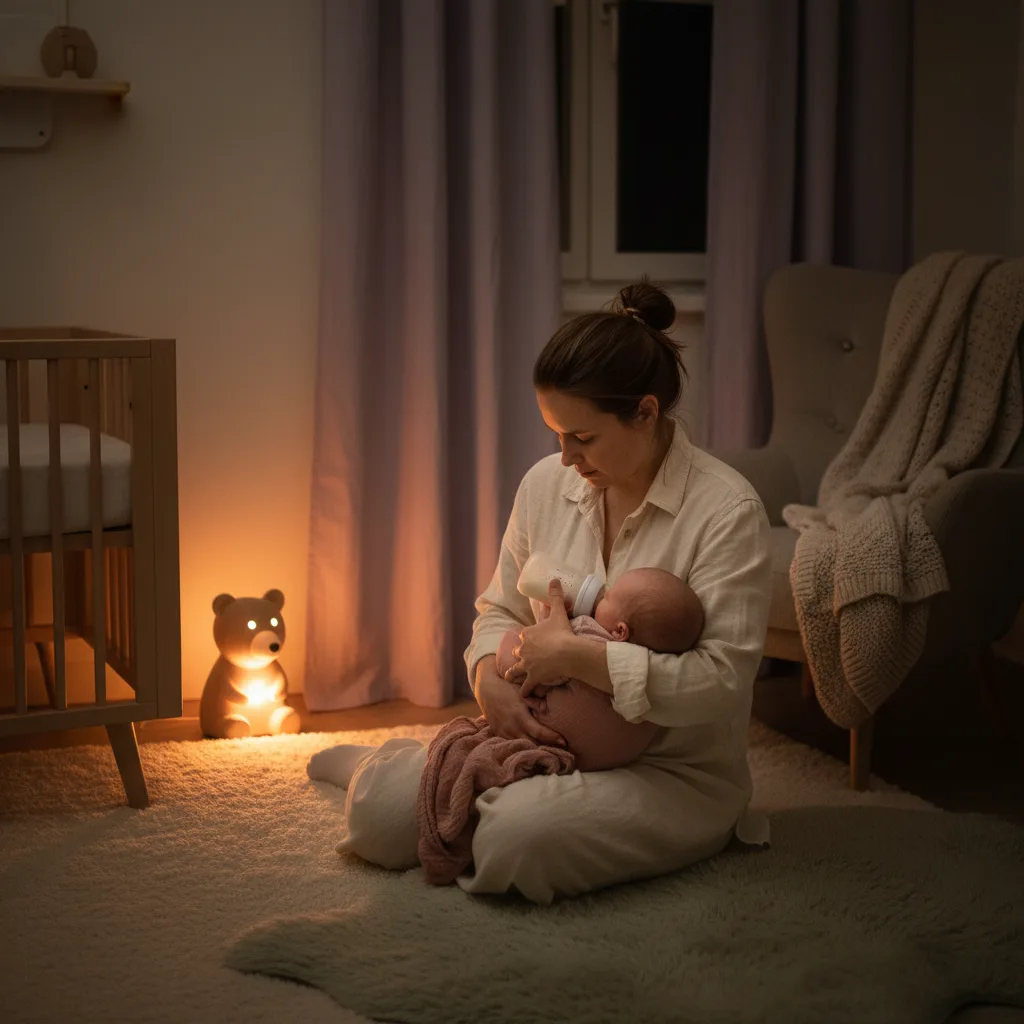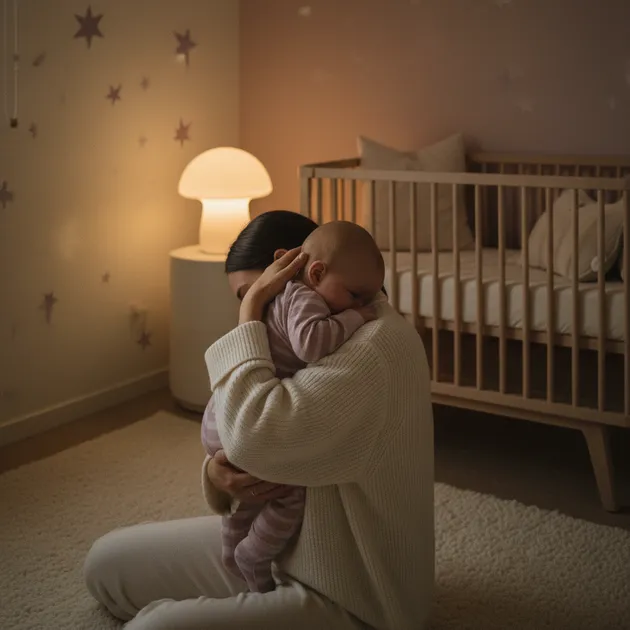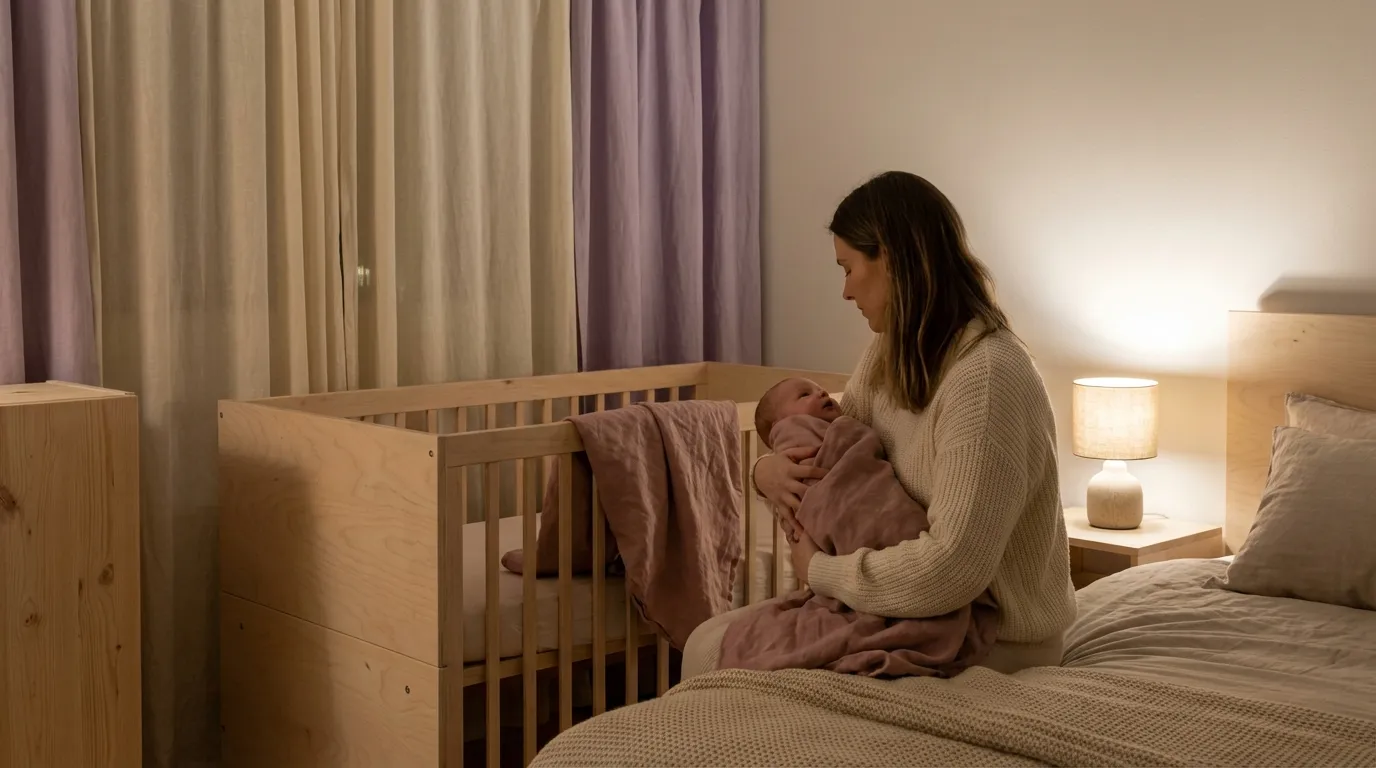
It's 3:14 a.m. You've already been up three times. The baby is crying again. Yesterday's coffee is still sitting on the counter. You wonder if it will ever get better.
It will. And you are doing nothing wrong.
When your baby isn't sleeping at night, it can feel lonely. But you are far from alone. Most parents go through periods of restless nights, and there are concrete things you can do.
In this guide we walk through the 8 most common causes, what is normal for each age, and practical solutions that actually work.
Key Takeaways
- According to the AAP, 2 in 3 babies still wake at night at 6 months of age, frequent night waking is developmentally normal, not a parenting failure.
- Babies have short sleep cycles of 45–60 minutes and naturally wake between cycles; the goal is helping them learn to resettle independently.
- "Sleeping through the night" for a baby means 5–6 consecutive hours, not the 8+ hours adults expect.
- The 4 most common causes of night waking are: hunger, overtiredness, sleep associations (needing help to fall back asleep), and developmental leaps.
- A consistent bedtime routine of 20–30 minutes (bath, feed, dim lights, calm activity) is the single most evidence-backed way to improve baby sleep at any age.
Is It Normal for a Baby Not to Sleep at Night?
Yes, usually. Babies are not designed to sleep 8 hours straight. They have short sleep cycles of 45–60 minutes and wake naturally between each one.
Expectations for your baby's night sleep vary with age:
- 0–3 months: Wakes every 2–4 hours. Completely normal and necessary for feeding and growth.
- 3–6 months: Some start sleeping longer stretches (4–6 hours), but many still wake frequently.
- 6–12 months: May sleep 6–8 hours, but night feeding is still common. About half still wake at 9 months.
- 1–3 years: Most can sleep through the night, but separation anxiety, nightmares, and overstimulation can disrupt sleep.
From the AAP: 2 in 3 babies still wake at night at 6 months of age. Waking is normal, it is part of a baby's natural sleep pattern.
"Sleeping through the night" doesn't mean what you might think. For babies, 5–6 hours straight is considered a full night. When someone says their baby "sleeps through," it rarely means 8 p.m. to 7 a.m.
8 Common Reasons a Baby Doesn't Sleep at Night
1. Hunger
The most common reason, especially in the first 6 months. Babies have small stomachs and need frequent feedings. Breastfed babies digest breast milk faster than formula, so they may wake more often.
What you can do: Feed when the baby shows hunger cues. Consider a dream feed around 10–11 p.m., before you go to bed yourself.
2. Overtiredness
Paradoxically, an overtired baby sleeps worse than a properly tired one. When a baby is kept awake too long, the stress hormone cortisol rises. This makes it harder to fall asleep, and easier to wake.
What you can do: Learn your baby's wake windows and watch for early tired cues: yawning, rubbing eyes, looking away, pulling at ears.
3. Under-tiredness
Yes, the opposite is also a problem. A baby who has slept too much during the day, or been put down too early, simply isn't tired enough to sleep well at night.
What you can do: Adjust daytime naps. Make sure wake windows match your baby's age and that the last nap doesn't fall too close to bedtime.
4. Teething
Tooth eruption typically begins around 6 months, but can start as early as 3 months. Pain and discomfort from the gums can disrupt sleep for several days.
What you can do: A chilled (not frozen) teething ring. For stronger pain, you can give infant acetaminophen according to your pediatrician's guidance.
5. Sleep Regression
Around 4, 8, 12, and 18 months, sleep can suddenly get worse. This is called a sleep regression, and it coincides with major developmental leaps. Your baby is learning new skills (rolling, crawling, walking), and the brain is working so hard that it disrupts sleep.
What you can do: Keep the routines. Regressions typically last 2–4 weeks and resolve on their own.
6. Illness and Discomfort
A cold, ear infection, reflux, or digestive issues can be the cause when sleep suddenly changes. A baby who normally sleeps well but suddenly wakes a lot may be sick.
What you can do: Offer extra closeness and comfort. Check temperature. Contact your doctor if the baby has a fever above 100.4°F (38°C) if under 3 months, or above 102.2°F (39°C) for older babies.
7. Sleep Environment
Too warm, too cold, too bright, or too noisy. The environment affects sleep quality more than many parents realize.
What you can do: Keep room temperature between 65–70°F (18–20°C). Use blackout curtains. White noise (a fan, an app) can help babies who wake from sudden sounds. Avoid over-dressing, a good rule of thumb is one layer more than what you would wear yourself.
8. Sleep Associations
If your baby always falls asleep while nursing, being rocked, or in your arms, they may need the same thing to fall back asleep when they wake between sleep cycles. This is not a "bad habit", it is completely natural. But it can mean more wake-ups for you.
What you can do: From 4–6 months of age, you can gradually practice putting your baby down drowsy but awake. There is no rush, do it at your baby's pace.
From the AAP: It is normal for babies to need help falling back to sleep when they wake. Comfort, nursing, and closeness are not bad habits, they are fundamental care.
Solutions by Age
Newborn (0–3 months)
Newborns sleep 14–17 hours a day, but in short bursts of 2–4 hours. They cannot yet distinguish between day and night.
Focus on:
- Day/night differentiation: Bright and active during the day, dark and calm at night. Take your baby out into daylight.
- Colic management: If your baby cries inconsolably in the evening (typically 3–12 weeks), try baby-wearing, rocking, white noise, and skin-to-skin contact.
- Feed on demand: Don't try to stretch between feedings. Frequent night feedings are important for milk supply and your baby's growth.
- Swaddling: Many newborns sleep better when swaddled. Stop swaddling when your baby starts rolling (around 3–4 months).
Don't expect: Fixed routines or long sleep stretches. This phase is about survival and adjustment.
Baby (3–12 months)
Sleep patterns mature. The baby starts producing melatonin and can learn a day/night rhythm.
Focus on:
- Wake windows: Follow recommended wake windows for your baby's age. A window that is too short or too long is one of the most common causes of poor night sleep.
- Consistent bedtime routine: Start a simple evening routine, bath, feeding, book, bed.
- Sleep regressions: Be prepared for temporary setbacks at 4, 8, and 12 months. Keep the routines.
- Daytime naps: Adjust the number of naps to your baby's age. Too much or too little daytime sleep affects the night.
- Gradual independence: Practice putting your baby down drowsy but awake. Give a little time before responding to sounds at night.
Early bedtime: Between 6:00 and 7:30 p.m. works best for most babies this age. An overtired baby put down too late will, paradoxically, sleep worse.
Toddler (1–3 years)
Most toddlers can sleep 11–14 hours a day, including one nap. But new challenges appear.
Common causes in this age group:
- Separation anxiety: Peaks around 18 months. The child understands you are leaving but is unsure you will come back.
- Nightmares: Usually start around age 2. The child needs comfort and reassurance that it was a dream.
- Overstimulation: Too much screen time, activity, or sugar late in the day can make it hard to wind down.
- Testing limits: Toddlers test boundaries, including at bedtime. "One more book," "water," "potty."
Focus on:
- Predictability: Same routine, same time, every evening. Consider a visual board with pictures of each step.
- Limited choice: "Do you want the blue or the red pajamas?" The child feels control without it becoming chaos.
- No screens in the last hour: Blue light from screens suppresses melatonin production. Swap tablets for a book or quiet play.
- Nightlight: A soft, warm nightlight can help children who are afraid of the dark.

A Bedtime Routine That Works
A good bedtime routine is short, predictable, and calm. Here is an example that works for most families:
- Bath or wash (5–10 min), signals that the day is winding down
- Clean diaper and nightclothes (5 min), comfortable temperature
- Feeding (10–15 min), nursing or bottle in calm surroundings
- Quiet activity (5–10 min), a short book, a lullaby, or quiet cuddle
- Into bed, say goodnight with a fixed phrase. Same words every evening.
The whole routine should take 20–40 minutes. Start early enough so it doesn't become stressful.
Tip: Start the routine when your baby shows the first tired cues, not when they are already overtired. Use a sleep tracker to find patterns in your baby's natural sleep rhythm.
When Should You Seek Help?
Night wakings are normal. But sometimes you should contact your pediatrician.
Contact your pediatrician if:
- Your baby seems unusually lethargic, irritable, or difficult to wake
- Wakings suddenly increase without obvious reason
- Your baby cries inconsolably for long periods every night
- You notice breathing pauses or unusual breathing patterns during sleep
- Your baby stops gaining weight or is feeding poorly
- You as a parent feel exhausted and need support
It is never wrong to ask for help. Pediatricians have experience with sleep problems and can offer tailored advice for your specific situation.
Important: If your baby has a fever above 100.4°F (38°C) and is under 3 months, contact a doctor immediately. For older babies, contact a doctor for fever above 102.2°F (39°C) lasting more than 3 days.
Frequently Asked Questions
Why does my baby only sleep on me?
Babies are programmed for closeness. Your warmth, heartbeat, and breathing provide security. It is completely normal for a baby to sleep best on you, especially in the first months. From 4–6 months you can gradually practice putting your baby down, but there is no rush.
Does a bigger feeding in the evening help?
An extra large evening feeding rarely makes a baby sleep longer. Babies wake for many reasons, not just hunger. Introducing solid foods (from 6 months) can help somewhat, but don't expect a miracle effect.
Is it harmful to let a baby cry?
Health authorities recommend responding to your baby's signals. Brief crying while you check on your baby is not harmful, but leaving a baby to cry alone for an extended period is not recommended. Babies need to know they will get help when they need it.
When will my baby sleep through the night?
It varies enormously. A few sleep 6 hours straight from 3 months. Others still wake at 12 months. That does not mean you are doing anything wrong. By age 2, the vast majority of children sleep through the night.
Can daytime naps ruin night sleep?
Both too much and too little daytime sleep affects the night. A baby who skips naps becomes overtired, while a baby who sleeps too much during the day isn't tired enough in the evening. Check recommended wake windows for your baby's age.

Summary
It is normal for your baby not to sleep at night. You are doing nothing wrong.
The most common causes, hunger, wrong wake windows, teething, regressions, are all temporary. With the right bedtime routine, age-appropriate expectations, and a little patience, the nights will get better.
And when it feels endless: this phase passes.
Read More
- Safe sleep checklist. Verify your baby's sleep environment is safe
- Wake windows by age: Complete guide. Find the right wake window for your baby
- Bedtime routines for babies. How to build healthy sleep habits
- 4-month sleep regression. What happens and how to get through it
Sources
- American Academy of Pediatrics (AAP). Healthy Sleep Habits
- Zero to Three. Sleep: What Every Parent Needs to Know
- National Sleep Foundation. Children and Sleep
🔧 Helpful Tools
- Baby Sleep Tracker. Track and optimize your baby's sleep
- Soothing Sounds. White noise and soothing sounds to help your baby sleep
- All Baby Tools. Browse all free tools for pregnancy and baby care
📖 Related Articles
- Dream Feeding. Can It Give Your Baby Longer Sleep Stretches?. Everything about dream feeding your baby. How to do it, what age it works for, and whether it actually gives your baby longer stretches of sleep at night.
- Night Waking in Babies: Causes and Tips for Better Nights. Baby waking frequently at night? Learn why babies wake up, and get practical tips for handling night wakings. Evidence-based advice for tired parents.
- Sleep Regression at 12 Months: What's Happening and What to Do. Sleep regression at 12 months is common. Learn what's happening, how long it lasts, and what you can do for better nights.