Your child is approaching two years old, and the reminder for their next well-child visit has arrived. Maybe you're wondering what happens, what the pediatrician is looking for, and whether you should prepare anything.
Here's everything you need to know about the 2-year checkup, so you can relax and use the time to ask the questions that matter to you.
What Is the 2-Year Checkup?
The 2-year checkup is one of the scheduled well-child visits recommended by the AAP. It's part of the preventive health care program offered to all children.
The purpose is to:
- Monitor the child's growth and development
- Catch any challenges early
- Provide parents with guidance and support
- Keep vaccinations up to date
The visit is recommended for all children. In most countries with universal health coverage it is free or covered by insurance.
Your pediatrician is on your side. They are not there to judge you as a parent. They are there to help your child thrive and to support you in your parenting role. Use them as a resource.
What Is Checked at the 2-Year Visit?
The pediatrician or nurse assesses several areas of development. Here is a rundown.
Height and Weight
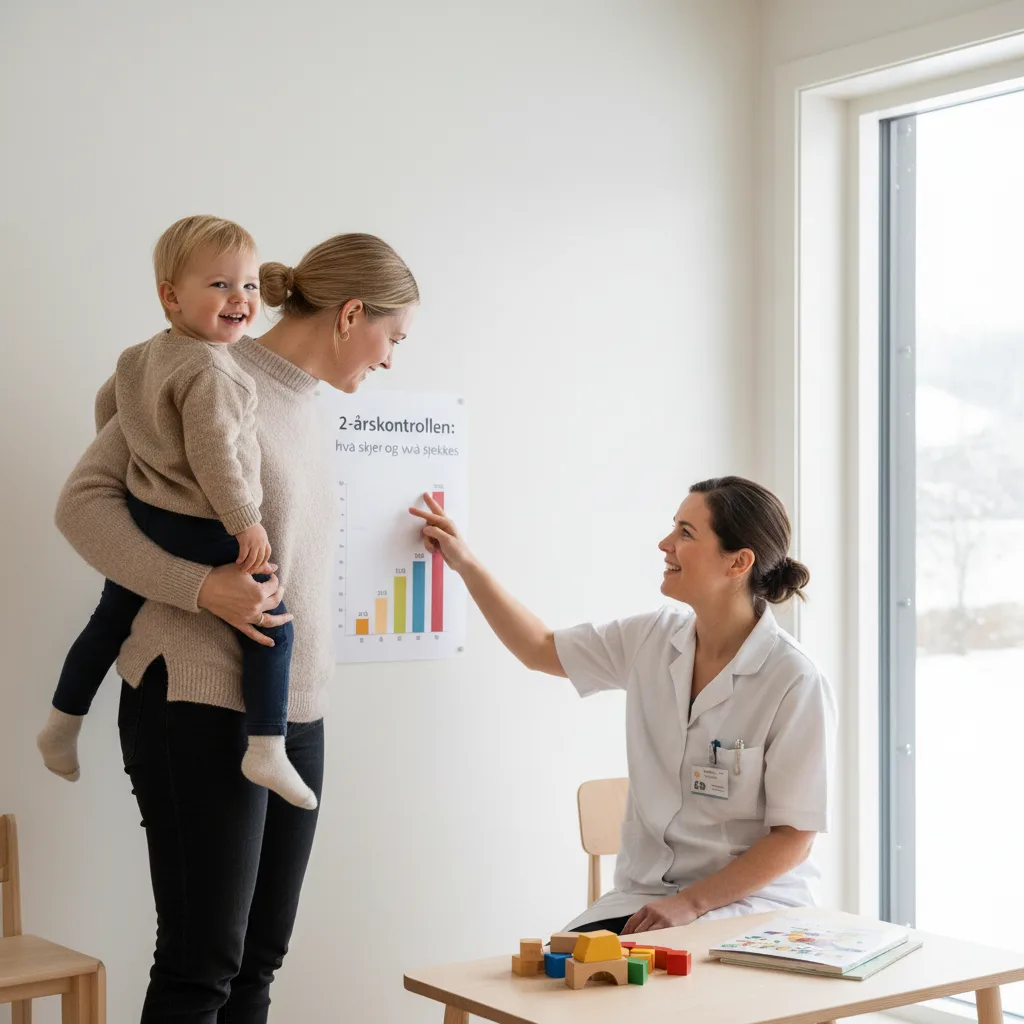
The child is measured and weighed. The values are plotted on the growth chart that has followed the child since birth. The provider looks at:
- Whether the child is following their own growth curve
- Whether there are deviations from previous measurements
- BMI for age
A child who has always been at the 25th percentile and continues there is developing well. It's sudden changes in the curve that may need follow-up.
Head Circumference
Head circumference is typically measured up to age 2. The value is plotted on the chart to ensure normal brain development.
Language Assessment
Language is a central topic at the 2-year visit. The provider assesses:
- Vocabulary, most 2-year-olds have 50–200 words
- Two-word phrases, many 2-year-olds are starting to combine two words ("more milk," "car there")
- Language comprehension, does the child understand simple instructions? ("Get your shoes")
- Communication intent, is the child trying to communicate, even if words are missing?
Language varies enormously. Some 2-year-olds speak in full sentences, others have a handful of words. Both can be completely normal. The provider looks at the whole picture, not just the word count. Does the child understand you? Are they trying to communicate? That counts just as much as speech.
Social Development
The provider observes the child's social skills:
- Does the child make eye contact?
- Does the child show interest in other children?
- Can the child engage in pretend play (for example, feeding a doll)?
- Does the child show emotions like joy, frustration, empathy?
- Does the child react to others' feelings?
Motor Skills
At 2 years it is expected that the child:
- Walks steadily and can run
- Climbs onto a chair or sofa
- Kicks a ball
- Can stack blocks (4–6 high)
- Holds a crayon and can draw lines
Vision and Hearing
A simple assessment of vision and hearing is done. If there is reason for concern, the child is referred to a specialist.
Vaccinations Around 15 Months and 2 Years
The recommended vaccination schedule includes vaccines around this age. Depending on your country and schedule, vaccines may include MMR (measles, mumps, rubella), varicella (chickenpox), and catch-up doses for any missed vaccines. Your provider will check that the vaccination schedule is up to date.
Read more about vaccines for children for a full overview.
Vaccines are recommended by the AAP and WHO. If you have questions about vaccines, a well-child visit is a safe place to ask them.
How to Prepare Your Child
A 2-year-old might find the doctor's office exciting, scary, or completely uninteresting. Here are some tips:
Before the Visit
- Talk about it in advance. "Tomorrow we're going to the doctor. There's a kind person there who wants to see how big you've gotten."
- Read a children's book about the doctor if the child has anxiety
- Pack a favorite toy or book the child can hold
- Try to come well-rested. Avoid the hour just before nap time
During the Visit
- Stay calm yourself. The child notices your mood
- Sit with the child in your lap if they feel insecure
- Distract with play during measurements and weighing
- Praise the child afterward. "You did so well at the doctor today!"

Questions You Can Ask
The 2-year visit is your opportunity to bring up things that are on your mind. Here are some topics many parents ask about:
Sleep
- The child still wakes up at night, is that normal?
- When should the child stop napping in the morning?
- How do I handle resistance at bedtime?
Food
- The child eats very little or limited foods, should I be worried?
- Is it normal for the child to refuse vegetables?
- How much milk should a 2-year-old drink?
Behavior
- Tantrums and defiance, what is normal?
- The child hits or bites, what do I do?
- Screen time, how much is okay?
Development
- The child talks less than peers
- The child doesn't play with other children
- The child is very active or restless
Write down your questions. It's easy to forget what you wanted to ask when you're sitting there with a restless 2-year-old. Make a list in advance.
What Happens If the Pediatrician Is Concerned?
Sometimes the provider will suggest further follow-up. This can mean:
- A recheck in a few months to monitor development
- Referral to a physical therapist for motor challenges
- Referral to a speech therapist for language challenges
- Referral to a developmental specialist for a broader assessment
- Referral to an eye doctor or audiologist for vision/hearing
A referral doesn't mean something is wrong. It means someone will take a closer look at your child, and that you'll get help early if it's needed.
After the 2-Year Checkup
The next scheduled well-child visit is typically at age 3 or 4. But you can always contact your pediatrician between visits if you have questions or concerns.
Frequently Asked Questions
Is the 2-year checkup mandatory?
In most countries, well-child visits are strongly recommended but not legally required. Missing a visit means your child misses an important health assessment, but there are no penalties.
What if the child cries the whole time?
Completely normal. Many 2-year-olds protest. The provider is used to this and can still make a good assessment. Weighing and measuring only take a few seconds.
Should both parents come?
It's nice if both can come, but not necessary. One parent is enough. Write down questions from your partner in advance.
What if the child is sick that day?
Call and reschedule. It's better to come when the child is well and you can get a real assessment.
What about bilingual children?
Bilingual children may have fewer words in each language, but the total vocabulary across both languages is usually normal. Let the provider know that the child is learning more than one language, it's relevant for the language assessment.
Your Pediatrician Is Your Ally
The 2-year checkup is an opportunity, not an exam. It's an appointment where you can get reassurance that your child is developing well, ask questions you've been wondering about, and get help with things that concern you.
Use it.
Sources
- AAP. "Recommendations for Preventive Pediatric Health Care." aap.org
- WHO. "Child growth standards." who.int
- CDC. "Developmental Milestones: 2-Year-Olds." cdc.gov
🔧 Helpful Tools
- Baby Milestones Tracker. Track your baby's developmental milestones
- All Baby Tools. Browse all free tools for pregnancy and baby care
📖 Related Articles
- Delayed Speech Development: When Should You Act?. Is your two-year-old saying very little? Here's how to evaluate whether speech development is delayed and when to contact your pediatrician.
- Delayed Speech Development: When Should You Be Concerned?. Is your two-year-old saying very little? Learn how to assess whether speech development is delayed and when to contact your pediatrician.
- Stopping Nighttime Diapers: Tips and Timing. When do children stop needing nighttime diapers? Practical guide to dry nights with realistic expectations and helpful tips.