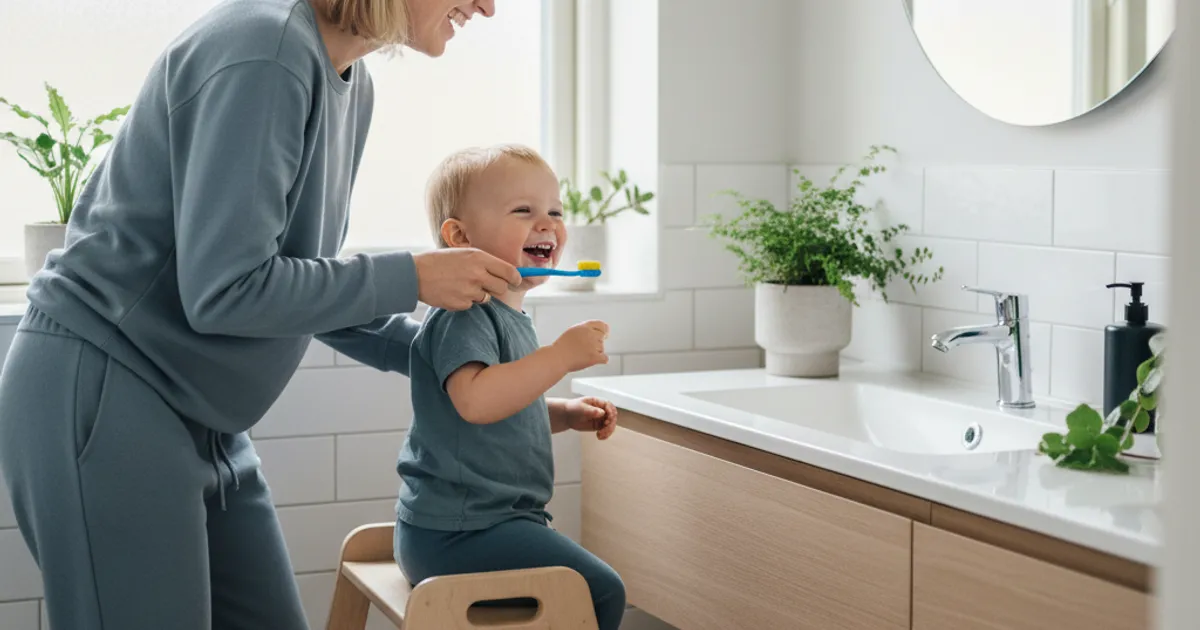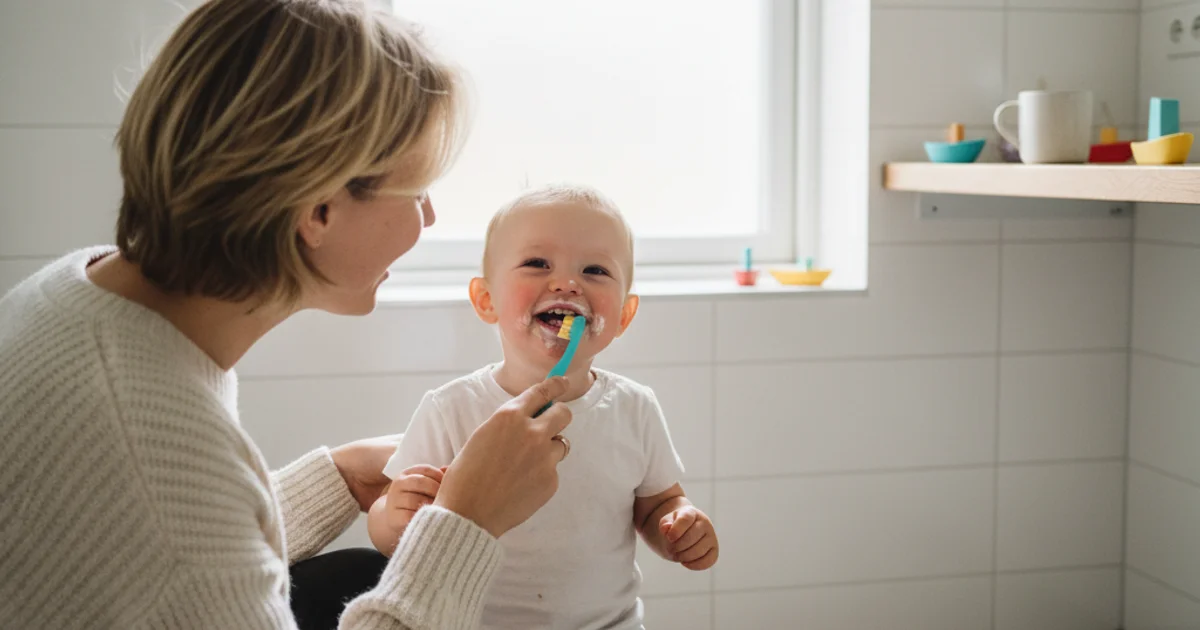
Dental health starts long before your child can say "toothbrush." The first years of life lay the foundation for strong, healthy teeth for a lifetime. But brushing the teeth of a wriggling, crying baby can feel like a battle.
Here is everything you need to know about dental health from 0 to 3 years, from the first tooth appearing to your child's first dental check-up.
When Do Teeth Appear?
Most babies get their first tooth at around 6 months of age, but there is a wide range of normal. Some babies have teeth at birth, while others don't get their first tooth until after 12 months. Both are completely normal.
Timeline for primary (baby) teeth:
| Teeth | Typical age |
|---|---|
| Lower central incisors (front bottom) | 6–10 months |
| Upper central incisors (front top) | 8–12 months |
| Upper lateral incisors | 9–13 months |
| Lower lateral incisors | 10–16 months |
| First molars (top and bottom) | 13–19 months |
| Canines (top and bottom) | 16–23 months |
| Second molars (top and bottom) | 23–33 months |
By age 3, most children have all 20 primary teeth.
If your child has not had any teeth by 18 months, contact your pediatric dentist. It is rarely a cause for concern, but worth checking.
Wondering about the signs of teething? Read our guide to teething in babies for symptoms and how to soothe discomfort.
Brushing: Start With the First Tooth
According to the AAP and the American Academy of Pediatric Dentistry (AAPD), tooth brushing should begin as soon as the first tooth appears. Do not wait until there are more teeth, bacteria can attack even a single tooth.
What you need:
- A soft-bristled toothbrush in baby size (small head, thick handle)
- Fluoride toothpaste (1,000 ppm fluoride)
- Patience and a relaxed attitude
Before the first tooth (0–6 months): You can wipe your baby's gums with a damp piece of gauze or a soft cloth after feeding. This is not strictly necessary, but it gets your baby used to having something in their mouth.
Fluoride, the Right Amount Matters
Fluoride strengthens tooth enamel and protects against decay. The AAPD and AAP guidelines on fluoride for children are clear.
Fluoride amount by age:
| Age | Amount of toothpaste | Fluoride concentration |
|---|---|---|
| 0–3 years | A smear (grain-of-rice size) | 1,000 ppm |
| 3–6 years | A pea-sized amount | 1,000 ppm |
Brush twice daily, morning and evening. The evening brush is the most important, because saliva production decreases overnight and teeth are more vulnerable to bacterial attack.
Young children will swallow toothpaste, this is why the amount should be tiny. A smear of 1,000 ppm fluoride toothpaste is safe even if swallowed.
How to Brush a Baby's Teeth
Brushing a young baby's teeth requires a little technique and a lot of calm.
Position:
- Baby lies in your lap with their head resting toward your tummy
- Or: baby lies on the changing table or a mattress
- You sit behind the child looking down into their mouth (as a dentist does)
Technique:
- Apply a tiny smear of fluoride toothpaste to the brush
- Gently lift the upper lip with one finger
- Brush with small circular movements along the gum line
- Clean all surfaces: outer, inner, and biting surfaces
- Spend 1–2 minutes in total
Tips that help:
- Sing a song or tell a short story while you brush
- Let your baby hold their own toothbrush to "brush" with
- Be quick and effective rather than perfect, an imperfect brush is better than no brush at all
- Brush at fixed times so it becomes a routine
Brushing for Toddlers (1–3 Years)
As your child gets older, the challenges change. Now your toddler wants to do it themselves, but their motor skills are not yet good enough for effective brushing.
The main rule: Your child can "have a go" themselves, but an adult must always finish with a thorough brush. Children typically need help with tooth brushing until they are 7–8 years old.
Battling the brushing refusal, what to do:
Most toddlers resist tooth brushing at some point. Here are strategies that work:
- Give a choice: "Do you want the red or the blue toothbrush?"
- Let your child brush your teeth first, turn-taking makes it fun
- Try an electric toothbrush, many children find them exciting
- Count teeth: "I'm counting all your teeth while I brush!"
- Keep it short and consistent, it does not need to be a long ordeal
Do not give in to tears and skip the brush. Tooth decay in primary teeth is painful, can require treatment under general anaesthetic, and can damage the permanent teeth developing underneath. Two minutes of discomfort now prevents hours in the dental chair later.
Preventing Tooth Decay
Cavities (tooth decay) can affect even the very youngest children. Prevention comes down to three things: brushing, fluoride, and diet.
Dietary advice for healthy teeth:
- Avoid sugary drinks in bottles or sippy cups, juice, squash, and sweet drinks are especially harmful when sipped over time
- Limit sugar between meals, it is the number of times teeth are exposed to sugar that matters most, not the total amount
- Water is the best thirst-quencher, from 6 months onwards
- Don't share spoons with your baby, decay-causing bacteria can be transferred from parent to child
- Whole fruit is better than juice, whole fruits stimulate saliva production and are less damaging to teeth
Breast milk and formula both contain milk sugars and can cause decay if your baby falls asleep with the bottle or while nursing. Brush teeth after the last evening feed.
Dummies and Thumb Sucking
Dummies (pacifiers) and thumb sucking are natural for babies and provide comfort. But prolonged use can affect tooth alignment.
AAP and AAPD guidance:
- Dummies are fine in the first years
- Try to limit use after 12 months to sleep and comfort
- Aim to wean off the dummy by age 2–3
- Thumb sucking is harder to wean, start gentle redirection early
Effect on teeth:
- Prolonged dummy or thumb use can cause an open bite (front teeth don't meet when the mouth is closed)
- Can affect the shape of the palate
- Most problems resolve if the habit is stopped in time
The First Dentist Visit
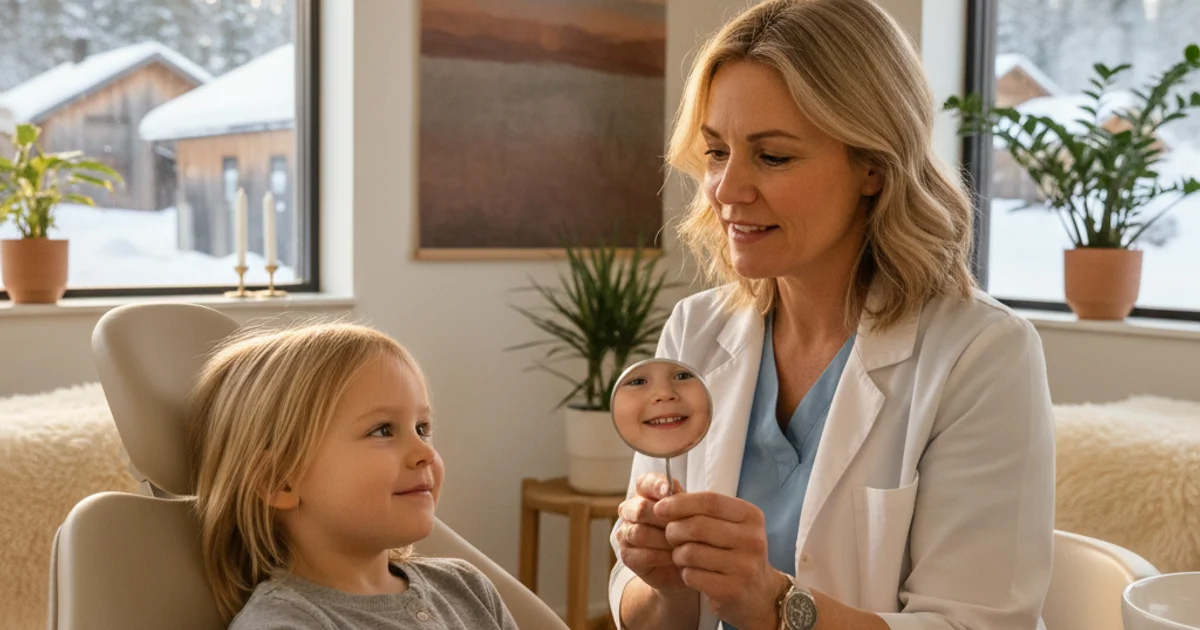
The AAP and AAPD recommend that children have their first dental visit by age 1, or within 6 months of the first tooth appearing, whichever comes first. In many countries, the first routine check-up is scheduled around age 1.
What happens at the first visit:
- The dentist or dental hygienist looks in your child's mouth
- Counts teeth and checks that everything looks normal
- Gives advice on brushing and fluoride tailored to your child
- Checks bite development
- The appointment is short and gentle, the aim is to create a positive experience
Preparation:
- Talk positively about the dentist beforehand
- Read a picture book about visiting the dentist together
- Play "dentist" at home, count the teddy bear's teeth
- Avoid saying "it won't hurt", this puts the idea of pain in your child's mind
- Let your child sit in your lap during the examination
Some dental practices offer "familiarisation visits" where your child can come and look around without any treatment. Ask your local dentist whether this is available.
Dental Care Routine by Age
Here is a summary of what applies at each age:
0–6 months:
- Wipe gums with a damp cloth (optional)
- Follow your pediatrician's advice on vitamin D supplementation
6–12 months:
- Start brushing with the first tooth
- Soft baby toothbrush + tiny smear of fluoride toothpaste (1,000 ppm)
- Brush twice daily
1–2 years:
- Continue twice daily with a smear of toothpaste
- Let your child have a go, but always brush yourself afterwards
- Avoid sugary drinks in cups or bottles
2–3 years:
- Increase to a pea-sized amount of toothpaste (1,000 ppm)
- First dental check-up (as recommended by your pediatrician or dentist)
- Start teaching your child to spit, ideally without rinsing with water afterwards (fluoride works better without rinsing)
When Should You Contact a Dentist?
Outside of regular check-ups, contact a dentist if:
- You notice white or brown spots on the teeth (early decay)
- Your child has pain in their mouth or refuses food
- A tooth is damaged after a fall
- The teeth look abnormal in shape or colour
- Your child has swelling around the gums that does not go away
Dental injuries are usually treated urgently, contact your dentist the same day if a tooth is knocked out or broken.
Frequently Asked Questions
Is fluoride toothpaste safe for babies, isn't fluoride dangerous?
Fluoride in the recommended amount is safe and is the best protection against decay. The AAP and AAPD recommend fluoride toothpaste (1,000 ppm) from the first tooth. With a grain-of-rice-sized smear, the amount of fluoride is minimal even if your child swallows it all. The risk of not using fluoride (tooth decay) far outweighs the risk of correct use.
My child refuses to let me brush their teeth. What do I do?
Brushing resistance is normal, especially around age 1–2. Try making it playful (sing, count teeth, let your child brush your teeth), offer a choice of toothbrush, and be consistent. Some days it will be a short brush, that is fine. But don't skip it entirely. Talk to your pediatric dentist if the battle is ongoing.
Are baby teeth really that important, they fall out anyway?
Yes, baby teeth are very important. They hold the space for the permanent teeth, help your child eat and speak, and influence jaw development. Decay in baby teeth can spread to the permanent teeth developing underneath, and can cause pain that affects your child's wellbeing and ability to eat.
Further Reading
Sources
🔧 Helpful Tools
- Baby Milestones Tracker. Track your baby's developmental milestones
- All Baby Tools. Browse all free tools for pregnancy and baby care
📖 Related Articles
- Baby Teeth: Teething, Brushing, and Fluoride Guide. Everything parents need to know about baby teeth: when teeth appear, the order of eruption, teething symptoms, brushing technique, fluoride recommendations, and dental checkups.