A journal that asks for one line feels possible on a day when nothing else does. A one line a day journal gives each date of the year its own page, so you write a sentence, close the book and go to bed.
This guide explains how the format works, how to keep going when life gets busy, 25 prompts for anyone and 15 more for a baby's first years, and how to choose between paper and your phone. It also covers how to store five years of lines.
Each page of a one line a day journal covers one date and holds an entry for five successive years, so you can reread what you wrote on the same day in earlier years. One line is small enough to write on a day when nothing else gets done.
Key Takeaways
- One page per date, five years per page. Chronicle Books describes its One Line a Day book that way.
- A line can be a few words. Choose one time of day and write one specific thing.
- A missed day can stay blank. Fill it in later or leave it.
- For a baby, write moments: what made them laugh, a sound they tried, where they fell asleep.
- Paper shows the same date across years; Memory Book does not. Memory Book keeps dated lines grouped by month, free and without an account.
What Is a One Line a Day Journal?
A one line a day journal is a book with a page for each date of the year. Chronicle Books, which publishes One Line a Day: A Five-Year Memory Book, says each page includes an entry for five successive years, so you can revisit what you wrote on a specific day in earlier years.
The same layout goes by other names, such as five year memory book and 5 year journal. Whatever the cover says, the idea is one date, five years and a few words for each.
The word "line" sets the size of the entry. A line can be a few words or one full sentence, and you decide which.
How to Use a One Line a Day Journal
Pick One Time of Day
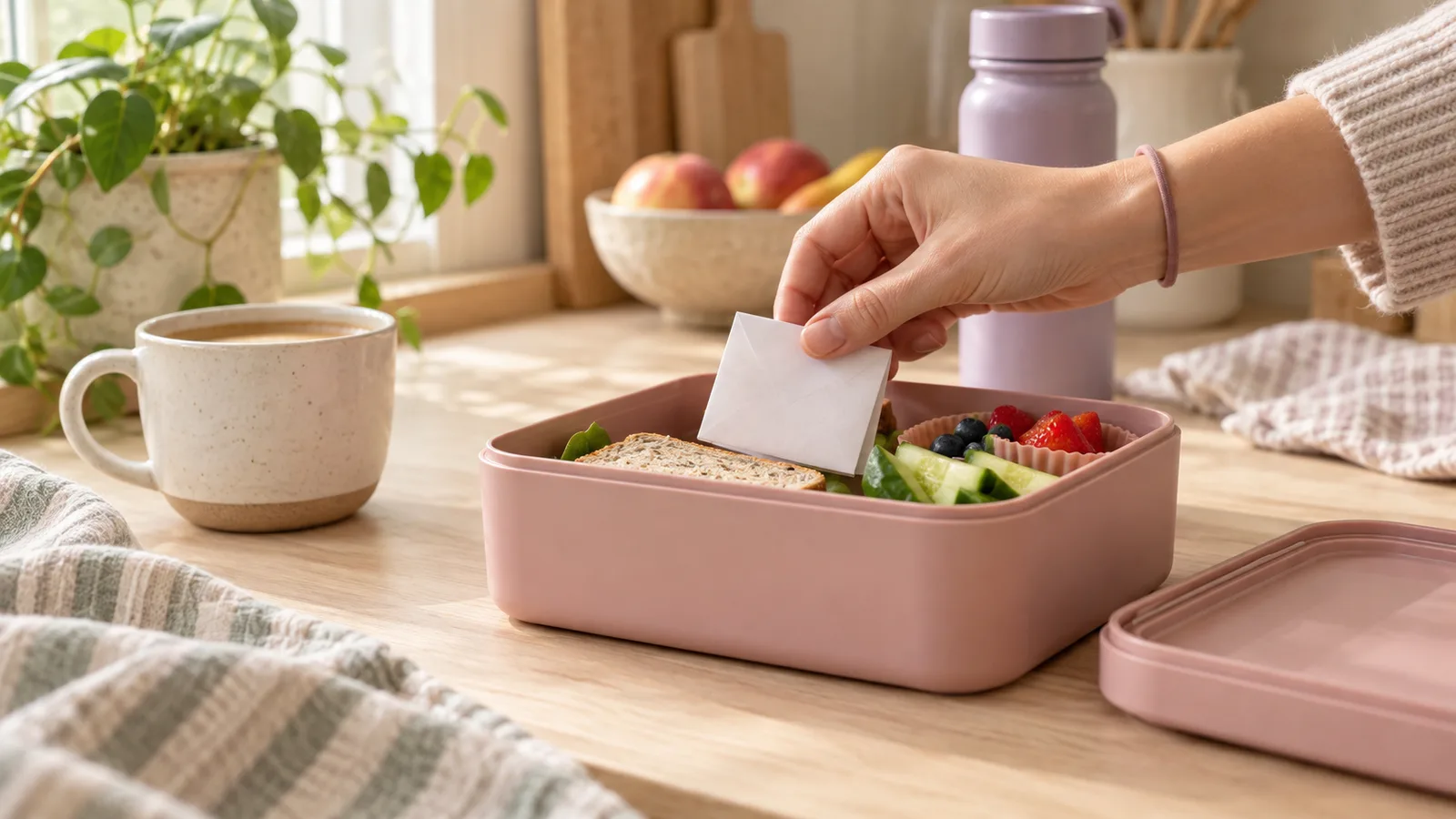
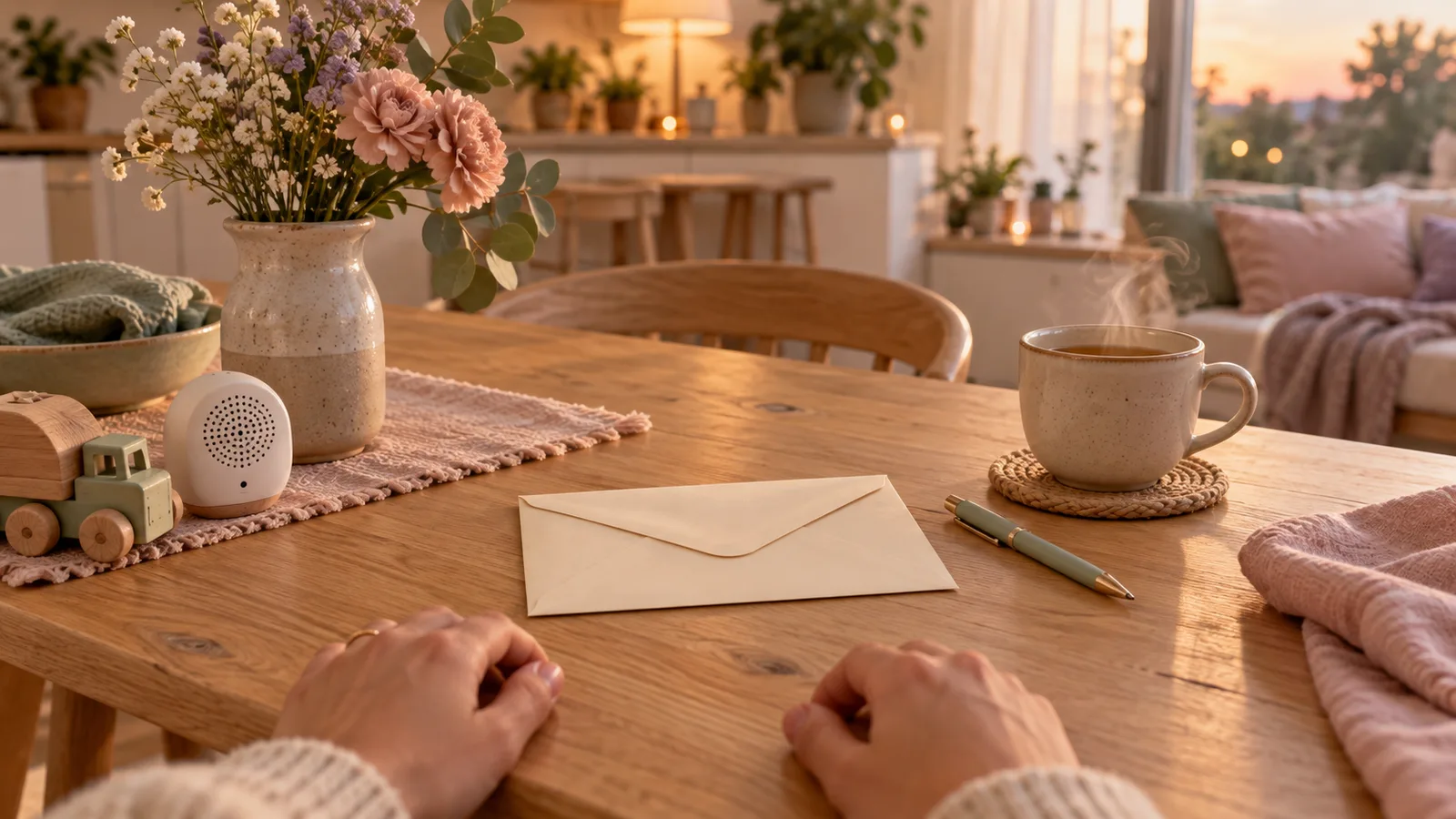
Choose a moment that already happens daily: after you brush your teeth, while the kettle boils, once the baby is down. Write the line then, so the journal does not need a slot of its own. If your evenings are chaotic, try the morning and write about yesterday.
Decide What Counts as a Line
One specific thing from today counts. A detail says more than a summary: "Soup for dinner, burned the toast" beats "Busy day." If you are stuck, write the weather and one thing you ate. These three lines are the right size:
- Soup for dinner, burned the toast.
- The neighbor's dog got out and we chased him together.
- Rain all day, walked to the library anyway.
Missed a Day?
Leave the space blank, or fill it in later with what you remember. If a gap runs a week or longer, skip ahead to today. A blank stretch is still part of the book.
Keep It Where You Will See It
A book in a drawer gets skipped. Put it on the nightstand or the kitchen counter, with a pen on top.
Read Back Once a Year
On the date you started, read the earlier line before you write the new one. In a five-year book the earlier years sit on the same page, so reading back comes with the layout.
What to Write in a One Line a Day Journal: 25 Prompts
Use a prompt on a slow day, or skip the list and write what happened. Each one asks for a single specific thing.
- The best thing I ate today.
- The person who made me laugh, and what they said.
- The weather, and what I did about it.
- A sound I noticed that I usually tune out.
- One small thing that went right.
- Something I overheard.
- The best ten minutes of the morning.
- A call or message that mattered.
- A place I went today, even if it was only the mailbox.
- Something I finished.
- Something I put off.
- A thing I am looking forward to this week.
- A smell that took me somewhere else.
- The song stuck in my head.
- Something I noticed on my walk or drive.
- Something I fixed, cooked or made.
- A price that surprised me.
- A question someone asked me.
- Something I learned.
- Someone I want to thank.
- The light at the end of the day.
- The food on the table at dinner.
- Something I am glad is over.
- A small kindness I saw.
- The last thing I did before bed.
A One-Line Journal for Your Baby's First Years
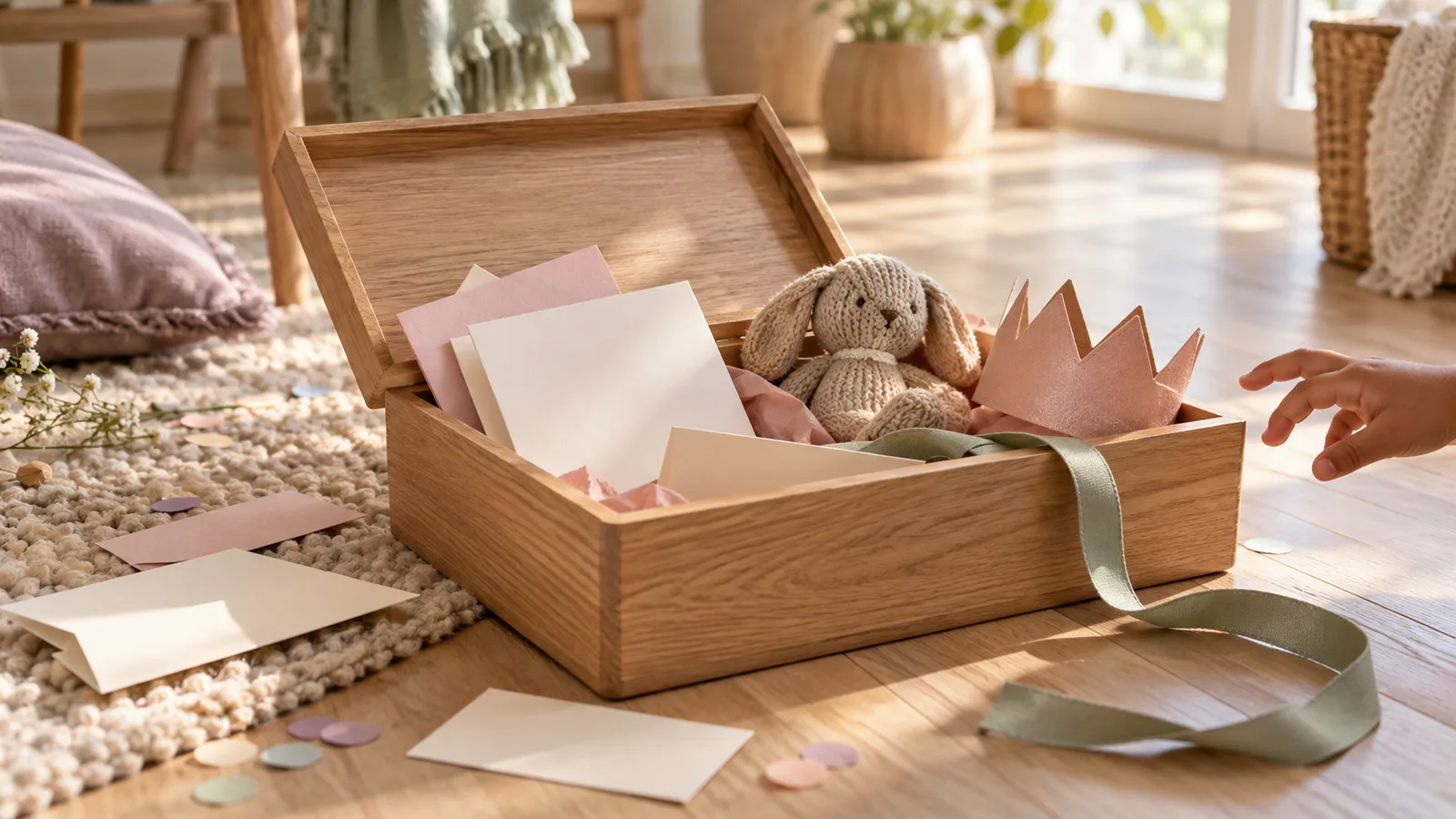
A one line a day journal for your baby fits around feeds, naps and diaper changes, and it records what a photograph skips: a sound, a place, a song. Write to your child ("You laughed at the dog") or about them ("Laughed at the dog"). Either way, keep it short, and use a nickname if you would rather not write a name. If you are still pregnant, the pregnancy journal covers the weeks before this one begins.
Chronicle Books also sells Mom's One Line a Day, which its page describes as a five-year journal for mothers with room for a single thought, a milestone or an event each day.
Lines about your own day belong in a baby journal too. These 15 prompts ask about your baby's moments. They are things to notice. Skip any that do not fit your day.
- The thing that made you laugh today.
- A sound you tried that was new to us.
- A word you said, or something close to one.
- The place you fell asleep.
- The first thing you reached for.
- The person you looked for when you woke up.
- The song, bounce or walk that settled you.
- Whatever ended up on your face after dinner.
- The one thing you would not let go of.
- Your greeting for the person at the door.
- A face you made that we are still talking about.
- The first thing you did when we got home.
- A food you made a face at.
- Something you wanted to do again and again.
- A quiet moment we had today.
Start your baby's one-line journal in Memory Book: one dated line a day, a First smile or First word tag when one happens, and a nickname if you like.
Five-Year Journal, One Line a Day, or a Baby Book?
The three formats do different jobs. The table compares what you put in and what you hold at the end.
| Format | Time per day | What you have at the end |
|---|---|---|
| Five-year journal, one line a day (paper) | One line | One book where each page holds the same date from five years |
| Dated notes on your phone, such as Memory Book | A line or a page, your choice | A timeline, newest first, grouped by month |
| Baby book (paper, with set pages) | Your choice; the format does not need a daily entry | A keepsake organized by the pages the book gives you |
Nothing stops you from keeping a baby book and a one line journal side by side. The journal asks for a line and the book asks for a page.
Paper or Phone?
Paper puts the same date from five years on one page and needs no battery. A phone is already in your hand at 2 a.m. Choose paper if you want to reread earlier years on one page. Choose the phone if your hands are full at night, or if some days need a longer note than a book's lines allow.
If you would rather type it, Memory Book keeps a dated line, or a whole page, for each moment, grouped by month, free and without an account. It does not show the same date across years the way a five-year book does, and it has no photos or reminders. It has no search either.
Without an account, your lines stay in that browser on that device; signing in syncs them to your account. The When field takes today or an earlier date, so Friday's line can go in on Sunday, but a line for tomorrow cannot. The title holds up to 120 characters, enough for a line, and the memory box takes up to 8,000 characters if a day needs a page.
For a wider comparison, see digital vs. paper baby memory books.
How to Keep Five Years of Lines Safe
Paper. A journal in daily use sits where you write in it. The rules below matter once a volume is full or when you want to keep old ones. The National Archives says to keep paper below 75°F and below 65% relative humidity, to avoid humidity below 15%, and to store it out of damp basements, garages and hot attics. It recommends board or folder stock that is lignin-free and acid-free or buffered, and a container sized so items do not shift, big enough to lie flat or stand upright and not overstuffed. It also says to keep items on a shelf, away from pipes, windows and known roof leaks. The Library of Congress page on works on paper asks for a cool, relatively dry (about 35% relative humidity), clean and stable place, lists acid- and lignin-free folders and boxes, alkaline buffered or neutral pH, from preservation suppliers, and says to avoid attics and basements.
Digital. The Library of Congress points out that digital materials can be more difficult to preserve than physical ones. If your lines live in an app or a note, copy them into a document once a year and keep that file in a second place. That habit is our suggestion; the Library's page does not spell it out. Memory Book has no export or print button, so you copy its lines over yourself.
Once a Year: Turn the Lines Into Something
On the date you started, read the year's lines and mark the ones you want to keep. A simple method is to copy the best line from each month onto one sheet; that sheet is the first draft of a letter or a list of the year's moments. Then put the year to work. You can turn a year of lines into a birthday letter for a son or for a daughter, or into a first birthday time capsule list.
Frequently Asked Questions
What is a one line a day journal?
A journal with one page per date and an entry for each of five successive years, so you can reread earlier years on the same date. Chronicle Books publishes One Line a Day: A Five-Year Memory Book.
What do you write in a one line a day journal?
One specific thing about today, such as what you ate, who made you laugh or what the weather did. A detail like soup for dinner says more than busy day.
What is a 5 year journal?
It is the same idea: five years of the same date on one page. You read last year's line as you write this year's.
What if I miss a day in my one line a day journal?
Leave the space blank, or fill it in later with what you remember. Then write today's line and carry on.
Can I keep a one line a day journal for my baby?
Yes, on paper or on your phone. Try what made them laugh, a sound they tried or where they fell asleep. Memory Book is a free browser option, but it has no five-year view, photos or reminders.
How This Guide Was Made
The Babysential Team drafted this guide, with AI assistance, from the National Archives and Library of Congress pages below, all opened on October 17, 2026. The two Chronicle Books pages are linked only to describe those products. Our own suggestions are marked as ours.
Sources
- How to Preserve Family Archives (papers and photographs). National Archives, page last reviewed September 18, 2025
- Care, Handling and Storage of Works on Paper. Library of Congress, undated page
- Personal Archiving: Preserving Your Digital Memories. Library of Congress, undated page
- One Line a Day: A Five-Year Memory Book. Chronicle Books, product page, used only to describe the book
- Mom's One Line a Day. Chronicle Books, product page, used only to describe the book