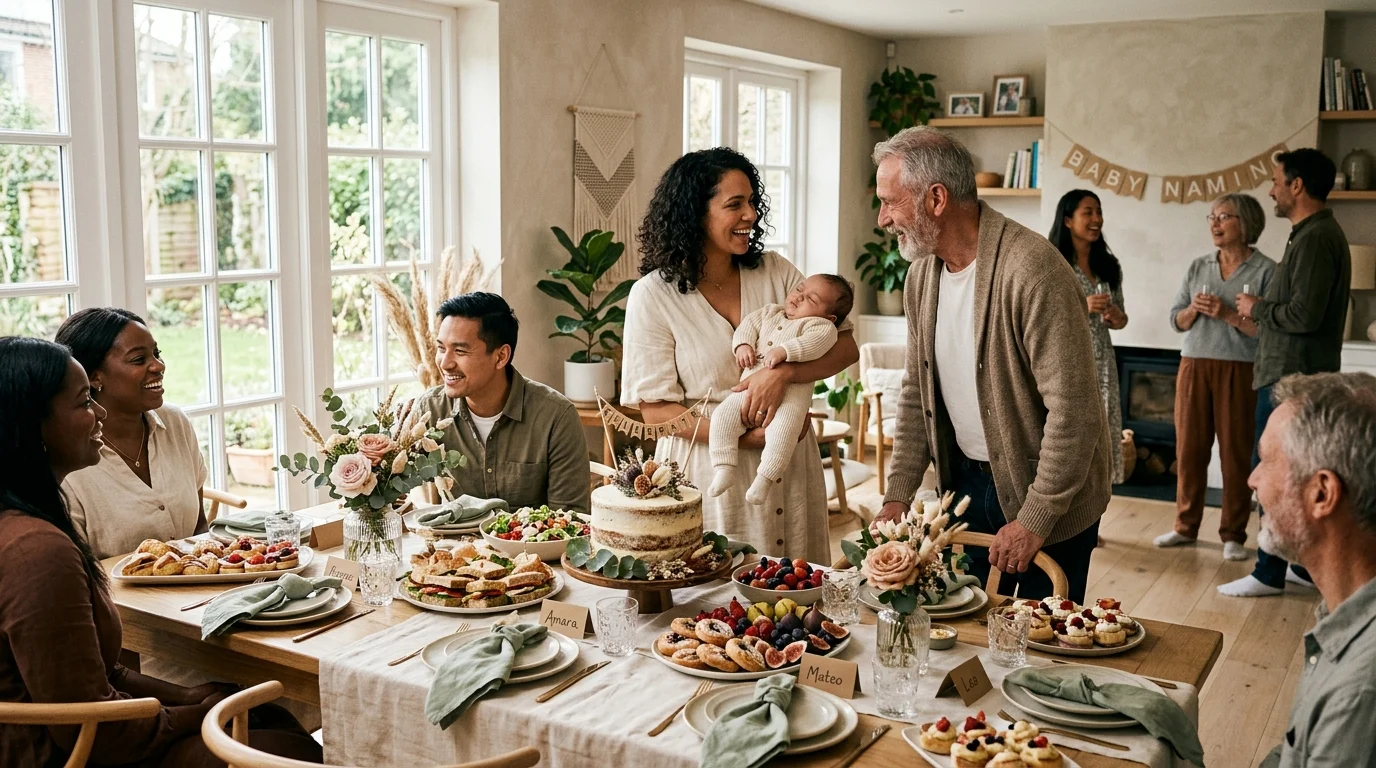
Naming ceremonies have become an increasingly popular alternative to traditional religious baptism. More and more families want to mark their baby's arrival without a religious framework, but with just as much warmth, community, and celebration.
In this guide, you'll find everything you need to plan a memorable naming ceremony, from timeline and budget to menu, decorations, and ceremony ideas.
What Is a Naming Ceremony?
A naming ceremony is a secular celebration where you introduce your baby to family and friends, and officially share the child's name with the world. It's a welcome party for the newest family member.
A naming ceremony has no fixed rules or rituals. You decide the content. Some give speeches and read poems; others serve cake and pass the baby around among the guests.
A naming ceremony can be held at any time. Most families choose to hold it when the baby is 2-6 months old, but there is no "right" time. Do it when your family is ready.
Naming Ceremony vs. Christening. What's the Difference?
Many people wonder about the difference between a naming ceremony and a christening. Here are the key points:
Christening is a religious sacrament in the Christian church. The child is baptized with water, receives godparents, and the ceremony involves a commitment to raising the child within the faith.
Naming ceremony is a non-religious ceremony with no connection to a church or religious organization. You decide the content yourself, and there are no formal requirements for godparents or rituals.
| Christening | Naming Ceremony | |
|---|---|---|
| Religious affiliation | Yes | No |
| Godparents | Required | Optional |
| Fixed ceremony | Yes | No, you decide |
| Location | Usually in a church | Home, outdoors, or rented venue |
| Cost | Free (church service) + celebration | Celebration only |
| Timing | Usually 3-6 months | Whenever you like |
Some families also choose a humanist naming ceremony, offered by humanist organizations in many countries. These ceremonies are led by a trained celebrant and typically cost a few hundred dollars or pounds.
According to research across many Western countries, a growing proportion of families choose not to baptize their children. Naming ceremonies and humanist celebrations are among the most popular alternatives.
Planning. Naming Ceremony Timeline
Good planning means you can relax and enjoy the day. Here is a practical timeline.
6-8 Weeks Before
- Set a date and time (a weekend lunch is most common)
- Choose a venue: at home, in the garden, at a café, or in a rented space
- Create a guest list (10-30 people is common)
- Send out invitations (digital or printed)
- Decide whether you want a ceremony or just a celebration
3-4 Weeks Before
- Plan the menu and arrange any catering
- Buy decorations
- Decide the program for the day
- Ask someone to give a speech or read a poem
- Create a wish list if guests ask for gift ideas
1 Week Before
- Confirm the number of guests
- Shop for food and drinks
- Prepare any decorations
- Write out the program and share it with those who are contributing
The Day Before
- Decorate the venue
- Prepare food that can be made in advance
- Set out a guestbook and any "time capsule box"
Venue
Most naming ceremonies are held at home, in the garden, or in a rented space. Here are some popular options:
At home is the most common choice. It's intimate, free, and practical with all the baby equipment on hand. Best for 10-20 guests.
The garden or a park works well in summer. Set up tables, blankets, and perhaps a party tent. Have an indoor backup plan in case of rain.
A café or restaurant is convenient, they handle food and cleanup. Many venues have private rooms for private events. Expect to budget accordingly per person.
A rented venue (community hall, function room) gives more space and flexibility. Prices vary depending on location.
Many community halls and local venues rent at reasonable prices. Check with your local council or community website for options.
The Ceremony. What Do You Say at a Naming Ceremony?
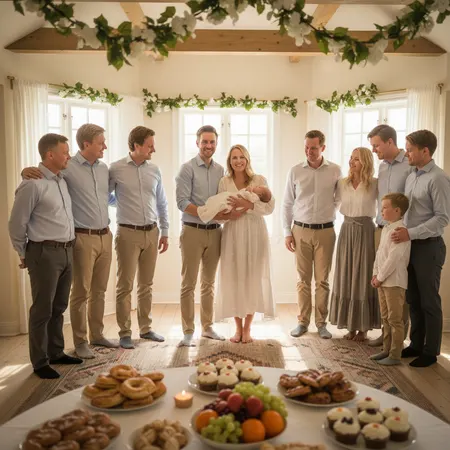
The ceremony is the heart of the naming celebration. It doesn't need to be long or formal, 10-20 minutes is common.
Suggested Ceremony Program
- Welcome. One of the parents welcomes everyone and briefly explains the occasion
- Name presentation. Share the child's full name and ideally the story behind the name choice
- Speeches. Grandparents, friends, or siblings give short speeches
- Poem or song. A beautiful poem about children, or a song you sing together
- Well wishes. Guests can share wishes for the child, spoken aloud or written on cards
- Toast. Raise a glass to the little one
Tips for What Parents Can Say
Share the story behind the name. Tell why you chose this particular name, what it means, and perhaps who it is named after.
You can also share memories from the pregnancy, birth, or the first weeks. Keep it short and personal, guests love the genuine moments.
Who Gives a Speech?
It is common for grandparents, siblings of the parents, or close friends to give a speech. A good naming ceremony speech is personal, warm, and ideally a little funny. It doesn't need to be long, 3-5 minutes is perfect.
Food and Drink
A naming ceremony is usually an informal gathering with finger food, cakes, and drinks. Here are some popular menu options.
Simple Lunch (Budget)
- Sandwiches with various fillings
- Fruit platter
- Cake (homemade is great)
- Coffee, tea, and soft drinks
Buffet (Mid-Range)
- Focaccia and wraps
- Fruit and vegetable platter
- Cheese and charcuterie
- Small desserts or cupcakes
- Sparkling non-alcoholic drinks
Catering (Premium)
- Tapas or finger food from a caterer
- Small plates and canapés
- Dessert table
- Champagne and non-alcoholic bubbles
Remember that the baby is the star, keep the food simple. Guests are there to meet the little one, not for a three-course dinner. A self-serve buffet works best.
Decorations
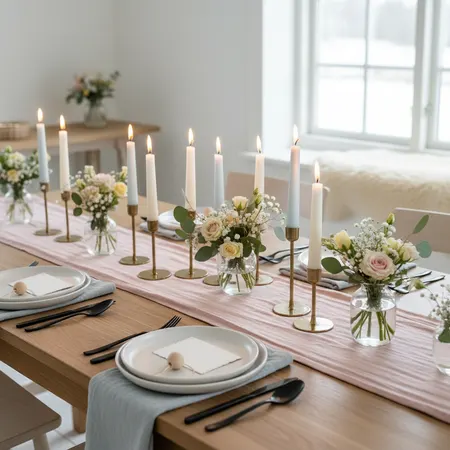
Keep decorations soft and beautiful. Popular choices include:
- Balloons in muted colors (blush, white, sage green, gold)
- Name banner or sign with the baby's name
- Floral arrangements on the tables
- String lights for atmosphere
- Photo corner with baby clothes, scan pictures, and props
- Guestbook where everyone can write a message to the baby
A simple color theme ties everything together. Choose 2-3 colors and use them on napkins, balloons, and decorations.
Gifts
Many guests will want to bring gifts for the baby. To make it easy for everyone, you can create a wish list to share with guests.
Popular Gifts for a Naming Ceremony
- Clothes in a slightly larger size (6-12 months)
- Toys and soft toys
- Books (a book from each guest is a lovely tradition)
- Savings account with a contribution for the child
- Personalized gifts such as engraved jewelry, name signs, or photo albums
The "book theme" is a popular tradition: ask guests to bring their favorite children's book with a personal message inside. This way, the child builds a library of memories.
Budget Guide
A naming ceremony doesn't have to cost a lot. Here is a general overview of typical costs.
| Item | Budget | Mid-Range | Premium |
|---|---|---|---|
| Venue | $0 (at home) | $200-400 | $500-1,000+ |
| Food and drink | $50-100 | $200-500 | $500-1,000+ |
| Cake | $20 (homemade) | $50-100 | $150-300 |
| Decorations | $30-50 | $80-150 | $200-400 |
| Invitations | $0 (digital) | $20-50 | $50-100 |
| Celebrant (humanist) | , | , | $200-500 |
Most families end up spending a modest amount for a lovely naming ceremony at home or in a rented venue.
Invitations
Digital invitations are the most common and eco-friendly option. Use a free service like Canva or Evite, or send a nice message in a group chat.
What Should the Invitation Include?
- The baby's name (or "You're invited to the naming ceremony for [name]!")
- Date, time, and location
- Dress code (informal is most common)
- A link to any wish list
- RSVP deadline
- Parking information
Example invitation text:
You're warmly invited to the naming ceremony for little Emma! We'd love to celebrate with you on Saturday, March 15th at 12:00 pm at our home. Lunch and cake will be served. Please RSVP by March 5th.
Typical Program for the Day
Here is a suggested schedule for a naming ceremony with lunch:
| Time | Activity |
|---|---|
| 12:00 pm | Guests arrive, welcome drinks |
| 12:15 pm | Mingling and meeting the baby |
| 12:30 pm | Lunch/buffet |
| 1:15 pm | Ceremony (name presentation, speeches, poem) |
| 1:45 pm | Cake and coffee |
| 2:15 pm | Gift opening (optional) |
| 2:30 pm | Free mingling, photos |
| 3:00-3:30 pm | Guests thanked and begin to leave |
Keep the celebration relatively short, especially with a young baby. 2.5-3 hours is perfect. The baby needs breaks, and you'll need energy for the rest of the day.
Fun Additions
Some ideas to make the naming ceremony extra memorable:
- Time capsule box. Guests place letters, wishes, or small items in a box for the child to open at age 18
- Name meaning. Present the origin and meaning of the baby's name
- Parenting tips. Guests write their best parenting advice on cards
- Photo corner. Set up props and a backdrop for fun photos
- Fingerprint guestbook. A tree design where guests add fingerprint "leaves"
Frequently Asked Questions About Naming Ceremonies
When should you have a naming ceremony?
Most families hold a naming ceremony when the baby is 2-6 months old, but there are no fixed rules. Choose a time when both parents and baby are ready for visitors.
Can you have a naming ceremony without a formal ceremony?
Yes, absolutely. Many choose to hold an informal gathering without speeches or a program. What matters most is bringing family and friends together to celebrate the baby.
Who do you invite to a naming ceremony?
Most people invite close family and good friends, usually 10-30 people. Some choose a big celebration with everyone they know, while others prefer an intimate gathering.
What does a naming ceremony cost?
A simple naming ceremony at home can cost very little. With a rented venue and catering, costs can add up significantly. Most families find a comfortable middle ground.
Do you need godparents at a naming ceremony?
No, godparents are associated with religious baptism. But many families choose to designate "guide parents," "godparents," or special mentors as important people in the child's life. It's entirely up to you.
Useful Tools for Planning
- Find the perfect gift. Answer 4 questions and get personalized recommendations
- Create a wish list. Share with guests and avoid duplicate gifts
- Birth plan creator. Plan your birth preferences
Read More
Sources
- Humanists UK. "What is a naming ceremony?" humanists.uk
- American Humanist Association. "Humanist ceremonies." americanhumanist.org
- Office for National Statistics. "Birth and baptism statistics." ons.gov.uk
Last updated: March 2026
🔧 Helpful Tools
- All Baby Tools. Browse all free tools for pregnancy and baby care
📖 Related Articles
- Food for a Baptism or Naming Ceremony: Complete Menu Ideas. Wondering what to serve at a baptism or naming ceremony? Here are complete menu ideas from simple ordering to a full spread, with quantity guides and a ready-to-use shopping list.
- Baby's First Christmas: How to Celebrate Safely and Memorably. Celebrating Christmas with a baby for the first time? Tips on safe decorations, age-appropriate activities, gifts, food, and traditions for baby's first Christmas.
- Food for Baby's Christening or Naming Ceremony: Complete Menu Ideas. Wondering what to serve at a christening or naming ceremony? Here are complete menu ideas for every ambition level, from simple ordering to a full spread, with serving estimates and a shopping list.