A baby christening or naming ceremony is one of the big milestones in the first year with a baby. Whether you choose a traditional church christening or a secular naming ceremony, the day is about celebrating new life and gathering your closest loved ones around your little one.
In this guide, you'll find everything you need to plan a beautiful christening, from practical steps and timelines to traditions around the christening gown and godparents. We also cover naming ceremonies as an alternative for those who want a non-religious celebration.
Church Christening
Most christenings take place in a church setting. Many churches welcome all families, regardless of membership status. The baby typically becomes a member of the church through the christening.
Most parents choose to christen the baby during the first year, often when the baby is 3–6 months old.
How a Christening Works
The christening ceremony follows a set liturgy. It usually takes place as part of a regular service, sometimes alongside other families who have signed up.
Here's the typical order:
- Bible reading. The minister reads about why we baptize children
- Creed. Read aloud together with the congregation
- Hymn. A hymn is sung together
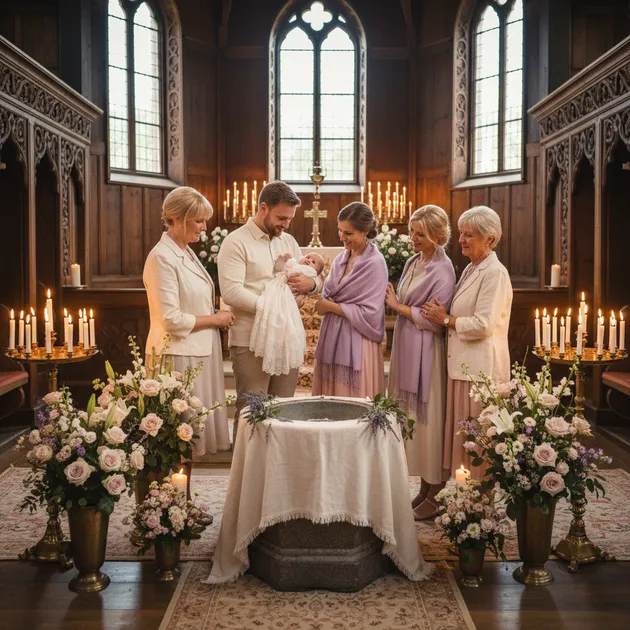
- Water in the font. The minister says a prayer and pours water into the baptismal font
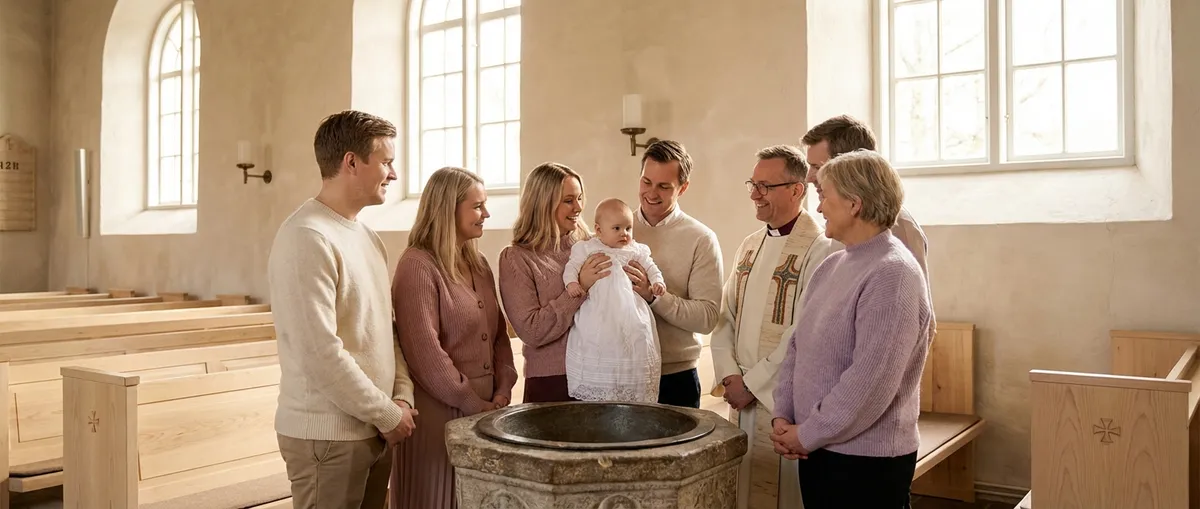
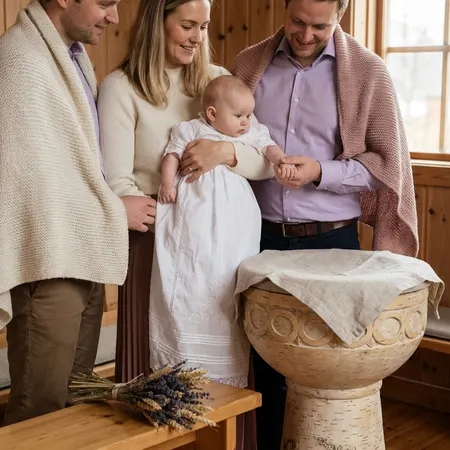
- The family comes forward. The baby is carried up to the font
- Sign of the cross. The minister traces a cross on the baby's forehead
- The baptism. Three handfuls of water are poured over the baby's head while the minister says: "I baptize you in the name of the Father, the Son, and the Holy Spirit"
- Baptismal candle. A candle is lit and given to the family
- Presentation. The baby is presented to the congregation
The entire ceremony typically takes 30–45 minutes as part of the service.
One of the parents or a godparent carries the baby up to the font. Decide in advance who will have this honor, it's a lovely moment for grandparents or close godparents.
Who Can Participate in the Ceremony?
Godparents and others in the christening party can take on roles during the ceremony. They can read scripture, lead prayers, or contribute in other ways. Older siblings can also be involved, for example by gently drying the baby's head.
All details are arranged with the minister during the pre-christening meeting.
The Christening Gown. Tradition and Symbolism
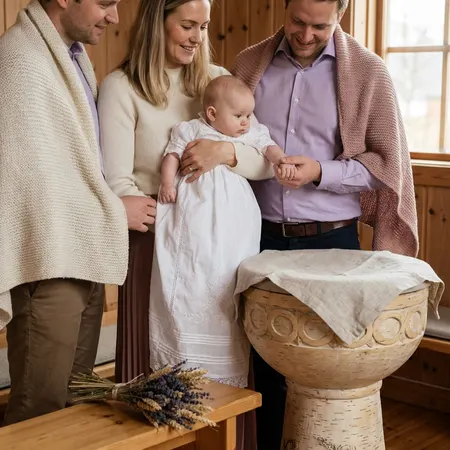
The christening gown is one of the most well-known traditions. The long, white gown symbolizes purity and the child growing into their faith.
Heirloom or New?
Many families have christening gowns that have been passed down through generations. An heirloom gown adds extra sentimental value and connects the baby to the family's history.
Don't have an heirloom gown? You can:
- Buy new. Available in many stores and online
- Make your own. Many patterns are available online
- Borrow. Ask friends or family
- Buy secondhand. Many people sell gently used christening gowns
Try the christening gown on the baby a few days before the christening. That way you avoid stress on the day itself, and you know it fits. Have a simpler outfit ready as a backup in case of spills.
Christening Gown for Naming Ceremonies
It's perfectly fine to use a christening gown for a naming ceremony as well. There are no dress code requirements, so you choose whatever represents your family best.
Godparents. Guidelines and Choices
Godparents are witnesses to the christening and traditionally have a responsibility to support the child through their upbringing.
Typical Requirements for Godparents
- Minimum two godparents. There's usually no upper limit
- Age: Godparents should typically be at least 15 years old
- Many churches require godparents to be baptized themselves
- Members of other denominations may serve as godparents, as long as they accept infant baptism
What Does the Godparent Role Involve?
In practice, it's about being a safe and present adult in the child's life. The role is described as:
- Being a witness that the child was baptized
- Caring for and thinking of the child
- Supporting the child's upbringing
Many families choose close friends, siblings, or other family members as godparents. The choice can require some conversations between the parents, so start early.
Think about what the godparent role means for your family. For some, it's a symbolic gesture; for others, it's an active role with expectations of closely following the child's upbringing.
Step-by-Step Planning
Good planning makes the christening day easier to enjoy. Here's a timeline to follow:
3–4 Months Before
- Choose a date. Contact your church for available dates
- Book the christening. Most churches have online registration
- Choose godparents. Ask your chosen godparents well in advance
- Send invitations. Invite guests early so they can save the date
1–2 Months Before
- Pre-christening meeting with the minister. Discuss your wishes for the ceremony (hymns, readings, who carries the baby)
- Book a venue. If you're celebrating somewhere other than home
- Plan the menu. Order catering or plan cooking
- Prepare the christening gown. Try it on the baby, wash and iron
1 Week Before
- Confirm guest count. Update any food orders
- Lay out outfits. For the whole family
- Charge camera and phone. To capture the moments
- Pack a christening bag. Diapers, spare outfit, pacifier, baby food
On the Day
- Arrive early, 15–20 minutes before the ceremony starts
- Have a "backup person". Someone who can comfort the baby if needed
- Enjoy the moment. Don't stress about perfection
The Celebration
After the ceremony, most families gather friends and family for a celebration. There are no rules for how the party should look.
Different Budgets
| Budget | Suggestion |
|---|---|
| Simple | Coffee and cake at home with close family |
| Medium | Sandwiches and cake with extended family |
| Generous | Catered dinner with a venue and decorations |
Food Tips
- Sandwiches with quality toppings are a classic
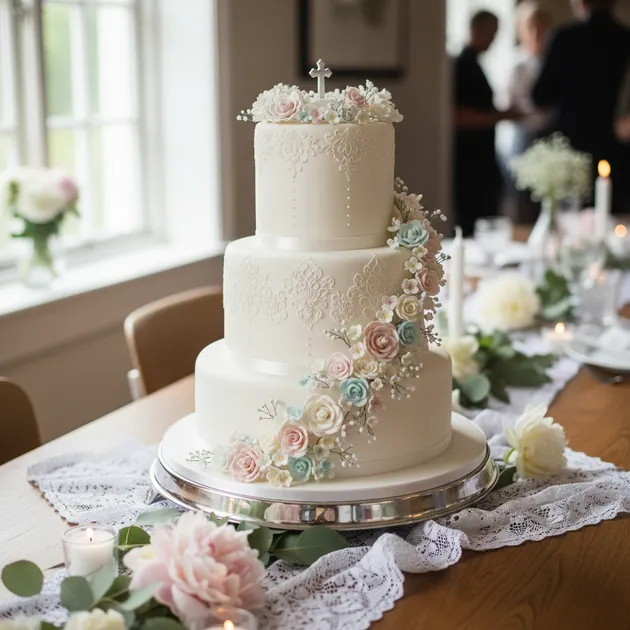
- Order a cake with the baby's name or christening date
- Have some child-friendly food if older siblings are coming
- Consider allergies and dietary needs among guests
Photography Tips
- Arrange with the photographer (or a friend with a good camera) in advance
- Take photos at the font right after the ceremony
- Groups: the whole family, godparents with the baby, grandparents
- Don't forget portraits of the baby in the christening gown
Naming Ceremony. The Secular Alternative
Not everyone wants a religious ceremony. A naming ceremony is a beautiful alternative to mark the new child.
What Happens at a Naming Ceremony?
- Speeches and cultural contributions (music, poetry readings)
- The child and their name are presented
- The child may receive a name certificate
- Family and friends serve as witnesses
Private Naming Ceremony
You don't need an organization to celebrate your child. Many families create their own ceremony at home or outdoors. You're completely free to shape it as you wish.
Ideas for a private naming ceremony:
- Choose a beautiful setting (garden, living room, park)
- Ask a close friend or family member to give a speech
- Let guests write messages in a book for the child
- Play music that's meaningful to the family
- Serve good food and enjoy being together
Difference Between Christening and Naming Ceremony
| Christening | Naming Ceremony | |
|---|---|---|
| Setting | Religious ceremony in church | Non-religious ceremony |
| Godparents | Yes, at least 2 | No formal requirement |
| Membership | Child becomes church member | No membership |
| Location | Church | Home, venue, park, etc. |
Choosing a Name for the Baby
Regardless of whether you choose a christening or naming ceremony, the baby's name should be legally registered through the appropriate government office. Neither the christening nor the naming ceremony is the formal legal registration.
Other Forms of Christening
Drop-in Baptism
Some churches offer drop-in baptisms at certain times of the year. You don't need to register in advance. The church may provide godparents if you don't have your own. It's an informal and lovely way to christen your child.
Christening in Other Denominations
Catholic, Baptist, and other denominations have their own traditions and rules for baptism. Contact the relevant church for information about their practices.

Frequently Asked Questions About Christening
How old should the baby be at christening?
Most people choose to christen the baby when they're 3–6 months old, but there's no age limit. Christening can happen at any point in life.
Can you christen the baby if the parents aren't church members?
In many churches, yes. Christening is often free and open to all, regardless of the parents' membership status.
How many godparents can the child have?
The child must have at least two godparents, but there's usually no upper limit. Many families choose 3–5 godparents.
Can godparents live abroad?
Yes, but they should ideally be present during the ceremony. Talk to the minister if a godparent can't attend.
Does the baby need a christening gown?
No, there's no requirement for special attire. The christening gown is a tradition, not a requirement. The baby can wear regular dressy clothes.
What's a good christening gift?
Popular christening gifts include jewelry (cross necklace, bracelet), piggy banks, engraved cutlery, photo albums, or money for a savings account.
Summary
Christening and naming ceremonies are about the same thing, celebrating new life and welcoming the child into the community. Whether you choose a traditional church christening, a secular naming ceremony, or your very own celebration, it's the love and togetherness that matter most.
Start planning early, choose what feels right for your family, and remember that the most important thing is enjoying the day together.
Sources:
- Various church and denominational websites for christening guidelines
- Parenting and family celebration resources
Sources
- AAP. Infant and toddler nutrition guidelines
- WHO. Global infant feeding recommendations
- CDC. Infant and toddler nutrition resources
🔧 Helpful Tools
- All Baby Tools. Browse all free tools for pregnancy and baby care
📖 Related Articles
- Food for a Baptism or Naming Ceremony: Complete Menu Ideas. Wondering what to serve at a baptism or naming ceremony? Here are complete menu ideas from simple ordering to a full spread, with quantity guides and a ready-to-use shopping list.
- Food for Baby's Christening or Naming Ceremony: Complete Menu Ideas. Wondering what to serve at a christening or naming ceremony? Here are complete menu ideas for every ambition level, from simple ordering to a full spread, with serving estimates and a shopping list.
- Free and DIY Christening Gifts: Handmade Beats Anything You Can Buy. The most beautiful christening gifts don't cost a thing. 20+ free and handmade christening gift ideas with step-by-step instructions. Meaningful gifts parents will never forget.