Meal Planning for Families: Save Time and Money
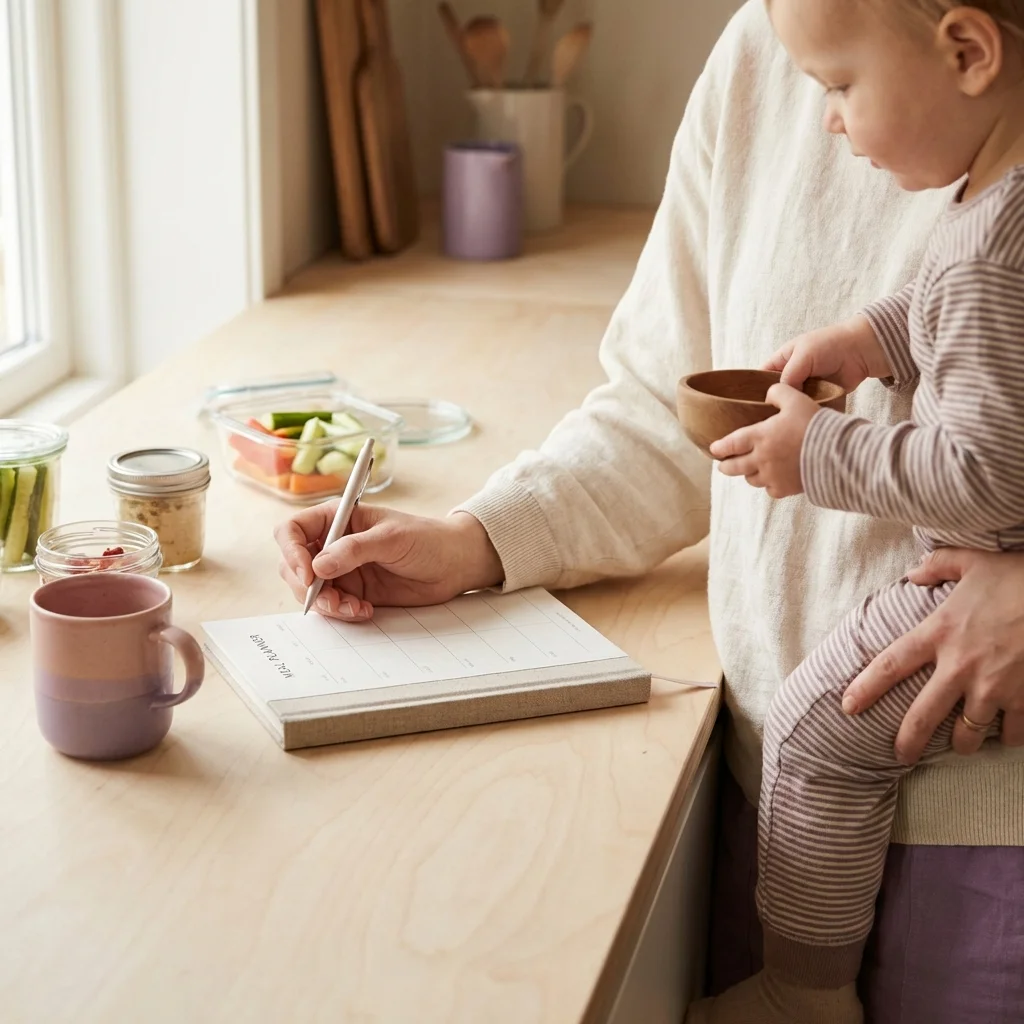
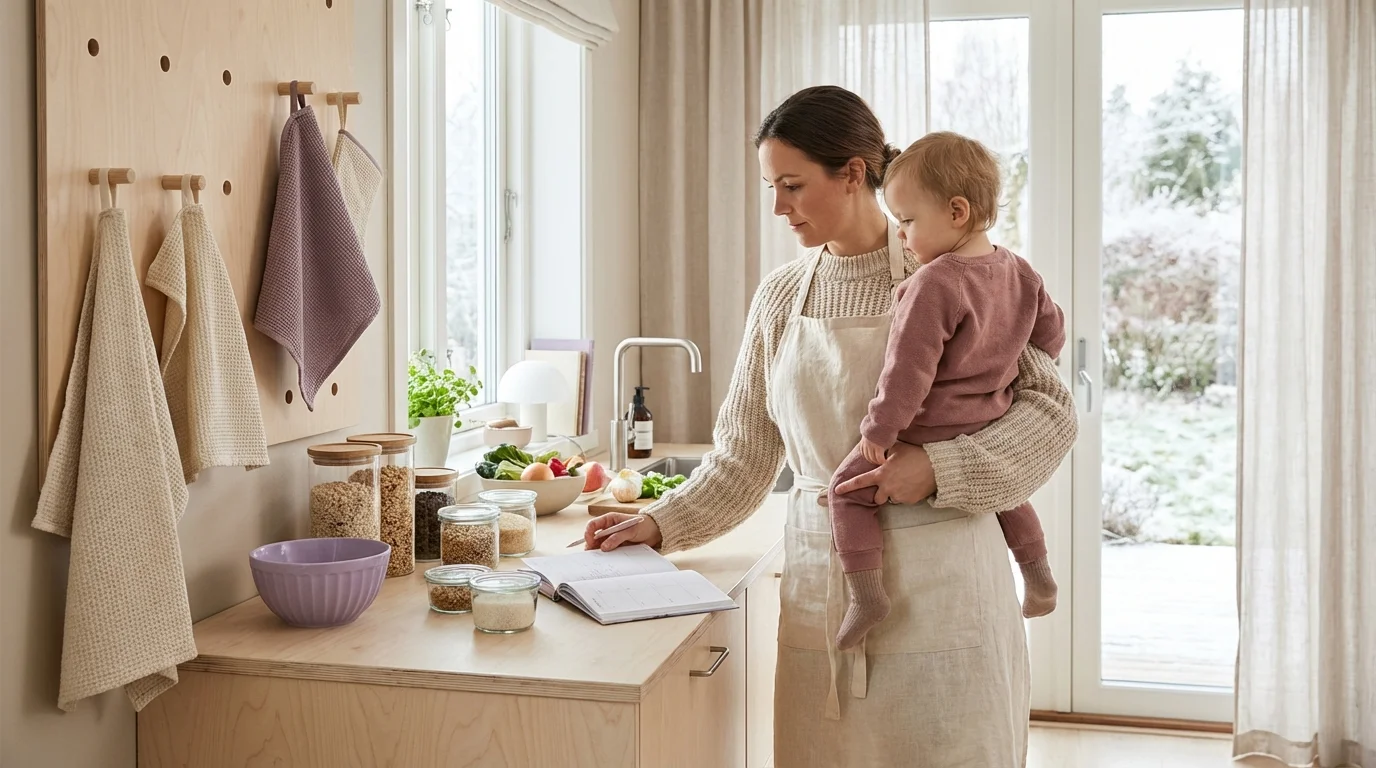
Life with young children is busy, and getting food on the table every day can feel like a full-time job on top of everything else. Meal planning is one of the most effective tools families have to reduce daily stress, save money, and ensure everyone eats well.
This guide walks you through a practical 5-step system, a sample weekly menu with baby and toddler adaptations, batch cooking strategies, and tips for involving even the youngest members of your family.
Why Meal Planning Helps Families
Save time
When you know in advance what you're cooking, you skip the daily "what's for dinner?" decision. You can defrost things the night before, prep ingredients during nap time, and avoid last-minute supermarket trips.
Save money
Unplanned grocery shopping leads to impulse purchases and wasted food. A shopping list based on a weekly plan means you buy exactly what you need. Studies consistently show that meal-planning families spend significantly less on food and throw away less.
Reduce stress
The mental load of feeding a family is real. Knowing that dinner is planned, and that the ingredients are in the fridge, removes a surprising amount of daily anxiety, especially in the late afternoon when energy is low and children are hungry and cranky.
Eat better
When you plan meals in advance, you naturally think about variety and nutrition. It's easier to make sure your family gets vegetables, proteins, and whole grains throughout the week when you've thought it through on Sunday rather than at 5pm on Wednesday.
The 5-Step Meal Planning System
Step 1: Check what you have
Before planning anything, look in your fridge, freezer, and pantry. What needs to be used up? What proteins do you have on hand? What vegetables are about to go bad? Building meals around what you already have reduces waste and saves money.
Make notes on:
- Proteins in the freezer (chicken, ground beef, fish fillets, legumes)
- Fresh vegetables and how many days they have left
- Pantry staples (pasta, rice, canned tomatoes, lentils, oats)
Step 2: Choose themes for each day
A simple way to reduce decision fatigue is to assign a loose theme to each day of the week. This doesn't mean eating the same thing every week, it just gives you a framework.
Example themes:
- Monday: Pasta night
- Tuesday: Fish or seafood
- Wednesday: Soup or stew
- Thursday: Leftovers or quick meal
- Friday: Tacos or wraps
- Saturday: Something new or more involved
- Sunday: Roast or batch cook
Step 3: Find recipes
Once you have your themes, choose specific recipes. You don't need to find something new every week, most families do best with a rotation of 10–15 meals they know and love, plus one or two new things per month.
Keep a list of family favorites somewhere accessible (a notes app, a shared document, or even a physical binder). When you're planning for the week, you can quickly scan your list rather than searching the internet.
Step 4: Make a shopping list
Write your shopping list organized by supermarket section (produce, dairy, meat, dry goods, etc.). This saves time in the store and means you're less likely to forget items or wander into sections you don't need.
Apps like AnyList, OurGroceries, or a shared note on your phone work well for families where both parents shop.
Step 5: Prep in advance
Sunday (or whatever day works for your family) is a great time to do some advance prep:
- Wash and chop vegetables
- Cook a large batch of grains (rice, quinoa, farro)
- Brown ground meat and refrigerate or freeze in portions
- Make a big pot of soup or stew that can serve two meals
- Boil eggs for quick snacks and salads
Even 30–60 minutes of prep can dramatically reduce weeknight cooking time.
Example Weekly Menu with Baby and Toddler Adaptations
Here's a sample week that works for the whole family, with notes on how to adapt each meal for babies (6–12 months) and toddlers (1–3 years).
Monday: Pasta Bolognese
Family meal: Ground beef and tomato sauce with spaghetti, parmesan on top.
Baby (6–9 months): Blend or finely mash the meat sauce with a little pasta. Serve as a soft puree or let baby explore with fingers if doing baby-led weaning.
Baby (9–12 months): Small pieces of soft pasta with a spoonful of meat sauce. No added salt.
Toddler: Same as family, but cut the spaghetti into shorter pieces. Offer parmesan as a finger food topping.
Tuesday: Baked Salmon with Roasted Vegetables
Family meal: Salmon fillet with roasted sweet potato, broccoli, and a yogurt-herb dip.
Baby (6–9 months): Flake the salmon (check carefully for bones) and mix with mashed sweet potato. Broccoli can be steamed soft and offered as a finger food.
Baby (9–12 months): Soft flaked salmon, soft roasted sweet potato pieces, tender broccoli florets.
Toddler: Same as family. This is a nutritional powerhouse, omega-3s, vitamin A, and iron in one meal.
Wednesday: Lentil Soup
Family meal: Red lentil soup with carrots, onion, cumin, and a squeeze of lemon. Served with crusty bread.
Baby (6+ months): Lentil soup is excellent for babies. Blend smooth for younger babies, or leave slightly chunky for older babies. Skip salt.
Toddler: Same as family. Offer bread for dipping, this is often a toddler favorite.
Batch cooking tip: Make double and freeze half for a future week.
Thursday: Leftovers
Use up any leftovers from Monday–Wednesday. This is your "free" night, no cooking required. If there are no leftovers, this is a good night for a quick meal like scrambled eggs with toast and vegetables.
Friday: Tacos
Family meal: Seasoned ground beef or black beans, corn tortillas, shredded cheese, avocado, tomato, sour cream.
Baby (6–9 months): Mashed avocado, soft black beans (mashed), soft cooked carrot strips.
Baby (9–12 months): Soft black beans, avocado strips, small shredded cheese pieces. Skip the seasoning on baby's portion.
Toddler: Taco night is almost universally loved by toddlers. Let them build their own, the involvement makes them more likely to eat.
Saturday: Chicken and Rice
Family meal: Roasted chicken thighs with rice and a simple green salad.
Baby (6+ months): Shredded chicken thigh meat (much softer than breast), soft rice, and any steamed vegetables on the side.
Toddler: Same as family. Shred the chicken for easier chewing.
Batch cooking tip: Roast extra chicken and use the bones to make stock for soup later in the week.
Sunday: Sheet Pan Dinner
Family meal: Sausages (or tofu sausages), potatoes, and mixed vegetables all roasted together on a sheet pan.
Baby (6–9 months): Roasted sweet potato and soft vegetables, mashed. Hold the sausage or offer only if very soft and low-sodium.
Baby (9–12 months): Soft roasted vegetables, small pieces of low-sodium sausage.
Toddler: This is an easy toddler meal, everything is soft and easy to pick up.
Batch Cooking: Work Once, Eat Twice
Batch cooking means making large quantities of food that can be used in multiple meals throughout the week. It's one of the highest-leverage things a busy family can do.
Best foods for batch cooking
- Grains: Cook a large pot of rice, quinoa, or farro on Sunday. Use it as a base for multiple meals during the week.
- Legumes: A big pot of lentils or chickpeas can go into soups, salads, pasta dishes, and baby food.
- Ground meat: Brown a large batch of ground beef or turkey. Use in pasta sauce, tacos, stuffed peppers, or rice bowls.
- Roasted vegetables: Roast a large tray of mixed vegetables. They keep for 4–5 days and can go into wraps, salads, grain bowls, or be reheated as a side.
- Soup and stew: Make a double or triple batch. Freeze in portions for future weeks.
- Baby food: If you're making purees, make large batches and freeze in ice cube trays, then transfer to bags. Each cube is roughly one serving.
Freezer-friendly meals
These family meals freeze well and are worth making in bulk:
- Bolognese sauce (without pasta)
- Lentil soup
- Vegetable curry
- Meatballs
- Chili
- Pancakes (great for toddler breakfasts)
- Banana-oat muffins
Label everything with the date and contents. Aim to use frozen meals within 2–3 months.
Adapting Family Food for Babies and Toddlers
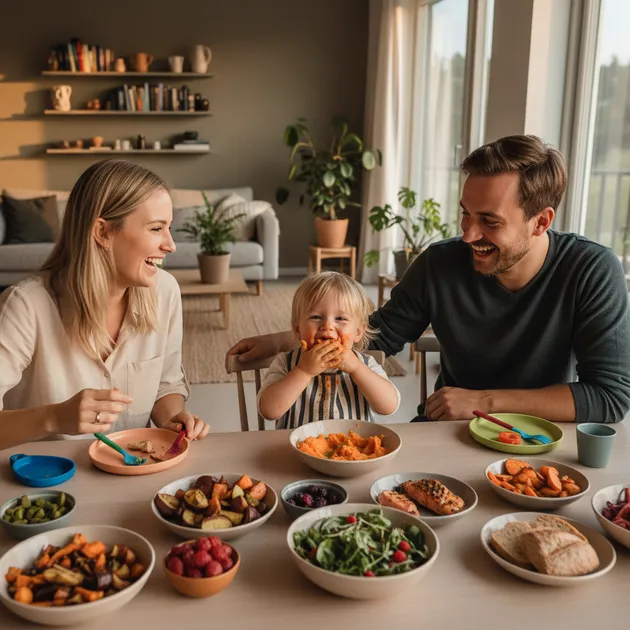
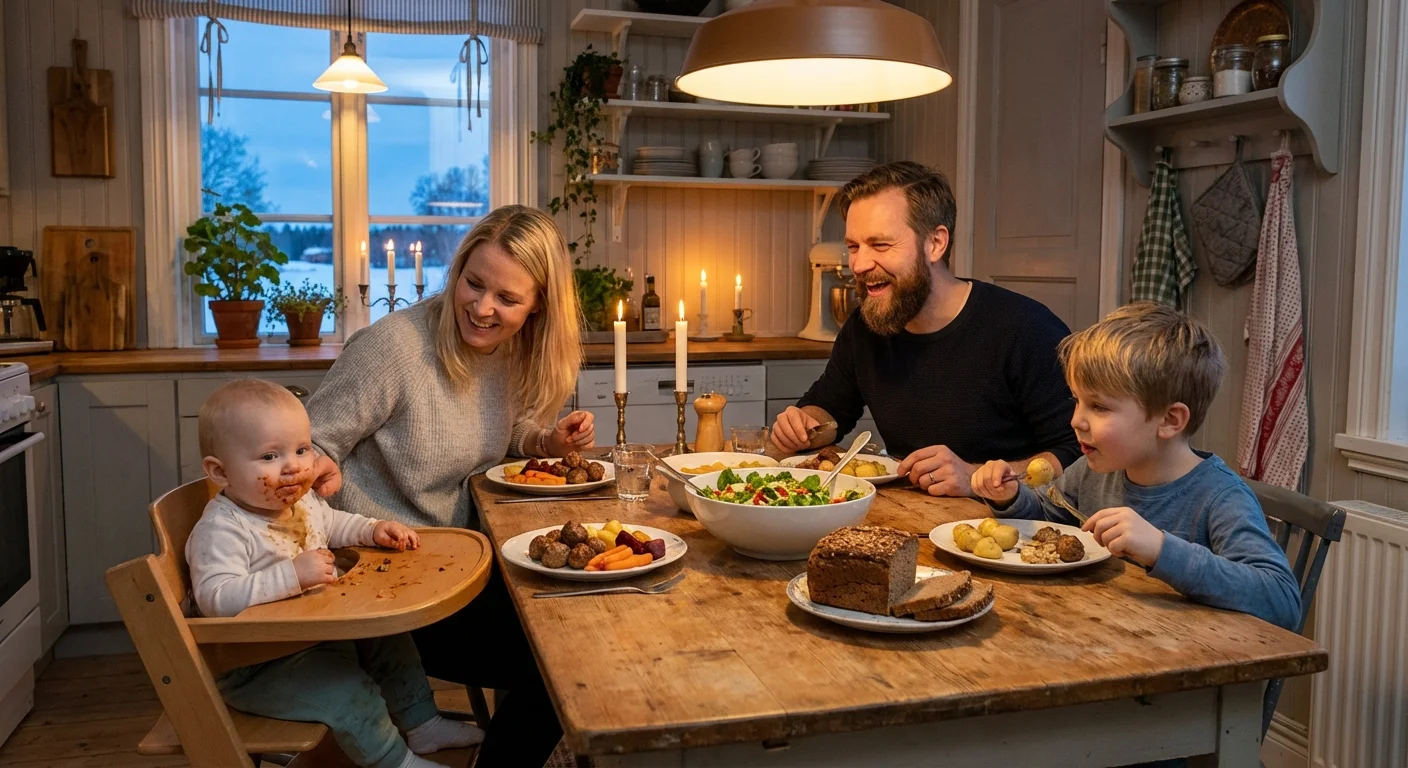
The best approach to feeding babies and toddlers is to start from the family meal and adapt, not to cook separate meals from scratch.
For babies 6–9 months
- Texture: Blend, mash, or puree to a smooth or slightly lumpy consistency.
- Salt: Remove baby's portion before adding salt or seasoning.
- Spices: Most gentle spices (cumin, cinnamon, turmeric, garlic) are fine. Avoid very spicy or very strong flavors initially, but mild flavor is good.
- Allergens: Introduce the common allergens (eggs, peanuts, tree nuts, fish, shellfish, wheat, soy, dairy) one at a time and watch for reactions.
For babies 9–12 months
- Texture: Soft finger foods and mashed food. Baby should be developing a pincer grasp.
- Salt: Still no added salt for baby's portion.
- Size: Small pieces that baby can pick up. Nothing hard, round, or small enough to be a choking hazard.
For toddlers 1–3 years
- Most family food is fine. The main adjustments are cutting into appropriate sizes and limiting very spicy food.
- Don't stress variety at every meal. Toddlers often go through phases of eating only a few foods. Offer variety without pressure.
- Dips and sauces help. Many toddlers will eat vegetables they would otherwise refuse if there's a yogurt dip or hummus involved.
Foods to avoid under 12 months
- Honey (risk of botulism)
- Whole cow's milk as a main drink (small amounts in cooking are fine from 6 months)
- Choking hazards: whole grapes, whole cherry tomatoes, raw carrots, whole nuts, large chunks of anything firm
- Added salt and sugar
- Very processed foods high in sodium
Involving Kids in Meal Planning and Preparation
Getting children involved in food preparation, even very young children, has real benefits. It builds familiarity with food, makes them more likely to try new things, and teaches practical life skills.
Babies and young toddlers (6–18 months)
- Let them explore food textures with their hands and mouths.
- Talk about the food you're preparing, name the vegetables, describe the colors.
- Let them sit in the high chair while you cook so they can see and smell what's happening.
Older toddlers (18 months–3 years)
- Washing vegetables
- Tearing lettuce or herbs
- Stirring dry ingredients
- Putting things in a bowl
- Helping set the table
Preschoolers (3–5 years)
- Choosing one meal per week from a list of options
- Helping make a shopping list
- Simple chopping with a child-safe knife (with close supervision)
- Measuring and pouring ingredients
Even if a toddler's "help" makes the process messier and slower, the long-term payoff in terms of food acceptance and relationship with food is worth it.
Budget Tips for Family Meal Planning
Buy in bulk when it makes sense
Dried legumes, oats, rice, pasta, and canned tomatoes are significantly cheaper per serving when bought in larger quantities. They also have long shelf lives.
Choose cheaper proteins
- Eggs are one of the most nutritious and affordable proteins available.
- Legumes (lentils, chickpeas, black beans) cost a fraction of meat.
- Whole chickens are cheaper per kilo than chicken breasts and make better stock.
- Frozen fish is often just as nutritious as fresh and significantly cheaper.
Use meat as a flavor, not the main ingredient
A small amount of ground beef or sausage can flavor a large pot of lentil soup, pasta sauce, or rice dish. You don't need a full portion of meat per person.
Embrace seasonal produce
Vegetables in season are cheaper, fresher, and taste better. In winter, lean on root vegetables, cabbage, and frozen vegetables. In summer, use zucchini, tomatoes, and leafy greens.
Reduce food waste
- Plan meals around what needs to be used up first.
- Keep a "use it up" shelf in the fridge where items approaching their use-by date go.
- Learn to love "clean-out-the-fridge" meals like frittatas, grain bowls, and fried rice, they often become favorites.
Frozen vegetables are your friend
Frozen peas, spinach, broccoli, corn, and mixed vegetables are nutritionally comparable to fresh, often cheaper, and always available. They're especially useful for getting vegetables into quick weeknight meals.
Getting Started: Your First Week
Don't try to overhaul everything at once. Start with planning just three or four dinners for the coming week. Here's a minimal first plan:
- Monday: Something you already know how to make
- Wednesday: A batch-cooking-friendly meal (soup, curry, or pasta sauce, make double)
- Friday: An easy crowd-pleaser (tacos, pizza, pancakes)
- Sunday: Use up leftovers or batch-cooked food
Write a shopping list for exactly what you need for those three meals. That's it.
Once this feels natural, after two or three weeks, add a fourth and fifth meal. Within a month, full-week planning will feel routine rather than daunting.
The goal isn't perfection. The goal is to reduce the daily mental load of feeding your family, save some money, and make sure everyone eats something nourishing most of the time. Even a loose plan is better than no plan.
Always consult your pediatrician regarding your baby's specific nutritional needs, especially when introducing new foods or if you have concerns about allergies or growth.
Sources
- AAP. Infant and toddler nutrition guidelines
- WHO. Global infant feeding recommendations
- CDC. Infant and toddler nutrition resources
🔧 Helpful Tools
- Baby Food Guide. Safe foods and introduction schedule for your baby
- Breastfeeding Tracker. Log feeds, track supply, and monitor nursing sessions
- All Baby Tools. Browse all free tools for pregnancy and baby care
📖 Related Articles
- Meal Planning for Families with Babies: Save Time and Money. Meal planning with kids? Here's how to create a weekly plan that saves time, reduces stress, and ensures varied meals for the whole family.