The Short Answer
Sharing an adult bed with a baby under 12 months is not recommended by the American Academy of Pediatrics (AAP), the NHS, or the CDC due to increased risk of Sudden Infant Death Syndrome (SIDS) and accidental suffocation. However, room-sharing (baby's own sleep surface in the parents' room) is strongly recommended and reduces SIDS risk by up to 50%.
Key Takeaways
- Room-sharing (baby in their own cot in the parents' room) is strongly recommended by the AAP for at least 6 months, ideally 12 months
- Bed-sharing increases SIDS risk 5-fold for babies under 3 months (Vennemann et al., BMJ 2012)
- Risk is substantially higher if a parent smokes or vapes, has consumed alcohol, or takes sedating medication, even if not in the bedroom
- Sofas and armchairs are the highest-risk surface of all, never sleep with a baby on a sofa or chair
- SIDS risk is highest in the first 6 months and peaks around 2–4 months of age
What Is Co-Sleeping?
"Co-sleeping" is an umbrella term that covers two distinct practices:
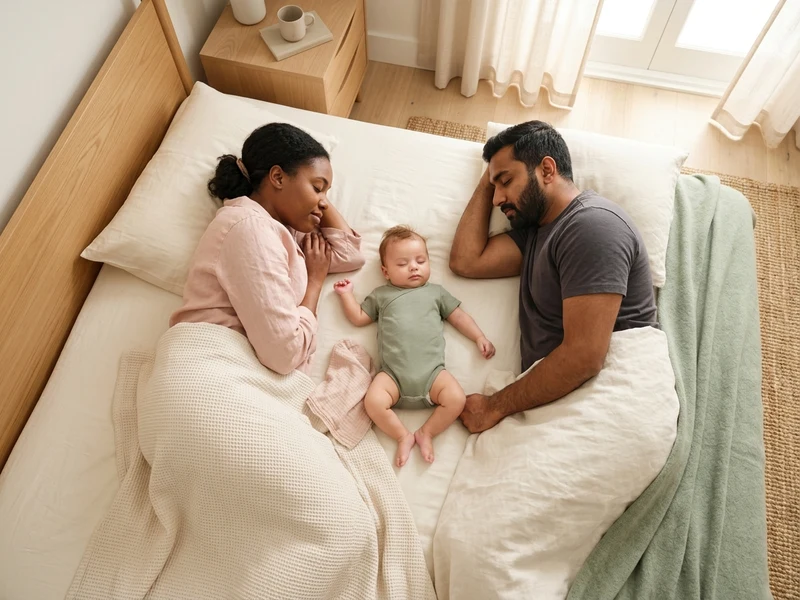
- Bed-sharing: Baby sleeps in the same adult bed as a parent or caregiver, this is what safety guidelines advise against
- Room-sharing: Baby sleeps in their own safe sleep surface (cot, Moses basket, bedside crib) in the parents' room, this is actively recommended
What the Evidence Shows About Bed-Sharing Risks
Research is clear: bed-sharing significantly increases the risk of sleep-related infant death.
Key findings:
- SIDS risk increases 5-fold when a baby under 3 months shares an adult bed (Vennemann et al., BMJ 2012)
- Risk is even higher when a parent has consumed alcohol, sedating medication, or is a smoker, even if not smoking in bed
- Soft bedding, pillows, and duvets in adult beds can obstruct a baby's airway
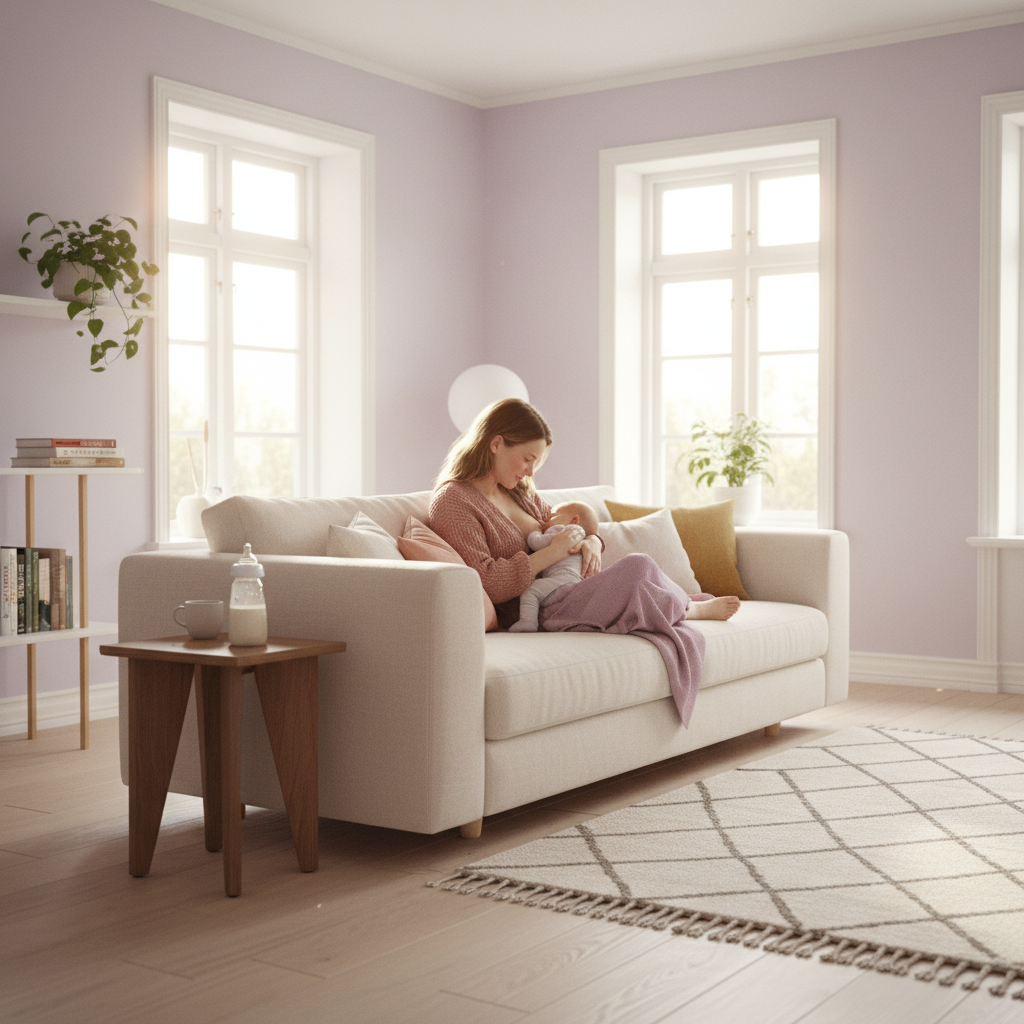
- Sofas and armchairs are the highest-risk surface of all, never sleep with a baby on a sofa
The AAP Safe Sleep Recommendations
The AAP's 2022 Safe Sleep guidelines recommend:
- Always place baby on their back to sleep
- Use a firm, flat sleep surface (cot or Moses basket that meets safety standards)
- Keep baby's sleep area free of soft bedding, pillows, bumpers, and toys
- Room-share without bed-sharing for at least the first 6 months, ideally 12 months
- Avoid smoking during pregnancy and around baby
The NHS Position
The NHS advises against bed-sharing if any of the following apply:
- Baby was born premature (before 37 weeks)
- Baby had low birth weight (under 2.5 kg / 5.5 lbs)
- You or your partner smoke (even if not in the bedroom)
- You or your partner have consumed alcohol or medication that causes drowsiness
- You are very tired
The NHS notes that the risk is difficult to eliminate entirely even for parents who don't smoke or drink.
Safer Alternatives to Bed-Sharing
If parents want closeness without the risks of sharing an adult bed:
- Bedside bassinet/next-to-me crib: Attaches to the adult bed, providing proximity while baby has their own safe surface. These are widely available and NHS-endorsed
- Room-sharing cot: Baby's cot in the parents' room, reduces SIDS risk significantly
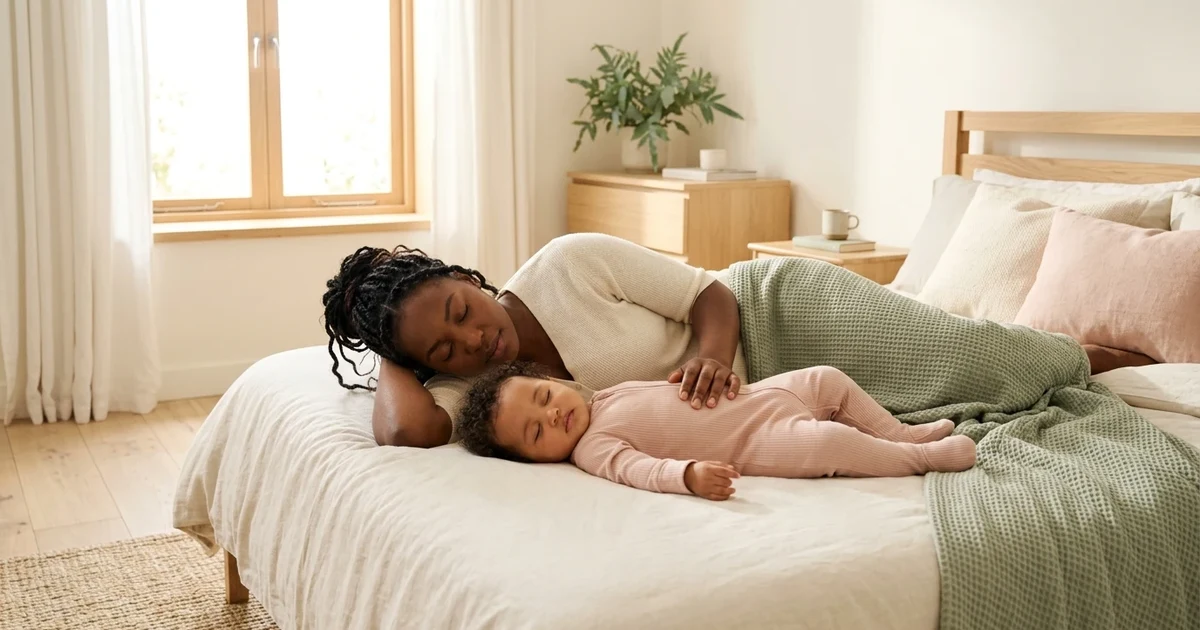
- Side-by-side contact naps: Supervised, awake contact where a parent lies next to baby is different from unsupervised overnight sleep
What About "Safe Bed-Sharing" Practices?
Some advocates promote structured safe bed-sharing approaches (e.g., the SAFE framework). While these reduce, but do not eliminate, risk, they are not endorsed by AAP, NHS, or the CDC. Current evidence does not support a universally "safe" way to bed-share with infants under 12 months.
If families do choose to bed-share despite advice, harm-reduction guidance (no alcohol, no smoking or vaping, no heavy bedding, firm mattress only) can reduce, but not eliminate, risk.
Key Takeaway
Room-sharing: ✅ Strongly recommended for at least 6–12 months Bed-sharing: ⚠️ Not recommended, increased SIDS and suffocation risk
Use our Baby Sleep Tracker to log safe sleep practices and track your baby's overnight patterns.
Related Articles
- How Much Sleep Does a Newborn Need?
- How to Help Your Baby Sleep Longer
- When Should a Baby Sleep Through the Night?
Frequently Asked Questions
Is co-sleeping safe for babies?
This depends on what "co-sleeping" means. Room-sharing, baby in their own sleep surface in the parents' room, is safe and actively recommended by the AAP, NHS, and CDC. Bed-sharing, baby in the adult bed, is not recommended due to significantly increased SIDS and suffocation risk.
What are the risks of bed-sharing with a baby?
Research shows SIDS risk increases 5-fold when a baby under 3 months shares an adult bed (Vennemann et al., BMJ 2012). Soft bedding, pillows, and duvets in adult beds can obstruct a baby's airway. Risk is substantially higher if a parent smokes, has consumed alcohol, or is on sedating medication.
What does the AAP say about co-sleeping?
The AAP's 2022 Safe Sleep guidelines recommend room-sharing without bed-sharing for at least the first 6 months, ideally 12 months. The guidelines recommend a firm, flat sleep surface free of soft bedding, and placing baby on their back for every sleep.
What is the safest alternative to bed-sharing if I want my baby close?
A bedside bassinet or next-to-me crib, which attaches to the adult bed at the same height, provides close proximity while giving baby their own safe sleep surface. These are widely available, endorsed by the NHS, and eliminate the main risks of bed-sharing.
Is bed-sharing always dangerous, or are there safer ways to do it?
Current evidence does not support a universally safe method of bed-sharing with infants under 12 months. Some harm-reduction approaches (firm mattress, no alcohol, no smoking or vaping, no heavy bedding) reduce but do not eliminate risk. The AAP, NHS, and CDC do not endorse any form of bed-sharing as safe practice.
When does SIDS risk decrease?
SIDS risk is highest in the first 6 months and peaks around 2–4 months. Risk decreases significantly after 6 months and is rare after 12 months. The AAP recommends maintaining safe sleep practices for the entire first year regardless of the baby's apparent health or development.
Is sleeping with baby on a sofa or armchair dangerous?
Yes, sofas and armchairs are the highest-risk surface for infant sleep. The NHS explicitly warns that accidentally falling asleep on a sofa or chair with a baby dramatically increases suffocation risk compared to any other surface, including an adult bed.
Sources
- American Academy of Pediatrics (AAP), Safe Sleep: Updated Recommendations (2022)
- NHS, Sudden infant death syndrome (SIDS)
- World Health Organization (WHO), Child mortality and cause of death
- CDC, Safe Sleep for Babies
🔧 Helpful Tools
- Baby Sleep Tracker. Track and optimize your baby's sleep
- Baby Food Guide. Safe foods and introduction schedule for your baby
- All Baby Tools. Browse all free tools for pregnancy and baby care