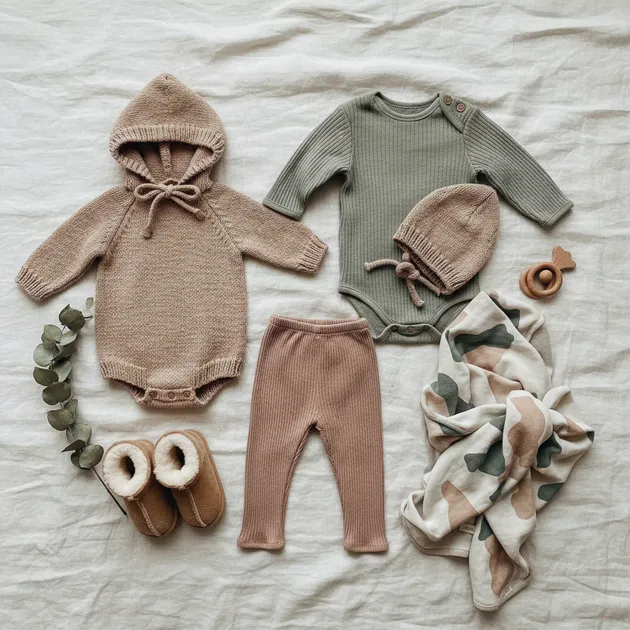
A complete newborn clothing essentials set is about 20 pieces in newborn size, not the 50-piece "newborn wardrobe" most baby-shower lists suggest. Most babies outgrow newborn size within 4–6 weeks; some skip it entirely. This guide is the minimum you actually need, with AAP-aligned safety notes on sleepwear and layering, plus a printable newborn essentials checklist you can take to the store.
Newborn Clothing Essentials at a Glance
The shortest possible answer to "what newborn clothes do I need?":
- 6–8 onesies (side-snap or kimono, newborn neck won't tolerate over-the-head pulls for the first weeks)
- 4–5 footed pants or leggings
- 3–4 footed pajamas / sleepers
- 2–3 long-sleeved undershirts
- 3–4 pairs of socks
- 1–2 hats
- 1–2 pairs of scratch mittens
- 2 sleep sacks (TOG 1.0 for room temp 68–75°F / TOG 2.5 for cooler). AAP recommends sleep sacks over loose blankets up to 12 months for safe sleep.
That's it for the first 4–6 weeks. Anything labeled "must-have" beyond this list (formal outfits, headbands, special-occasion onesies) is optional. The rest of this guide explains sizing, materials, and where to save vs. spend.
Key Takeaways
- Newborns need surprisingly few clothes, a basic pack of 6–8 onesies, 4–5 footed pants, 3–4 sleepers, and 2 sleep sacks covers the first weeks comfortably.
- Buy as few newborn-size items as possible; many babies skip sizes entirely or outgrow 0–3M within weeks, stock up on 3–6M and 6–12M instead.
- Prioritize easy-on, easy-off designs: side-snap and kimono-style onesies mean no pulling over a floppy newborn head, which most babies resist strongly.
- Choose 100% organic cotton or merino wool for items worn against the skin, synthetic fabrics trap heat and can irritate newborn skin.
- Second-hand baby clothes are a smart choice: babies outgrow sizes so fast that most used items are barely worn, and washing at 140°F (60°C) makes them perfectly hygienic.
What Does a Newborn Need?
Newborns need surprisingly few clothes. The first weeks, the baby spends most of their time indoors and mainly needs soft garments that are easy to put on and take off.
The Basic Newborn Pack
| Item | Quantity | Size |
|---|---|---|
| Onesies (side-snap or kimono style) | 6-8 | Newborn / 0-1M |
| Footed pants / leggings | 4-5 | Newborn / 0-1M |
| Sleepers / footie pajamas | 3-4 | Newborn / 0-1M |
| Long-sleeved undershirts | 2-3 | Newborn / 0-1M |
| Socks / booties | 3-4 pairs | Newborn |
| Hat (cotton or wool) | 1-2 | Newborn |
| Scratch mittens | 1-2 pairs | Newborn |
| Sleep sacks (1-2.5 TOG) | 2 | Newborn |
Side-snap or kimono-style onesies are gold in the first weeks. You don't have to pull anything over the head of a newborn with an unsteady neck, and many babies protest loudly against that.
How Many in Each Size?
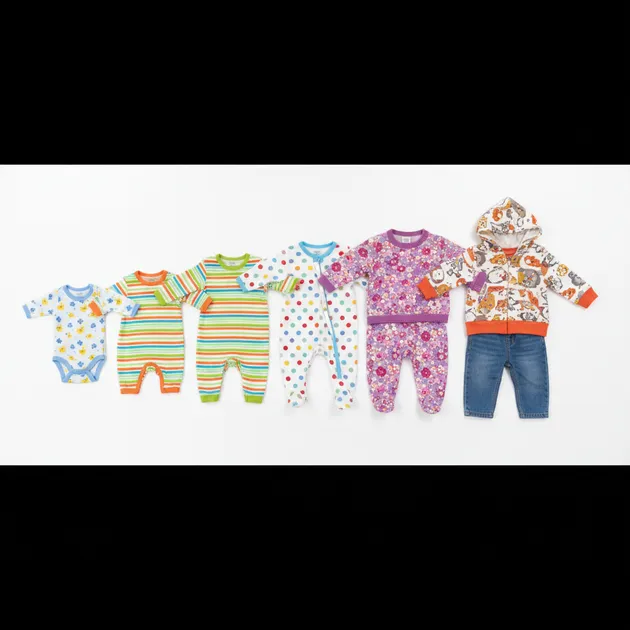
Babies grow fast. Some skip entire sizes. Buy the fewest in the smallest sizes.
| Size | Age (approx.) | Number of items |
|---|---|---|
| Preemie | Premature / very small newborn | Only as needed |
| Newborn | 0-1 month | 15-20 items |
| 0-3M | 1-3 months | 15-20 items |
| 3-6M | 3-6 months | 10-15 items |
| 6-9M | 6-9 months | 10-15 items |
| 9-12M | 9-12 months | 10-15 items |
Large babies (over 8.8 lbs / 4 kg) may skip newborn size entirely and go straight to 0-3M. Consider waiting to buy newborn size until the baby is born, so you know which size fits.
Materials. What Works Best?
Not all materials are equally suitable for baby skin. Here's what you need to know.
Wool (Merino Wool)
Merino wool is soft against the skin, regulates body temperature, and keeps warm even when damp. Wool is naturally antibacterial and rarely needs washing.
Best for: Base layers (onesies, pants), outerwear in winter, sleepwear.
Cotton
Soft, affordable, and handles frequent washing. Cotton breathes well and is comfortable against the skin. The downside is that cotton doesn't keep warm when wet.
Best for: Summer clothes, onesies, everyday wear for indoor use.
Bamboo
Bamboo fabric is silky soft and moisture-absorbing. Great for babies with sensitive skin. Dries quickly and is temperature-regulating.
Best for: Sleepwear, summer clothes, babies with eczema or sensitive skin.
Avoid synthetic materials (polyester, nylon) next to the skin. Synthetic fabric can give the baby a rash and regulates temperature poorly. Fleece is OK as a mid layer, but never directly against the skin.
Layering for Any Climate
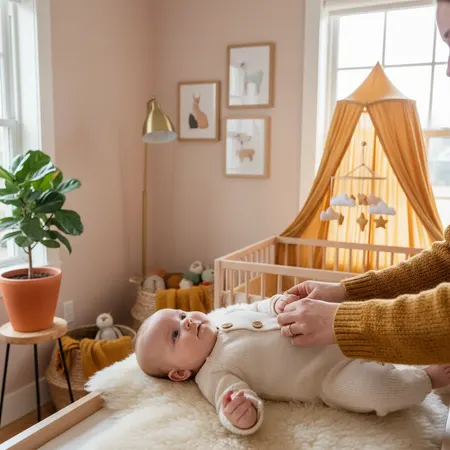
Layering is the key to dressing your baby right in changing weather. Combine several thin layers rather than one thick garment.
Winter (outdoors): Wool onesie + wool pants + fleece layer + bunting/snowsuit + wool hat and mittens.
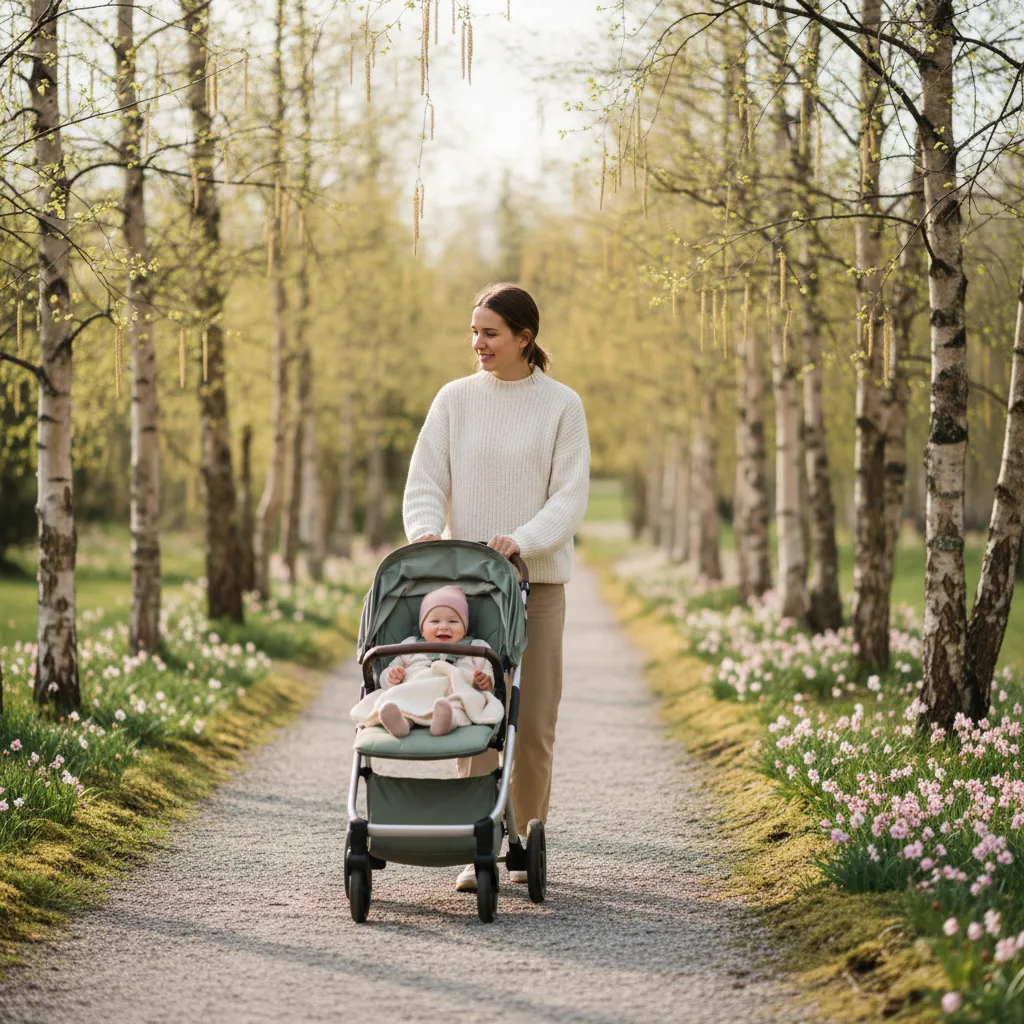
Spring/Fall (outdoors): Wool onesie + light mid layer + softshell/warm suit + hat.
Summer (outdoors): Cotton onesie + light pants or romper. Sun hat with brim.
Indoors: Onesie + leggings. Add a wool undershirt if the room is cool.
Where to Shop
Online Retailers
Major baby retailers (Amazon, Target, BuyBuyBaby, Carter's) have wide selections and regular sales. Subscribe to newsletters to catch deals.
Secondhand and Resale
Baby clothes are often worn for just a few weeks before being outgrown. Used clothes are a smart choice, both for your wallet and the environment.
- ThredUp, large online consignment store for children's clothes
- Facebook Marketplace, many local groups for buying and selling baby clothes
- Poshmark / Mercari, popular apps for secondhand children's clothing
- Consignment shops, local stores often have excellent baby clothing selections
Quality merino wool clothes in good condition hold up well secondhand. A used set often costs half the price of new, and handles several more rounds of wear and washing just fine.
When Should You Shop?
Many expectant parents start shopping around weeks 30-34. Here's a simple plan:
Before birth: Buy the basic pack in newborn size (or 0-3M if you're expecting a large baby). Have 2-3 days' worth of changes ready. Don't go overboard, you don't know how fast the baby will grow.
After birth: Buy 0-3M and larger as needed. Now you know the baby's actual size and growth rate.
Seasonal clothes: Buy winter suits and outerwear when you know what size the baby will be in the relevant season. Buying ahead may mean the baby is too big or too small when the season arrives.
Budget. What Do Baby Clothes Cost?
A realistic budget for the first six months:
| Category | New | Secondhand |
|---|---|---|
| Basic newborn pack | $200-400 | $75-150 |
| Wool base layers (6 items) | $150-300 | $60-120 |
| Seasonal outerwear | $80-200 | $30-80 |
| Sleep sacks (2) | $50-100 | $20-40 |
| Total | $480-1,000 | $185-390 |
A mix of new and secondhand gives the best value. Buy base layers new (better fit and durability), and save on outerwear, sleepers, and everyday clothes by buying secondhand.
Laundry Tips for Baby Clothes
- Wash all new clothes before the baby wears them. New clothes may contain chemicals from manufacturing.
- Use fragrance-free detergent, baby skin is sensitive
- Wool goes on the wool cycle with wool detergent, max 86°F (30°C)
- Cotton handles 104-140°F (40-60°C), use 140°F for spit-up stains and diaper blowouts
- Tumble dry on low heat for cotton, never for wool (dry flat)
Frequently Asked Questions
How many baby clothes do I need to buy?
For a newborn, you need 15-20 items in newborn size, that means 6-8 onesies, 4-5 footed pants, 3-4 sleepers, and some wool items. That's enough for 2-3 days of changes between washes.
Should I buy baby clothes before or after birth?
Buy the basic pack in newborn size before birth, but wait to buy much in 0-3M and larger. After birth, you'll know the baby's actual size and growth rate, and you won't end up with clothes that were never used.
Is it safe to buy secondhand baby clothes?
Secondhand baby clothes are perfectly safe as long as you wash them before use. Baby clothes are often in excellent condition because they're worn for such a short time. Check that elastic, snaps, and zippers work properly.
Sources
- Consumer Reports. "Baby Clothing Safety." consumerreports.org
- AAP. "Safe Sleep for Babies." aap.org
Last updated: March 2026
🔧 Helpful Tools
- Newborn & Hospital Bag Checklists. Printable, sectioned by clothing/feeding/sleep/diapering so you can tick the clothing essentials and move on.
- Due Date Calculator. Work back from your due date to give shipping + laundry 2–3 weeks of runway before delivery week.
- Smart Start: First 72 Hours Home. Walks you through which outfit to put on for the ride home (one extra light layer beyond what an adult would wear).
- Milestone Tracker. Log baby's weight + length so you can size-up clothes by data, not by guesswork.
📖 Related Articles
- Baby Clothes Sizes. Complete Guide to Finding the Right Fit. Find the right size for baby clothes. Size chart, shopping tips, and an overview of US, UK, and European sizing from preemie to 24 months.
- Baby Clothes by Season. What to Buy When. Seasonal layering for newborn through toddler.
- Winter Baby Clothes Layering Guide. How to layer for cold-weather walks without overheating baby during sleep transitions.
- How to Choose the Right Stroller in 2026: A Complete Buying Guide. A complete guide to choosing a stroller. We help you find the right type, size, and features for your lifestyle and terrain.