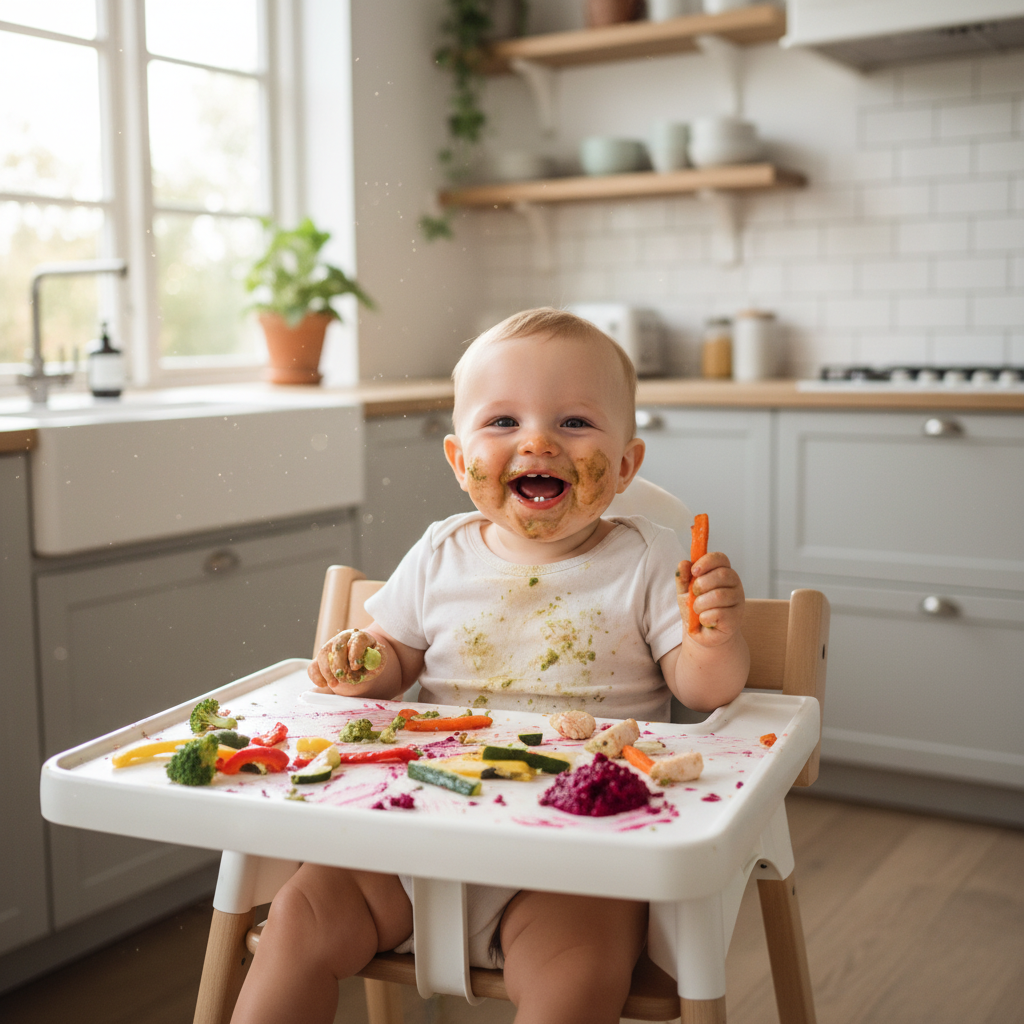
At 10 months, your baby is ready for a big step: transitioning toward family meals. They can now chew softer pieces, eat a more varied diet, and begin with dairy products like cheese and yogurt.
This guide covers everything you need to know about feeding your baby at 10 months, from new foods to sample daily menus and practical tips for making the transition smooth.
What Changes at 10 Months?
Your baby has developed a lot since those first spoonfuls of purée. At 10 months, most babies can:
- Chew softer pieces with their gums
- Pick up food with the pincer grasp (thumb and index finger)
- Drink a little from an open cup with help
- Eat increasingly more of what the family is having
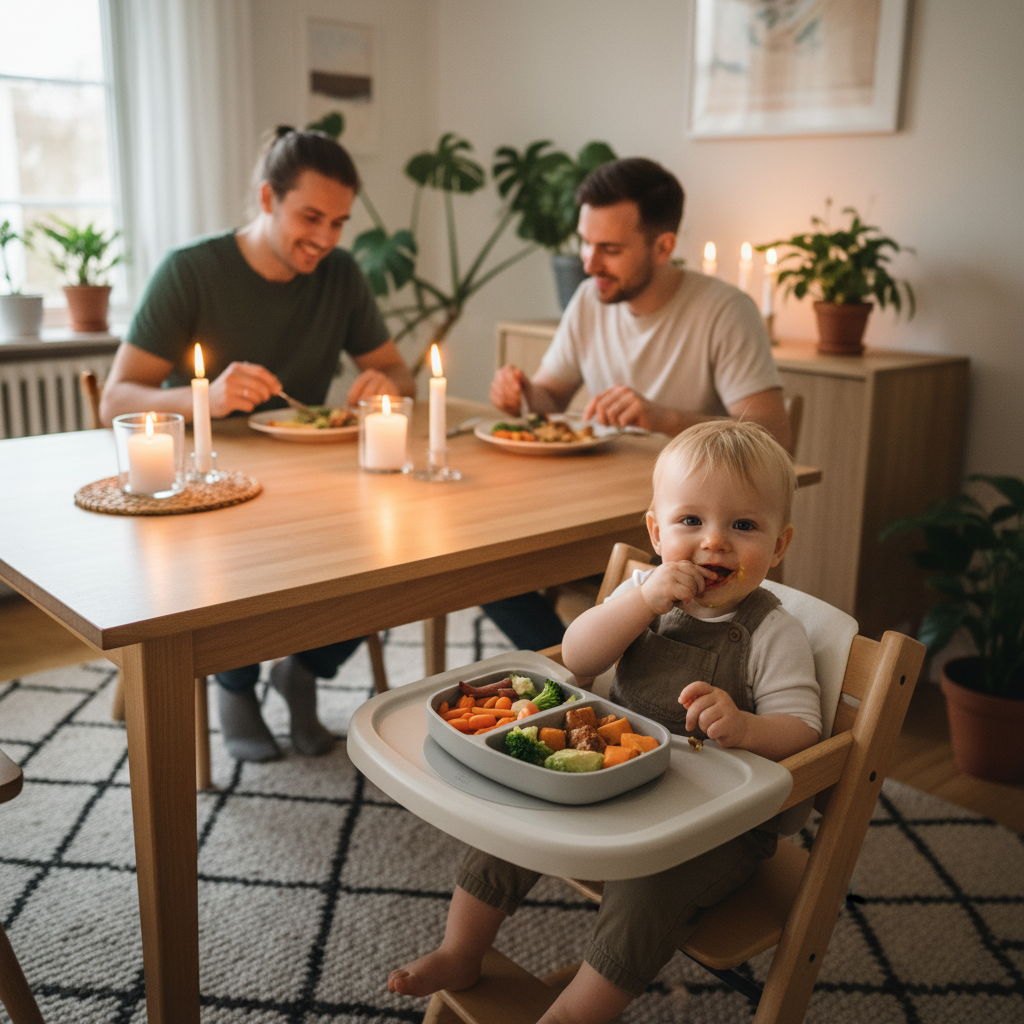
That means you no longer need to prepare completely separate meals. Instead, you can adapt family meals by cutting food into appropriate pieces and keeping salt and added sugar low.
Babies learn by watching you. Try to eat together at the table with your baby, it stimulates appetite and builds good eating habits from the start.
New Foods From 10 Months: Dairy Products
The big news at 10 months is that your baby can start having dairy products. According to AAP and WHO guidance, most dairy products can be introduced around 9–10 months.
Yogurt and Cultured Dairy
- Your baby can have tastes of plain yogurt from around 10 months
- Start with a small amount (about 2–3 tablespoons per day)
- From 12 months, yogurt can be offered more regularly
- Choose plain yogurt without added sugar
- Mix with fruit or berries for flavor
Cheese as a Topping or Spread
Your baby can now have cheese on toast or crackers:
- Mild cheddar, mild and nutritious, in thin slices
- Soft cheese or cream cheese, easy to spread, good calcium source
- Cottage cheese, soft and protein-rich
Small amounts of cow's milk in cooking (sauces, pancakes, baking) are fine from around 9–10 months. Cow's milk as the main drink should wait until 12 months. From 12 months, whole milk is recommended, and babies should not drink more than 16–20 oz (around 500 ml) of milk per day to ensure they still eat enough solid food.
Summary: Dairy Timing
| Dairy product | From age | Amount |
|---|---|---|
| Yogurt (plain) | ~10 months (tastes) | Small amount; regular from 12 months |
| Cheese (mild, soft) | ~10 months | Thin layer on bread/crackers |
| Cottage cheese | ~10 months | As part of a meal |
| Cow's milk in cooking | ~10 months | In sauces, pancakes, baking |
| Cow's milk as drink | 12 months | Max ~16–20 oz/day (including yogurt) |
Finger Foods for a 10-Month-Old Baby
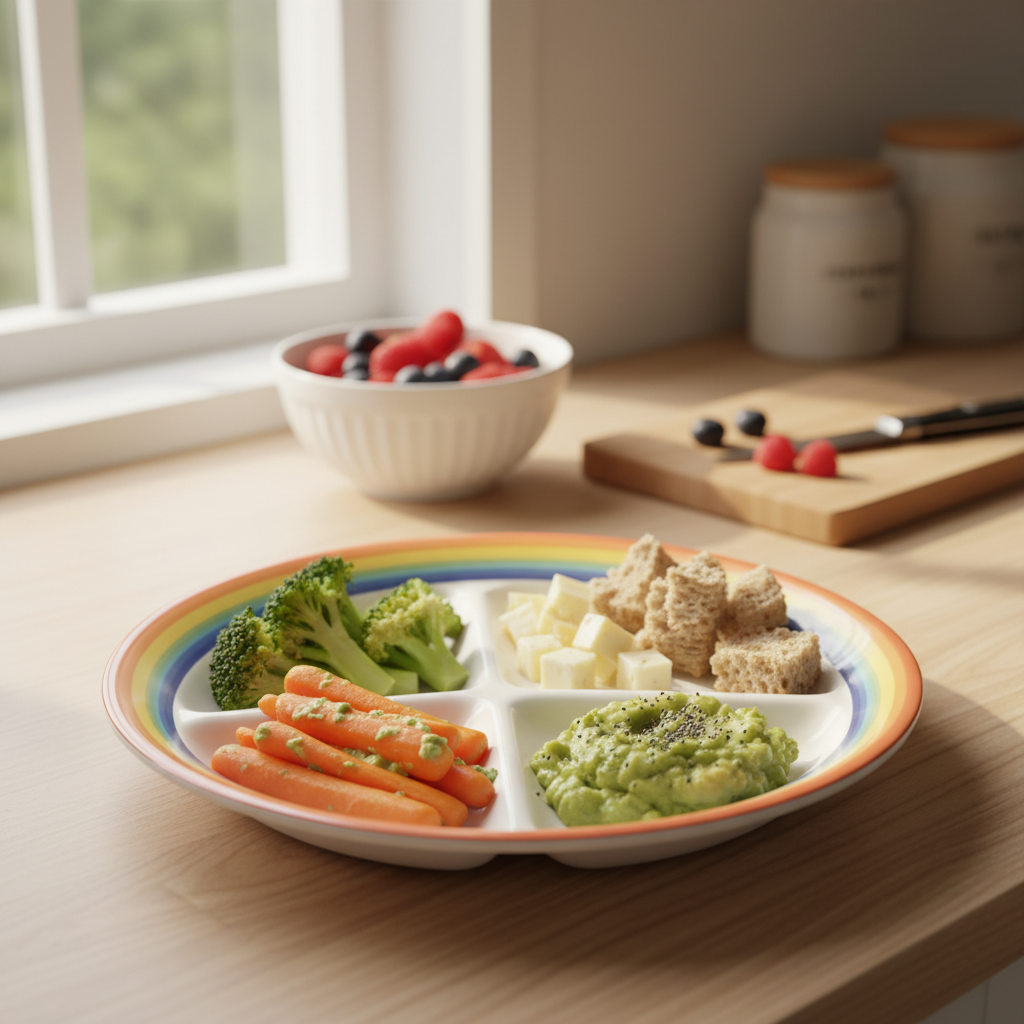
Finger foods are important for developing the pincer grasp and independence. Here's a list of great options:
Vegetables
- Steamed broccoli florets
- Cooked carrot sticks (soft, not raw)
- Avocado strips
- Steamed sweet potato cubes
- Cooked peas (lightly crushed)
Fruit
- Banana pieces
- Soft pear slices
- Blueberries (halved for smaller babies)
- Mango strips
- Ripe plum pieces (pitted)
Protein
- Finely chopped cooked chicken or ground meat
- Fish cakes or fish sticks in pieces
- Strips of scrambled egg
- Lentil patties
- Hummus as a dip
Grains
- Soft bread strips with toppings
- Cooked pasta shapes (spirals, penne)
- Pancakes without added sugar
- Oat bites (baked with egg and banana)
Foods that are choking hazards: Whole grapes (slice lengthwise), whole nuts (never for children under 4 years), raw carrots (too hard), whole sausage rounds (slice lengthwise), plain popcorn, large chunks of raw apple. Always cut round foods into strips or lengthwise pieces.
Sample Daily Menu for a 10-Month-Old
Here's an example of a typical daily plan:
Breakfast (approx. 7–8 AM)
- Oat porridge with banana and blueberries
- Soft bread with mild spread or cheese
- Water from a cup
Morning snack (approx. 10 AM)
- Fruit pieces (pear, banana)
- Soft rice cake or oat cracker
Lunch (approx. 11–12 PM)
- Meat stew with vegetables and pasta
- Or fish cake with mashed potato and broccoli
- Water
Afternoon snack (approx. 2–3 PM)
- Soft bread with avocado
- Or yogurt with fruit (from 10 months)
Dinner (approx. 5 PM)
- Family dinner adapted for baby
- For example: salmon with rice and vegetables
- Water
Milk
- Your baby still receives breast milk or formula
- Approximately 400–500 ml (13–17 oz) per day, ideally morning and evening
- Breastfeeding or bottles will naturally decrease as solid food increases
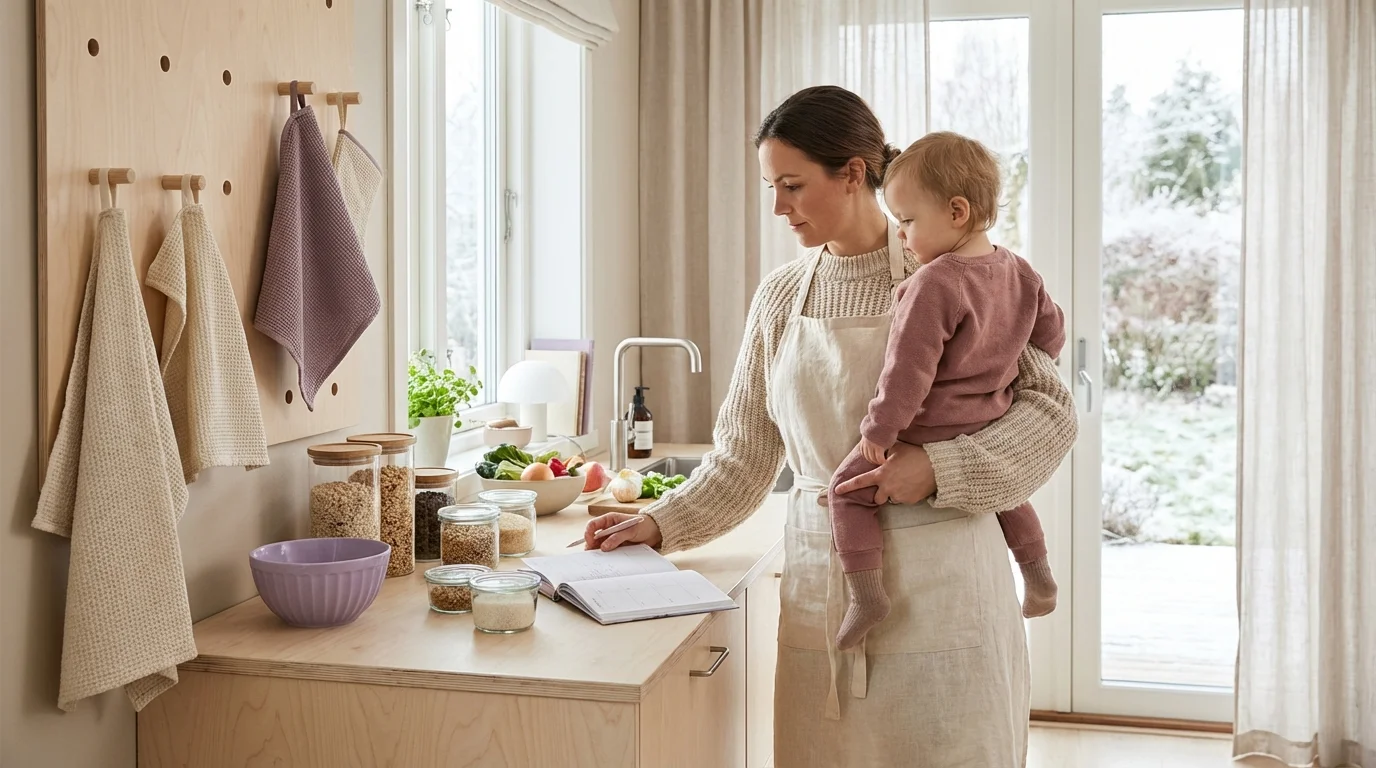
Use a meal planner to create a customized weekly menu for your baby. It makes varying meals and tracking nutrition much easier.
How to Adapt Family Dinners
You no longer need to make separate food for your baby. Here's how:
- Set aside the baby's portion before seasoning, add salt and spices to the rest of the family's portions afterward
- Cut into appropriate pieces, small pieces or strips the baby can grip
- Adjust the texture, roughly mash or finely chop instead of blending smooth
- Keep salt minimal, babies should have very little added salt in the first year
- Use herbs instead of salt, basil, parsley, dill, and thyme are great flavors to introduce
Family Meals That Work Well for Babies
- Fish chowder, roughly mash the vegetables and fish
- Ground meat sauce, cut into small pieces, serve with pasta
- Chicken stir-fry, cut chicken and vegetables finely
- Salmon dinner, flake the salmon, roughly mash the potato
- Lentil dal, naturally soft, perfect consistency for babies
- Omelet, cut into strips as finger food
Foods to Avoid at 10 Months
Even though your baby can eat most things now, some foods still need to wait:
- Cow's milk as a drink, wait until 12 months
- Honey, risk of botulism, wait until 12 months
- Salt, avoid added salt as much as possible
- Sugar, babies don't need added sugar
- Rice cakes, may contain arsenic; check guidance for your region
- Spinach and beets, high nitrate content; wait until 12 months
- Whole nuts, choking hazard, never for children under 4 (nut butter is fine)
Frequently Asked Questions
How much food should a 10-month-old eat?
At 10 months, most babies eat 3 main meals and 1–2 snacks per day, plus about 400–500 ml (13–17 oz) of breast milk or formula. The amount varies from baby to baby. Let your baby regulate their own appetite, never force-feed, and it's fine if they don't finish everything.
Can my baby have yogurt at 10 months?
Yes. According to AAP guidance, plain yogurt without added sugar can be introduced around 9–10 months. Start with small amounts and increase gradually. From 12 months, yogurt can be a regular part of the diet.
Should my baby stop breastfeeding at 10 months?
No, there's no reason to stop breastfeeding at 10 months. Breast milk is still valuable as a complement to solid food. Both WHO and AAP recommend breastfeeding through the entire first year and beyond. Your baby will naturally reduce feeds as solid intake increases.
My baby will only eat purée, is that normal?
It's common for some babies to prefer smooth textures for longer. Try offering pieces alongside the purée. Let your baby pick up food with their hands and explore at their own pace. Most babies accept coarser textures gradually. Talk to your pediatrician if your baby consistently refuses all texture beyond smooth purée after 12 months.
Can I use cow's milk in my baby's porridge at 10 months?
Small amounts of cow's milk in cooking (sauces, pancakes, baking) are generally fine from 9–10 months. Using larger amounts in porridge or as a drink should wait until 12 months. Check with your pediatrician for personalized guidance.

Summary
At 10 months, your baby can start with dairy products (yogurt, cheese, cottage cheese) and gradually eat more of the family's regular meals. Offer varied finger foods, adapt family dinners, and let your baby practice self-feeding. Avoid salt, honey, and cow's milk as a drink until 12 months.
Sources
- American Academy of Pediatrics (AAP). "Starting Solid Foods." healthychildren.org
- WHO. "Complementary feeding." who.int
- USDA Dietary Guidelines for Americans. dietaryguidelines.gov
Last updated: March 2026
🔧 Helpful Tools
- Baby Food Guide. Safe foods and introduction schedule for your baby
- Breastfeeding Tracker. Log feeds, track supply, and monitor nursing sessions
- All Baby Tools. Browse all free tools for pregnancy and baby care
📖 Related Articles
- Baby Food at 8 Months: What Can Your Baby Eat?. Complete guide to food for an 8-month-old baby. Sample menus, finger foods, portions, textures, and iron-rich foods based on AAP and WHO recommendations.
- When Can Babies Eat Pasta? Age, Safety & How to Serve. Find out when babies can eat pasta, the best shapes for each age, how to cook it safely, and gluten allergy guidance based on AAP and WHO recommendations.