Color can feel strangely loaded once you have a baby. One parent hears that newborns need black-and-white cards. Another hears that bright toys build the brain. Then social feeds add the beige nursery debate, and suddenly a soft room can feel like a developmental mistake.
The calmer answer is this: colors can support baby development, but they do not do the parenting for you. Babies learn through faces, voices, movement, touch, repetition, and safe chances to look, reach, mouth, listen, and try again. Color is one useful ingredient in that mix.
For babies, contrast and interaction matter more than filling the nursery with bright colors. Use simple high-contrast objects early, add more color as vision matures, and bring the focus back to shared play rather than perfect toys.
Key Takeaways
- Newborns see best up close and are drawn to faces, light, movement, and strong contrast.
- Color vision develops during the first months, so babies often show clearer interest in bold colors around 2 to 4 months.
- Bright colors are helpful for attention, but no evidence says every toy, outfit, or nursery wall must be saturated.
- A neutral room is fine if your baby also gets rich awake-time experiences: books, songs, tummy time, faces, outdoor light, and safe objects to explore.
- Ask your pediatrician about vision if your baby does not seem to track, focus, or respond visually in an age-expected way.
When Do Babies Start Seeing Colors?
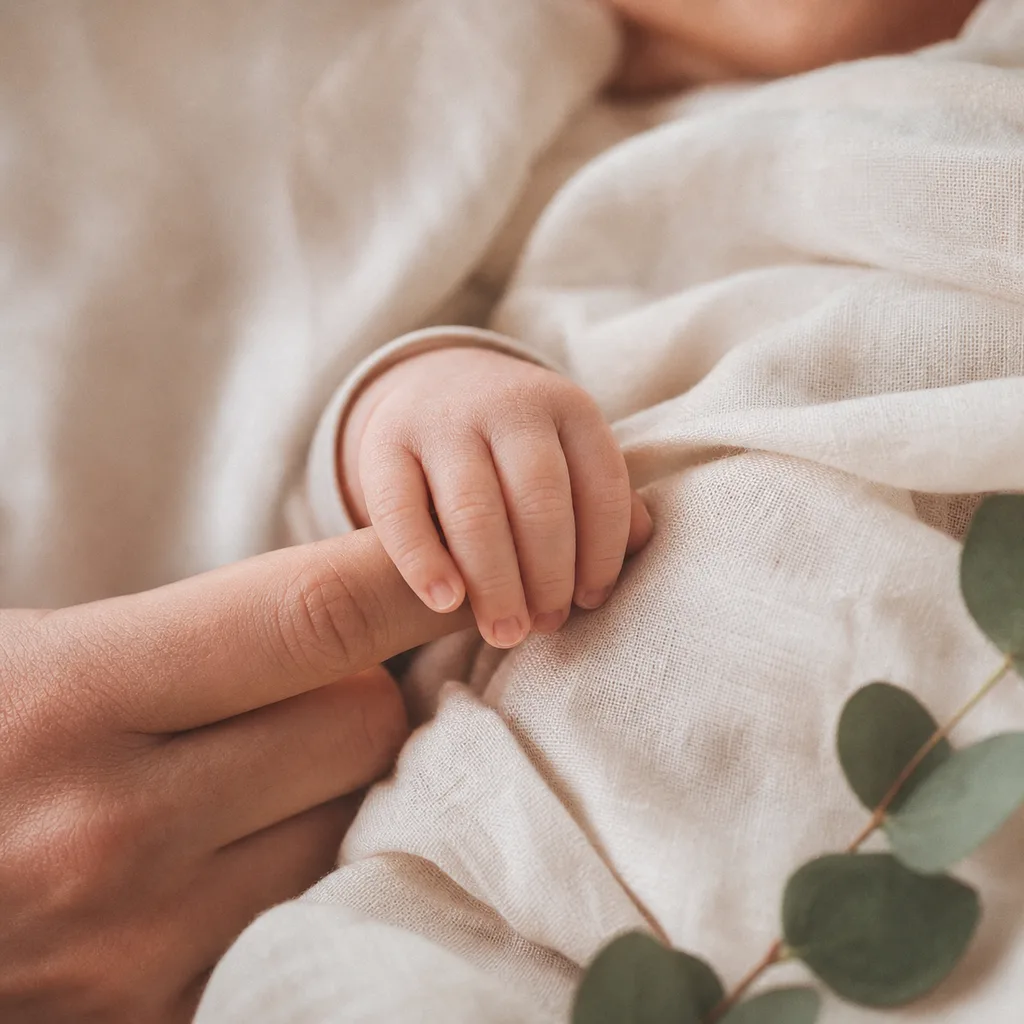
Newborn vision is still developing. In the earliest weeks, your baby is not scanning the room the way an adult would. They are best at seeing things close to their face, especially high-contrast shapes and human faces. That is one reason your face during feeding, diaper changes, and cuddling is more valuable than any toy shelf.
The American Academy of Pediatrics explains that newborns see best at close range and that vision, including color vision, improves during the first months. A baby may briefly focus on a face, look toward light, or respond to movement, but they are not expected to study colors with adult precision.
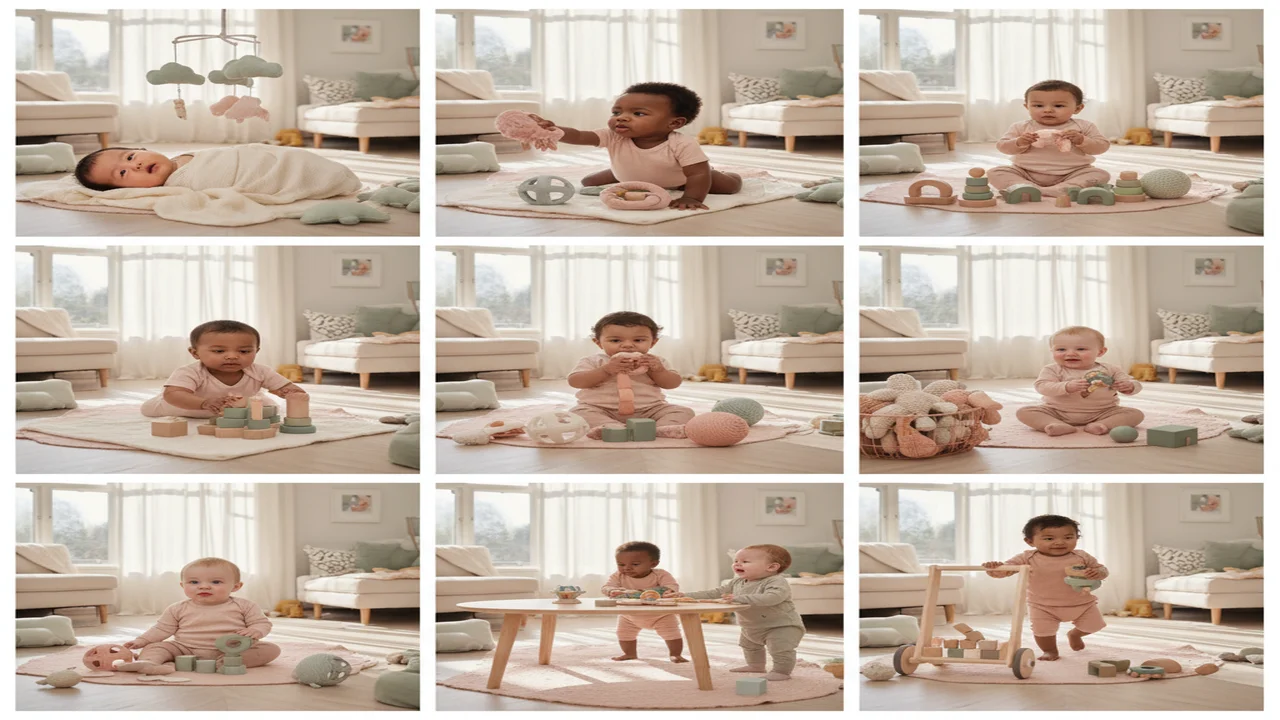
By around 2 to 4 months, many babies show more obvious interest in color and patterns. The CDC's four-month milestones include visual attention behaviors such as watching movement and looking at hands. That does not mean a four-month-old is ready for color flashcards. It means vision, attention, motor control, and curiosity are starting to work together.
The American Academy of Ophthalmology notes that vision changes a lot across the first year, and pediatricians check vision as part of well-child visits. That routine check matters because development is a pattern, not one single moment when color vision suddenly switches on.
Do Babies Need Bright Colors for Development?
Bright colors can catch a baby's attention. Red, yellow, blue, and green toys may be easier to notice than soft beige objects once color vision has developed enough. But "can catch attention" is not the same as "required for development."
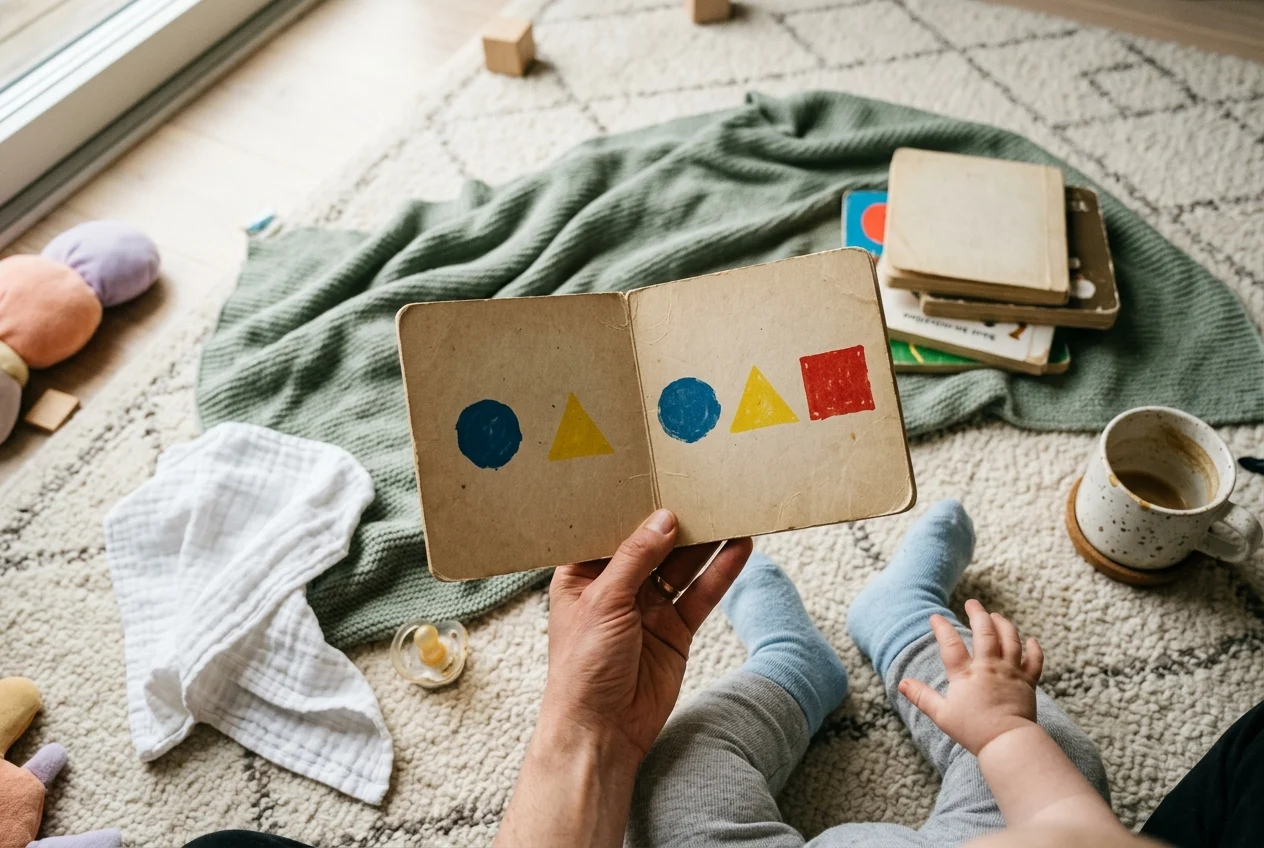
For newborns, contrast is usually the bigger point. A black-and-white card, a striped blanket edge, a dark picture on a light page, or your face against the background can be easier to notice than several pastel objects with low contrast. As babies get older, bold colors become more interesting because their vision and attention span are improving.
The bigger developmental engine is interaction. The NHS gives a simple, useful standard for baby play: everyday objects, books, songs, nursery rhymes, and adult involvement can be enough. WHO early childhood guidance points in the same direction: responsive caregiving and early learning opportunities are the foundation, not a specific color palette. Your child learns more from shared attention than from an expensive toy that sits across the room.
So if you have bright toys, use them. If you have a calm neutral nursery, do not panic. A beige wall does not erase the color in board books, faces, clothes, walks outside, bath toys, food, blocks, or the laundry basket your baby finds more fascinating than the toy you researched for two nights.
Best Colors and Contrast by Age
0 to 2 months
Keep it simple. Newborns do well with high contrast, close distance, slow movement, and familiar voices. Try a black-and-white card during short awake time, a simple board book, a striped burp cloth, or your face 8 to 12 inches away.
At this age, do not turn play into a lesson. A few seconds of looking away can mean your baby needs a break. Short moments count.
3 to 6 months
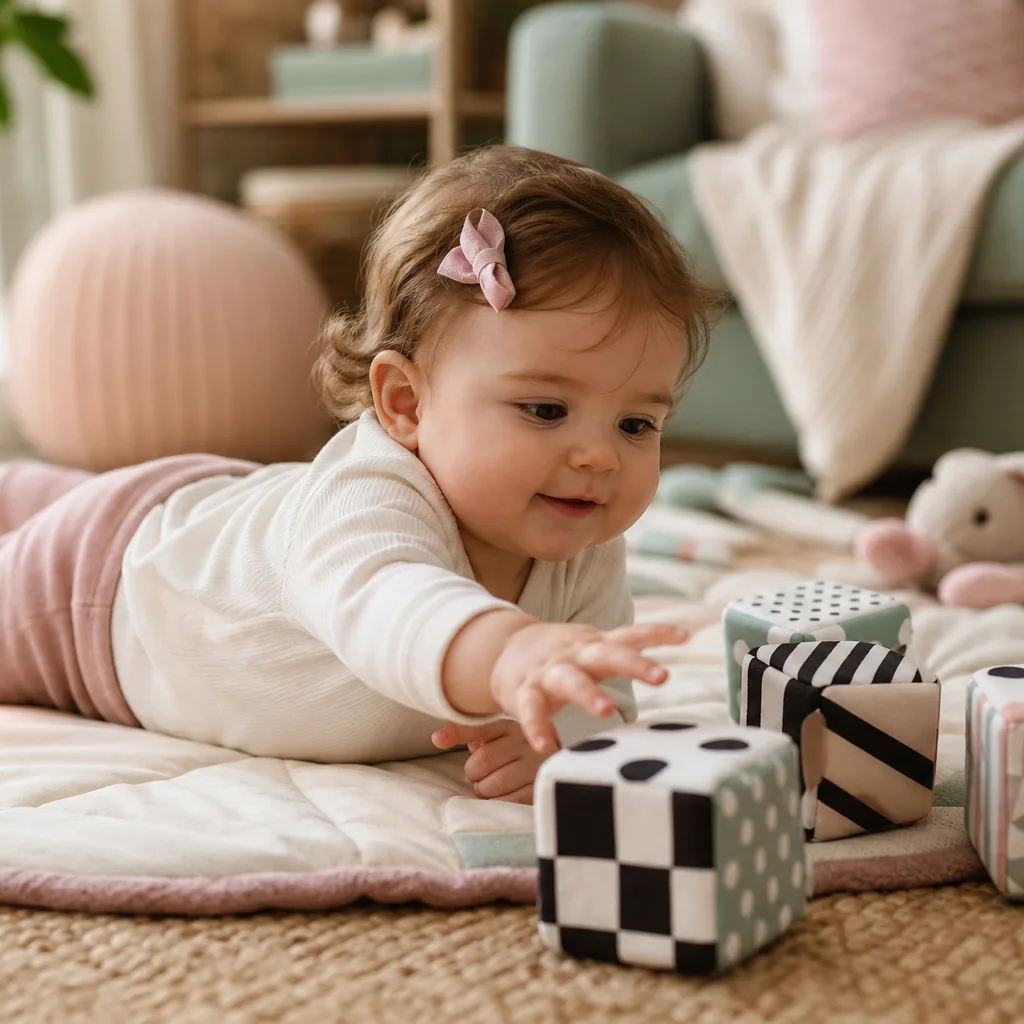
This is when many babies become more visually alert. They may watch a toy move from side to side, stare at their hands, reach toward objects, or light up at bold books and play mats. Add clear colors, simple shapes, and toys that are easy to grasp.
Tummy time is a good place for color because it gives your baby a reason to lift, look, shift weight, and eventually reach. Put one bright object slightly to the side rather than surrounding them with ten things at once.
If you want a practical way to follow patterns without turning everything into a test, use the Baby Milestones Tracker to note visual attention, reaching, rolling, and social cues over time.
6 to 12 months
Older babies usually care less about looking only and more about doing. They bang, drop, mouth, transfer, crawl toward, and compare objects. Color becomes useful for sorting, finding, naming, and choosing.
You can say, "You found the red cup," or "The blue block is under the chair," without quizzing. Naming color during ordinary play builds language and categorization in a low-pressure way.
This is also a good stage for books with simple pictures, stacking cups, blocks, scarves, and safe household objects. The goal is not a perfect toy rotation. The goal is varied experience.
Toddlers
Toddlers can start matching, sorting, and naming colors, but the timeline varies. Some two-year-olds love color words. Others know exactly which cup they want but do not reliably say "yellow" yet.
Use color as part of real life: socks in the laundry, fruit at snack time, chalk outside, bath cups, crayons, and "find something green" games. If your child resists, switch to a different kind of play and come back later.
How Color Supports Play, Attention, and Learning
Color helps most when it gives your baby something clear to notice. A bold rattle can invite tracking. A red ball rolling slowly across the floor can invite reaching. A picture book with a bright object on a plain page can invite shared attention.
Shared attention is the useful phrase. Your baby looks at something, you notice what they noticed, and you respond. You might label it, move it closer, pause, smile, or copy their sound. That loop is more developmentally rich than silently placing a rainbow toy in front of them.
Color can also help you simplify the environment. If your baby is overwhelmed, choose one clear object instead of a busy pile. If your baby is bored, change the object, the position, the lighting, or your voice before buying something new.
For babies who seem to move through developmental bursts, pair this kind of everyday observation with Development Leaps. It can help you connect changes in attention, sleep, fussiness, and new skills without treating every fussy day as a problem.
What the Beige Nursery Trend Gets Right and Wrong
The beige nursery trend gets one thing right: babies do not need constant visual noise. Calm sleep spaces, soft lighting, and fewer distractions can be useful, especially around naps and bedtime. A nursery does not need to look like a toy catalog to support development.
Where the trend goes wrong is when the whole day becomes visually flat or adult-aesthetic first. Babies benefit from variety. They need faces, books, outdoor light, shadows, safe textures, movement, songs, and objects with enough contrast to notice.
The practical compromise is easy. Keep the sleep space calm if that works for your family. Then add color during awake time: a high-contrast book near the changing table, a bright scarf during floor play, colorful cups in the bath, or a simple play mat with a few clear shapes.
This also protects parents from the opposite pressure: the idea that every object must be bright, educational, and optimized. Babies do not need a stimulation room. They need a safe, responsive environment with enough variety to explore.
Simple Ways to Use Color Without Overstimulating Your Baby
Start with one object at a time. Hold it still, then move it slowly. Watch your baby's face, body, and breathing. If they turn away, arch, fuss, hiccup, or stare past it, pause. Looking away is communication, not failure.
Use color during routines you already do:
- Place one high-contrast card near the changing area for brief looking time.
- Read a simple board book and name one thing on each page.
- Put a bright toy beside your baby during tummy time, slightly off center.
- Use colored cups in the bath while keeping one hand on your baby.
- Point out colors during walks: leaves, cars, signs, flowers, coats, sky.
- Sort socks, blocks, or spoons with an older baby or toddler.
Keep sleep spaces less stimulating. Bright mobiles, flashing lights, and busy wall patterns are not necessary for sleep. Daytime play can be more colorful; nighttime can stay boring.
Safety still comes before color. Choose age-appropriate toys without small parts, loose batteries, long strings, or magnets. A dull safe object is better than a fascinating unsafe one.
When to Ask About Your Baby's Vision
Well-child visits are the normal place to bring up vision questions. Your pediatrician checks the eyes and asks about developmental progress, including whether your baby seems to look, track, focus, and respond in age-expected ways.
Ask sooner if you notice something that worries you: your baby does not seem to focus on faces, one eye consistently turns in or out after the early newborn period, pupils look unusual in photos, there is persistent tearing or cloudiness, or your baby suddenly stops using visual skills they had before.
Premature babies may be assessed using corrected age for some milestones, and some need more specific eye follow-up. If your baby was premature, had NICU care, or has a known medical condition, use the follow-up plan from your pediatrician or specialist rather than generic age charts alone.
The point is not to diagnose your baby from a color toy response. A baby ignoring a red block on a tired afternoon is usually just a baby. Patterns over time matter more than one moment.
FAQ
What colors can babies see first?
Babies notice contrast before they use color the way older children do. In the first weeks, black-and-white patterns, faces, and strong light-dark edges are often easiest to see. Interest in bold colors usually becomes clearer during the first months.
Are black-and-white toys better for newborns?
They can be helpful because newborn vision is still blurry and contrast is easier to notice. But they are not magic. A simple high-contrast card, a board book, or your face during close interaction can all work.
Is a beige nursery bad for baby development?
No. A neutral nursery is not harmful by itself. The issue is the total environment. If your baby has colorful books, varied play, outdoor time, faces, songs, and safe objects to explore while awake, the wall color is not the main concern.
Can too many bright colors overstimulate a baby?
Some babies get overwhelmed by busy spaces, flashing toys, loud sounds, or too many objects at once. Use your baby's cues. If they turn away or fuss, simplify the scene and try again later.
Sources
- American Academy of Pediatrics: Baby's Vision Development
- CDC: Milestones by 4 Months
- NHS: Baby and toddler play ideas
- WHO: Improving early childhood development
- American Academy of Ophthalmology: Vision Development, Newborn to 12 Months
Related Tools and Guides
- Baby Milestones Tracker. Track visual attention, reaching, movement, and social milestones over time.
- Development Leaps. Understand changing attention, fussiness, and new skills during baby development.
- Baby Development Month by Month. See how vision, movement, senses, and milestones unfold through the first year.
- Sensory Development in Babies. Learn how sight, sound, touch, taste, and smell develop together.
- Best Baby Toys by Age. Choose safe toys by age, from newborn contrast cards to later stacking, books, and movement play.