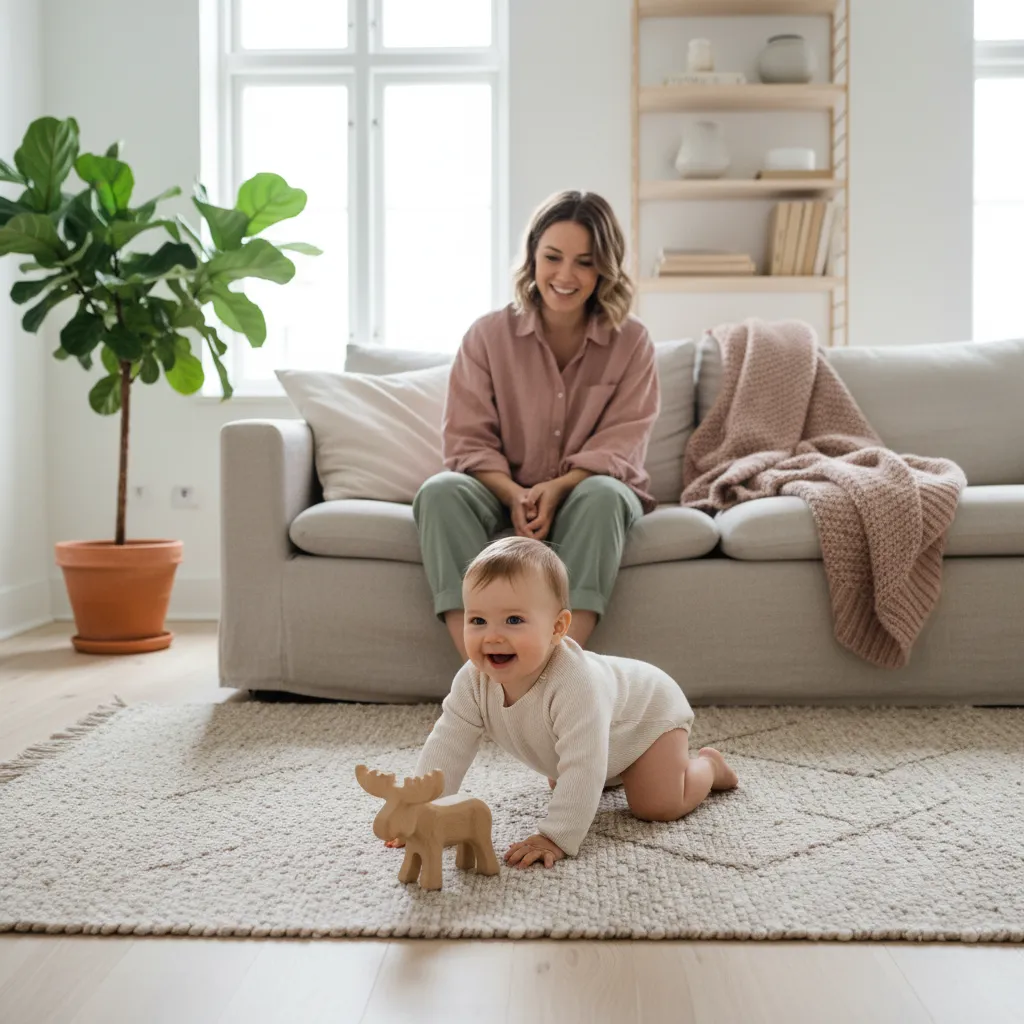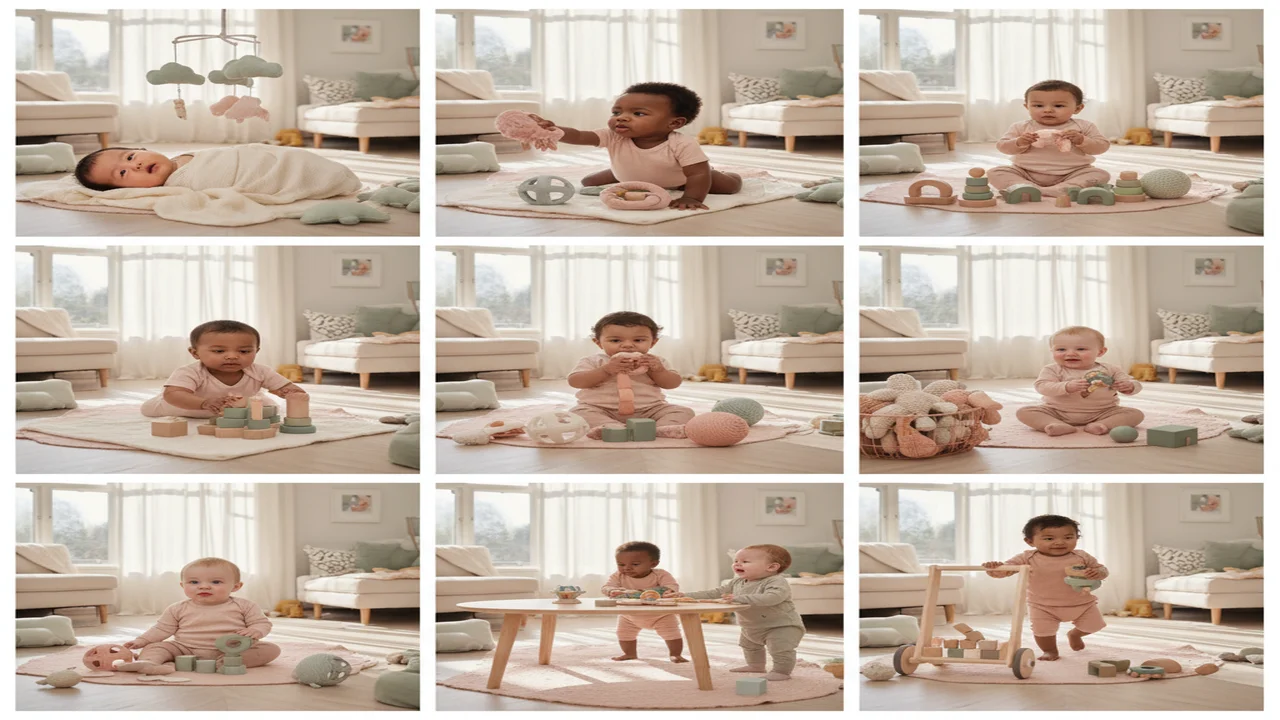
The best baby books are the ones you can read with one hand while your baby chews the corner, pats the page, or tries to close the book halfway through.
Baby books are not about creating a tiny scholar before preschool. They are about voice, rhythm, closeness, language, and a small predictable moment in the day.
Start reading from birth if you want to. Choose soft, high-contrast books for newborns, sturdy board books for older babies, and simple story books for toddlers who are ready to point, name, and choose favorites.
Use this guide to match books to your child's stage, then save the favorites in your baby checklist library or watch language and pointing skills in the milestone tracker.
Key Takeaways
- Birth is not too early: The AAP recommends shared reading from birth because the benefit is the interaction, not the baby's ability to understand plot.
- Choose by stage: Newborns need contrast and rhythm; older babies need sturdy pages; toddlers need repetition, naming, emotion words, and simple stories.
- Short counts: One board book, a few pages, or ten minutes on the floor can be enough.
- Print books win for connection: AAP guidance gives priority to physical books because they invite back-and-forth interaction.
- Safety matters: Skip torn pages, loose parts, button batteries, and small detachable pieces for babies who mouth everything.
Baby Books by Age: A Quick Chooser
| Age | Best book type | What your baby gets from it | Watch for |
|---|---|---|---|
| 0-3 months | High-contrast cards, soft books, rhyme books | Voice, rhythm, closeness, visual attention | Keep sessions very short |
| 3-6 months | Crinkle books, fabric books, simple board books | Reaching, tracking, listening, tummy-time motivation | Books will go in the mouth |
| 6-12 months | Sturdy board books, texture books, lift-the-flap books | Page turning, object names, cause and effect | Avoid weak flaps and loose parts |
| 12-18 months | First-word books, animal books, routine books | Pointing, naming, imitation, shared attention | Expect the same book on repeat |
| 18-36 months | Short stories, emotion books, bedtime favorites | Sequencing, feelings, pretend play, early narrative | Keep stories simple and concrete |
The table is a starting point, not a rule. A 10-month-old may love a newborn rhyme book. A 2-year-old may still want the same battered board book every night. That is normal.
When Should I Start Reading to My Baby?
You can start reading from the newborn days. The AAP's 2024 literacy policy recommends shared reading beginning at birth and continuing through early childhood because it supports relationships, language, and social-emotional development.
For a newborn, reading may look like holding your baby close while you say a few lines from a simple rhyme. They may stare at your face, drift off, or fuss after thirty seconds. That still counts.
The point is not finishing the book. The point is that your baby hears your voice, feels your rhythm, and begins to associate books with attention and comfort.
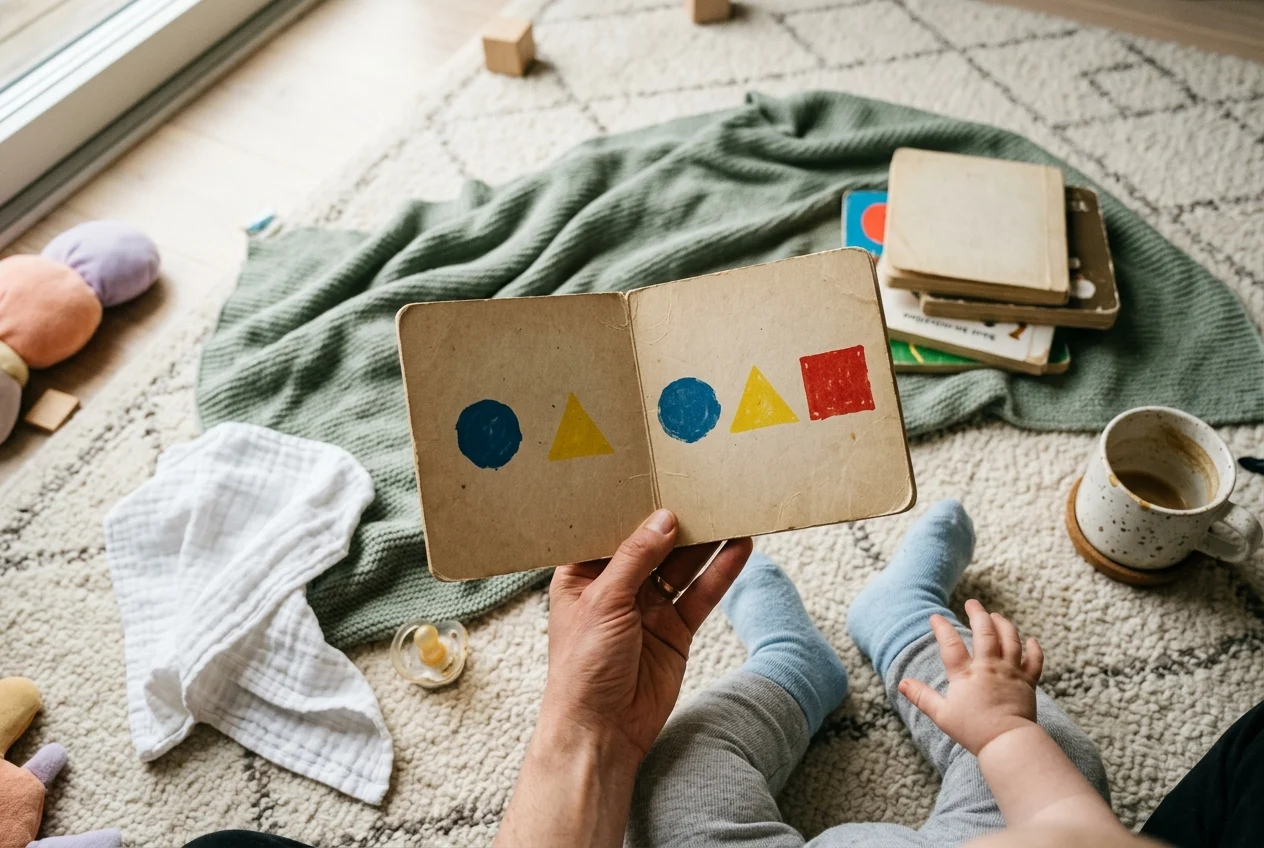
If reading aloud feels awkward, try narrating the pictures instead. "Blue circle. Red square. Baby is looking. Mama is turning the page." This kind of slow, warm talk is exactly the interaction babies need.
What Books Are Best for Newborns?
Newborns are drawn to faces, voices, rhythm, and strong visual contrast. They do not need a library full of plots.
Good newborn books usually have:
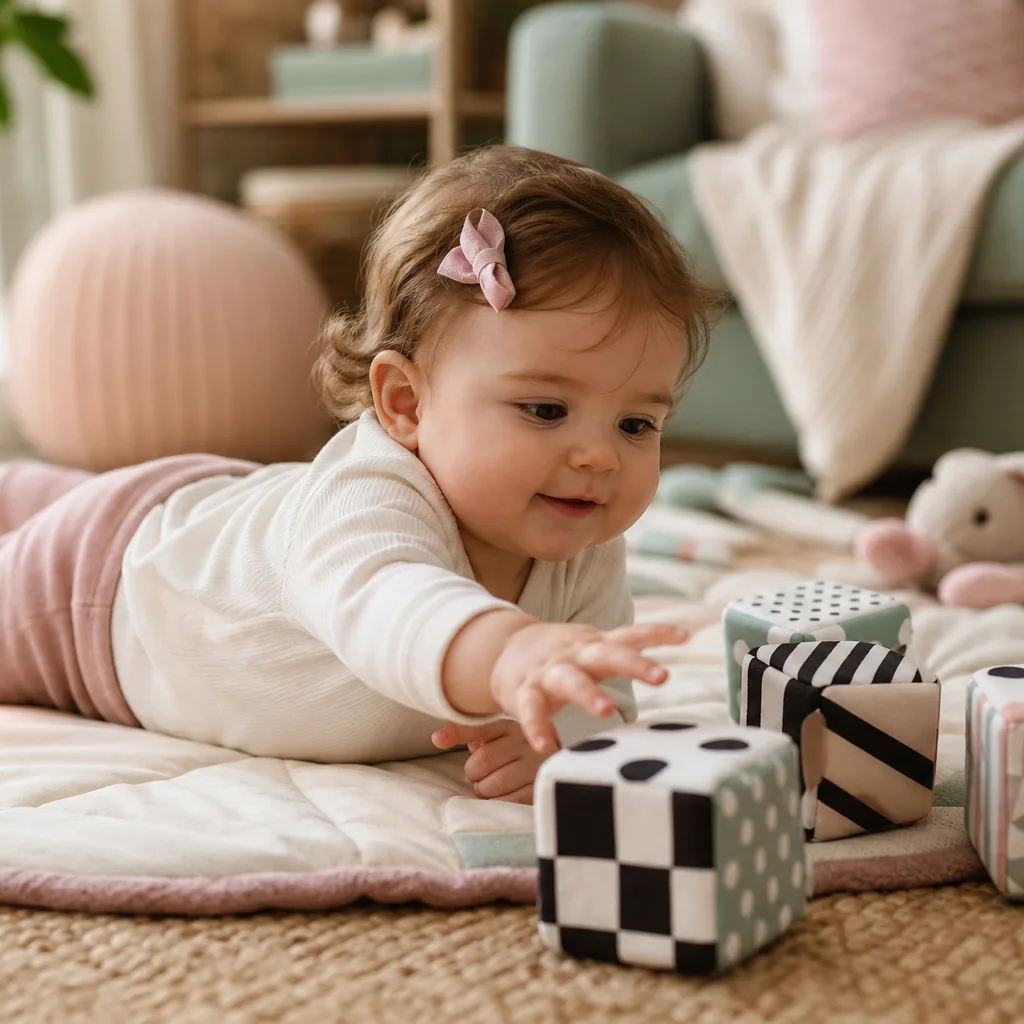
- High-contrast images: black, white, bold shapes, or simple faces
- Rhythm or rhyme: repeated sounds make it easier to listen
- Soft pages: fabric books are easy to hold near a baby during cuddles
- Short length: one page can be a complete reading session
- No loose pieces: newborn books should be safe around grabbing hands and later mouthing
HealthyChildren, the AAP's parent-facing site, suggests simple rhymes and bold pictures for the earliest months. The same guidance notes that babies benefit most from hearing your voice and being close to you.
This is why a cheap contrast card can be better than a fancy sound book. If the book helps you talk, pause, smile, and repeat, it is doing its job.
For more age-specific development context, pair reading with baby development milestones by month. The goal is not to test your baby, but to notice what kind of interaction they are ready for.
What Kind of Books Are Good for Babies from 3 to 6 Months?
Around 3 to 6 months, many babies become more alert during floor play. They may reach toward pages, bat at a fabric book, or stare longer at pictures.
This is a good stage for:
- Crinkle books for sensory feedback
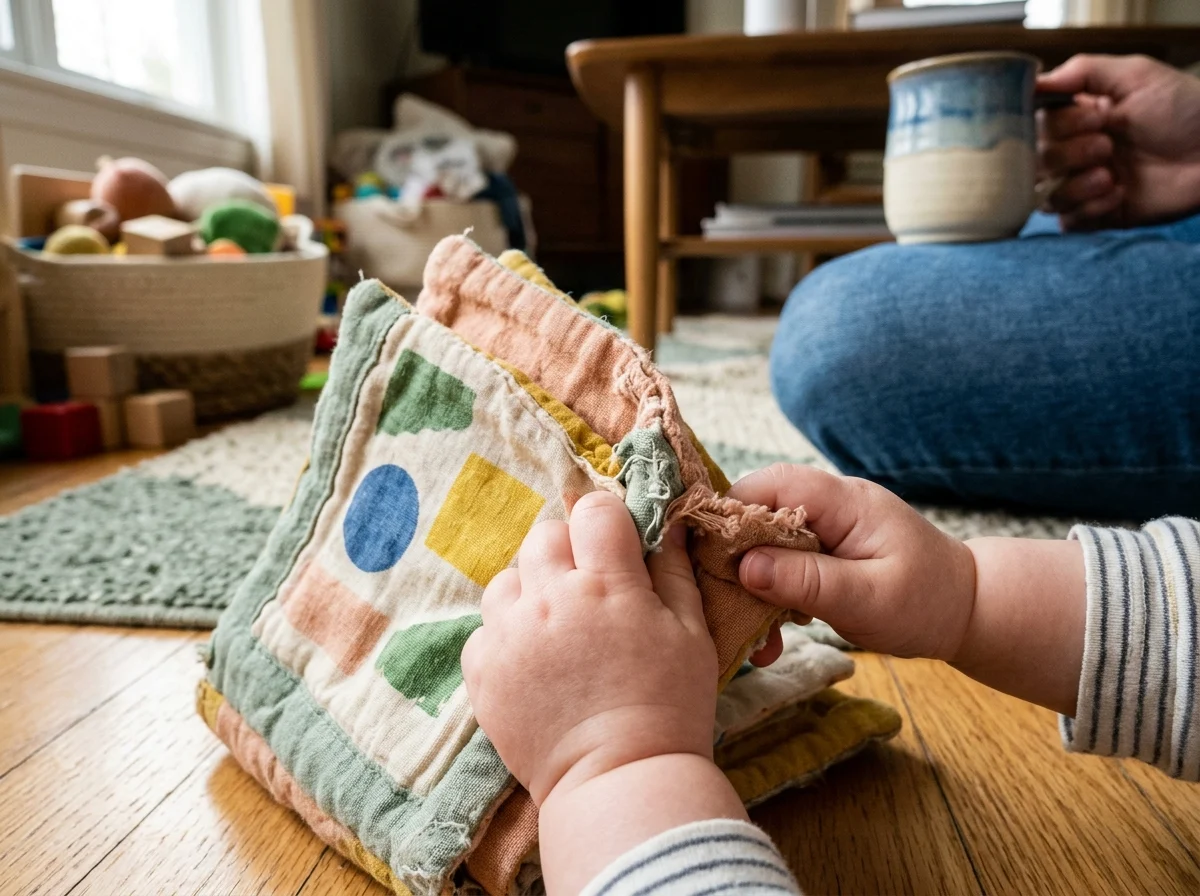
- Soft cloth books that can be grabbed and mouthed
- Board books with one clear image per page
- Simple songs or nursery rhymes
- Tummy-time books that stand open in front of your baby
Reading can become part of play. Place a sturdy book just in front of your baby during tummy time. Point to one picture, say the word, then wait. If your baby kicks, coos, or looks away, you can respond as if they joined the conversation.
The CDC encourages caregivers to read with babies and talk about colorful pictures as part of daily interaction. That "reading" does not need to be formal. Looking at the same page and naming what you see is enough.
If your baby gets frustrated during tummy time, try combining books with ideas from our sensory play for babies guide. A book can be a visual anchor, a texture experience, and a reason for you to stay face-to-face.
Are Board Books Better for Babies?
Board books become especially useful once babies can grab, mouth, bang, and turn pages. They are not automatically more educational than fabric books, but they survive real baby use better.
Choose board books with:
- Rounded corners
- Thick pages that do not peel easily
- Clear photos or simple illustrations
- A small number of words per page
- Familiar topics such as faces, animals, food, bedtime, bath time, and family routines
Avoid books with damaged spines, loose flaps, tiny detachable pieces, or button batteries. Sound books can be fun for supervised toddlers, but babies who mouth everything need simple, sturdy materials.
For 6 to 12 months, repetition is a feature. Your baby may want to slap the same page, open and close the book, or chew one corner. That is not failure. It is how babies explore objects.
At this stage, you can add tiny routines:
- Let your baby choose between two books.
- Name the cover picture.
- Read one or two pages.
- Pause for your baby to touch or look.
- End before everyone is annoyed.
That last step matters. A positive 90-second reading moment is more useful than a forced 10-minute session that ends in tears.
What Books Should a 1 Year Old Have?
One-year-olds often love books they can control. They may point, turn several pages at once, lift flaps, hand you the book, or demand the same one again.
Good choices for 12 to 18 months include:
- First-word books: body parts, animals, vehicles, foods, and household objects
- Routine books: waking up, getting dressed, bath, bedtime, and going outside
- Lift-the-flap books: sturdy flaps only, with supervision
- Animal sound books without batteries: you make the sounds together
- Emotion books: happy, sad, angry, scared, surprised, tired
CDC milestone guidance for 1 year includes interaction around books and pictures. By 2 years, many toddlers can point to things in a book when asked. Reading gives you a natural way to practice those skills without turning play into a quiz.
Try asking fewer test questions and making more comments. Instead of "What is that?" every page, say, "The dog is wet. Splash. The baby is laughing." Then wait. Your toddler may point, repeat one word, or act out the sound.
If you are watching language growth, our speech delay help guide explains what to notice and when to ask for support. Books can help language, but they do not replace evaluation if you are worried.
Best Baby Books by Goal
Sometimes age is less useful than the job you want the book to do.
For Bonding
Choose books with rhythm, rhyme, and a cozy pace. Bedtime books, lullaby books, and family-themed board books work well because your baby hears the pattern in your voice.
For Language
Choose books with clear pictures and repeated words. First-word books, animal books, and everyday object books give you easy things to name again and again.
For Fine Motor Practice
Choose sturdy pages, textures, tabs, and supervised flaps. Turning pages, patting textures, and pointing all support hand use.
For Bedtime
Choose quiet books with predictable endings. Keep the voice soft, the lights low, and the book short enough that you can repeat it without resentment.
For Toddlers With Big Feelings
Choose stories about waiting, sharing, missing a parent, bedtime, new siblings, or frustration. Toddlers often understand feelings first through characters who look nothing like them.
You can organize these by age and purpose in Babysential checklists, especially if relatives ask what to buy for birthdays or holidays.
How Many Books Should I Read to My Baby Each Day?
There is no magic number. The NHS says even 10 minutes a day looking at books can build important skills and interest in reading. For many families, that may be one short book, two pages at breakfast, or a bedtime favorite.
A useful target is "daily enough to become familiar." That can mean:
- One book before the morning nap
- Two pages during tummy time
- A bath book after dinner
- The same bedtime book every night
- A library storytime once a week
If you miss days, nothing breaks. Babies learn from thousands of ordinary interactions: diaper changes, songs, stroller walks, feeding, face games, and the way you answer their sounds.
Books are one powerful container for that interaction because they slow you down. They give you something to point at, repeat, and share.
Should Babies Use Book Apps or Touchscreens?
For babies and young toddlers, physical books are usually the better default. AAP guidance gives priority to high-quality print books because screens tend to make the experience more passive or solitary.
That does not mean a video call with a grandparent reading a book is bad. The difference is interaction. A caregiver who pauses, responds, points, and talks turns reading into a relationship. A baby alone with an autoplaying app does not get the same back-and-forth.
If you use digital books, keep them shared and short. Sit together, talk about the pictures, and treat the screen like a book you are reading with your child, not a babysitter.
How to Build a Reading Routine That Sticks
Start smaller than you think.
Pick one anchor moment: after the first feed, before the afternoon nap, after bath, or before bed. Put two or three books in the same basket. Read until your baby is done.
Then stop.
The routine becomes easier when it feels possible on bad days. A teething baby, a sick toddler, or an exhausted parent may only manage one page. That still keeps the habit alive.
For toddlers, let them choose from two options. Too many choices can turn bedtime into a negotiation. Two familiar books gives them control without stretching the evening forever.
If your child has a favorite book you are tired of, change your job. Read it in a whisper, sing one page, ask your toddler to find the dog, or let them finish the last word. Repetition is how toddlers learn, even when adults are ready to hide the book behind the couch.
When to Ask for Help
Reading is supportive, but it is not a diagnostic tool by itself. Ask your pediatrician or early-intervention service if your child loses skills, does not respond to sound, does not make eye contact in ways that concern you, or is not using gestures, sounds, or words in the range your clinician expects.
The CDC's milestone tools can help you notice patterns by age. You can also track your child's communication, pointing, and play skills in Babysential milestones.
Early support is not a label. It is a way to get more information and more help while your child's brain is still changing quickly.
FAQ
When should I start reading to my baby?
You can start from birth. Newborns will not follow a story yet, but they benefit from your voice, rhythm, closeness, and repeated interaction.
What books are best for newborns?
Newborns usually do best with high-contrast pictures, simple rhymes, soft fabric books, and sturdy books you can hold close during cuddles.
Are board books better for babies?
Board books are practical once babies start grabbing, mouthing, and turning pages. Soft fabric books are often easier for younger babies.
How many books should I read each day?
One short book or a few pages is enough. A calm daily habit matters more than finishing a stack of books.
The Bottom Line
The best baby books are not always the prettiest or most expensive. They are the books you can repeat, chew on, point at, and read when everyone is tired.
Start with simple books that match your child's stage. Keep them within reach. Let the routine be short. Your voice and attention are the part your baby needs most.
This article is for informational purposes only and does not replace professional medical or developmental advice. Ask your pediatrician for guidance specific to your child.