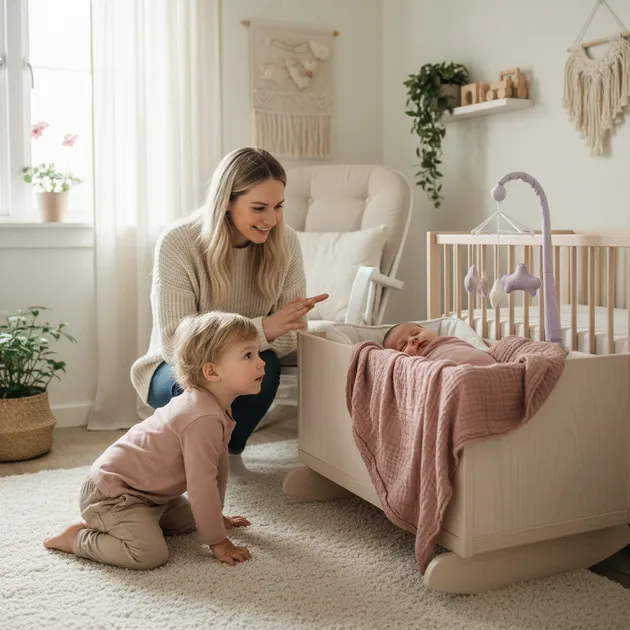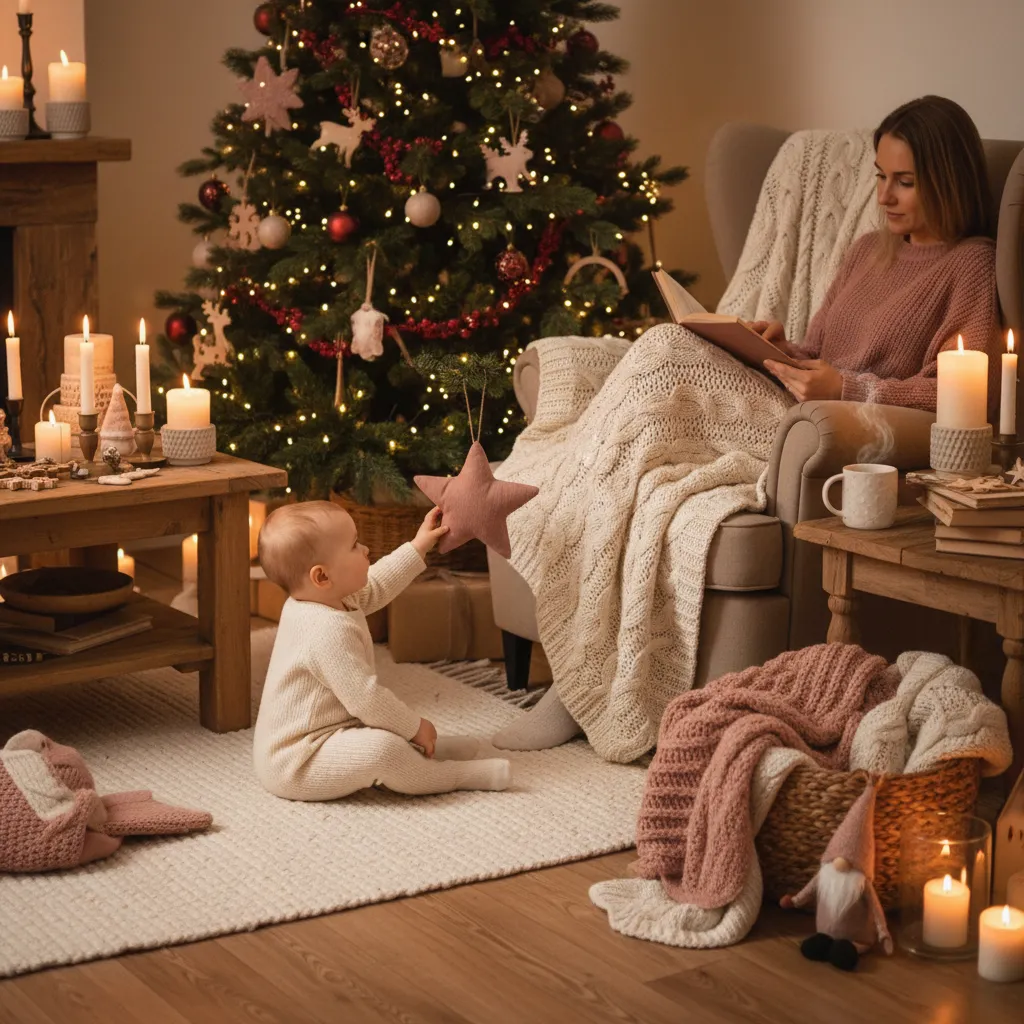
Baby's first Christmas is magical for the parents. For the baby? It's mostly about warm laps, calm voices, and maybe a colorful ribbon to chew on.
Many parents put pressure on themselves to create the perfect Christmas. But the best gift you can give your child is calm, closeness, and predictability.
Baby's First Christmas: Keep It Simple
A baby under 6 months understands nothing about Christmas. No presents, no Santa, no tradition requirements. The only thing baby needs is you.
That means you can safely skip all the stress of creating an Instagram-worthy Christmas morning. Baby won't remember it. But you'll remember how you felt, so do yourself a favor and lower the bar.
What Baby Actually Notices
- Twinkling lights on the tree (fascinating from about 3 months)
- Wrapping paper that crinkles and rustles
- New faces and voices (can be overwhelming)
- Changes in routines (can cause fussiness)
Take photos of baby with wrapping paper instead of with the gift. The best first-year photos are the real ones, not the posed ones. A child chewing on a ribbon is cuter than one sitting stiffly with a gift they don't understand.
Gifts by Age
You don't need to spend a fortune on Christmas gifts for young children. They have short attention spans and play just as happily with the packaging.
0-6 Months
Baby needs very little. Good gifts include:
- Black and white contrast cards (stimulates visual development)
- A soft rattle or teething toy
- Crinkly toy or sensory blanket
- Stuffed animal with different textures
6-12 Months
Now baby is starting to grasp, explore, and put everything in their mouth:
- Stacking cups or stacking tower
- Simple shape sorters
- Books with flaps and textures
- Ball that rolls and bounces
- Musical toys with buttons
1-2 Years
Toddlers are actively exploring the world:
- Doll or stuffed animal
- Push and pull toys
- Simple puzzles with large pieces
- Duplo blocks
- Play kitchen or workbench
2-3 Years
Imaginative play is blossoming:
- Dress-up clothes and costumes
- Train set or car track
- Drawing board and crayons
- Simple board games (Lotto, memory)
- Tricycle or balance bike
Buy fewer, better toys. A child who drowns in packages becomes overstimulated and loses interest quickly. Three to five thoughtful gifts is enough.
Safe Christmas: Hazards You Should Know About
Christmas brings many new items into the home. Some of them are dangerous for small children.
Candles and Flames
- Place candles high up, out of reach
- Use LED candles instead of real ones where children are present
- Always extinguish open flames when the room is empty
- Teach toddlers that flame is hot, but don't rely on them remembering
The Christmas Tree
- Secure the tree to the wall with rope or a strap, toddlers pull on branches
- Avoid glass ornaments at child height (use wooden figures, felt hearts, or similar)
- Check that tree lights don't have loose wires
- Remove low-hanging decorations that could be put in mouths
Holiday Plants
Poinsettia is mildly toxic if ingested. Holly has berries that are poisonous. Place both out of reach, or skip them entirely.
Choking Hazards
Nuts, hard candies, raisins in small packets, and marzipan figures are common holiday foods that pose a choking risk for children under 3-4 years.
Batteries in Christmas gifts are especially dangerous. Button batteries can cause serious chemical burns if swallowed. Check that the battery compartment is securely screwed shut on all electronic gifts.
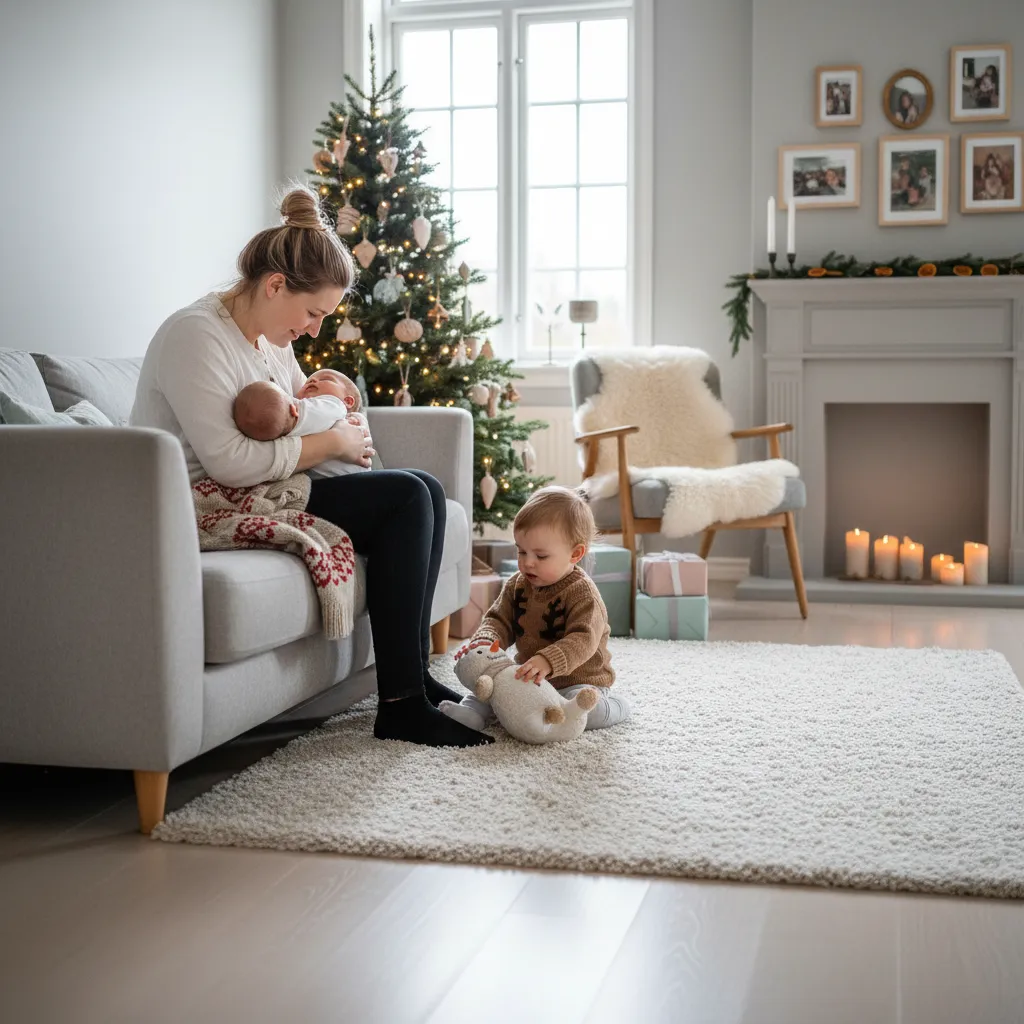
Sleep and Routines During the Holidays
The holiday season turns everyday life upside down. For children who thrive on predictability, this can lead to restless nights.
Maintain Sleep Routines
Even though the days are different, try to:
- Put the child to bed at roughly the same time as usual
- Follow the usual bedtime routine (bath, book, song)
- Ensure the bedroom is dark and quiet
- Avoid sugar and stimulation close to bedtime
Handle Overstimulation
Holiday gatherings with many people, loud music, and new impressions can be overwhelming. Signs that your child needs a break:
- Rubbing eyes or ears
- Turning their head away
- Crying without a clear reason
- Becoming hyperactive and restless
Retreat to a quiet room. Let your child calm down before returning to the gathering.
Visits and Social Gatherings
Christmas often means many visits. Relatives who want to hold the baby, in-laws with opinions about parenting, and a full house for days on end.
Set Boundaries Early
You decide who holds the baby, how long you stay at visits, and when you go home. It's okay to say:
- "We're heading home for bedtime"
- "Baby needs quiet time now, we're taking a break"
- "Please don't kiss the baby on the face" (important during cold and flu season)
Celebrating at Home vs. Away
With a baby under 6 months, it may be wise to celebrate at home and invite close family to you. That way you control noise levels, temperature, and routines.
With older children, traveling can work fine, but plan the travel bed and bring familiar items from home.
Holiday Food for the Little Ones
The holiday table is full of temptations. Here's an overview of what the youngest can eat.
From 6 Months
- Roast meat: Remove fat and salty skin, offer soft meat finely chopped or mashed
- Meatballs: Mash or cut into pieces, watch for salt
- Cooked vegetables: Carrots, Brussels sprouts, turnips, all fine mashed or in pieces
- Boiled potato: A classic baby can chew on
From 12 Months
- Rice pudding: Fine from 1 year, but keep the sugar down
- Holiday cookies: A few bites are fine, but toddlers don't need much sugar
Avoid for the Youngest
- Honey: Forbidden under 1 year (risk of botulism)
- Whole nuts and almonds: Choking hazard under 3-4 years
- Very salty foods: Too salty for babies under 1 year
- Chocolate and candy: Avoid under 1 year, limit for toddlers
Prepare a separate plate with baby food before the holiday meal. Mash some meat with cooked vegetables and potato. Then baby can eat holiday food without you stressing during the meal.
Lower Your Shoulders
The best Christmas gift you give yourself is dropping the perfection pressure. Baby doesn't care about holiday napkins, coordinated pajamas, or homemade marzipan pigs.
What baby remembers (or rather, what the body remembers) is calm adults, safe laps, and predictable days.
Three things that make Christmas good with young children:
- Slow down, fewer activities, more calm
- Keep routines, sleep and food at regular times
- Set boundaries, say no to visits and events that become too much
Happy holidays with the little ones.

Frequently Asked Questions
What do you give a baby for Christmas?
Babies under 6 months don't need gifts. Sensory toys like rattles and soft books are great for 6-12 months. Toddlers enjoy blocks, shape sorters, and books with flaps.
Can baby eat roast meat?
Yes, from 6 months baby can taste lean roast meat without skin, salt, and spices. Mash the meat with vegetables and potato. Avoid crispy skin due to choking hazard.
How do we maintain routines during the holidays?
Prioritize sleep and meals at regular times, even if the rest of the schedule is different. Drop activities rather than stretching bedtime. A well-rested baby makes for a better holiday for everyone.
Are Christmas lights dangerous for baby?
Candles should never be within reach of babies and toddlers. Use LED lights on the tree and place candles high up. Small batteries in LED lights are a choking hazard, check that battery compartments are secure.
Read More
Sources
- AAP - Holiday Safety Tips
- CDC - Choking Hazards
- FDA - Honey and Infant Botulism
- NFPA - Holiday Fire Safety
🔧 Helpful Tools
- All Baby Tools. Browse all free tools for pregnancy and baby care
📖 Related Articles
- Baby's First Christmas: How to Celebrate Safely and Memorably. Celebrating Christmas with a baby for the first time? Tips on safe decorations, age-appropriate activities, gifts, food, and traditions for baby's first Christmas.