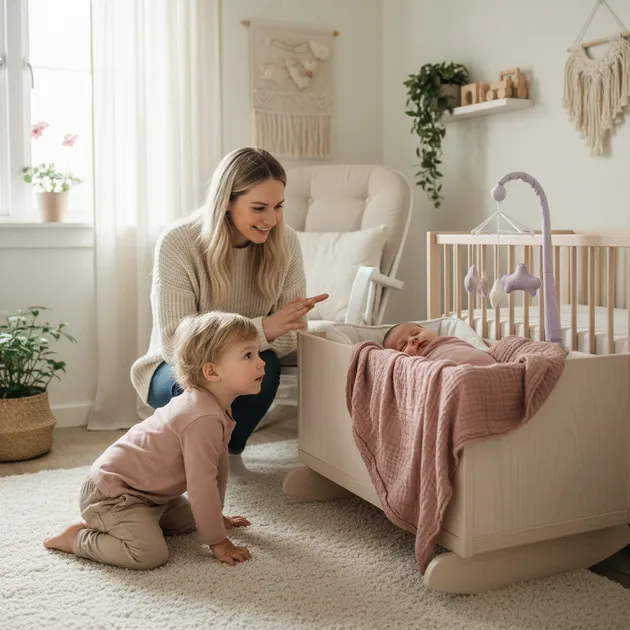
Grandparents can be invaluable to new parents. Relief, care and a safe extra pair of arms for the baby. But the relationship between generations can also create friction.
Advice has changed. Parenting philosophy has changed. And in the middle of all this, you need to find a dynamic that works for everyone.
The grandparent role today
A generation ago, grandparents were often daily caregivers. Many lived nearby, and childcare was a natural part of family life.
Today things look different. Many grandparents live in another city. Some still work full time. Others are active retirees with packed calendars.
There is no single grandparent model that fits everyone. But regardless of distance and life circumstances, grandparents can play a meaningful role in a grandchild's life.
What grandparents offer that no one else can
- Unconditional love without the responsibility of day-to-day parenting
- Stories and traditions from another time
- Relief that lets parents breathe
- A different voice and a different kind of presence
- Security in knowing the child has more caring adults in their corner
Common conflicts, and how to resolve them
Let's be honest: most families have some kind of disagreement between generations. It is rarely about bad intentions, but about different experiences and outdated knowledge.
Sleep position and sleep advice
Many grandparents placed their babies on their stomachs to sleep. Today the AAP and WHO recommend that babies always sleep on their backs to reduce the risk of SIDS.
How to say it: "The advice has changed since you had children. Babies should sleep on their backs, it reduces the risk of SIDS. Can we show you how we put them down?"
Read more: Safe sleep for baby
Food and introduction of solids
Previously, babies received cereal from 3–4 months. Current WHO and AAP guidelines recommend starting solids around 6 months.
Other changes:
- Honey is not safe under 1 year (not everyone knew this a generation ago)
- Allergens should be introduced early, not avoided
- Cow's milk as a drink is recommended only from 12 months
How to say it: "We're following the current guidelines from our pediatrician. The baby starts solid food at 6 months. We appreciate your support on this."
Screen time
Many grandparents use tablets or TV to entertain grandchildren. The AAP recommends avoiding screens for children under 2 years, and limiting use for 2–3-year-olds.
How to say it: "We're trying to keep screen time low for them. Could you read a book, build blocks or go outside instead?"
Clothing, temperature and dressing
"The baby is cold!" is a classic from grandparent generation. Over-dressing babies is common. The AAP recommends checking the back of the baby's neck, it should feel warm but not sweaty.
Parenting and setting limits
Disagreements about limit-setting, rewards and consequences come up early. They can be about anything from sweets to bedtime to pacifier use.
The main rule: parents decide. Grandparents follow the parents' lead, even if they disagree.
A good rule of thumb: grandparents are advisors, not decision-makers. Feel free to share experiences and opinions, but respect that parents have the final say.
Setting limits with love
Setting limits with your own parents or in-laws can be difficult. But clear limits are better than simmering conflicts.
Concrete phrases
Instead of saying "you're doing it wrong," try:
- "The advice has changed, let us show you what the pediatrician recommends"
- "This is how we do it at home, and it means a lot that you support that"
- "You're the expert on your own children. We're the experts on ours"
- "We truly appreciate the help. Here are a few things that are good to know"
Write a simple list
When grandparents babysit, a simple list can help:
- Bedtime and bedtime routine
- What the child can (and cannot) eat
- Any allergies or medications
- Emergency numbers and contact information
This is not condescending, it is safe. Most grandparents appreciate clear information.
Remember that grandparents who feel included and valued are more likely to follow your guidance. Start by acknowledging what they do right before raising what you want done differently.
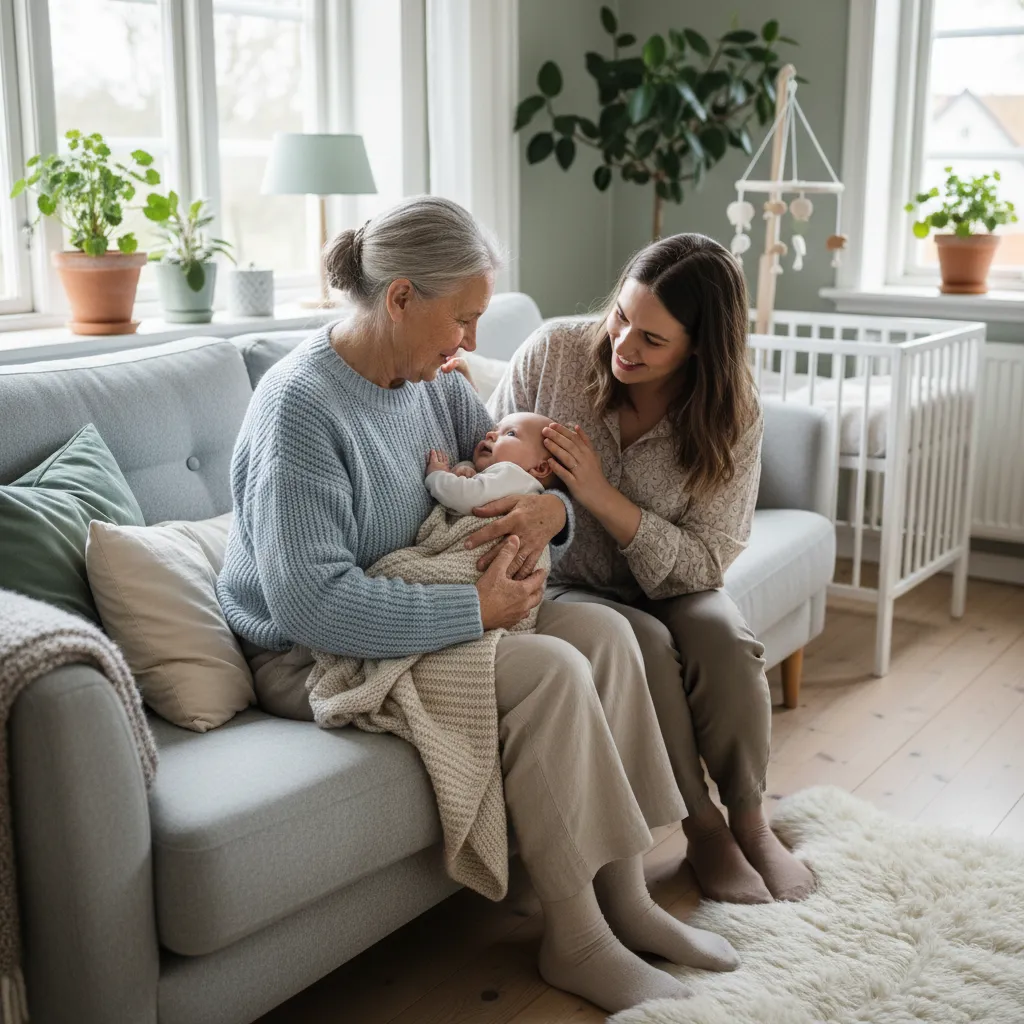
Grandparents as babysitters
Many parents rely on grandparents as their primary childcare support. This is a great resource, but it requires clear communication.
Safe handover
The first time grandparents babysit alone, go through:
- Sleep: How the baby is put down, sleep position, what is in the crib (nothing besides the baby)
- Food: What the baby eats, any allergies, amounts and timing
- Safety: Changing table (never leave baby unattended), car seat, bathing (never alone)
- Emergencies: Phone numbers, nearest urgent care, what to do with fever
Update their safety knowledge
Much has changed since grandparents had young children:
- Car seat: Children should sit rear-facing as long as possible (AAP recommends until the child outgrows the seat's limits)
- Choking hazards: Whole grapes, hot dog pieces and nuts are dangerous for children under 3–4 years
- Sleep environment: No pillows, duvets or soft toys in the crib for babies under 1 year
- Back to sleep: Babies sleep on their backs, not their stomachs
An infant first aid course is a great gift for grandparents. The Red Cross and many local organizations offer courses. Updated knowledge about CPR and choking can save a life.
Grandparents who live far away
Not all grandparents live nearby. Many live in another part of the country, some abroad. Distance does not have to mean distance in the relationship.
Digital connection
- Video calls: Regular time slots work best. Short, frequent calls are better than long, infrequent ones
- Photos and updates: Share photos regularly, many grandparents live for this
- Read a book via video: Grandma reads aloud via screen while the child follows along in their own copy
- Film short moments: First steps, first words, funny situations
Holiday visits
Longer visits can be intense. Some tips:
- Discuss expectations in advance (length of visit, who does what)
- Plan time alone for parents while grandparents babysit
- Give grandparents and grandchild time alone, it builds the relationship
- Have a space where grandparents can retreat (everyone needs breaks)
Postpartum visits: The first weeks
The first weeks after birth are vulnerable. Grandparents want to help, but help means different things to different families.
Useful help in the postpartum period:
- Cooking food and filling the freezer
- Doing laundry and tidying up
- Looking after the baby while parents sleep
- Grocery shopping
- Taking the baby out for a walk in the stroller
Less useful: sitting over as guests expecting to be hosted, or giving unsolicited advice about breastfeeding.
The best thing a grandparent can say to a new parent is: "What do you need me to do?", and then do it without commenting.
When it gets difficult
Sometimes the dynamic does not work. Grandparents who repeatedly overstep limits, undermine parents' decisions, or create disruption can become a burden.
Signs you need to set clearer limits
- You dread visits
- Grandparents ignore repeated requests
- The child is upset or overstimulated after visits
- You feel criticized for your parenting choices
What you can do
- Have a concrete conversation, do not let frustration build up
- Be clear about what is acceptable and what is not
- Bring it up with your partner, stand united
- If problems persist, consider family counseling
Frequently asked questions
How do I tell grandparents that the advice has changed?
Be clear but friendly. For example: "The advice has changed since you had children. Babies should sleep on their backs, let us show you how we put them down." Acknowledge their experience, but be firm that parents decide.
Should grandparents take a first aid course?
Yes, it is a worthwhile investment. The Red Cross and many local organizations offer infant and child first aid courses. Updated knowledge about CPR and choking can save a life.
How do I manage grandparents who live far away?
Regular video calls work well, short, frequent calls are better than rare, long ones. Share photos regularly, read a book via video, and plan longer visits where grandparents and grandchild get time alone together.
The big picture
Most grandparents want the best for their grandchild. Most conflicts are about updated advice, not bad intentions.
Three things that build a great relationship between generations:
- Clear communication, say what you mean, ask what they think
- Appreciation, show that you value their effort
- Updated knowledge, share new recommendations without lecturing
Grandparents who feel welcome and valued become the best grandparents.
Read more
Sources
🔧 Helpful Tools
- All Baby Tools. Browse all free tools for pregnancy and baby care
📖 Related Articles
- Grandparents: How to Set Healthy Limits. How to set healthy limits with grandparents without damaging the relationship. Communication, expectations and balance for new parents.