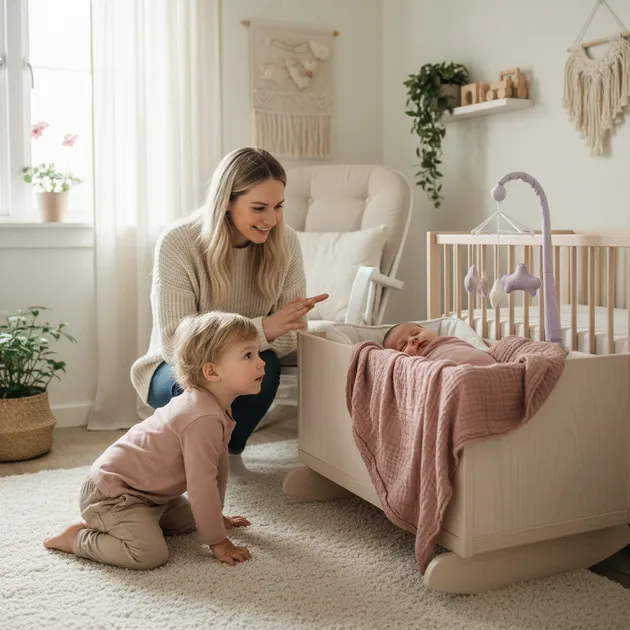
The pregnancy test shows two lines again, and this time you already have a little one who's about to get some big news. The joy is there, but maybe also a knot in your stomach: How will the toddler react? Will there be jealousy? Can we handle this?
Preparing a toddler for a new sibling is one of the most important things you can do for family dynamics. Good preparation makes the transition easier for everyone, especially for the little one who is suddenly going to share mom and dad.
When should you tell your child?
Toddlers have a limited sense of time. Nine months is an eternity for a 2-year-old. The advice from most child psychologists is:
- Under 2 years: Wait until the belly is clearly visible or until shortly before the due date. Abstract concepts like "a baby is growing in mommy's tummy" are hard to grasp
- 2–3 years: Share the news after you've passed the 20-week scan. Use concrete words and picture books
- Over 3 years: Can be told a bit earlier, but avoid making the waiting period feel endless
Tell your child before they hear it from someone else. Children are good at picking up on adult conversations, and it can create anxiety to hear the news from anyone other than you.
How to talk about the new baby
Keep it simple and concrete. Avoid abstract explanations. Use books with pictures of babies and siblings as a starting point for conversation.
Good things to say:
- "A baby is growing in mommy's tummy. You're going to be a big sister/big brother"
- "The baby is very small and can't play right away. But you can help"
- "Mommy and daddy love you just as much. There's just going to be one more person to love"
Things to avoid:
- Promising that the baby will be a playmate right away
- Telling the child they "must" be grown up now
- Linking other changes (room switch, starting daycare) directly to the baby
Involve the child in preparations
Let the child take part in concrete preparations:
- Help sort baby clothes
- Choose a gift for the baby (and receive a "big sibling gift" in return)
- Come to an ultrasound appointment or listen to the heartbeat
- Pick out a stuffed animal for the new baby
Preparations before the birth
Practical changes, do them early
If the child is switching rooms, starting daycare, or moving out of a crib, do this well in advance, at least 2–3 months before the birth. That way the changes don't feel like the baby "taking" something from the child.
Plan for the hospital stay
- Who will look after the child while you're at the hospital?
- Can the child come for a visit? Many hospitals allow brief visits
- Call or video call the child from the hospital
- Have a small "gift from the baby" ready for the first meeting
Talk about what happens during birth
"Mommy and daddy are going to the hospital to bring home the baby. You'll be staying with (grandma/uncle/friend), and we'll be home soon." Make the plan clear and reassuring.
Don't let the first meeting between siblings happen while you're holding the baby. Put the baby down and welcome the older child with open arms. Show that you've missed them.
The first weeks at home
The first meeting
Let the child approach the baby at their own pace. Some children are immediately curious, others keep their distance at first. Both reactions are completely normal.
Expect regression
Many toddlers take a step back developmentally after the baby arrives. They may suddenly want diapers again, use baby talk, become extra clingy, or sleep worse.
This is normal and will pass. The child is testing whether they are still safe and loved. Meet regression with understanding, not irritation.
Protect one-on-one time
Set aside time for the older child alone, without the baby. Even 15–20 minutes of undivided attention each day makes an enormous difference. Read a book, play with building blocks, or take a short walk outside.
Let the child "help"
Give the older child tasks that make them feel important:
- Fetching a diaper or washcloth
- Singing to the baby
- Holding the bottle (with help)
- Showing the baby toys
"The baby is smiling at you! You're such a great big brother."
Some families create a "big sibling basket" with small gifts the child can open during periods when you're occupied with the baby. It provides positive attention without needing to split yourself in two.
Handling jealousy and difficult feelings
Jealousy is a natural reaction. Your child has had you all to themselves their whole life, and now they have to share. Acknowledge the feelings instead of dismissing them.
How to handle jealousy:
- Name the feeling: "I understand you're sad because I'm holding the baby. You want mommy to hold you"
- Avoid comparisons: "Look how good the baby is" can trigger jealousy
- Normalize it: "Sometimes you like the baby, and sometimes you don't. That's completely okay"
- Set limits with warmth: "You can't hit the baby. You can stamp your feet on the floor if you're angry"
- Give responsibility: "Can you watch the baby while I get the water?" Responsibility builds a sense of belonging
Parental leave planning for baby number two
If you're in a country with parental leave benefits, it's worth planning ahead:
- Can one parent take leave in a way that allows the older child to keep their daycare or preschool spot?
- Do you want both children home for a period, or is continuity in preschool important for the older child?
- Many daycare providers allow children to keep their spot during parental leave, check with yours
Discuss the leave arrangement early so you have a plan that works for the whole family.
Relevant tools on Babysential:
- Babysential AI Chat. Get personalized answers to your parenting questions
- My Baby. Track your baby's development, health, and milestones
Frequently asked questions
What do I do if the older sibling tries to hurt the baby?
Stay calm. Intervene physically and say briefly: "Stop. We're gentle with the baby." Afterward, name the feeling: "You were angry. It's okay to be angry, but you can't hit the baby." Never leave the child and baby alone without supervision in the early phase.
When do siblings start playing together?
Most babies begin showing interest in older siblings around 6–8 months. Simple parallel play typically starts around 12–18 months. Truly interactive play comes from around age 2. Patience pays off.
Is a small or large age gap better?
There is no "perfect" age gap. A small gap (under 2 years) means an intense few years, but the siblings grow up close. A larger gap (3–4 years) gives you an older child who understands more and can help out. Both have advantages and challenges.
The older child suddenly wants diapers again. Is that normal?
Yes, regression is very common and completely normal. Let the child use diapers briefly if they want to, without making a big deal of it. Most children quickly return to using the toilet once their need for reassurance is met.
Becoming a big sibling is a major adjustment. With preparation, patience, and plenty of love for both children, the family will find its new rhythm. Remember that it's okay to find it exhausting, and that it gets easier.
Read more about life with a newborn or check what you need for baby number two with our newborn checklist.
Find more resources for the toddler years at For You. Toddlers.
Sources
- American Academy of Pediatrics, preparing children for a new sibling
- Zero to Three, siblings and new babies
- CDC, child development milestones
🔧 Helpful Tools
- All Baby Tools. Browse all free tools for pregnancy and baby care
📖 Related Articles
- Sibling Jealousy: When Older Brother or Sister Feels Left Out. Sibling jealousy after a new baby? Here's how to help your older child handle the new situation.
- Siblings and a New Baby: How to Prepare Your Older Child. Tips for preparing siblings for a new baby. Jealousy, age-appropriate advice, and how the whole family finds its new rhythm.