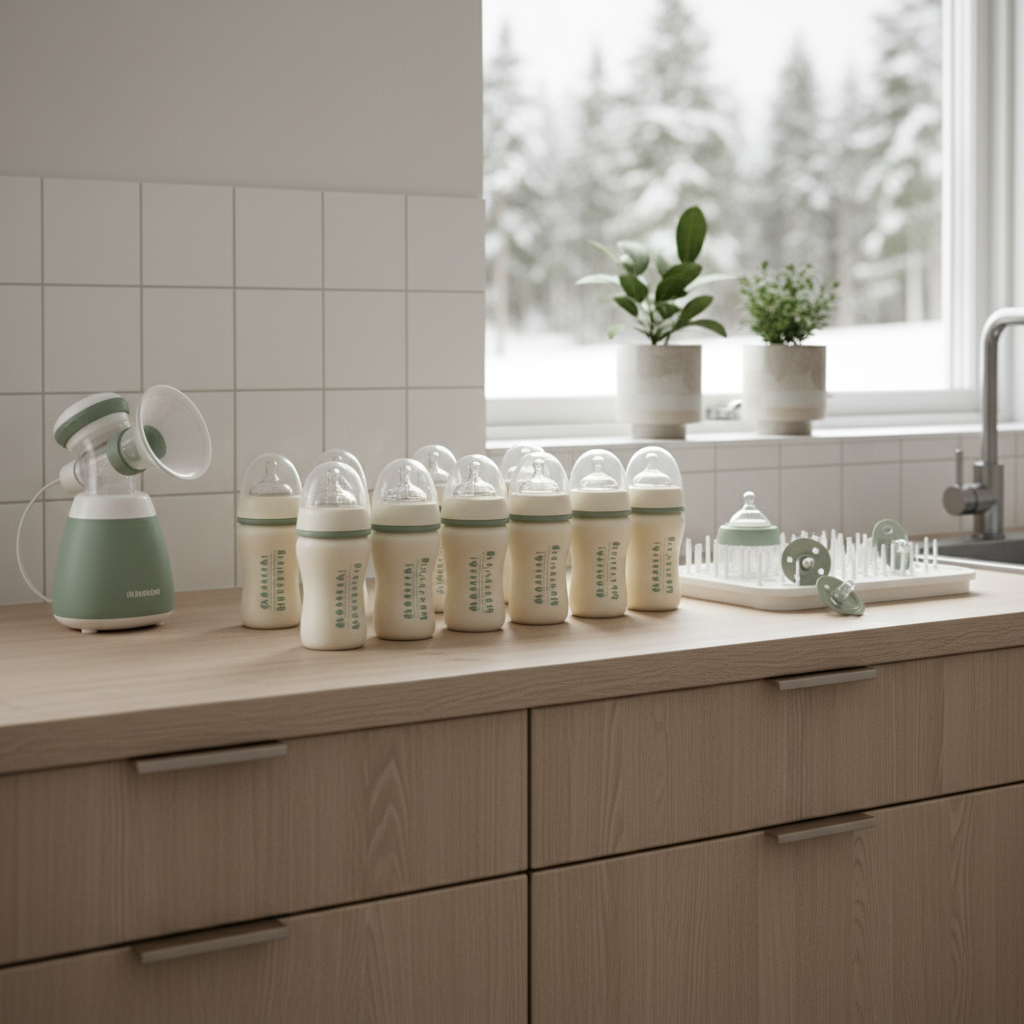
The best bottle sterilizer is the one that solves your actual feeding routine, not the one with the most buttons. Some families need a full bottle washer because they are cleaning bottles and pump parts all day. Others only need a simple steam sterilizer-dryer for the newborn phase. Plenty of families can skip a separate machine and use a dishwasher with hot water plus a heated dry or sanitize cycle.
This guide is intentionally practical. It uses current product roundups for market fit, but safety advice comes first from CDC, NHS, and Consumer Reports-style testing considerations.
Best Bottle Sterilizers at a Glance
| Best for | Pick type | Why it fits |
|---|---|---|
| Most families | Electric steam sterilizer with dryer | Good balance of speed, capacity, and dry storage |
| Heavy bottle users | Bottle washer, sterilizer, and dryer combo | Washes, sanitizes, and dries with less handwashing |
| Small kitchens | Microwave steam sterilizer or steam bags | Cheap, compact, easy to store |
| Pumping parents | Large sterilizer-dryer | Room for pump parts, nipples, caps, and pacifiers |
| Occasional use | Dishwasher sanitize cycle | No extra appliance if your dishwasher qualifies |
If you are still setting up your feeding station, pair this with our newborn bottle guide. For tracking nursing once baby arrives, the breastfeeding tracker records session times, sides, and duration.
How We Judged the Best Bottle Sterilizers
The top current SERP results are mostly testing-led and parent-review-led. Babylist emphasizes capacity, ease of use, cycle length, and drying capability. The Bump gives extra weight to hands-on use with bottles, pump parts, pacifiers, and baby foodware. NBC Select and Good Housekeeping both lean into convenience: machines that wash, dry, sanitize, and store save the most time, but they also cost more and need more counter space.
For this Babysential shortlist, the filters are:
- Cleaning reality: A sterilizer does not replace washing unless it is a true washer combo. Bottles still need milk residue removed first.
- Drying: Wet parts sitting together can be frustrating and less hygienic. A drying cycle is worth paying for if you sanitize often.
- Capacity: Six bottles plus small parts is a useful baseline for daily use.
- Maintenance: Steam machines need descaling. Washer combos may require detergent tablets, filters, or tank cleaning.
- Bottle fit: Tall bottles, wide bottles, anti-colic vents, pump flanges, and pacifiers all change how useful the rack actually is.
Best Overall: Electric Steam Sterilizer With Dryer
For most homes, the strongest overall category is a countertop electric steam sterilizer with a drying cycle. The Philips Avent Baby Bottle Sterilizer & Dryer Premium is a repeated top pick across current roundups because it is simple, holds several bottles, and combines steam sanitizing with drying instead of leaving parts wet.
Choose this style if you:
- Have a newborn and want daily sanitizing without boiling water
- Pump or bottle-feed enough that a drying cycle matters
- Want a dedicated baby-feeding appliance but not a full washer
- Prefer a familiar, easy-to-load design
The tradeoff is that you still wash every bottle and pump part before loading it. You also need to descale the unit according to the manual, especially if you have hard water.
Best Upgrade: Bottle Washer, Sterilizer, and Dryer Combo
If bottle washing is already taking over your sink, a full bottle washer combo is the luxury pick that can become practical. Products like the Baby Brezza Bottle Washer Pro and Momcozy KleanPal Pro sit in this category: they wash, steam sanitize, and dry in one workflow.
This is the best fit for:
- Formula-feeding families using many bottles daily
- Exclusive pumpers with lots of parts
- Twins or multiples
- Preemie or medically vulnerable babies where daily sanitizing is part of the routine
- Parents who know handwashing will be the pain point
The downsides are real: high price, large footprint, filters or special detergent, more parts to maintain, and bottle capacity limits. A washer combo is not necessary for safe feeding. It is a time-saving appliance.
If you are preparing for a new baby and still deciding what matters, use the due date calculator to anchor your registry timing, then revisit this after you know whether you will pump, formula-feed, or combo-feed.
Best Budget: Microwave Steam Sterilizer or Steam Bags
Microwave steam sterilizers and steam bags are the most affordable route. They are good for occasional sanitizing, travel, daycare backup, and small kitchens. Medela Quick Clean Micro-Steam bags are commonly recommended for pump parts and small bottle pieces; microwave pod-style sterilizers, including Philips Avent-style models, can handle bottles when they fit.
Choose this style if you:
- Only need to sanitize occasionally
- Have limited counter space
- Want a low-cost registry add-on
- Need something portable for visits or travel
Check your microwave size before buying. Also check the bottle manufacturer's guidance, because not every plastic part is meant for every heat method.
Best for Dr. Brown's, Anti-Colic Bottles, and Pump Parts
Anti-colic bottles can be awkward because vents, tubes, nipples, collars, and caps multiply quickly. The best sterilizer here is less about brand loyalty and more about rack layout. Look for a tall, open basket with a dedicated tray for small parts.
Dr. Brown's own sterilizer-dryer can make sense if you use that bottle system heavily, but large generic sterilizer-dryers can work too. Before buying, check:
- Whether your full bottle height fits
- Whether vent inserts and nipples have a secure top tray
- Whether the dryer reaches small parts well
- Whether the unit stays useful for pacifiers and teethers later
If you already own a dishwasher with a top rack, hot water, and heated dry or sanitize setting, test that routine first. It may solve the same problem with less clutter.
Safety First: Cleaning Matters More Than the Gadget
CDC's guidance is clear on the order: take bottle parts apart, wash them carefully after feeds, sanitize when needed, and air-dry thoroughly before storing. If your dishwasher uses hot water and a heated drying cycle or sanitizing setting, CDC says a separate sanitizing step is not necessary.
Daily sanitizing is particularly important when your baby is:
- Younger than 2 months
- Born prematurely
- Immunocompromised or medically fragile
CDC also highlights careful cleaning and sanitizing to help reduce Cronobacter risk, especially around powdered infant formula. Powdered formula is not sterile, so clean hands, clean surfaces, and clean feeding items matter.
NHS guidance is a useful second safety check: clean bottles and teats before sterilizing, follow the manufacturer's instructions for steam systems, and make sure bottles face the right direction so steam reaches the openings.
Consumer Reports' 2026 sterilizer testing category also flags a practical issue with heated plastic: if you use plastic bottles, follow the manufacturer's heat instructions and replace bottles with scratches, clouding, warping, cracks, or lingering odors. Glass bottles avoid some plastic-heating concerns, but they can chip or break.
What to Buy Based on Your Routine
If you are mostly breastfeeding and using one bottle a day, buy steam bags or use your dishwasher. A big countertop machine may become a bulky drying rack.
If you are combo-feeding, pumping, or formula-feeding several times daily, choose an electric steam sterilizer with dryer. It is the best middle ground for most families.
If you are exclusively pumping, formula-feeding twins, or caring for a preemie, consider a full washer combo if the budget works. This is where the saved time can be meaningful.
If you are traveling, keep microwave bags or a compact microwave sterilizer on hand, but do not rely on them where clean water and a clean microwave are uncertain. In emergencies or travel with unsafe water, follow CDC guidance and ask your pediatrician what is safest for your baby.
Quick Buying Checklist
Before you buy, answer these:
- Does it wash, or only sterilize?
- Does it dry fully?
- How many bottles and small parts fit at once?
- Does it fit your bottle brand and pump parts?
- What maintenance does it require?
- Does it need filters, detergent tablets, distilled water, or descaling?
- Can your dishwasher already do the job?
For a minimalist registry, start with a dishwasher basket, a dedicated bottle brush, and either microwave steam bags or a simple sterilizer-dryer. Upgrade only if the daily workload proves it.
Bottom Line
The best bottle sterilizer for most families is a steam sterilizer with a dryer: useful, not wildly expensive, and easier than boiling. A bottle washer combo is the premium pick for heavy daily bottle use. A microwave sterilizer or steam bags are enough for occasional sanitizing.
The real safety rule is not "buy the fanciest sterilizer." It is clean after every use, sanitize when your baby's age or health makes it important, dry thoroughly, and store bottles somewhere clean.
FAQ
Do bottle sterilizers really sterilize?
Most home products are closer to sanitizing than medical sterilization. They reduce germs using steam, heat, UV, or chemical methods, but they do not create a surgical sterile field in your kitchen. That is okay for home bottle care when used correctly.
Should I sterilize bottles after every feed?
Usually no. Bottles should be washed after every feed. Daily sanitizing is particularly important for babies younger than 2 months, premature babies, and babies with weakened immune systems. Ask your pediatrician if your baby has special medical needs.
Is UV better than steam?
Not automatically. Steam is simple and widely referenced in public health guidance. UV units can be useful for drying and storage, but the light has to reach the surfaces being sanitized. Bottle shape and loading matter.
Can I put pump parts in a bottle sterilizer?
Often, yes, but check both the pump manual and the sterilizer manual. Some pump parts tolerate steam; others may warp or wear faster with repeated heat.
What is the cheapest safe option?
If your dishwasher has hot water plus heated dry or a sanitize setting, that may be the cheapest. Otherwise, microwave steam bags or boiling can work when the item manufacturer says the parts are safe for that method.
Sources
- CDC: How to Clean, Sanitize, and Store Infant Feeding Items
- CDC: About Feeding From a Bottle
- CDC: Preventing Cronobacter in Infants
- NHS: How to Sterilise Equipment
- Consumer Reports: Best Baby Bottle Sterilizers of 2026
- Babylist: Best Bottle Sterilizers of 2026
- The Bump: Best Baby Bottle Sterilizers
- NBC Select: Best Bottle Washers of 2026
Related reads: