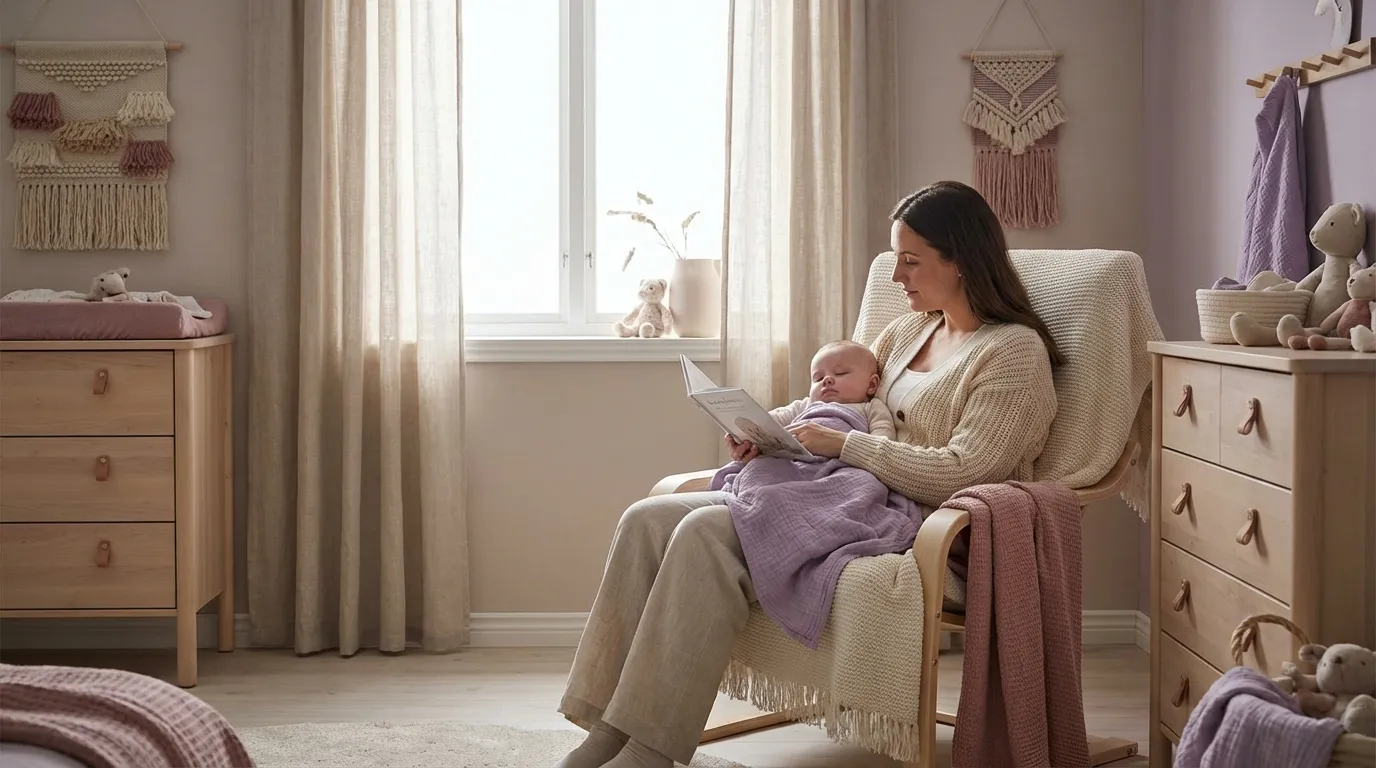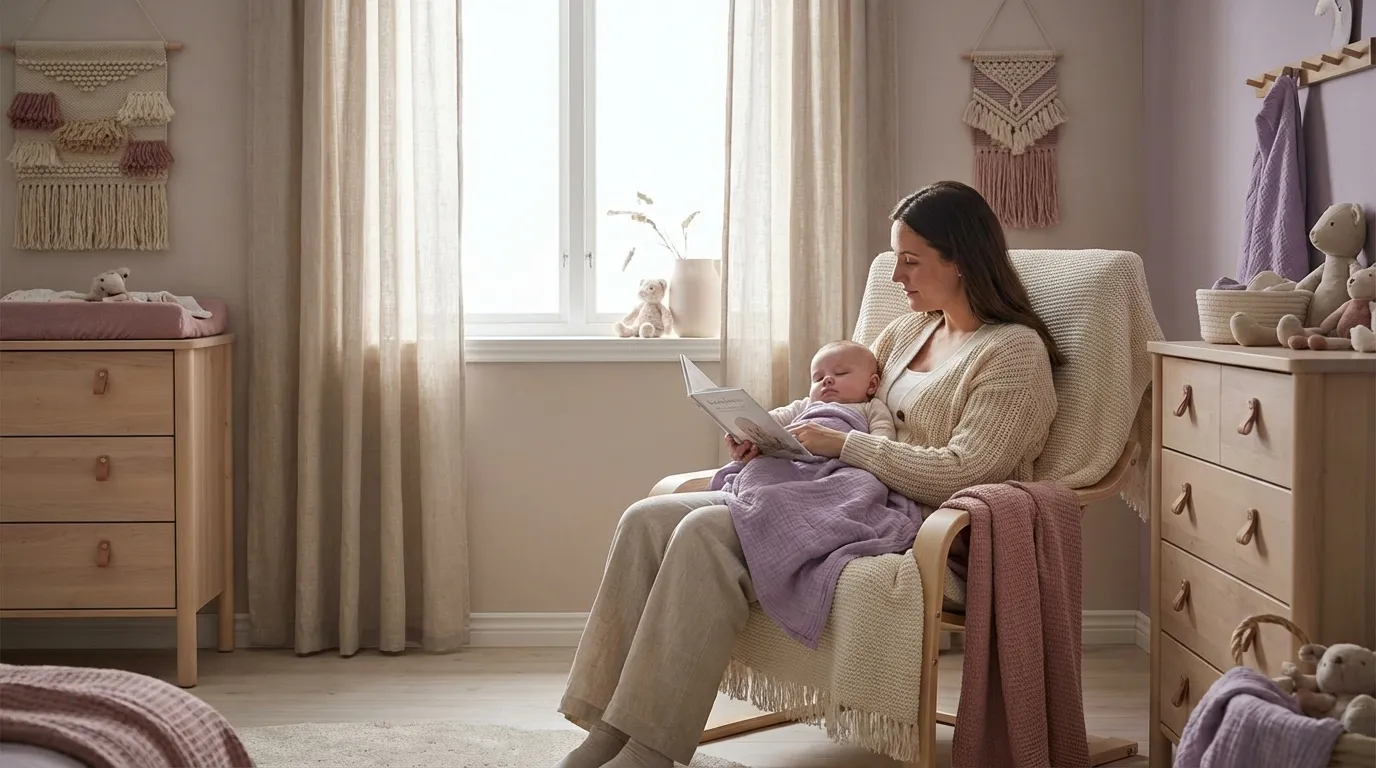
Good bedtime routines make for secure babies, and more relaxed parents. But when should you start, and what should the routine include?
Here's a complete guide to bedtime routines for babies, tailored to every age from newborn to 12 months.
Why Bedtime Routines Matter
Babies thrive with predictability. When the same things happen in the same order each evening, the body understands it's time for sleep.
A good bedtime routine helps baby:
- Distinguish between day and night
- Wind down after an active day
- Feel safe at bedtime
- Fall asleep more easily and sleep better
From the AAP: After 3 months of age, baby starts producing melatonin, which regulates feelings of tiredness. That's when it becomes easier to establish consistent evening routines.
When Should You Start Bedtime Routines?
0–3 months: Newborns rarely need fixed routines. Focus on helping baby distinguish day from night, light and activity during the day, dark and quiet at night.
From 3–4 months: Baby is ready for a simple evening routine. Start small and build gradually.
From 6 months: Most babies benefit from a consistent, predictable bedtime routine every evening.
A Simple Bedtime Routine That Works
Here's an example of a good evening routine:
- Bath. A warm bath signals the day is winding down
- Getting dressed. Clean diaper and comfortable sleepwear
- Feeding. Nursing or bottle in a calm setting
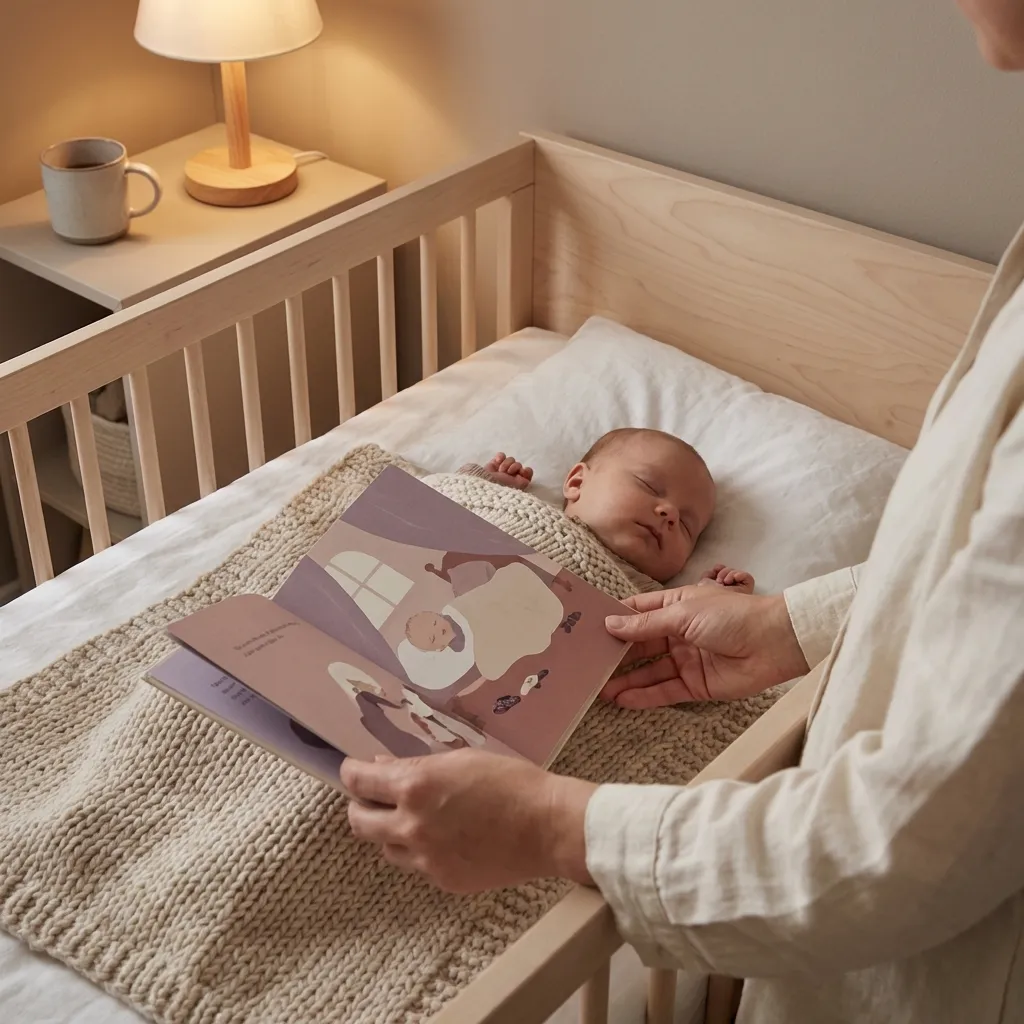
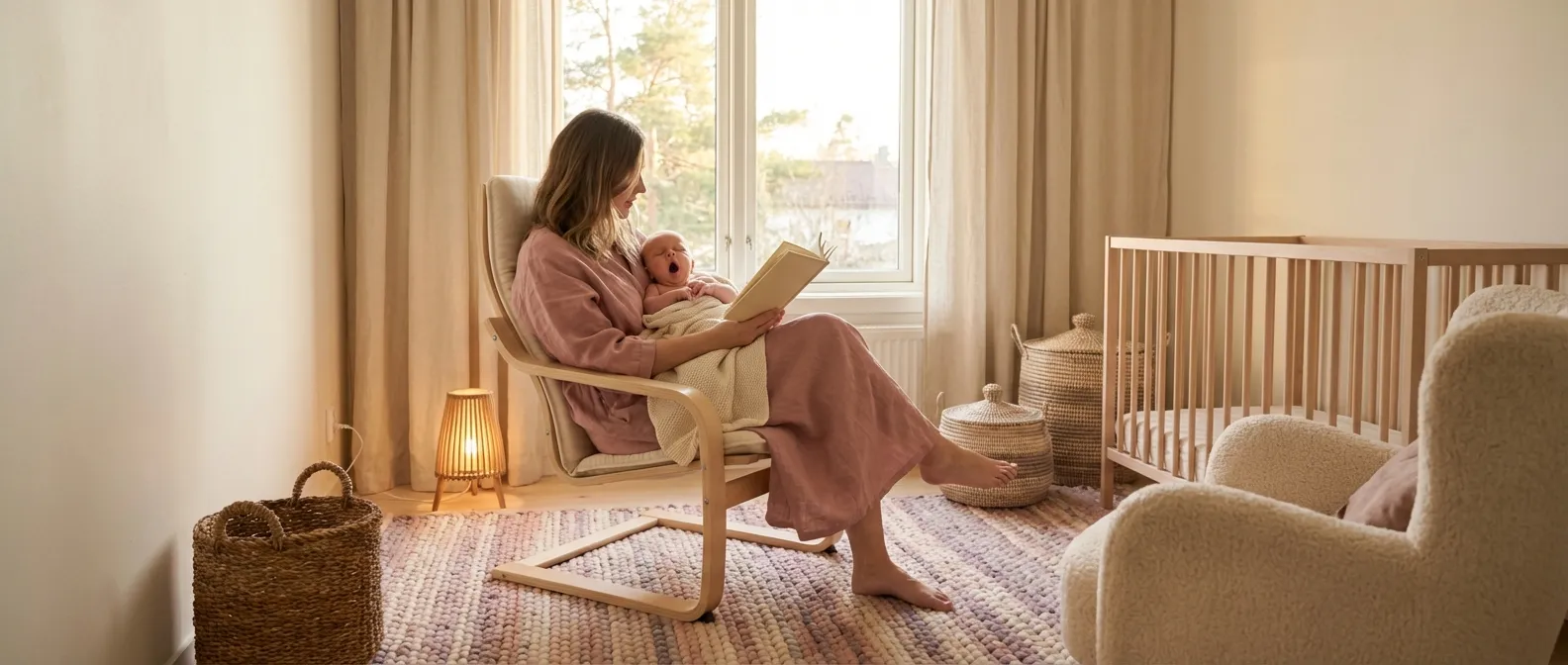
- Quiet activity. A short book, lullaby, or cuddle
- Into bed. Ideally while baby is drowsy but still awake
The whole routine should take 20–30 minutes. Start early enough that it doesn't become rushed.
Bedtime Routines by Age
0–3 Months: Laying the Foundation
Newborns sleep 14–17 hours a day, spread across many short periods. A fixed bedtime isn't necessary yet.
Focus on:
- Dark room at night, light during the day
- Calm voice and movements during night feeds
- Closeness and security
Example of a simple routine (from about 6–8 weeks):
- Dimmed lights in the living area from 6–7 pm
- Calm nursing/bottle
- Clean diaper and nightwear
- Swaddling (if baby likes it)
- Put baby down in a dark room
3–6 Months: Establishing the Evening Routine
Baby is starting to develop a circadian rhythm. Melatonin production begins around 3–4 months, and baby can now understand that certain activities mean night is coming.
Example sleep routine at 3 months:
- 5:30–6:00 pm: Last nap ends
- 6:00 pm: Quiet play/cuddle time with family
- 6:30 pm: Bath (every other day is enough)
- 6:45 pm: Clean diaper, sleepwear
- 7:00 pm: Nursing/bottle in dimmed room
- 7:15–7:30 pm: Put baby down drowsy but awake
Example sleep routine at 6 months:
- 5:00 pm: Last daytime nap ends
- 5:30–6:00 pm: Evening meal (puree/porridge) + nursing/bottle
- 6:15 pm: Bath
- 6:30 pm: Sleepwear, dimmed lights
- 6:40 pm: A short book or lullaby
- 6:45–7:00 pm: Put baby down in crib
Expert recommendations: According to the AAP, babies begin to understand bedtime routines from around 4–5 months of age. This is a good time to establish consistent habits.
6–9 Months: Strengthening the Routine
Baby now has a clearer circadian rhythm and often sleeps 10–11 hours at night (with some wake-ups). Most babies have gone from 3 to 2 daytime naps.
Tips:
- Be consistent with the routine
- Let baby practice falling asleep in their own bed
- Avoid screen time before bed
9–12 Months: Adapting and Maintaining
Baby is more active and aware. Separation anxiety can make bedtime harder around 8–10 months.
Example sleep routine at 9–12 months:
- 5:30 pm: Evening meal with the family
- 6:00 pm: Quiet play (puzzles, blocks, board books)
- 6:15 pm: Bath
- 6:30 pm: Sleepwear, brush teeth (once teeth appear)
- 6:40 pm: Two or three books in dimmed light
- 6:50 pm: Lullaby or quiet cuddle
- 7:00 pm: Good night, put baby down
Tips for separation anxiety: Give baby a consistent comfort item like a soft cloth or stuffed animal that stays in the crib. Always say good night the same way, and be brief and calm if you need to go back in.
Sleep Needs and Bedtime by Age
Here's an overview of typical sleep needs and recommended bedtime for babies:
| Age | Total sleep | Naps | Wake window | Bedtime |
|---|---|---|---|---|
| 0–3 months | 14–17 hours | 4–6 short | 45–90 min | Varies |
| 3–4 months | 12–15 hours | 3–4 | 75–120 min | 7:00–8:00 pm |
| 4–6 months | 12–15 hours | 3 | 1.5–2.5 hours | 6:00–7:30 pm |
| 6–9 months | 12–15 hours | 2 | 2–3 hours | 6:00–7:00 pm |
| 9–12 months | 12–15 hours | 2 | 2.5–3.5 hours | 6:00–7:00 pm |
(Sleep needs based on AAP guidelines)
5 Tips for Successful Bedtime Routines
1. Be Consistent
Repeat the same activities in the same order each evening. Predictability creates security.
2. Start Before Baby Gets Overtired
Watch for tiredness cues: yawning, rubbing eyes, looking away. An overtired baby has a harder time falling asleep.
3. Dim the Lights and Lower the Noise
The last hour before bed should be calm. Turn down the lights and avoid loud sounds.
4. Keep It Short
A bedtime routine doesn't need to be long. 20–30 minutes is usually enough.
5. Be Flexible During Illness
When baby is sick or going through a difficult period, the routine can be adjusted. Return to the usual routine once things normalize.
When Bedtime Is Difficult
Some evenings the routine just doesn't work. That's normal.
Common challenges:
- Sleep regression. Around 4, 8, and 12 months sleep can become disrupted. Read more about 4-month sleep regression.
- Teething. Can make baby restless at bedtime
- Illness. Offer extra closeness and adapt the routine
Tip: Use the Sleep Tracker to log your baby's sleep and see patterns over time. It makes it easier to adjust the routine.
Frequently Asked Questions
When should baby go to bed in the evening?
It depends on age. Newborns have no fixed bedtime. From 4–8 months, bedtime between 5:30 and 7:30 pm is recommended. From 8–10 months, between 5:30 and 7:00 pm.
Does baby have to fall asleep alone?
No. Health authorities emphasize that babies need varying levels of support. It's normal to soothe, nurse, or be present until baby falls asleep.
How long should the bedtime routine last?
20–30 minutes is typical. Keep it short enough that it doesn't become stressful, but long enough that baby has time to wind down.
Can I change the routine?
Yes. If something isn't working, adjust gradually. Babies adapt to changes over a few days.
Sleep routine at 6 months, what should it include?
A good sleep routine for a 6-month-old should take 20–30 minutes and include a bath (every other day), sleepwear, nursing/bottle, a short book or lullaby, and putting baby down drowsy but awake. Aim for bedtime between 6:00 and 7:00 pm. See the example above for a detailed routine.
Does baby need a bath every evening?
No. A bath every other day or 2–3 times per week is enough for most babies. Frequent bathing can dry out baby's skin. On other evenings, a calm wash of the face and hands works well. The most important thing is that the routine is predictable.
What do I do when baby falls asleep during nursing?
Many babies fall asleep during nursing, especially in the first months. This is completely normal and nothing to worry about. If you eventually want baby to fall asleep more independently, you can gradually move the feeding a bit earlier in the routine.
What is the right bedtime for a 3-month-old?
Most 3-month-old babies go to bed between 7:00 and 8:00 pm. The wake window is approximately 75–120 minutes, so bedtime should be adjusted based on when the last nap ended. Watch for sleep cues like yawning and eye rubbing.
Do routines work for babies with colic?
Yes, but it may take longer. Babies with colic need extra closeness and calm. Keep the routine short and simple, and expect it to take a few extra weeks to stick. Once the colic phase passes (usually around 3–4 months), the routine will show results more quickly.
Summary
Good bedtime routines are about predictability and calm. Start simple, be consistent, and adapt to your baby's needs.
There is no perfect routine, only the one that works for your family.
Try the Sleep Tracker to log your baby's sleep, or ask the Sleep Helper if you need advice.
Read also: Sleep Cues in Babies | Bedtime Rituals That Work | Sleep Environment for the Nursery
Read More
- Checklist: Safe Sleep. Verify the sleep environment is safe for baby
- 4-Month Sleep Regression. What happens and how to get through it
- Sleep Tracker. Log and track your baby's sleep
- Sleep Helper. Get answers to sleep questions around the clock
Sources
🔧 Helpful Tools
- Baby Sleep Tracker. Track and optimize your baby's sleep
- Soothing Sounds. White noise and soothing sounds to help your baby sleep
- All Baby Tools. Browse all free tools for pregnancy and baby care
📖 Related Articles
- Baby Bedtime Routines: How to Build Good Sleep Habits. Learn how to establish good bedtime routines for your baby. Get concrete tips for every age, from newborn to 12 months, based on AAP recommendations.
- Baby Sleep Help: Get Support with Infant Sleep Around the Clock. Struggling with baby sleep? Babysential's Sleep Assistant AI answers your sleep questions 24/7, based on international pediatric health guidelines.