The pile of baby stuff can get ridiculous before the baby is even here.
This baby stuff guide starts with the first weeks at home: feeding, sleep, diapering, clothing, travel, and the few safety basics that genuinely earn space in your house.
Buy the essentials first: a safe flat sleep space, an installed rear-facing car seat, diapers and wipes, a way to feed your baby, simple clothes, burp cloths, and a basic health kit. Add the nice-to-haves later, after you know your baby and your home rhythm.
Babysential Team created this guide from current AAP, CDC, FDA, WHO, and NHS guidance, then turned it into a practical checklist for tired parents. AI helped organize the draft.
For a saved version, use the newborn checklist tool. If feeding is the part that feels most uncertain, keep the baby food guide handy for the months after solids begin.
Key Takeaways
- Start with care tasks: Your baby needs to eat, sleep safely, stay clean, travel safely, and stay warm.
- Buy fewer bottles first: Four to six newborn bottles is enough for many families until you know what works.
- Safe sleep is non-negotiable: A crib, bassinet, portable crib, or play yard needs a firm, flat surface and a fitted sheet only.
- Feeding choices change the list: Breastfeeding, formula feeding, pumping, and combo feeding each need a slightly different setup.
- Delay the extras: Wipe warmers, big toy sets, shoes, special gadgets, and full wardrobes can wait.
Baby Stuff Checklist: What to Buy First
| Category | Buy before baby arrives | Wait until needed |
|---|---|---|
| Sleep | Crib, bassinet, or play yard; firm mattress; fitted sheets | Decorative bedding, pillows, positioners |
| Feeding | Bottles if using formula or pumped milk; burp cloths; bottle brush | Bottle warmer, large bottle sets, specialty gadgets |
| Diapering | Newborn and size 1 diapers; wipes; barrier cream; changing pad | Wipe warmer, diaper pail refills in bulk |
| Clothing | 6-8 zip sleepers; 6-8 bodysuits; socks; sleep sacks | Shoes, fancy outfits, seasonal overbuying |
| Travel | Rear-facing car seat installed before discharge | Travel system extras you have not tested |
| Health | Digital rectal thermometer; nail file or clippers; saline drops | Large medicine kits, supplements without clinician advice |
The best registry is boring on purpose. Boring means the item solves a daily care job instead of promising a perfect baby.
If you want a broader prep view, pair this with Checklists: Never Forget Anything and Best Newborn Travel Beds 2026.
What Baby Stuff Do I Actually Need?
You need the things that support five jobs: feeding, safe sleep, diapering, clothing, and safe transport.
That sounds small because it is. A newborn does not need a nursery theme, twelve kinds of containers, or a toy rotation. They need milk, a safe place to sleep, clean diapers, weather-appropriate clothes, and adults who can reach the things they use at 3 a.m.
Start with the first 48 hours. Can the baby get home safely? Can they sleep on a firm, flat surface? Can you feed them? Can you change them? Can you tell if they have a fever? If yes, you have the core covered.
The rest can be bought slowly. This is not only cheaper. It also prevents the classic problem where parents buy a full system before learning that their baby hates that bottle nipple, that swaddle, or that expensive seat.
Feeding Baby Stuff: Breast, Formula, Pumping, or Combo
Feeding gear depends on how milk gets to the baby.
WHO recommends exclusive breastfeeding for the first 6 months where possible, followed by safe complementary foods while breastfeeding continues. Many families breastfeed, formula-feed, pump, combine methods, or change plans after birth. The useful list is the one that supports the method you are actually using.
For breastfeeding, start with:
- Burp cloths: 8-12 simple cloths, because milk and spit-up travel.
- Nursing pads: Disposable or washable pads if leaking bothers you.
- Nipple cream: Useful in the early days if latch soreness appears.
- Water bottle and snacks: Not baby stuff technically, but very real at night.
- A small bottle backup: One or two bottles can help if expressed milk is needed.
For formula feeding or combo feeding, start with:
- Four to six 4-ounce bottles: Small bottles fit newborn feeds and are easier to test before buying more.
- Slow-flow nipples: Newborns usually need the slowest flow available.
- Bottle brush: A dedicated brush makes cleaning easier.
- Formula you can reliably buy: Do not stockpile several brands before you know tolerance and availability.
- Clean prep space: A small tray or bin keeps scoops, caps, and clean bottles together.
The AAP warns against homemade formula, watered-down formula, cow's milk, plant milks, and imported formula that is not properly regulated for infants. CDC and FDA guidance also stress safe preparation and storage, especially because powdered formula is not sterile.
For higher-risk infants, including babies younger than 2 months, premature babies, or babies with weakened immune systems, the FDA identifies ready-to-feed liquid formula as the safest formula option because it is sterile.
How Many Bottles Do I Need for a Newborn?
Four to six bottles is a practical starting point for a newborn who takes bottles every day.
AAP feeding guidance notes that many formula-fed newborns start with about 1 to 2 ounces per feed in the first week. By the end of the first month, many take about 3 to 4 ounces per feed every 3 to 4 hours. Those numbers explain why small bottles are enough at first.
Buy a modest set before birth, then add more once you know:
- Which nipple flow your baby manages without coughing or dribbling
- Whether your baby prefers a certain bottle shape
- How often you can wash bottles
- Whether you are exclusively bottle-feeding or only using bottles occasionally
If you are pumping often, the bottle count may climb. If you are mostly breastfeeding and using an occasional expressed bottle, two to four may be fine.
Do not prop bottles. Hold your baby for feeds, pace the milk, and stop when they show fullness cues. For solids later on, see our Baby-Led Weaning Complete Guide and the SmartStart Food Guide.
Do I Need to Sterilize Baby Bottles?
Sanitize bottles and nipples before first use. After that, follow your local health guidance and your baby's risk level.
The NHS advises sterilising bottles and teats until a baby is at least 12 months old. CDC guidance focuses on safe cleaning, sanitizing, and formula preparation, with extra care for young babies and babies at higher risk from infection.
A practical middle path for US families is:
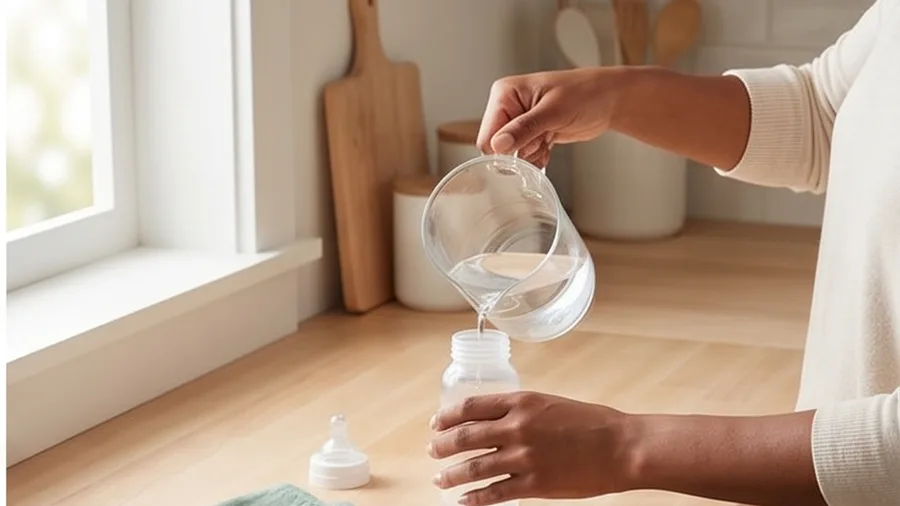
- Wash bottles, nipples, rings, and caps after every feed.
- Sanitize before first use.
- Sanitize daily if your baby is under 2 months, premature, or immunocompromised.
- Ask your pediatrician if your baby has medical risk factors.
- Throw away formula left in the bottle after feeding.
CDC guidance says prepared formula should be used within 1 hour from the start of feeding, within 2 hours of preparation if untouched, or within 24 hours if refrigerated promptly. That one rule prevents a lot of unsafe "save it for later" habits.
Safe Sleep Stuff: What Matters Most
Safe sleep gear is simple: firm, flat, uncluttered.
The AAP recommends a crib, bassinet, portable crib, or play yard that meets safety standards, with a tight-fitting mattress and a fitted sheet only. No pillows, loose blankets, bumpers, sleep positioners, stuffed animals, or weighted products in the sleep space.
Buy:
- One safe sleep space: Crib, bassinet, play yard, or portable crib.
- Two to three fitted sheets: Enough for leaks without overbuying.
- Wearable blankets or sleep sacks: Choose the right size and temperature rating.
- A thermometer for the room if overheating worries you: Useful, but not mandatory.
Skip:
- Inclined sleepers
- Crib bumpers
- Loose blankets for sleep
- Sleep positioners
- Loungers marketed as nap spots
- Weighted swaddles or weighted sleep sacks
Swings, bouncers, rockers, and car seats can be useful while a baby is awake and supervised, but they are not routine sleep spaces. If your baby falls asleep in one, move them to a firm, flat sleep surface as soon as you can.
For deeper sleep context, read What Is Sleep Regression? and use the Baby Sleep Tracker once patterns start to appear.
Diapering and Clothing: Keep It Washable
Diapering is where small boring supplies beat fancy systems.
Start with one small pack of newborn diapers and one small pack of size 1. Some babies skip newborn size quickly. Add wipes, a barrier cream, and a changing mat or washable towel.
The NHS notes that newborns may need diaper changes around 10 to 12 times a day at the beginning. That does not mean you need a thousand diapers in one size. It means you need enough for the first few days and a plan to reorder quickly.
Clothing should make diaper changes easy:
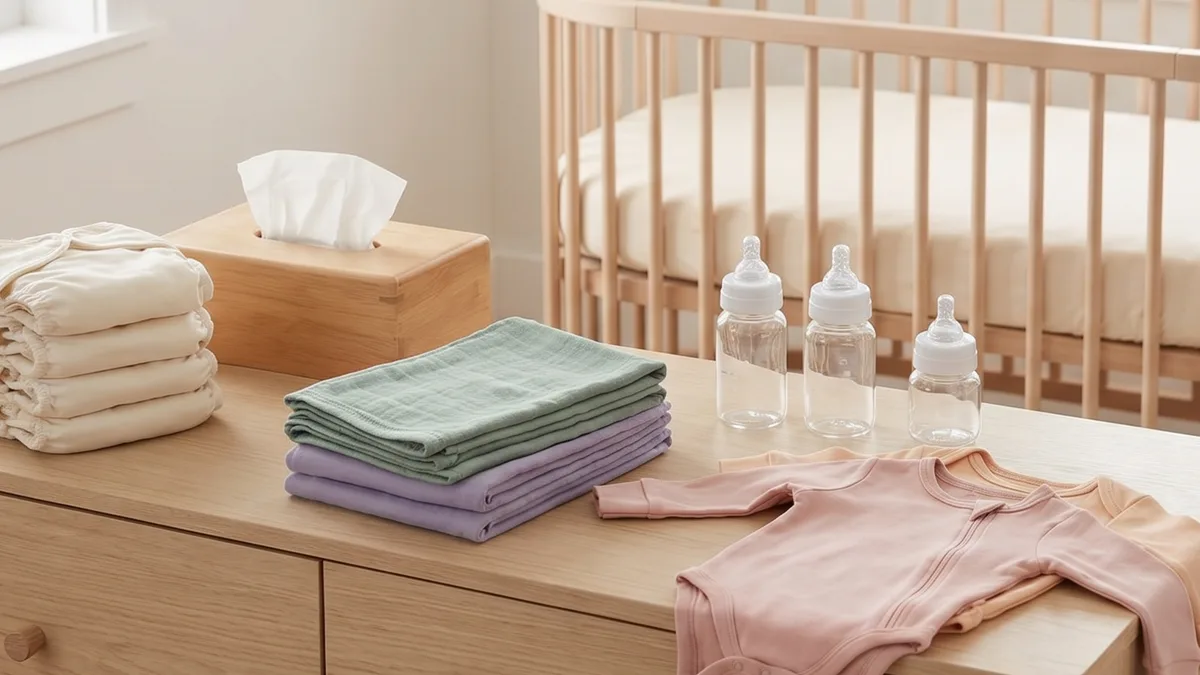
- 6-8 zip sleepers
- 6-8 short- or long-sleeve bodysuits
- 2-3 sleep sacks or swaddles that match safe-use guidance
- Socks if the sleepers do not have feet
- A hat for going home or cold outdoor trips
- A small laundry basket near the changing area
Skip baby shoes. Skip stiff outfits. Skip huge newborn wardrobes unless returns are easy.
Health, Bath, and Safety Basics
The health kit should be small and specific.
Buy a digital rectal thermometer and learn how your pediatrician wants you to use it. Add baby nail clippers or a nail file, saline drops, a nasal aspirator, and a simple first-aid contact list.
For bathing, a newborn does not need spa equipment. A baby bath seat or basin can help, but a towel on a safe surface and a small basin also work in many homes. Use fragrance-free products if your baby's skin is sensitive.
Safety basics for the first months:
- Smoke and carbon monoxide alarms that work
- Rear-facing car seat installed correctly
- A safe sleep surface
- No loose cords near sleep or changing areas
- No small loose objects within reach
- A clear plan for where baby goes when you need both hands
Do not buy medicines, supplements, or gripe-water style products as routine "just in case" items without asking your pediatrician. Some products are harmless-looking but poorly suited for newborns.
What Baby Items Can I Skip at First?
You can skip more than registry culture suggests.
Usually safe to wait on:
- Wipe warmer
- Bottle warmer
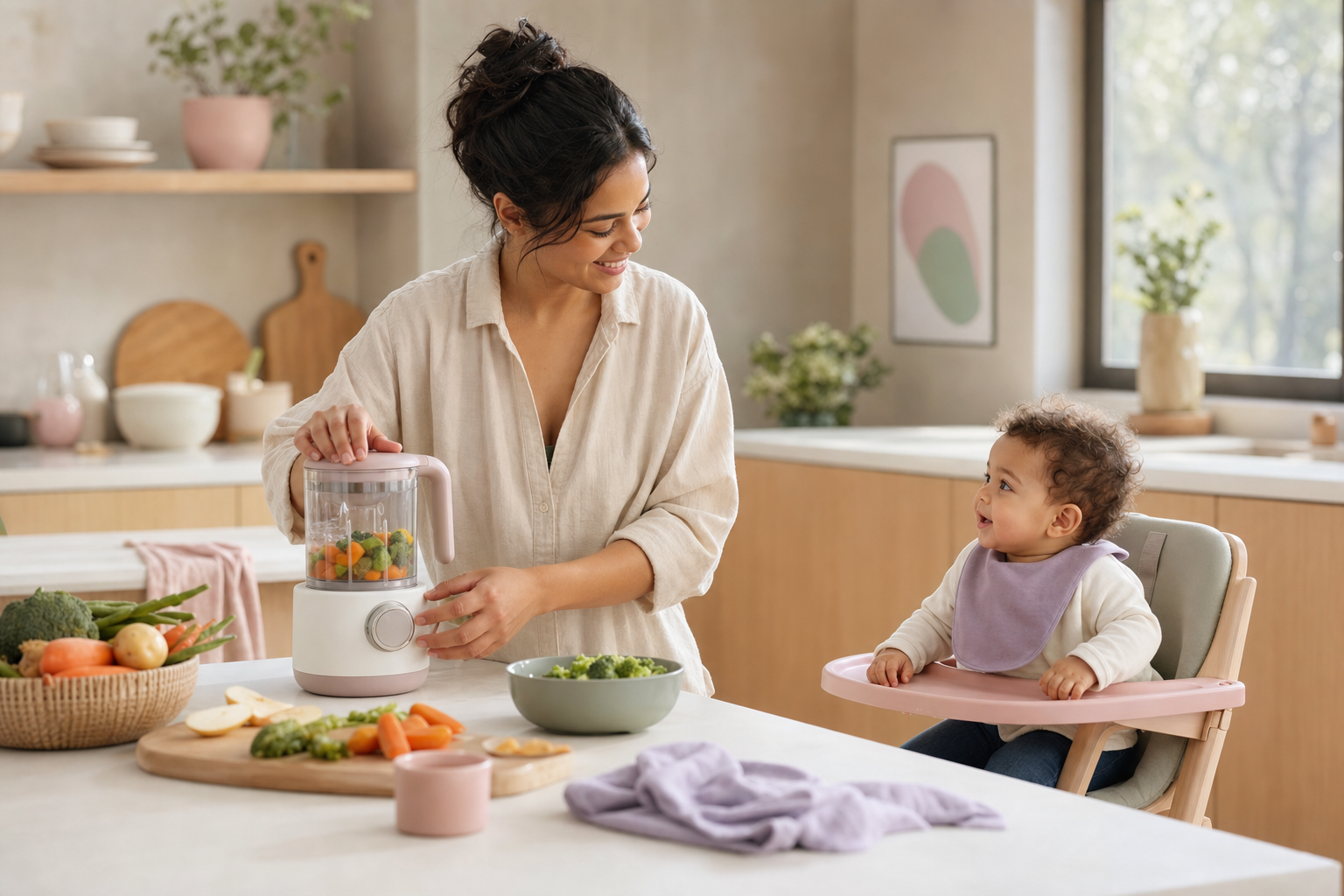
- Baby food maker
- Shoes
- Fancy outfits
- Large toy sets
- Full-size high chair
- Multiple carriers before you know what fits
- Specialty pillows not used for supervised feeding support
- Large packs of one bottle or pacifier brand
This is not a moral stance on minimalism. Some extras make life easier for some families. The point is timing. Buy the urgent things first, then let real problems earn real purchases.
If you are building a registry, put flexible basics at the top: diapers in several sizes, wipes, burp cloths, sleepers, safe sleep sheets, and feeding supplies that match your plan.
A Simple First-Week Setup
Set up stations instead of rooms.
Near the sleep space, keep fitted sheets, sleep sacks, a dim light, diapers, wipes, and a spare outfit. Near the feeding spot, keep burp cloths, water for the parent, bottles or nursing supplies, and a phone charger. Near the exit, keep the car seat ready and a small diaper bag packed.
That setup helps because newborn care repeats. Feed, burp, change, sleep, repeat. Fancy organization matters less than being able to reach a clean cloth with one hand.
Use the checklists tool to make this personal. A city apartment, a two-story house, and a grandparent-care setup need different placement even when the shopping list is similar.
FAQ
What baby stuff do I actually need?
Start with a safe sleep space, a correctly installed car seat, diapers and wipes, simple clothing, feeding supplies, burp cloths, and a small health kit. Add extras only when you can name the problem they solve.
What do I need for a newborn in the first week?
For the first week, focus on feeding, sleep, diapers, clothes, safe travel, and basic health checks. You do not need a complete nursery before the baby comes home.
How many bottles do I need for a newborn?
Four to six small bottles is enough for many families at the start. Buy more once you know the nipple flow, bottle shape, and cleaning rhythm that work for your baby.
What baby items can I skip at first?
Most families can wait on wipe warmers, bottle warmers, large toy sets, baby shoes, fancy outfits, baby food makers, and full-size feeding gear. Those items are easier to judge after your baby is here.
Do I need to sterilize baby bottles?
Sanitize bottles before first use. NHS advises sterilising bottles until at least 12 months; CDC gives extra sanitizing guidance for babies under 2 months, premature babies, or babies with weaker immune systems.
Bottom Line
The right baby stuff list is short, safe, and flexible.
Buy the things that help you feed your baby, give them a safe place to sleep, change them, dress them, travel safely, and notice when something is wrong. Then pause. Your baby will show you which extras are actually worth the space.
This article is for informational purposes only and does not replace professional medical advice. Always consult your pediatrician for guidance specific to your child.
Sources: