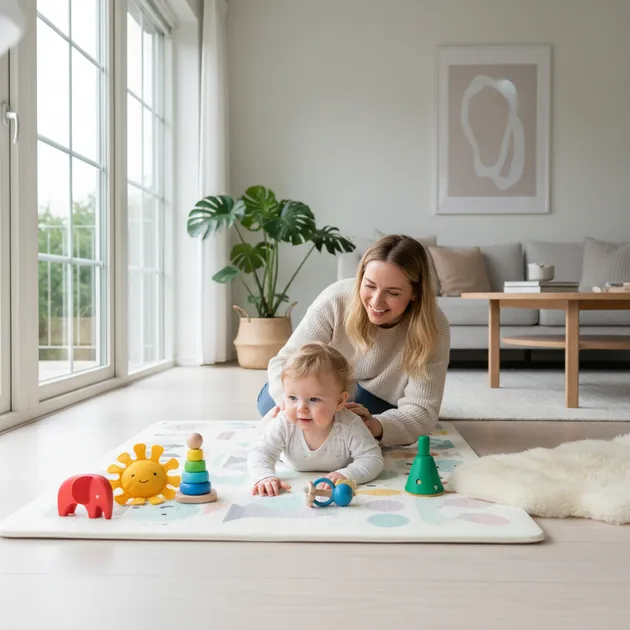
Sitting independently is a milestone most parents look forward to. When a baby can sit, it opens up a whole new world, she can play with both hands free, see the room from a new angle, and start to explore food properly. But what if your baby is approaching nine months without sitting?
The short answer is that it is almost always completely normal. The longer answer is about understanding what independent sitting actually requires, and what you can do to support development.
When Do Babies Start to Sit?
According to the AAP and WHO developmental guidelines, there is normal variation in when children master sitting:
Early Phase: Sitting with Support (4–6 months)
In this phase, the baby can hold themselves upright when they have something to support them, your arm behind their back, a cushion, or a chair back. The back is still a little rounded, and they cannot sit for long at a time.
Middle Phase: Tripod Sitting (6–7 months)
The baby sits on the floor and uses their hands in front as support (tripod sitting). They can hold balance for a while, but tip over easily. The hands are busy maintaining balance, making it hard to play at the same time.
Independent Sitting (6–9 months)
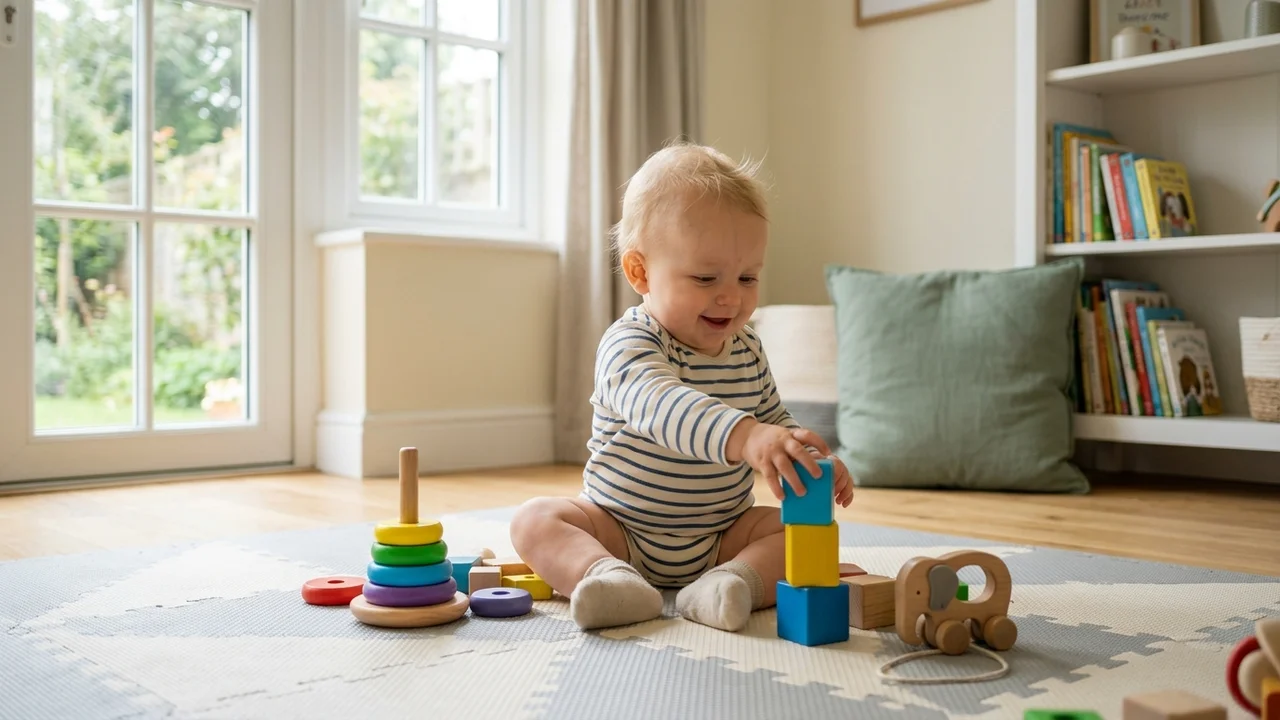
The baby sits stably without support with a straight back and can use both hands to play. They can turn and reach for things without losing balance. Most babies master this between six and nine months.
Some babies sit independently as early as five months, while others don't do so until ten months. Both can be within the normal range. What matters is that development is progressing.
What Does Independent Sitting Require?
Independent sitting is more complex than it looks. The baby needs:
Core Muscle Strength
Strong abdominal and back muscles hold the upper body upright. These muscles are built up through tummy time, rolling, and all the daily movement the baby does.
Balance
The baby must be able to constantly adjust their body to maintain balance. This is a skill that develops gradually through experience and maturation of the nervous system.
Head and Neck Control
The head is heavy relative to the body. The baby must be able to hold their head steady and controlled to sit without tipping.
Protective Reflexes
Protective reflexes (catching yourself with your hands when you tip) must be in place. These develop between six and eight months in most babies.
Why Isn't My Baby Sitting Yet?
There are several common and entirely harmless explanations:
Prematurity
Always use corrected age for premature babies. A baby born eight weeks early who is nine months old is developmentally more like a seven-month-old baby.
Focus on Other Skills
Some babies are busy practicing crawling, babbling, or fine motor skills. The brain and body often work on one thing at a time.
Body Build
Heavier babies may need more time to develop sufficient strength in the core musculature. Longer babies have a higher center of gravity, making balance a little more demanding.
Too Little Floor Time
Babies who spend a lot of time in equipment (bouncers, jumperoos, carriers) get fewer opportunities to practice balance and core strength on their own.
Temperament
Cautious babies may choose to wait until they feel completely confident in a skill. They don't jump into something new as quickly, but when they do, they often master it solidly right away.
How to Support Your Baby's Path to Sitting
You cannot force a baby to sit, but you can create the conditions for development to happen naturally:
1. Tummy Time Is Key
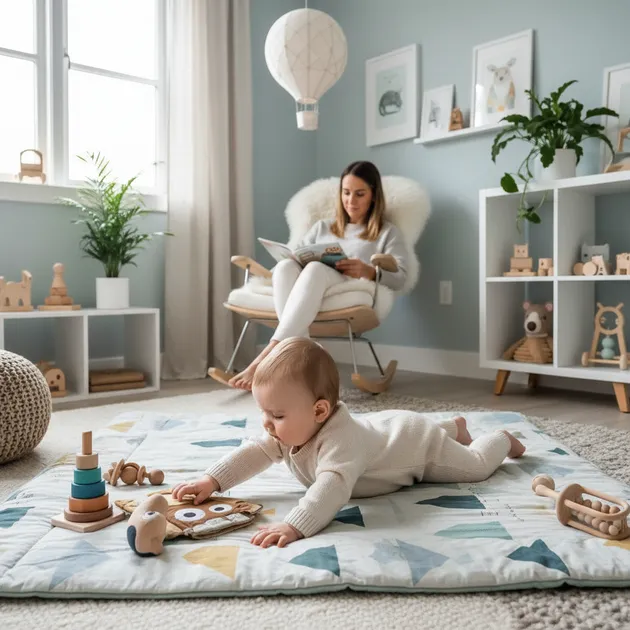
Everything starts with strong muscles, and tummy time builds the abdominal, back, and neck muscles needed for sitting.
2. Supported Sitting with Cushions
Place your baby on the floor with cushions in a semicircle behind and on the sides. Let them practice in short sessions, but also let them fall safely to the side, that is how they learn to balance.
3. Lap Sitting
Let your baby sit in your lap facing outward. You provide support with your body, but let the baby work on balance themselves. Gradually reduce your support.
Sit your baby between your legs on the floor with their back toward you. Let them lean forward toward a toy. You are there as a safety net, but the baby does the work themselves.
4. Motivating Toys
Place interesting toys in front of the baby when they are sitting with support. Toys that make sound, light up, or move motivate them to reach out and use their hands, which trains balance.
5. Variety of Positions
Let your baby be in different positions throughout the day:
- Tummy time to build strength
- On their back to kick and grasp
- On their side to roll
- Sitting with support to practice balance
- Standing with support for leg strength
6. Avoid Too Much Equipment
Bouncers, jumperoos, and baby seats are fine in short periods, but should not replace floor time. Babies need free movement to develop motorically.
Supported vs. Independent Sitting
It is important to distinguish between different degrees of sitting:
| Type | Description | Typical age |
|---|---|---|
| Supported sitting | Sits with full support from parent or cushions | 4–5 months |
| Tripod sitting | Sits with hands in front as support | 5–7 months |
| Unstable independent | Sits alone but tips easily | 6–8 months |
| Stable independent | Sits securely, turns, plays with hands | 6–9 months |
If your baby is at the tripod stage at nine months, they are on their way, they just need a little more time and practice.
When Should You Contact Your Pediatrician?
Most babies who are late to sit just need a little more time. But there are some signals you should raise with your pediatrician:
Contact your pediatrician if your baby:
- Does not sit with support at 9 months, meaning not even with help
- Seems very stiff or very floppy in the body
- Does not hold their head steady, this should have been in place by 4–5 months
- Has lost skills they had previously
- Does not use both arms/legs equally, consistent preference for one side
- Shows little interest in their surroundings, no engagement, not tracking with eyes
Signs to take seriously include loss of previously acquired skills (regression), persistent asymmetry in the body, and marked stiffness or floppiness. These should be evaluated by a pediatrician or physical therapist.
What Can the Pediatrician Do?
Your pediatrician will:
- Observe the baby's movement patterns and interaction
- Assess muscle tone and reflexes
- Ask about other milestones and daily routines
- Refer to a physical therapist or specialist if needed
Physical therapy for babies is play-based and focuses on stimulating natural development. Most babies who are referred simply need a few simple adjustments to their daily routine.
The Connection to Other Milestones
Sitting is connected to the rest of motor development. A baby who sits independently is often also in the process of:
- Crawling or army-crawling forward
- Pulling up to kneeling at furniture
- Picking up small objects with thumb and index finger (pincer grasp)
- Banging two things together or hitting with a toy
If your baby is progressing in several of these areas, that is a good sign, even if independent sitting has not come yet.
Should You Avoid "Placing" the Baby in a Sitting Position?
It is a common question among parents. The AAP recommendation is:
- Avoid Bumbo chairs or similar that force the baby into a sitting position before they are ready
- Let the baby find the sitting position themselves as much as possible
- Supported sitting in your lap is fine, the baby works on balance themselves
- Short sessions with cushions are also fine, they give the baby experience with sitting
The point is that the baby should have the opportunity to use their muscles actively, not be passively held in a position.
Instead of placing your baby directly into a sitting position, try laying them on their tummy and letting them work their way up to sitting themselves. That is how they build the strength and coordination they need.
Frequently Asked Questions
Is it normal for a baby not to sit at 9 months? Yes, it can be within the normal range. Some babies sit independently only at ten months. But if the baby is not even sitting with support at nine months, you should raise it with your pediatrician.
Does practicing sitting help? Yes, but indirectly. Tummy time and varied floor time build the muscles the baby needs. Placing the baby in a sitting position with cushions gives them experience with balancing, but they should also have the opportunity to find the position themselves.
Can late sitting mean something serious? In the vast majority of cases, late sitting simply means the baby is on their own timeline. In rare cases it can be a sign of muscular or neurological challenges, but in those cases other signs are usually also present.
Should I worry if my baby crawls but doesn't sit? Some babies crawl before they sit independently. It is unusual, but not necessarily a cause for concern. They often have strong arm and leg muscles but need more practice with balance in a sitting position.
Should I use a Bumbo chair to help my baby sit? Experts recommend avoiding chairs that force the baby into a sitting position. They provide passive support without the baby training their muscles. Floor time with cushions around them is a better alternative.
Read also: Motor development in babies | Baby not rolling at 6 months | Baby development 9 months | Tummy time guide
Sources
- American Academy of Pediatrics (AAP): Developmental Milestones
- WHO Motor Development Study: Windows of achievement for six gross motor milestones
- Centers for Disease Control and Prevention (CDC): Developmental Milestones
🔧 Helpful Tools
- Baby Milestones Tracker. Track your baby's developmental milestones
- Development Leaps. Understand your baby's developmental leaps
- All Baby Tools. Browse all free tools for pregnancy and baby care
📖 Related Articles
- Baby Not Rolling at 6 Months: Should You Worry?. Baby not rolling at 6 months? Learn about normal variation, when to contact your pediatrician, and exercises that encourage rolling.
- Baby Not Walking at 15 Months: When Should You Seek Help?. Baby not walking at 15 months? Learn about the normal range for walking (9–18 months), bum shufflers, and when to contact a physical therapist.
- Baby at 3 Months: Development and Milestones. What can your baby do at 3 months? Complete guide to motor, social, and cognitive development with tips for stimulation.