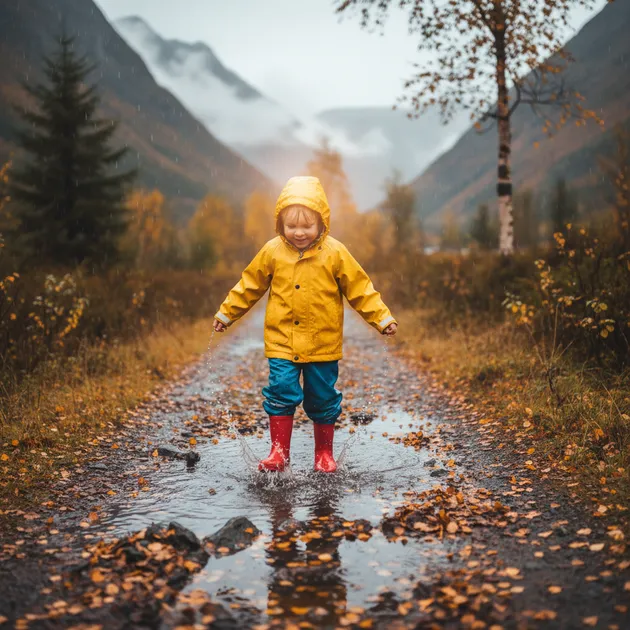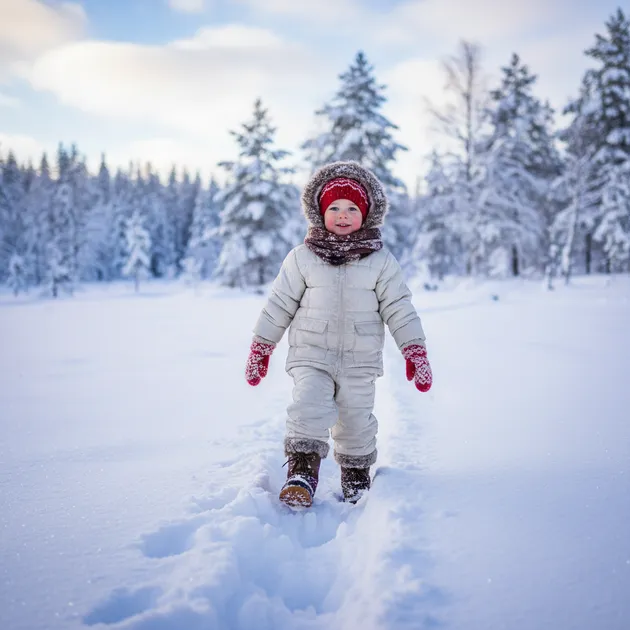
Cold, wet feet are the fastest route to an unhappy child. Good winter boots are one of the most important investments you make for your child in a cold winter climate.
But the options are endless and it's hard to know what actually keeps feet warm and dry. This guide helps you choose the right boots, whether your child is cruising through snow for the first time or running full speed on the playground.
When Does My Child Need Winter Boots?
Babies who aren't yet walking don't need proper winter boots. For them, a warm stroller footmuff, wool socks, and soft fleece or wool booties are enough.
The first real winter boots become relevant when your child:
- Has started walking or pulling to stand (typically around 10–14 months)
- Will be outside in snow and cold on their own feet
- Is starting daycare in winter
Don't rush into stiff shoes. Babies who have just learned to walk benefit most from soft, flexible soles that allow the foot to move naturally. Wait for rigid winter boots until your child walks steadily.
Types of Winter Boots for Children
Insulated Winter Boots (Pac Boots)
The most popular type of winter boot for young children. They have a thick, insulated insole and a lined interior that keeps feet warm in temperatures as low as -4°F to -13°F / -20°C to -25°C.
Best for: Active children from around age 1 who play in snow and cold. Excellent for daycare use.
Pros: Waterproof, warm, lightweight, easy to put on and take off.
Cons: Can get too warm indoors and on mild winter days.
Leather Boots with Lining
Classic leather boots with wool or synthetic lining provide good warmth and a more refined look. Leather breathes better than synthetic materials.
Best for: Lower-key activities, city use, and dressier occasions in winter.
Pros: Breathable, durable, attractive appearance.
Cons: Need regular waterproofing treatment, not as waterproof as insulated boots, more expensive.
GORE-TEX Boots
GORE-TEX is a membrane that's waterproof from outside but lets moisture escape from inside. That means feet stay dry even when the child sweats.
Best for: Children who spend a lot of time outside in wet, slushy snow.
Pros: Waterproof and breathable, easy to maintain.
Cons: More expensive than standard winter boots.
Rubber Boots with Lining
Lined rubber boots are perfect for transitional weather, when it's wet and cold but not deeply snowy.
Best for: Slush, wet conditions, fall-to-winter transition, between 23°F and 41°F / -5°C to 5°C.
Pros: Completely waterproof, easy to clean, affordable.
Cons: Poor breathability, cold in extreme temperatures, slippery on ice.
How to Choose the Right Winter Boots
1. Waterproofing
In cold, wet winter conditions, waterproofing is the most important feature. Look for boots labeled "waterproof", not just "water-resistant," which only holds up to light moisture.
Insulated pac boots and GORE-TEX boots are typically fully waterproof. Leather boots need regular waterproofing treatment to maintain water resistance.
2. Warmth and Insulation
How much insulation your child needs depends on their activity level and the temperatures:
- Light insulation (200g): Active children, mild winter days (32°F to 14°F / 0°C to -10°C)
- Medium insulation (400g): All-around use, most winter days
- Heavy insulation (600g+): Very cold days, children who sit still in a stroller or sled
An active child generates significant heat. Too much insulation can cause feet to sweat, and sweaty feet get cold quickly. It's often better to go with slightly lighter boots and add a good wool sock for extra cold days.
3. Sole and Traction
A good winter sole has:
- Deep lug pattern for grip in snow
- Soft rubber that doesn't harden in cold temperatures
- Flexibility so the child can walk naturally
Some brands use rubber compounds specifically engineered for better grip at low temperatures. Look for descriptions like "Arctic grip" or "cold-weather traction."
4. Opening and Closure
For children under 3, winter boots should have a wide opening and simple closure. Hook-and-loop (Velcro) is the gold standard, children can eventually put them on and take them off independently.
For older children, options include:
- Zipper with storm flap (quick on/off)
- Laces (best fit, but requires help)
- Elastic/toggle (simplest, least adjustable)
5. Getting the Right Size
Wrong sizing is the most common cause of cold and uncomfortable feet. Here's how to measure:
- Measure the foot. Have your child stand on paper, trace the foot, measure from heel to longest toe
- Add 0.4–0.6 inches / 1–1.5 cm. Your child needs room to wiggle toes and space for thick socks
- Check the insole measurement. Some brands list the interior measurement (the actual usable space inside the boot)
Take out the insole and have your child stand on it. You can clearly see whether there's enough room in front of the toes. There should be about 0.4 inches / 1 cm between the longest toe and the edge of the insole.
Top Brands for Cold-Weather Kids' Boots
These brands are popular in cold-climate countries and designed for winter conditions:
Kamik (Canada)
Canadian brand with a long tradition of cold-weather footwear. Kamik makes some of the most popular insulated kids' boots in North America, excellent warmth-to-price ratio. Price range: $40–$80.
Bogs (USA)
Waterproof neoprene construction with a fleece lining. Known for being easy to put on and take off. Particularly good in slushy, wet conditions. Price range: $50–$90.
Sorel (Canada)
Classic cold-weather boots with a reputation for durability and warmth. Sorel's kids' line handles extreme cold well. Price range: $60–$100.
Viking (Norway)
Norwegian brand with long cold-weather heritage. Well-regarded for insulated boots with excellent grip on snow and ice. Price range: $60–$110.
Reima (Finland)
Finnish brand specializing in children's cold-weather gear. Makes lightweight, warm boots built for hard use. Price range: $70–$120.
Superfit (Austria)
Known for ergonomic lasts and good fit. Wide range of winter boots at varying insulation levels. Price range: $70–$120.
Price Guide for Winter Boots
| Type | Price Range | Durability |
|---|---|---|
| Basic insulated boots | $30–$50 | 1–2 seasons |
| Name-brand insulated boots | $50–$90 | 1–2 seasons |
| GORE-TEX boots | $80–$130 | 2–3 seasons |
| Leather boots with lining | $80–$130 | 2–3 seasons |
| Lined rubber boots | $20–$50 | 1–2 seasons |
Children grow fast, a 1-year-old can go through 3–4 shoe sizes in a single year. Buy well-fitting boots in the right size rather than expensive boots they'll grow out of in months. Secondhand kids' boots in good condition are a smart, sustainable choice.
Care and Maintenance
Proper care significantly extends the life of winter boots:
Drying
- Never dry winter boots directly on a radiator or in a dryer, heat damages adhesives and materials
- Let boots dry at room temperature with the top open
- Remove insoles for faster drying
- Consider having two pairs in rotation, especially for daycare
Cleaning
- Brush off loose dirt when dry
- Wash with lukewarm water and mild soap when needed
- Leather boots: apply leather conditioner or waterproofing after washing
- Synthetic boots: apply spray waterproofing once a month
Storage
When the season ends:
- Clean and dry thoroughly
- Stuff with newspaper to hold shape
- Store in a cool, dry place
When to Size Up
Watch for these signs:
Signs the boots are too small
- Child complains of toe pain
- Red pressure marks on the foot after wearing
- Child refuses to wear them
- Less than 0.2 inches / 0.5 cm of room in front of the longest toe
Signs the boots are too big
- Child trips or is unsteady
- Boot slips at the heel
- Child complains of blisters
General guidance
Check sizing every 6–8 weeks through the winter. Children's feet grow quickly, and boots that are too tight don't just cause discomfort, they restrict circulation, which is what keeps feet warm.
Signs That Boots Are Working (or Not)
Things are fine if your child has
- Warm, dry socks after an outing
- Pink, warm toes (not red or white)
- Enthusiasm for staying outside longer
- Dry boot interiors after use
Investigate if you notice
- Cold toes. Could mean boots are too tight, socks are too thin, or insulation is inadequate
- Wet socks. Boots are leaking, or the child is sweating (too much insulation)
- Pressure marks. Boots are too small; size up
- Crying or refusing boots. Check fit; something is causing discomfort
Wear wool socks, not cotton. Wool insulates even when damp, while cotton becomes cold and clammy when wet. One pair of good wool socks is better than two pairs of cotton socks. Avoid over-layering, too tight means worse circulation, which means colder feet.
Further Reading
- Baby and Toddler Snowsuits. Choosing the right outer layer
- Baby Clothes Through the Seasons. Complete dressing guide
- Baby's First Shoes. A guide to the very first footwear
- Baby Clothing Size Guide. Finding the right fit
Prices in this article are approximate and based on major US and international retailers as of March 2026. Actual prices vary between stores and seasons.
Frequently Asked Questions
Which winter boots are best for toddlers?
Kamik, Bogs, and Sorel consistently score well in cold-climate tests. For daycare use, fully waterproof insulated boots with hook-and-loop closures are the most practical. Choose based on your child's activity level and local temperatures.
When does my baby need winter boots?
Babies need winter boots once they're walking and will be standing or moving around in snow and cold, typically from around 10–14 months. Before that, warm stroller footmuffs and wool booties are sufficient.
How much should I spend on kids' winter boots?
Good winter boots run $50–$100 for name-brand options. For daily use and daycare, the $60–$90 range is a solid starting point. Since children grow fast, secondhand boots in good condition are worth considering.
Should my child wear wool socks in winter boots?
Yes, wool socks are the best choice. Wool insulates well and retains warmth even when damp. Wear one pair in the right thickness rather than multiple layers. Avoid cotton socks, which become cold and wet when damp.
How do I know if winter boots are too small?
Take out the insole and have your child stand on it. There should be about 0.4 inches / 1 cm between the longest toe and the edge. Also check for red pressure marks on the foot after wearing. Measure sizing every 6–8 weeks through the winter.
Sources
- AAP. Infant and toddler nutrition guidelines
- WHO. Global infant feeding recommendations
- CDC. Infant and toddler nutrition resources
🔧 Helpful Tools
- All Baby Tools. Browse all free tools for pregnancy and baby care