Baby clothes are labeled with sizes like Newborn, 0-3M, and 3-6M. But what do the sizes actually mean? And why does a 3-6M from one brand fit differently than from another?
Baby clothing sizes can be confusing, especially when you're shopping for the first time. This guide gives you everything you need to find the right size, from premature babies to two-year-olds.
How Baby Clothing Sizes Work
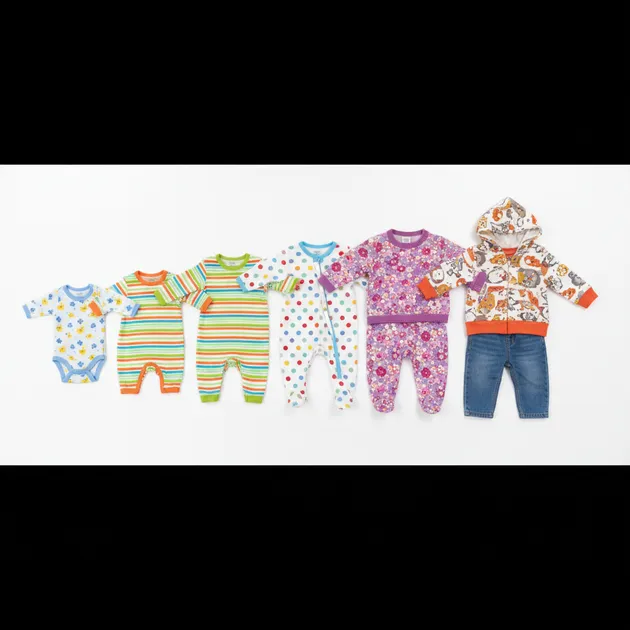
In the US, baby clothing sizes are based on age ranges (e.g., 0-3 months, 3-6 months). In Europe, sizes are based on the child's length in centimeters (e.g., size 56, 62, 68).
It's important to know that the age on the label is just a guideline. Babies are different, some are long and lean, others short and stocky. Always choose size based on your baby's actual measurements, not age.
Your pediatrician measures your baby's length and weight at every well-child visit. Write down the numbers and have them available when shopping for clothes.
Size Chart: Baby Clothes from Preemie to 24 Months
Here's the complete size chart for baby clothes with US, European, and UK equivalents:
| US Size | EU Size | UK Size | Length | Weight (approx.) | Age Guide |
|---|---|---|---|---|---|
| Preemie | 44-48 | Tiny Baby | Up to 18 in (46 cm) | Under 5.5 lbs (2.5 kg) | Premature |
| Newborn | 50-56 | First Size | 18-22 in (46-56 cm) | 5.5-10 lbs (2.5-4.5 kg) | 0-1 month |
| 0-3M | 56-62 | 0-3 months | 21-24 in (54-62 cm) | 8-13 lbs (4-6 kg) | 1-3 months |
| 3-6M | 62-68 | 3-6 months | 24-27 in (62-68 cm) | 13-17 lbs (6-8 kg) | 3-6 months |
| 6-9M | 68-74 | 6-9 months | 27-29 in (68-74 cm) | 17-22 lbs (8-10 kg) | 6-9 months |
| 9-12M | 74-80 | 9-12 months | 29-31 in (74-80 cm) | 22-26 lbs (10-12 kg) | 9-12 months |
| 12-18M | 80-86 | 12-18 months | 31-34 in (80-86 cm) | 24-28 lbs (11-13 kg) | 12-18 months |
| 18-24M | 86-92 | 18-24 months | 34-36 in (86-92 cm) | 26-31 lbs (12-14 kg) | 18-24 months |
The weight column is only a guide. A long, thin baby may need 3-6M for length, but the garment may be a bit roomy around the tummy. That's completely normal.
Newborn Sizes: What You Actually Need
An average newborn is 19-21 inches (49-52 cm) and weighs around 7.5 lbs (3.5 kg). That means most babies start in Newborn size, and outgrow it in 2-4 weeks.
Newborn Size. Do You Need It?
Most babies will wear Newborn size briefly. Three to five onesies and a few sleepers are enough. Many parents end up with piles of unused clothes in this size.
0-3M. This Is Where You Buy More
0-3M fits from about 1-3 months and is the size the baby wears the longest at the start. Buy more in this size than in Newborn.
3-6M. From 3-6 Months
Now the baby starts moving more. Choose clothes that allow good freedom of movement. Stretchy fabrics and roomy fits are important.
Shopping tip: Large babies (over 8.8 lbs / 4 kg) may skip Newborn size entirely. Consider waiting until the baby is born to see which size fits best.
Preemie Sizes
For babies born early, special sizes are available. Most major baby clothing brands carry preemie collections.
Premature babies have special needs:
- Soft seams, the skin is extra sensitive
- Easy dressing, front snaps, no tight necks
- Cotton or wool, natural materials that breathe
- A hat is important, premature babies lose a lot of heat through their heads
Check with your hospital about what they recommend and what you should bring yourself.
Why Sizes Vary Between Brands
Have you noticed that 3-6M from Carter's feels different than 3-6M from Gerber? It's not a mistake, sizes genuinely vary between manufacturers.
Brands That Run Small
Some brands are known for running small:
- European brands, often slimmer fit
- Hanna Andersson, can be snug, especially in length
- Petit Bateau. French brand with narrow fit
Brands That Run Large
Other brands are generous:
- Carter's, often runs a half size large
- Old Navy, generous fit
- H&M, tends to run big
Brands with Consistent Sizing
These generally hit the size well:
- Burt's Bees Baby, reliable sizing
- Primary, consistent and true to size
- Gerber, standard sizing
When shopping from a new brand for the first time, check the size guide on the brand's website. Most have detailed measurements in inches or centimeters for each garment.
When to Size Up
Here are signs that your baby needs the next size:
- Snaps at the crotch are tight, the most common sign
- The onesie rides up and doesn't cover the diaper properly
- Sleeves are too short, stopping well above the wrist
- Pants show the ankles, tighter around the belly
- The baby seems uncomfortable or has marks from tight clothing
Babies grow in spurts. One week everything fits fine, the next, half the wardrobe is suddenly too small. Get used to checking the fit regularly.
International Size Conversion
If you shop from international brands, the sizing system may look completely different. Here's a simple conversion table:
| US | EU | UK |
|---|---|---|
| Preemie | 44-48 | Tiny Baby |
| Newborn | 50-56 | First Size / 0-1M |
| 0-3M | 56-62 | 0-3 months |
| 3-6M | 62-68 | 3-6 months |
| 6-9M | 68-74 | 6-9 months |
| 9-12M | 74-80 | 9-12 months |
| 12-18M | 80-86 | 12-18 months |
| 18-24M | 86-92 | 18-24 months |
European sizes are based on length in centimeters, while US sizes are based on age. This means European sizes are often more precise. When shopping internationally, always check measurements in inches or centimeters.
Seasonal Planning: Right Size for the Right Season
One of the most common mistakes parents make is buying clothes in the wrong size for the season. A summer romper in 3-6M is useless if the baby is 3-6M in the middle of winter.
How to Plan
- Find your baby's current size
- Estimate the size for the next season, babies grow roughly one size per 3 months in the first year
- Shop for the season that matches the size
Example
Your baby is born in March and wears Newborn size. Here's the seasonal plan:
| Season | Month | Approx. Size | What You Need |
|---|---|---|---|
| Spring | Mar-May | NB to 0-3M | Onesies, light outfits, thin outer layer |
| Summer | Jun-Aug | 0-3M to 3-6M | Rompers, sun hat, thin layers |
| Fall | Sep-Nov | 3-6M to 6-9M | Warm layers, light jacket, hat |
| Winter | Dec-Feb | 6-9M to 9-12M | Snowsuit, wool base layers, mittens |
Common Mistakes When Buying Baby Clothes
1. Too many in newborn size
Many parents buy dozens of items in Newborn size. The baby wears them for 2-4 weeks. Buy 5-6 onesies and 3-4 sleepers, max.
2. Forgetting about seasons
That adorable summer dress in 12-18M is useless if the baby is that size in January. Think season first, size second.
3. Shopping too far ahead
Babies grow differently. A baby who's large at birth may slow down, and vice versa. Wait to shop for larger sizes until you see how the baby grows.
4. Ignoring material choices
Cotton and merino wool are best for babies. Synthetic fabrics can cause rashes and don't regulate temperature as well. Always check washing instructions, you'll be washing baby clothes often.
5. Buying too much new
Secondhand baby clothes are a goldmine. Many items are worn just a few weeks before the baby outgrows them. Check ThredUp, Facebook Marketplace, and local consignment shops.
Buy in multipacks. Onesies and sleepers in multipacks are much cheaper than individual items. Carter's, Gerber, and Primary have great multipack deals.
Tips for Smarter Shopping
Size up for sleepwear. Babies need a little extra room for comfortable nights. A slightly roomy sleep outfit is better than a tight one.
Choose clothes with stretch. Babies move a lot. Clothes with a little spandex (2-5%) hold their shape better and are more comfortable.
Check the snaps. Clothes that open all the way down the front and at the crotch make diaper changes much easier, especially in the middle of the night.
Envelope necklines are a lifesaver. Onesies with overlapping shoulder panels can be pulled down over the body instead of over the head. Perfect when there's been a diaper blowout.
Summary
Baby clothing sizes are based on age (US) or length (EU), not a universal standard. Measure your baby, choose the right size, and don't buy too many in the smallest sizes. Remember to plan for the right season and accept that sizes vary between brands.
The most important tips:
- Measure your baby's length, don't rely on the age on the label
- Buy few in Newborn size, more in 0-3M
- Plan for the season, right size at the right time of year
- Check the brand's size guide when trying new brands
- Secondhand is smart, baby clothes are worn for such a short time
Frequently Asked Questions
What size does a newborn baby need?
Most newborns start in Newborn size, which fits babies 18-22 inches (46-56 cm). Some large babies (over 8.8 lbs / 4 kg) may go straight to 0-3M. Buy few items in Newborn size, the baby outgrows them in 2-4 weeks.
Why do sizes vary between brands?
There's no mandatory standard for baby clothing sizes. Each brand creates its own size template. Some brands like Hanna Andersson run small, while Carter's and Old Navy run large. Always check the brand's own size guide.
When should you size up?
Size up when the crotch snaps are tight, the onesie rides up, or the sleeves and pants are too short. Babies grow in spurts, so check the fit regularly. It's better to have slightly big clothes than too-tight ones.
Do preemie baby clothes exist?
Yes, most major baby clothing brands carry preemie sizes. Carter's, Gerber, and many specialty brands have preemie collections with soft seams and easy dressing features.
Sources
- AAP. Infant and toddler nutrition guidelines
- WHO. Global infant feeding recommendations
- CDC. Infant and toddler nutrition resources
🔧 Helpful Tools
- All Baby Tools. Browse all free tools for pregnancy and baby care
📖 Related Articles
- Baby Clothes: Complete Buying Guide for New Parents. What do you need for baby clothes? Complete buying guide with quantities, sizes, materials, and recommended brands.