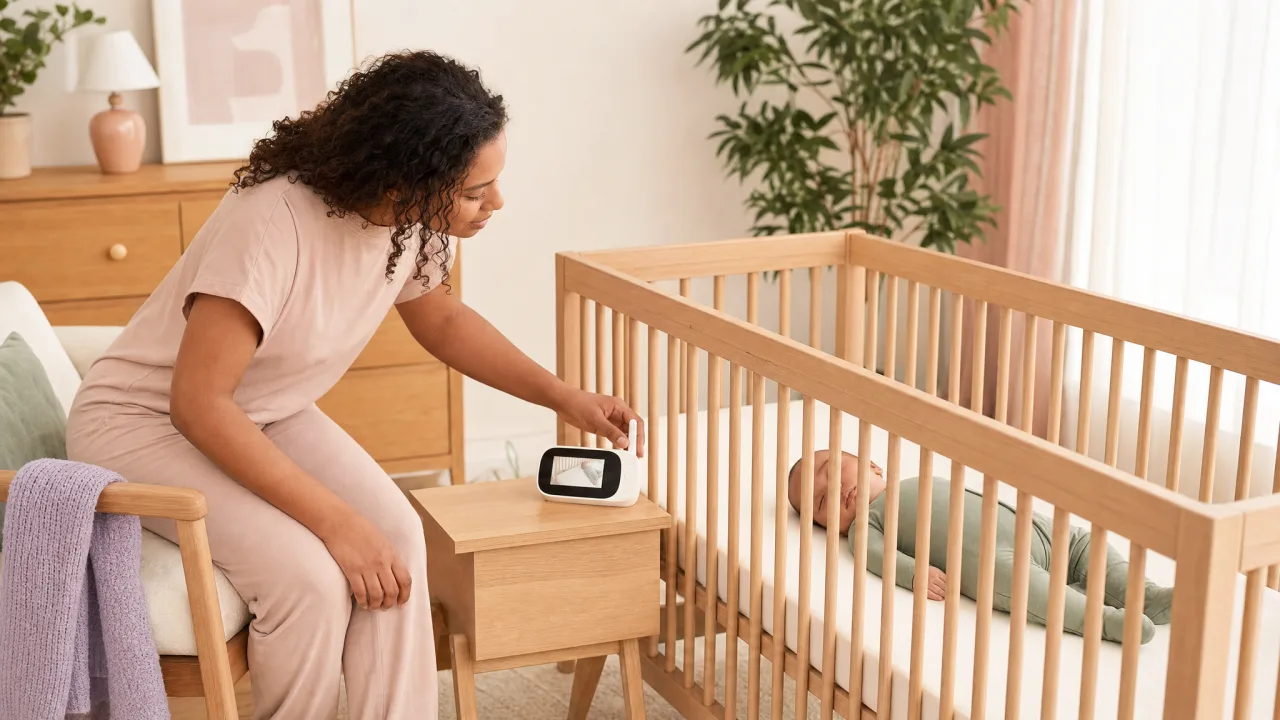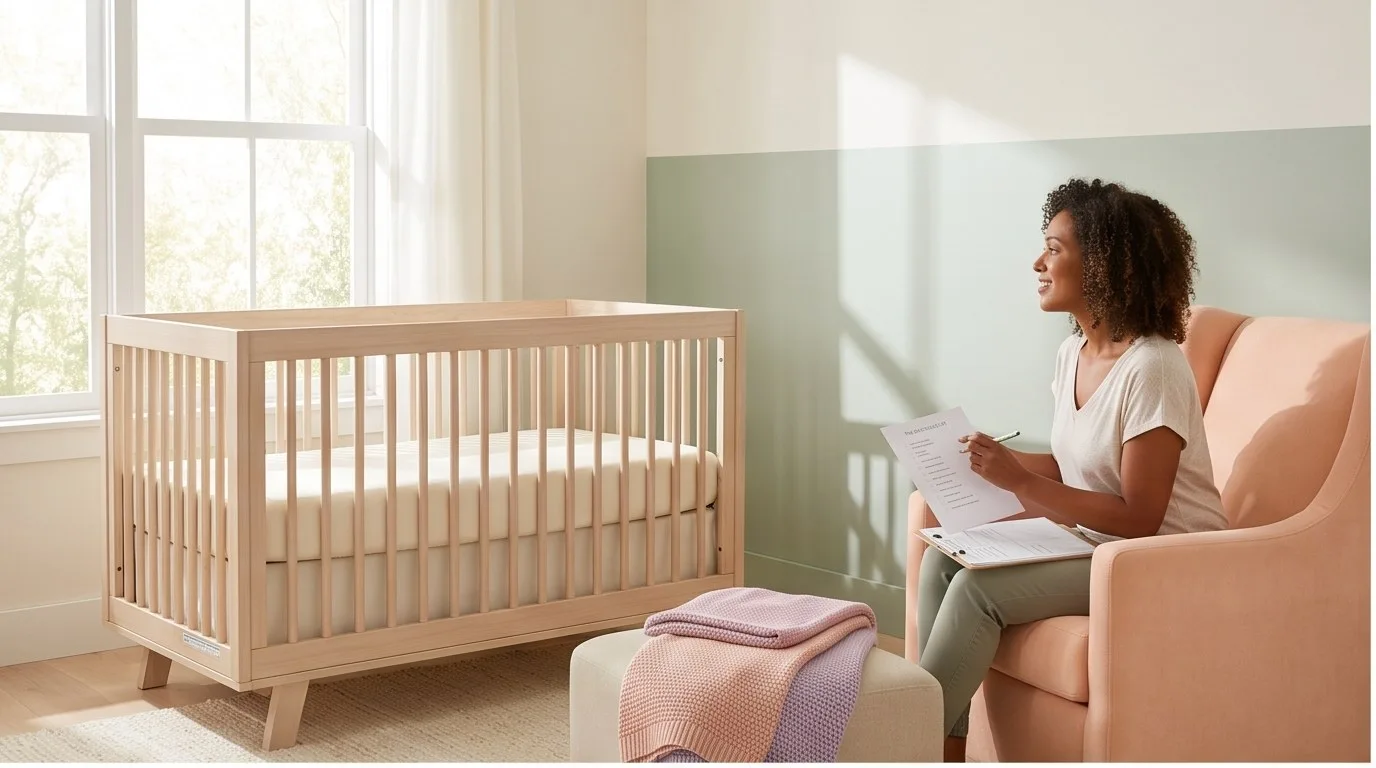
The best baby crib is one that meets current safety standards, fits your space, and has a firm, flat mattress made for that sleep surface. Start with CPSC compliance in the US, then compare crib type, mattress fit, size limits, and ease of everyday use.
This guide compares crib categories and buying criteria rather than ranking specific models. Product specifications and recalls change, so verify the current label, instructions, weight and milestone limits, and CPSC recall status before buying.
Key Takeaways
- Newborns sleep 14–17 hours per day, making the crib one of the most-used items you'll buy, prioritize safety certifications (JPMA, ASTM) over aesthetics.
- The AAP recommends babies sleep on their back on a firm, flat surface with no soft bedding, bumpers, or pillows, a fitted sheet on a firm mattress is all that's needed.
- Bedside bassinets (co-sleepers) offer easy nighttime access for breastfeeding but are typically outgrown by 6 months; standard cribs last from birth to age 2–3.
- Mattress firmness is critical: press the center, it should spring back immediately with no indentation; a gap of more than two fingers between the mattress and the crib side is too large.
- The AAP recommends room-sharing (but not bed-sharing) for at least the first 6 months, ideally up to 1 year, as this reduces the risk of SIDS by up to 50%.
Baby Crib Types Compared
There are four main types of baby sleeping surfaces, and each has its advantages. Which one suits you best depends on your space, budget, and how you want to organize nighttime sleep.
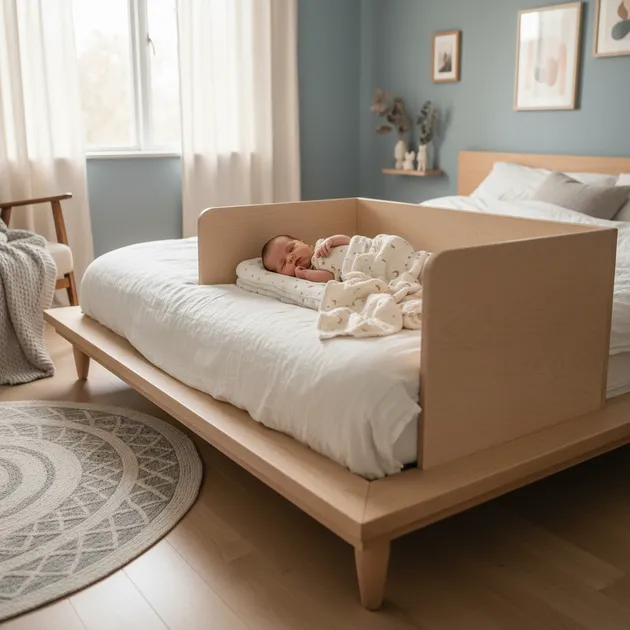
Bedside Bassinet (Co-sleeper)
A bedside bassinet is a small baby bed that attaches to the parents' bed. One side can be opened so that baby lies in their own bed but right next to you. This provides easy access for breastfeeding and comforting at night without baby sleeping in the parents' bed.
Bedside bassinets are typically designed for children from birth to around 6 months, or until baby begins to pull up.
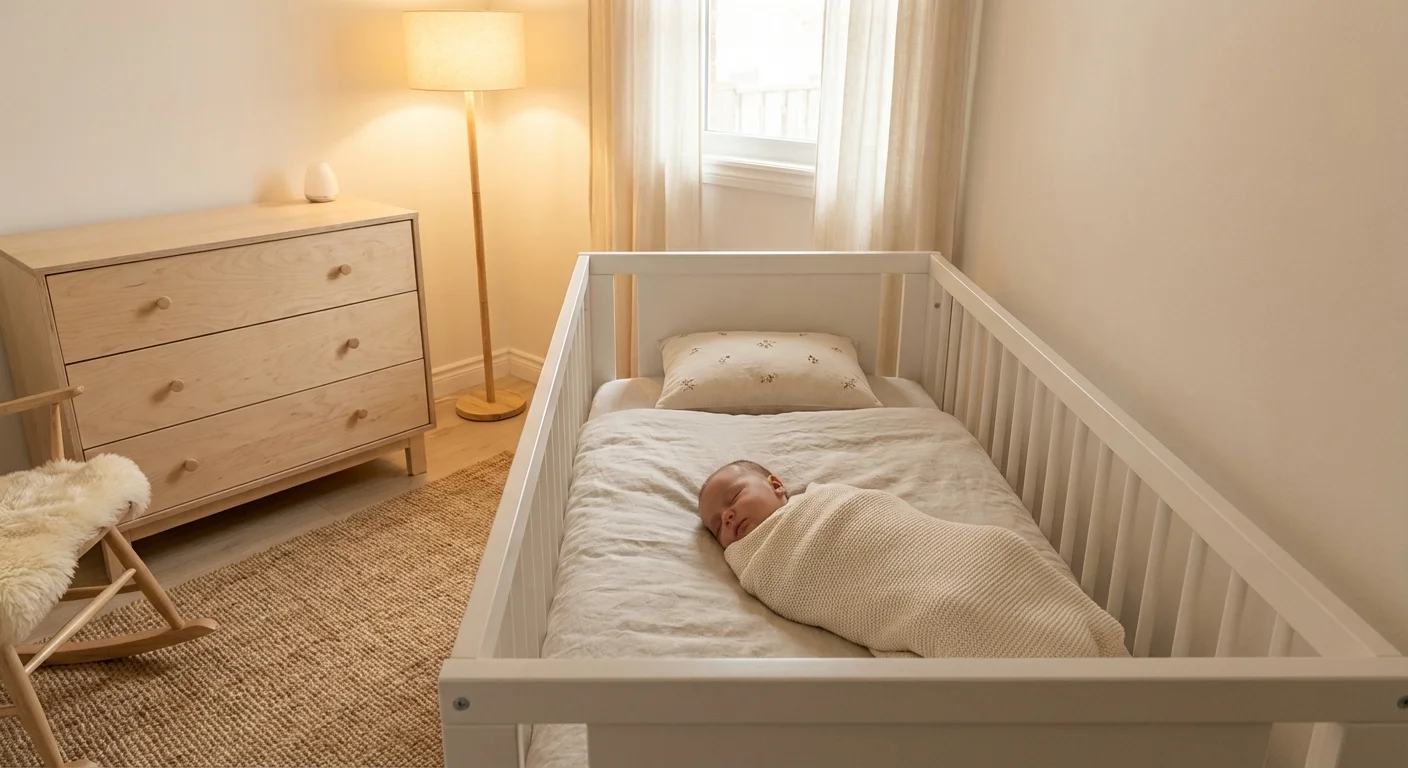
Standard Crib
The classic standard crib lasts longer than most other options. With standard dimensions of about 28 x 52 inches (70 x 130 cm), many children can use it from birth until age 2–3. The mattress height can be adjusted to multiple levels, making it easy to place a newborn without bending too much, and lowering the base as the child begins to stand.
Bassinet
The bassinet is the most compact option and works well as a first sleeping surface for the very first weeks and months. The gentle rocking motion can help baby fall asleep. Most bassinets are used from birth to 4–6 months, depending on size and baby's development.
Travel Crib
A travel crib is a practical option for families who travel frequently or need an extra sleeping surface at grandparents' house. Modern travel cribs are lightweight and fold compactly. Some models are approved as a daily sleeping surface, but always check the manufacturer's recommendations.
Tip: Most families start with either a bedside bassinet or a standard crib. Many choose to combine, bedside bassinet for the first months and standard crib afterward.
What Should You Look For?
Regardless of which type of crib you choose, there are some important things to check before buying.
Safety Certifications and Standards
All baby cribs should meet safety standards. In the US, look for JPMA (Juvenile Products Manufacturers Association) certification and CPSC compliance. In Europe, standard EN 716 applies to cribs, and EN 1130 applies to bassinets. These certifications mean the product has been tested for mechanical strength, stability, and slat spacing.
Slat Spacing
The distance between slats in a standard crib should be no more than 2 3/8 inches (6 cm). This prevents baby from getting their head stuck between the slats while being narrow enough that arms and legs don't get caught.
Mattress and Fit
The mattress is at least as important as the crib itself. It should be firm and fit the crib exactly with no gaps along the edges. A rule of thumb is that you shouldn't be able to press more than two fingers between the mattress and the crib side. A mattress that's too soft increases the risk of suffocation.
Look for mattresses with breathable covers, and preferably choose a mattress specifically made for the particular crib. Many manufacturers sell mattress and crib as a set.
Adjustable Mattress Height
For standard cribs, adjustable mattress height is a major advantage. The highest setting makes it easy to lay down a newborn, while you lower the base as the child grows and begins to pull up. Most models have 2–3 levels.
Material and Finish
Choose a crib made from durable materials without harmful substances. If the crib needs paint or varnish, it should be free from lead and other toxic substances. Many parents prefer untreated wood or water-based varnish.
Safe Sleep for Baby
Choosing the right crib is only part of the puzzle. How you place baby and what you have in the crib is equally important. According to the AAP, these are the most important recommendations for a safe sleep surface.
Always on the Back
Baby should always be placed on their back to sleep. This is the single most important recommendation for preventing SIDS (Sudden Infant Death Syndrome). Back sleeping is recommended for all sleep periods, both at night and during daytime naps.
When baby can roll from back to tummy and back again on their own (usually around 4–6 months), you don't need to turn the child back if they roll over in their sleep.
Firm, Flat Mattress
The mattress should be firm, not soft. A soft mattress, couch cushion, or water mattress can mold around baby's face and make it difficult to breathe. It should lie flat, never use pillows or wedges to elevate the head.
No Loose Objects
The crib should be free of pillows, blankets, sheepskins, soft stuffed animals, and other loose objects. All of these can cover baby's face and pose a suffocation risk. Instead, use a sleep sack sized for your baby, or a light blanket tucked firmly under the mattress.
Important: The AAP advises against using crib bumpers (padded side protectors) in cribs. These can pose suffocation and overheating risks. The slats in an approved crib are safe enough without extra padding.
Correct Room Temperature
The recommended temperature range for a bedroom is 65–70°F (16–20°C). Overheating is a risk factor for SIDS. Dress baby in appropriate clothing for the temperature, and feel the chest or neck to check if baby is too warm. Hands and feet may feel cool without baby actually being cold.
Smoke-Free Environment
Smoking is a significant risk factor for SIDS. Baby should never be exposed to secondhand smoke, and the room where baby sleeps should be completely smoke-free.
Baby Should Sleep in the Parents' Bedroom
The AAP recommends that baby sleep in their own sleep surface in the parents' bedroom for the first six months. This is associated with lower risk of SIDS. Baby should have their own crib, not share a bed with the parents.
Bedside Bassinet. Pros and Cons
The bedside bassinet has become very popular among parents, and it's easy to see why. Here's an honest review.
Pros
Easier nighttime nursing. You can bring baby to you for nursing without getting out of bed. Afterward, you place baby back in their own safe crib. For breastfeeding mothers, this can save a lot of sleep and energy.
Closeness provides security. Many parents find they sleep better when baby is right beside them. You hear their breathing and can quickly check if everything is fine without leaving the bed.
Safer than bed-sharing. A bedside bassinet provides the closeness many parents want, but without the risks associated with sharing a bed. Baby has their own firm mattress and their own sleep surface.
Cons
Limited use period. Most bedside bassinets last only until 6–9 months. After that, you'll need a standard crib or other solution anyway.
Takes up bedroom space. The crib requires space along the parents' bed and can make it harder to get out of bed on one side.
Transition period. Some children find it difficult to move from the bedside bassinet to a crib in their own room. A gradual transition with adjustment can help.
Bedside Bassinet Checklist
Before buying a bedside bassinet, check:
- That the model is compatible with the height of your bed
- That the attachment system fits your bed type (platform bed, box spring, etc.)
- That the transition between beds is smooth, no gap or height difference
- That the mattress is included and fits exactly
Standard Crib. The Classic Choice
The standard crib is the most versatile option and the type that lasts longest. For many families, it's an obvious choice.
Advantages of a Standard Crib
Long use period. A standard crib with typical dimensions (28 x 52 inches) is used from birth until the child is 2–3 years old. Some models with larger dimensions last even longer.
Adjustable mattress height. You start with the highest setting for a newborn and lower it over time. This extends the use period and keeps the crib safe through different developmental stages.
Good mattress selection. Standard dimensions mean you have many mattresses to choose from, and it's easy to find fitting sheets and bedding.
Stable and solid. A good standard crib is heavy enough that even active toddlers can't tip it over.
When to Switch from Bassinet to Crib
If you start with a bassinet or bedside crib, the time will come when baby needs a larger sleeping surface. Here are the signs to look for.
Timing the Transition
Most children are ready for the transition to a standard crib around 4–6 months, but this varies. Here are the signals:
- Baby can roll over. When baby can turn from back to tummy, they need more space than a bassinet provides.
- Baby is approaching the weight limit. Check the manufacturer's recommended maximum weight for the bassinet or bedside crib.
- Baby seems cramped. If baby kicks the sides or seems restless, it may be time for more space.
- Baby begins to pull up. For safety reasons, baby must be moved to a crib with a lower mattress setting when they can pull up to standing.
Tips for a Smooth Transition
The transition goes more smoothly with a few simple steps:
- Start with daytime naps. Let baby sleep in the new crib during the day first, so they get used to the surroundings.
- Use the familiar. Put the usual sheet or sleep sack in the new crib so the smell is familiar.
- Be patient. Some children need a week or two to adjust to the new crib. That's completely normal.
- Keep the routines. Maintain the usual evening routines, bath, book, song, so the bedtime routine itself stays the same even though the crib is new.
Budget and Saving Tips
A baby crib is something you need from day one, but it doesn't have to break the bank. Here are some tips for keeping the budget down without compromising safety.
New or Used?
A standard crib in good condition can certainly be bought used. Check that:
- All slats are intact and none are loose
- The crib is not damaged or has cracks in the wood
- The model hasn't been recalled (check CPSC recall database)
- The base mechanism works correctly
The mattress should always be bought new. A used mattress may have lost its firmness, and hygiene is important for baby's sleeping surface. This is the one place you should never skimp.
What's Worth Spending Money On?
| Priority | Product | Why |
|---|---|---|
| High | Mattress | Safety and comfort, the most important single investment |
| High | Sleep sack | Safer than blankets, used daily for many months |
| Medium | The crib itself | Must be safe, but doesn't need to be expensive |
| Low | Canopy | Purely aesthetic, no functional value |
| Low | Decorative pillows | Should not be used in the crib anyway |
Frequently Asked Questions
Can baby sleep in a stroller overnight?
No, the stroller is designed for transport and short daytime naps, not as a permanent overnight sleeping surface. The mattress in a stroller is often softer than a crib mattress, and ventilation is poorer. For nighttime sleep, baby should always be in an approved crib.
Does baby need a pillow?
No. Babies should sleep without a pillow for the first year. A pillow can increase the risk of suffocation and is also unnecessary for baby's neck and back. Most children don't need a pillow until they are 1.5–2 years old.
How long can baby use a bedside bassinet?
Most bedside bassinets are designed for children up to about 20 lbs (9 kg) or 6 months, depending on the model. Always check the manufacturer's recommendations. When baby approaches the limit, or can pull up, it's time to transition to a standard crib.
Is it safe to buy a used baby crib?
Yes, as long as you check that the crib is in good condition, has all slats intact, and hasn't been recalled by the manufacturer. Check that the model meets current safety standards. The mattress should always be bought new.
What do I do if baby won't sleep in the crib?
It's common for newborns to prefer sleeping in arms or close to an adult. Start by placing baby in the crib drowsy but awake, so they gradually learn to fall asleep there. Stay by the crib and place a hand gently on their chest for reassurance. Be patient, it can take time.
Summary
Choosing a baby crib is primarily about safety, then practical needs and budget. Whether you choose a bedside bassinet, standard crib, bassinet, or a combination, the most important things are that the crib is approved, the mattress is firm and properly fitted, and the sleep environment follows AAP guidelines for safe sleep.
Remember: baby should always sleep on their back, without pillows, blankets, or loose objects in the crib, in a room with temperatures between 65–70°F (16–20°C). With these simple rules in place, you can feel confident that your baby is sleeping safely.
Sources
- AAP - Safe Sleep Recommendations. Official safe sleep guidelines
- CPSC - Crib Safety. Product safety and recall information
- NIH - Safe to Sleep Campaign. Evidence-based safe sleep information
🔧 Helpful Tools
- Baby Sleep Tracker. Track and optimize your baby's sleep
- Newborn Checklists. Cover the nursery setup before baby arrives
- Smart Start. Step-by-step setup for the first weeks at home
- All Baby Tools. Browse all free tools for pregnancy and baby care
📖 Related Articles
- Bedside Crib: The Complete Guide to Co-Sleeping Safely. Everything about bedside cribs and co-sleepers. Benefits, safety, top models, and tips for safe nighttime sleep with your baby.
- Best Strollers 2026: Top-Rated Prams and Pushchairs Reviewed. An overview of the best strollers for 2025/2026. Comparison of top-rated prams and pushchairs with prices, pros, and cons. Updated buying guide for new parents.
- Crib Guide: How to Choose a Baby Crib, Safety Tips, and When to Transition. Everything you need to know about baby cribs, how to choose the right one, safety requirements, the right mattress and bedding, and when your child is ready for a regular bed.